Videos
Browse videos by topic
All Videos
Showing 721-744 of 1435 videos

VITALIC - Regulatory Information Management Software in Pharma By DDreg Pharma | RIMS Software
DDReg Pharma
/@ddregpharma
Sep 15, 2022
This video introduces VITALIC, a comprehensive Regulatory Information Management Software (RIMS) developed by DDReg Pharma, designed to streamline the process of bringing new drugs and biologicals to market quickly and compliantly. The core premise is that in the modern pharmaceutical world, where regulations change daily, small errors in registration tracking can cause significant, unnecessary delays. The video highlights the inadequacy of traditional, siloed, and disconnected tracking systems that leave companies without clear insight into necessary market registrations or timelines. VITALIC is positioned as the solution, developed by experienced regulatory information management professionals to help organizations deliver higher-quality data to authorities and efficiently manage the entire product lifecycle through regulatory intervention. The platform’s primary value proposition lies in its deep, global regulatory expertise. VITALIC provides up-to-date country and regional regulatory insight, applicable across the spectrum of drug products, including consumer healthcare, generics, and biosimilars. The software meticulously covers every imaginable regulatory scenario, detailing crucial variables such as country patent status, required regulatory fees, expected timeliness of approvals, region-specific approval processes, necessary guidelines, templates, waivers, and provisions for emergency use. This level of granular detail is crucial for minimizing compliance risks and maximizing the chances of a successful launch. DDReg Pharma leverages over a decade of experience providing global regulatory services to underpin VITALIC, claiming a 100% success rate in overcoming common regulatory challenges and noting zero filing rejections to date. This practical, real-world experience is embedded into the software, distinguishing it from other RIMS databases on the market. The company asserts that VITALIC is unique in its deep experience handling the specific agency queries and working processes of regulatory bodies across more than 130 countries worldwide. The ultimate mission of the platform is to ensure clients achieve approval the first time around by taking on the responsibility of preparing, tracking, and monitoring product submissions in defined formats, integrated with robust regulatory project management capabilities. Key Takeaways: • **Addressing Regulatory Fragmentation:** The video identifies the primary challenge in pharmaceutical regulatory affairs as the use of siloed and disconnected registration tracking systems, which lead to delays and a critical lack of comprehensive insight into global market requirements. • **Comprehensive Global Coverage:** VITALIC’s strength is its extensive regulatory intelligence spanning over 130 countries, providing specific knowledge on how to handle agency queries and comply with the unique working processes of diverse regulatory bodies globally. • **Granular Regulatory Data:** The RIMS solution offers detailed, actionable insights covering specific regulatory components, including country patent information, regulatory fee structures, expected approval timelines, and necessary region-specific templates and guidelines. • **Focus on Risk Minimization:** The platform is explicitly designed to minimize compliance risks and maximize the probability of success by ensuring product submissions are meticulously prepared, tracked, and monitored in the precise formats required by authorities. • **Accelerated Time-to-Market:** By providing better data and efficient management tools, the software aims to accelerate the process of getting new drugs and biologicals onto the market, contrasting sharply with the delays caused by traditional error-prone methods. • **Product Lifecycle Management Integration:** VITALIC supports the efficient management of the product lifecycle through regulatory intervention, ensuring continuous compliance from initial submission through post-market activities for diverse product types (generics, biosimilars, consumer healthcare). • **Experience-Backed Software:** The RIMS solution is not just a database; it is built upon DDReg’s decade-plus experience and claimed 100% success rate in regulatory services, suggesting the software incorporates proven best practices and knowledge for overcoming common filing obstacles. • **Regulatory Project Management:** Beyond simple tracking, VITALIC incorporates regulatory project management features, ensuring a structured approach to submission preparation, monitoring, and successful product launch. • **Goal of First-Time Approval:** The core objective promoted is achieving regulatory approval on the first attempt, thereby eliminating costly resubmissions and minimizing the time a product spends waiting for market access. Tools/Resources Mentioned: * VITALIC (Regulatory Information Management Software - RIMS) Key Concepts: * **Regulatory Information Management Software (RIMS):** An enterprise solution used in the life sciences industry to manage, track, and archive all regulatory data, documents, and processes required for product registration, compliance, and maintenance across global markets. * **Product Lifecycle Management (Regulatory Intervention):** The continuous process of managing a pharmaceutical product's regulatory status from early development through marketing authorization, post-market surveillance, and eventual discontinuation, ensuring all necessary regulatory filings and updates are handled efficiently.

Episode 3. Will Traditional EDC Exist Ten Years From Now?
Veeva Systems Inc
/@VeevaSystems
Sep 12, 2022
This video provides an insightful discussion on the evolving landscape of Electronic Data Capture (EDC) and clinical trial technology, featuring Richard Young, VP of Vault CDMS Strategy at Veeva, and Doug Bain, Chief Technology Officer at KCR, a Contract Research Organization (CRO). The central theme revolves around the diminishing relevance of traditional EDC systems, which often still mirror paper-based Case Report Forms (CRFs), and the imperative for the pharmaceutical industry to embrace more integrated, platform-based digital solutions. The conversation highlights that only a fraction of clinical trial data now originates from traditional EDC, prompting a critical examination of its future and the tangible opportunities presented by truly digital clinical trials to alleviate burdens on sites and patients. The discussion progresses from a historical perspective, tracing the journey from paper-based trials in the 1980s to the advent of EDC, acknowledging that while EDC was a significant step, it hasn't fully realized its potential. Doug Bain argues for a radical simplification of clinical trial technology, moving away from a "best of breed" approach that has led to an "avalanche of systems" and frustrated sites. He champions platform-based solutions, exemplified by Veeva, which can integrate various functionalities and inherently improve over time, eventually becoming "best of breed" across all verticals without compromise. This shift is crucial for enhancing efficiency and transparency in clinical operations. Furthermore, the video delves into the changing role of data managers, envisioning them with a broader scope encompassing the entire data lifecycle, from study build to reporting and data administration, rather than just data cleaning. The speakers advocate for process automation, where Sops are embedded into intelligent systems that guide and govern the clinical trial lifecycle, moving beyond static documents. The conversation also addresses the "buzzword" of decentralized clinical trials (DCTs), emphasizing that true decentralization requires a protocol-level design and a flexible "toolkit" approach to patient participation, rather than retrofitting traditional protocols. The ultimate goal is to achieve genuine site and patient centricity by listening to their needs, simplifying their interactions with technology, and providing value back to patients through user-friendly applications. Key Takeaways: * **EDC's Evolving Role:** Traditional Electronic Data Capture (EDC) systems, often still a digital representation of paper CRFs, are becoming less central as only a fraction of clinical trial data now originates from them. The industry needs to move beyond this legacy definition of data capture. * **Simplification through Platforms:** The current "best of breed" approach has led to an overly complex ecosystem of disparate systems, causing inefficiency and site burden. A shift towards integrated, platform-based solutions (like Veeva) is essential to simplify operations and enhance overall capability. * **Veeva as a Platform Leader:** The discussion positions Veeva as a prime example of a platform developer that is building layers of functionality, suggesting that such platforms will eventually become "best of breed" across all clinical trial verticals, eliminating the need for compromises. * **Expanded Role for Data Managers:** The future of data management involves a broader scope, moving beyond mere data cleaning to encompass the entire data lifecycle, from initial study design and data definition to reporting and administration, effectively bridging silos between different functions. * **Process Automation and Intelligent Systems:** Instead of relying on static Standard Operating Procedures (SOPs), the vision is for intelligent, system-defined processes that guide and govern the clinical trial lifecycle, effectively teaching the computer the trial's workflow and automating oversight. * **Designing for Digital/Decentralized Trials:** Decentralized Clinical Trials (DCTs) should not be an afterthought but integrated into the protocol design from day one. A "toolkit" approach is needed to offer patient-specific flexibility, especially for vulnerable populations, rather than enforcing rigid visit schedules. * **True Site and Patient Centricity:** Achieving site and patient centricity requires actively listening to their frustrations (e.g., using multiple, disconnected systems) and designing technology that genuinely supports their needs, making their jobs easier and providing value back to patients. * **Eliminating "Paper Thinking":** The industry must move beyond the misconception that scanning paper documents into PDFs constitutes "digital." True digital transformation involves replacing all paper-based processes with rich, electronic forms that allow data to be surfaced, cleaned, and checked effectively. * **Holistic Data Definition and Transparency:** A more holistic definition of data is needed, moving away from silos to a continuous loop of understanding data needs, capture mechanisms, and how data is manifested to different stakeholders (e.g., medical monitors, data managers) in a useful, transparent way. * **Regulatory Catalysts for Change:** Regulatory bodies, such as those behind E8 guidelines, are increasingly emphasizing early data management involvement. There's an opportunity for regulators to drive innovation, for example, by mandating long-term follow-up with conditional approvals, which technology can now support seamlessly. * **Seamless Long-Term Follow-up:** Technology can enable continuous long-term follow-up within the same data environment, particularly for vaccine or oncology studies, breaking down the traditional siloing between drug development and post-marketing activities like registries. * **Cloud-Enabled Collaboration:** Cloud-based systems will facilitate a future where there is essentially "one trial in one database," allowing all stakeholders, including patients, to collaborate in real-time within the same technology environment, fostering greater efficiency and transparency. **Tools/Resources Mentioned:** * Veeva (specifically Vault CDMS) * Apple Macintosh (historical context of early clinical trial systems) * IBM (historical context of CTMS and EDC systems) * Microsoft Word (cited as an example of an outdated tool for process definition) * ePRO apps (Electronic Patient-Reported Outcomes applications) **Key Concepts:** * **Electronic Data Capture (EDC):** Systems designed to collect clinical trial data in an electronic format. * **Case Report Form (CRF):** A document (paper or electronic) used in clinical trials to record protocol-required information about a participant. * **Clinical Trial Management System (CTMS):** Software that manages and tracks various aspects of clinical trials, from planning to closeout. * **Platform-based Solutions:** Integrated software ecosystems that provide a comprehensive suite of functionalities, often built on a common data model, as opposed to disparate "best of breed" systems. * **Digital Clinical Trials:** Clinical trials that leverage digital technologies and processes throughout their lifecycle to enhance efficiency, data quality, and patient experience. * **Decentralized Clinical Trials (DCTs):** Trials that incorporate virtual elements and allow participants to engage from their homes or local healthcare facilities, reducing the need for frequent site visits. * **Site-centricity:** Designing clinical trials and technologies with the needs and workflows of investigator sites in mind to reduce burden and improve efficiency. * **Patient-centricity:** Designing clinical trials and technologies with the patient's experience, preferences, and convenience at the forefront, aiming to reduce patient burden and improve engagement. * **Metadata:** Data that provides information about other data, crucial for defining and managing clinical trial data holistically. * **Adaptive Clinical Trials:** Clinical trials that allow for pre-specified modifications to the trial design based on accumulating data, often requiring real-time data access and analysis. * **Long-term Follow-up (LTFU):** The extended monitoring of participants after the primary treatment or study period, often to assess long-term safety or efficacy. * **ePRO (Electronic Patient-Reported Outcomes):** The direct capture of patient-reported health information using electronic devices. * **Standard Operating Procedure (SOP):** Detailed, written instructions to achieve uniformity of the performance of a specific function.
Clinical Data Management Interview Question & Answers:Things That You Look For Before Database Lock?
Great Online Training
/@GreatOnlineTraining
Sep 12, 2022
This video provides an in-depth exploration of the critical pre-closure checks that must be performed in clinical data management before initiating a database lock. Presented in an interview question-and-answer format, the speaker systematically outlines the essential steps to ensure data completeness, consistency, and quality, which are paramount for regulatory submission and trial integrity. The overarching purpose is to detail the rigorous validation processes required to finalize clinical trial data, emphasizing the importance of meticulous review before the database is sealed. The discussion begins by framing these checks as "pre-closure checks," underscoring their significance in the final stages of a clinical trial. The speaker then delves into specific areas of scrutiny, starting with the fundamental requirement that all Case Report Form (CRF) data, whether paper-based or electronic (eCRF), must be fully entered into the database. This initial step ensures data completeness, which is foundational for subsequent analyses. Following data entry, the video highlights the necessity of completing Source Data Verification (SDV), a crucial process for confirming that the data in the CRFs accurately reflects the original source documents. Further into the pre-closure process, the speaker emphasizes the completion of various coding activities. This includes the standardized coding of adverse events (AEs), concomitant and prior medications, and medical history terms, typically using industry-standard dictionaries. Accuracy in coding is critical for consistent data interpretation and reporting. The video also covers the reconciliation of Serious Adverse Events (SAEs) and external data from all third-party vendors, ensuring that all safety and ancillary data sources are aligned and complete. Finally, the resolution of all data queries—whether automatically generated or manually raised by data managers, CRAs, or safety associates—is presented as a non-negotiable step. The ultimate confirmation comes with the approval and signature of all eCRFs/CRFs by the Principal Investigator, signifying their endorsement of the data's accuracy and integrity. Key Takeaways: * **Comprehensive Data Entry:** Before database lock, it is imperative to confirm that all data from both paper CRFs and electronic eCRFs has been accurately and completely entered into the clinical database. This ensures the foundational dataset is ready for subsequent quality checks and analysis. * **Source Data Verification (SDV) Completion:** All planned Source Data Verification activities must be finalized. SDV is a critical process where data recorded in the CRF is compared against original source documents to ensure accuracy, completeness, and authenticity, directly impacting data quality and reliability. * **Standardized Coding of Clinical Terms:** The coding of various clinical terms, including adverse events, medical history, and concomitant medications, must be fully completed using standard dictionaries. This standardization is essential for consistent data interpretation, analysis, and regulatory reporting across different studies and sites. * **Serious Adverse Event (SAE) Reconciliation:** Reconciliation of all Serious Adverse Events is a mandatory pre-closure check. This process ensures that all SAEs reported through different channels (e.g., clinical database, safety database) are consistent and accounted for, which is vital for patient safety and regulatory compliance. * **External Data Reconciliation:** All external data, such as laboratory results, imaging data, or data from other third-party vendors, must be reconciled. This step ensures that all ancillary data streams are integrated, complete, and consistent with the core clinical database. * **Resolution of All Data Queries:** Every data query, whether automatically generated by the system or manually raised by clinical data managers, CRAs, or safety associates, must be fully resolved. Unresolved queries indicate potential data discrepancies or missing information that could compromise data integrity. * **Principal Investigator Approval and Signature:** A critical final step involves ensuring that all eCRFs/CRFs have been reviewed, approved, and electronically or physically signed by the Principal Investigator. This signifies the investigator's responsibility and confirmation of the accuracy and completeness of the data collected at their site. * **Pre-Closure Checks as a Quality Assurance Gateway:** The entire set of these checks serves as a robust quality assurance gateway, designed to identify and rectify any remaining data inconsistencies or omissions before the database is permanently locked. This systematic approach minimizes the risk of errors in final study reports and regulatory submissions. * **Importance for Regulatory Compliance:** Adhering to these pre-closure checks is fundamental for maintaining regulatory compliance (e.g., FDA, EMA, GxP, 21 CFR Part 11). A locked database that has undergone these rigorous checks provides a reliable and auditable dataset for regulatory scrutiny. Key Concepts: * **Clinical Data Management (CDM):** The process of collecting, managing, and ensuring the quality of data for clinical trials. * **Database Lock:** The final step in clinical data management where the clinical trial database is sealed, preventing any further changes to the data. This signifies that the data is complete, clean, and ready for statistical analysis and regulatory submission. * **CRF (Case Report Form) / eCRF (Electronic Case Report Form):** A paper or electronic document designed to record all protocol-required information to be reported to the sponsor on each trial participant. * **Source Data Verification (SDV):** The process of comparing data in the CRF with the original source documents (e.g., patient medical records) to ensure accuracy and completeness. * **Coding:** The process of assigning standardized codes (e.g., using MedDRA for adverse events, WHODrug for medications) to clinical terms for consistent data analysis and reporting. * **Serious Adverse Event (SAE):** An adverse event that results in death, is life-threatening, requires hospitalization, results in persistent or significant disability/incapacity, or is a congenital anomaly/birth defect. * **Reconciliation:** The process of comparing and resolving discrepancies between two or more data sources, such as SAEs reported in the clinical database versus the safety database, or external lab data versus the clinical database. * **Queries:** Questions raised by data managers or other study personnel to clarify or correct data discrepancies or missing information in the CRF/eCRF. * **Principal Investigator (PI):** The lead researcher responsible for the conduct of a clinical trial at a specific site. Their signature on CRFs/eCRFs confirms the accuracy of the data.

Castor 2022 demo
Castor
/@castordoc
Sep 12, 2022
This video provides a demonstration of Castor, a "plug and play catalog" designed for organizations adopting modern data technology stacks. The primary purpose of the tool is to enhance data discovery, governance, and reuse within an enterprise environment. The presentation begins by showcasing the user interface, which features a company-branded landing page with a Google-like search bar, immediately highlighting top dashboards and frequently used tables residing within the company's data warehouse. This design prioritizes ease of access and familiarity for the end-user. The core functionality revolves around efficient data asset discovery. Users can search for terms, such as "user," and then filter results based on the type of asset they are looking for, including definitions, terms, dashboards, tables, and columns. A key differentiator highlighted is Castor's reliance on popularity; the system surfaces the most frequently used data assets first, allowing users to prioritize and trust data that is actively utilized across the organization. This popularity-based ranking helps establish de facto standards and promotes the use of validated data sources. When a user navigates into a specific data table, Castor provides comprehensive context essential for data governance and trust. This context includes the physical location of the data, data types, column names, detailed descriptions, and, critically, the data owner and certification status. The certification status is vital for regulated industries, assuring users that the data meets internal quality or compliance standards. Furthermore, the platform offers "rich lineage capabilities" at both the table and column levels. This lineage visualization allows users to trace the flow of data throughout the entire data pipeline, enabling them to understand and identify both upstream dependencies (where the data originated) and downstream impacts (what systems or reports rely on this data). The final feature demonstrated is the Query Tab, which addresses the common organizational challenge of redundant data analysis. This tab allows users to view who is running specific queries on a given table and, importantly, what other tables they are joining it with. The speaker emphasizes that this feature is highly valuable for companies seeking to avoid "reinventing the wheel." By enabling analysts and data scientists to get inspired by and reuse existing, validated SQL queries, the tool significantly accelerates analysis, promotes best practices, and ensures consistency in data manipulation across the enterprise. Key Takeaways: • **Prioritizing Data Discovery:** Castor functions as a centralized data catalog, utilizing a familiar, Google-like search interface to help users quickly locate relevant data assets, including dashboards, tables, and definitions, streamlining the initial phase of data analysis. • **Popularity-Based Ranking for Trust:** The platform automatically surfaces the most popular and frequently used data assets first, providing an implicit layer of validation and trust, encouraging users to rely on established, high-quality data sources. • **Comprehensive Data Context is Crucial:** Detailed metadata is provided for every table, including data location, column descriptions, data types, and the designated owner, ensuring users fully understand the meaning and structure of the data before use. • **Certification Status for Governance:** The ability to mark data assets as "certified" is a critical feature, especially in regulated environments like life sciences, as it provides immediate assurance that the data adheres to internal quality and compliance standards. • **Rich Data Lineage for Compliance and Impact Analysis:** The tool provides detailed lineage visualization at both the table and column levels, allowing users to trace the complete flow of data through the pipeline, which is essential for audit trails, impact assessments, and regulatory compliance. • **Identifying Upstream and Downstream Dependencies:** Lineage capabilities allow users to quickly identify upstream sources (understanding data origin and potential quality issues) and downstream consumers (understanding the impact of changes to the source data). • **Accelerating Analysis through Query Reuse:** The Query Tab is a powerful feature that captures and displays existing SQL queries run on a specific table, including join logic, enabling analysts to reuse validated code snippets and avoid redundant query development. • **Promoting Consistency and Efficiency:** By making existing queries visible, the tool fosters a culture of collaboration and reuse, reducing the time spent on data preparation and ensuring that different teams are using consistent logic when analyzing the same data. Tools/Resources Mentioned: * **Castor:** A data catalog and lineage platform. Key Concepts: * **Data Catalog:** A centralized inventory of all data assets within an organization, providing metadata, context, and tools for data discovery and governance. * **Data Lineage:** The lifecycle of data, which includes the data's origin, where it moves over time, and what transformations it undergoes. It is crucial for auditing, compliance, and troubleshooting data quality issues. * **Data Pipeline:** A series of steps or processes that move and transform data from source systems to target destinations (like a data warehouse or BI dashboard). * **Certification Status:** A designation applied to data assets indicating that they have been reviewed, validated, and approved for use by the organization, typically signifying adherence to quality or regulatory standards.

Doctors Split from Hospital System... How'd They Do It??
AHealthcareZ - Healthcare Finance Explained
@ahealthcarez
Sep 10, 2022
This video provides an in-depth exploration of how a large group of physicians successfully broke away from a major hospital system to establish an independent practice, focusing on patient-centered, cost-effective care. Dr. Eric Bricker narrates the compelling story of Tryon Medical Partners in Charlotte, North Carolina, detailing their grievances against Atrium Health and the subsequent steps they took to regain autonomy. The presentation highlights the operational and financial pressures exerted by traditional fee-for-service hospital models on physicians and the innovative alternative models that independent practices can adopt. The narrative begins by outlining the core reasons for the physicians' discontent: Atrium Health's cost-cutting measures, such as replacing nurses with less expensive medical assistants, and increasing patient quotas while decreasing visit times to just 8 minutes of face-to-face interaction. These changes, driven by a fee-for-service billing model, were perceived by the doctors as detrimental to patient care, particularly in complex primary care scenarios requiring detailed histories and coordinated management. Furthermore, the hospital system expanded non-compete agreements, restricting physician mobility. Facing these challenges, 88 doctors from Tryon Medical Partners, a multi-specialty group primarily focused on primary care, took the courageous step of suing Atrium Health to secure their independence. Upon reaching an agreement to separate, Tryon Medical Partners faced the significant challenge of establishing eight new clinics in less than six months, a venture entirely financed by the doctors themselves. This transition underscored the risks and entrepreneurial spirit required for independence. Crucially, over 80% of their 110,000 patients chose to follow the doctors, demonstrating strong patient loyalty to individual practitioners rather than the hospital system. Post-separation, Tryon Medical Partners leveraged their independence to implement innovative care models. Within a year, they launched a Direct Primary Care (DPC) service for local employers, offering subscription-based, no-billing, unlimited visits, and have since signed up 30 companies. They also engage in at-risk contracts with Medicare Advantage plans, moving away from the restrictive fee-for-service model towards value-based care. Dr. Bricker emphasizes that this freedom allows doctors to spend more time with patients, provide better coordinated care, and ultimately lower healthcare costs by preventing hospitalizations, ER visits, and unnecessary specialist referrals, aligning with the principles of a "third-generation patient-centered medical home." Key Takeaways: * **Physician Autonomy and Burnout:** Hospital systems often impose operational changes (e.g., replacing nurses with MAs, reducing visit times) driven by financial incentives, leading to physician dissatisfaction and burnout due to perceived compromises in patient care. * **Impact of Fee-for-Service:** The traditional fee-for-service model incentivizes hospitals to maximize patient volume and procedures, often at the expense of quality time with patients, leading to increased testing, referrals, and overall healthcare costs. * **Direct Primary Care (DPC) as an Alternative:** Independent practices can successfully adopt DPC models, offering subscription-based services directly to employers or individuals, eliminating insurance billing complexities, and allowing for unlimited, longer patient visits. * **Value-Based Care Models:** Moving beyond fee-for-service, independent groups can engage in at-risk contracts (e.g., with Medicare Advantage plans), aligning financial incentives with patient outcomes and cost reduction. * **Patient Loyalty to Physicians:** The case of Tryon Medical Partners demonstrates that patient loyalty often lies with their individual doctors rather than the hospital system, with over 80% of patients following their physicians to the new independent practice. * **Challenges and Risks of Independence:** Establishing an independent practice requires significant financial investment (doctor-financed in this case) and rapid operational setup (e.g., opening eight clinics in six months), highlighting the entrepreneurial courage required. * **Operational Efficiency in Independent Practices:** Independent groups can streamline operations, such as having doctors directly answer patient calls, fostering a more direct and patient-centric service model compared to large call centers. * **Importance of Time in Primary Care:** Effective primary care, especially for complex patients, hinges on sufficient time for detailed histories, communication, and care coordination, which is often curtailed in fee-for-service models. * **Courage as a Catalyst for Change:** The video emphasizes that "courage" is the foundational virtue enabling physicians to challenge existing systems, exit unfavorable employment situations, and innovate for better patient and professional outcomes. * **Cost-Effective, High-Quality Care:** Independent practices, freed from fee-for-service pressures, are better positioned to focus on preventive care, coordinated management, and reducing unnecessary interventions, leading to lower overall healthcare costs and improved patient outcomes. * **Third-Generation Patient-Centered Medical Home:** The DPC model exemplified by Tryon Medical Partners aligns with the principles of a patient-centered medical home, focusing on comprehensive, coordinated, accessible care with a strong emphasis on patient relationships. * **Implications for the Broader Healthcare Ecosystem:** The success of independent physician groups and alternative payment models like DPC signals a significant shift in healthcare delivery that impacts pharmaceutical companies, medical device manufacturers, and other life sciences entities by changing the landscape of patient access, prescribing patterns, and data collection. Key Concepts: * **Direct Primary Care (DPC):** A healthcare model where patients pay a monthly or annual fee directly to their primary care provider for a defined set of services, typically including unlimited visits, direct access to the doctor, and no billing to insurance. * **Fee-for-Service:** A traditional payment model where healthcare providers are paid for each service they provide (e.g., office visit, test, procedure), incentivizing volume over value. * **At-Risk Medicare Advantage Plans:** Healthcare providers or organizations take on financial risk for the total cost of care for a group of Medicare Advantage patients, incentivizing them to manage care efficiently and improve outcomes to stay within budget. * **Patient-Centered Medical Home (PCMH):** A model of care that aims to improve primary healthcare by transforming how primary care is organized and delivered, emphasizing comprehensive, coordinated, accessible, and patient-centered care. Examples/Case Studies: * **Tryon Medical Partners vs. Atrium Health:** The central case study of 88 primary care and multi-specialty doctors successfully suing and separating from Atrium Health in Charlotte, North Carolina, to form an independent practice focused on Direct Primary Care and value-based models.
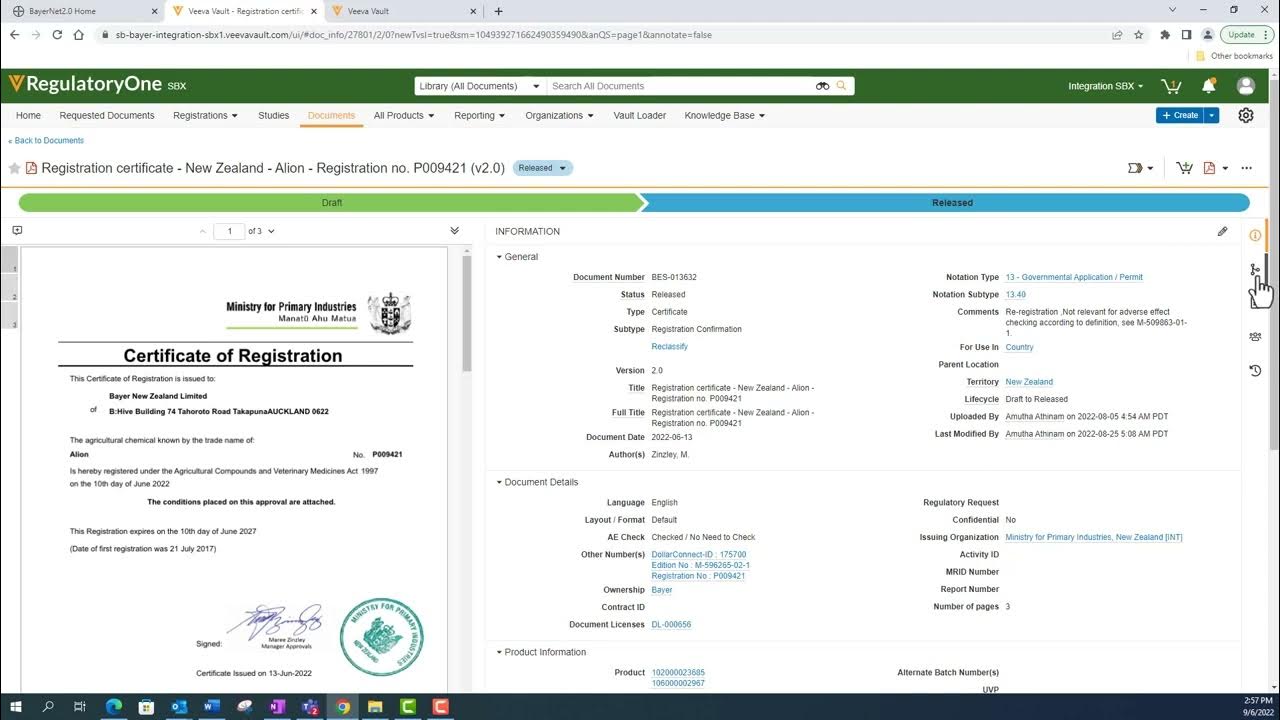
Documents - Customizing Views, Filtering, Searching, Exploring
Envu's Guide Through Veeva Vault
/@envusguidethroughveevavaul5558
Sep 6, 2022
This video provides an in-depth how-to guide for navigating and managing documents within Veeva Vault, specifically tailored for users transitioning from a legacy system (Bear's Dart). The presenter walks through essential functionalities such as customizing document views, performing effective searches, applying filters to narrow down results, and exploring document details. The overarching goal is to empower users to efficiently locate and interact with the extensive collection of migrated and newly added documents within the Veeva ecosystem, emphasizing a systematic approach to document discovery and management. The guide begins by demonstrating how users can personalize their document views by adding, removing, and reordering columns to suit individual preferences, highlighting the flexibility of Veeva's interface. It then transitions into search strategies, advising users to approach Veeva like a search engine such as Google – starting broad and progressively refining their queries. The video illustrates the difference between searching document titles and including document content and attachments in advanced searches, showcasing how to cast a wider net for comprehensive results. A significant portion of the demonstration focuses on the powerful filtering capabilities, using real-world examples like filtering by file format (to exclude placeholder documents), document type (e.g., certificates, labels), language, and specific subtypes to quickly drill down from thousands to a handful of relevant documents. Further into the video, the presenter details the exploration of individual documents, covering aspects such as general information, product linkages, regulatory information, legacy identifiers, and version history. It also explains how to view document relationships, renditions (like attached approval certificates), and access permissions. Practical actions like adding documents to a cart, downloading them, and sharing via links are demonstrated. A crucial segment is dedicated to the importance of saving customized views and search criteria for future efficiency, allowing users to quickly revisit frequently accessed document sets. The video concludes with a strong emphasis on data cleanliness, encouraging all users to take ownership by editing incorrect metadata to ensure the integrity and usability of the data within Veeva Vault. Key Takeaways: * **Customizable Document Views:** Users can personalize their Veeva Vault interface by adding, removing, and reordering columns (e.g., format, title, keywords) to create a standard view that aligns with their specific needs, enhancing efficiency in document discovery. * **Strategic Document Search:** It's recommended to approach Veeva document search like Google, starting with broad terms and then narrowing down. Users can search within document titles or utilize advanced search options to include content and attachments for a more comprehensive result. * **Effective Filtering for Precision:** Veeva Vault offers robust filtering capabilities by criteria such as file format (e.g., PDF, Word), document type (e.g., certificate, labeling), language, and specific subtypes (e.g., registration confirmation), which are crucial for quickly sifting through large volumes of documents. * **Handling Migrated Data and Placeholders:** During data migration, some documents may initially appear as "placeholders" with only metadata available. Users can filter by file format to exclude these temporary entries and focus on fully migrated, accessible documents. * **In-depth Document Exploration:** Beyond basic viewing, users can explore detailed document information including general metadata, linked product information, associated regulatory details or dossiers, legacy identifiers, and comprehensive version history. * **Understanding Document Relationships and Renditions:** Veeva Vault allows users to view relationships to other documents, access renditions (e.g., PDF versions, attached approval certificates), and check who has access to a particular document, providing a holistic view. * **Saving Custom Views for Efficiency:** Once a specific set of search and filter criteria has been applied to find a particular type of document (e.g., US labels), users can save this configuration as a custom view. This prevents repetitive searching and allows quick access to frequently needed document sets. * **Document Lifecycle and Actions:** Documents in Veeva Vault have states (e.g., "release state"). Users with appropriate permissions can perform actions like making a document "obsolete" if a newer version or draft exists, indicating its status within its lifecycle. * **Sharing and Downloading Documents:** Users can easily share documents by sending a direct link to recipients within Veeva or download documents to their local computer for offline use or integration into other workflows. * **Critical Importance of Data Cleanliness:** The video strongly emphasizes that all users are "champions of this data" and encourages them to proactively edit any incorrect metadata they encounter. Maintaining clean and accurate data is paramount for the system's overall usability and reliability. Tools/Resources Mentioned: * **Veeva Vault:** The primary document management system discussed. * **Bear / Dart:** Mentioned as a legacy system from which documents were migrated to Veeva Vault. * **Google:** Used as an analogy for effective search strategies ("approach Veeva just like you would Google"). * **Wiki page on team site:** Referenced for additional, more detailed information on document options. Key Concepts: * **Customizing Views:** The ability to modify the display of document lists by adding, removing, or reordering columns. * **Filtering Documents:** Applying specific criteria (e.g., file format, document type, language) to narrow down search results. * **Searching Documents:** Locating documents based on keywords in titles, content, or attachments. * **Placeholders:** Temporary entries for documents where only metadata has been migrated, with the full file content yet to be transferred. * **Metadata:** Data that provides information about other data, such as document title, format, type, language, and associated product or regulatory details. * **Renditions:** Different versions or formats of a document, or associated attachments (e.g., a PDF rendition of a Word document, or an approval certificate attached to a main document). * **Version History:** A record of changes made to a document over time, including different versions and their status (e.g., obsoleted). * **Document States:** The lifecycle status of a document (e.g., "release state," "obsolete"). * **Cart:** A temporary collection area for documents a user intends to download or perform other actions on. * **Saving Views:** The functionality to store a specific set of search and filter parameters for quick reuse. * **Data Ownership:** The concept that all users are responsible for maintaining the accuracy and cleanliness of data within the system. Examples/Case Studies: * **Searching for "indazaflam":** Used as a primary example to demonstrate broad search, content inclusion in search, and subsequent filtering. * **Finding a "Registration Confirmation" Certificate:** A step-by-step example of filtering by document type ("certificate"), language ("English"), and subtype ("registration confirmation") to locate a specific document for "New Zealand." * **Searching for "Labels":** Another example used to demonstrate filtering by document type ("labeling") and the process of saving a custom view for frequently accessed categories like "US Labels."

Spine Surgery Warranty Explained - Jamie Rindler - CEO of Marvel Group
Self-Funded
@SelfFunded
Sep 6, 2022
This video provides an in-depth exploration of the Marvel Group's Surgical Outcome Warranty program, a novel value-based care model focused specifically on spine surgery. Jamie Rindler, CEO of the Marvel Group, details how this program leverages high-quality surgeons, best-in-class medical devices, and rigorous data collection to significantly reduce surgical revision rates and provide financial assurance to patients and employers. The core concept involves medical device manufacturers supporting a surgical outcome warranty in exchange for granular, de-identified patient-reported outcomes (PRO) and intra-operative data, creating a powerful feedback loop for product improvement and efficacy understanding. The Marvel Group’s solution, termed a "surgical stewardship program," is designed to address the lack of guarantees and high financial risk associated with spine surgery. Rindler explains that while physicians cannot guarantee a positive outcome, the warranty guarantees coverage for the patient's out-of-pocket expenses (up to \$5,000) if a revision surgery is required within one year for any reason, including infection or hardware failure. For self-insured employers utilizing the program as a Center of Excellence (COE), the benefit shifts to the employer, who is made whole if a revision occurs, offsetting the costs they absorbed by waiving the patient's deductible. This structure creates financial accountability for the surgeons and device companies, moving away from the traditional fee-for-service model where poor outcomes carry little financial consequence for providers. A critical pillar of the program is its comprehensive data analytics platform, which utilizes a cloud-based registry (Patient IQ). Data collection is segmented into three buckets: pre-operative (demographics, diagnosis codes), intra-operative (50+ data points collected in real-time by device reps via iPad, including anesthesia, blood loss, X-ray exposure, and detailed implant specifics), and post-operative (PROs collected at 3, 6, 12, and 24 months using seven industry-standard indexes). This holistic, high-quality data provides surgeons with real-time feedback to identify patterns, complications, and causes of revisions, enabling continuous quality improvement. The success of this approach is evident in the Marvel Group's revision rate of approximately 3%, significantly lower than the national average of 7-10%. Furthermore, the organization is structured as a non-profit medical practice to comply with CMS safe harbor rules for value-based care coordination and state Corporate Practice of Medicine laws, ensuring physician oversight and alignment of incentives. Key Takeaways: * **Value-Based Care for Spine Surgery:** The Marvel Group successfully implements a value-based care model in spine surgery by offering a surgical outcome warranty, directly challenging the traditional fee-for-service structure and incentivizing positive patient outcomes. * **Data-for-Warranty Exchange:** Medical device manufacturers fund the surgical outcome warranty in exchange for access to high-quality, de-identified data on their products' performance, including detailed implant usage, intra-operative variables, and two years of patient-reported outcomes (PROs). * **Rigorous Surgeon Vetting:** Surgeons must undergo a strict, annual underwriting process, typically resulting in only 1 in 10 applicants being accepted. This vetting is performed by a third-party commercial insurance carrier, which assumes the risk, ensuring independent qualification based on historical case logs and revision rates. * **Comprehensive Data Collection:** The program collects a vast array of data points across the surgical journey: pre-op demographics, 50+ intra-op variables (collected by clinical specialists/device reps via iPad), and post-op PROs tracked for two years using industry-standard indexes. * **Feedback Mechanism for Quality Improvement:** This detailed data collection acts as a real-time feedback mechanism for surgeons, allowing them to identify specific variables (e.g., anesthesia type, surgical time, specific device combinations) that correlate with complications or successful outcomes, driving continuous improvement. * **Significant Reduction in Revision Rates:** Surgeons participating in the stewardship program achieve a revision rate of around 3%, which is substantially lower than the national average range of 7% to 10%, demonstrating the efficacy of the quality controls and feedback loop. * **Incentivizing Patient Choice:** For self-insured employers, the program serves as a Center of Excellence. If patients choose a surgeon in the program outside of a mandatory bundle, they receive a financial warranty (up to \$5,000) if a revision is needed, incentivizing them to choose high-quality providers. * **Addressing Unnecessary Surgery:** The model passively addresses the problem of unnecessary surgery (estimated to be high in spine) by creating financial accountability. Surgeons are disincentivized from operating on poor candidates because a subsequent revision would negatively impact their outcomes data and risk their annual renewal in the program. * **Marketing and Differentiation:** Participating surgeons experience a significant increase (30-40%) in patient volume, as the surgical outcome warranty acts as a powerful differentiator and community education tool, allowing them to market their superior, measured outcomes. * **Regulatory Compliance in Structure:** The Marvel Group operates as a non-profit medical practice to comply with CMS regulations encouraging physician-led value-based care coordination and Texas's Corporate Practice of Medicine laws, ensuring medical decisions are governed by a physician board. Tools/Resources Mentioned: * **Patient IQ:** A cloud-based registry and software-as-a-service platform used for data collection, storage, and powerful analytics, serving as the core data engine for the stewardship program. * **Feed the Agency:** A marketing and media firm that provides a surgical stewardship press release kit and social media content creation program for participating surgeons. Key Concepts: * **Surgical Outcome Warranty:** A guarantee, classified by CMS as a warranty (not insurance), that covers the patient's out-of-pocket costs (or the employer's costs) if a revision surgery is required within one year. * **Surgical Stewardship Program:** The Marvel Group's comprehensive program encompassing surgeon vetting, device quality standards, intensive data collection, and the surgical outcome warranty, designed to improve quality and reduce costs in specialty surgery. * **Patient Reported Outcomes (PROs):** Data collected directly from the patient post-surgery (at set intervals) using standardized indexes to measure functional improvement and quality of life, forming a key part of the feedback loop. * **Corporate Practice of Medicine (CPM) Law:** State laws (like in Texas) that prohibit lay people from employing physicians, necessitating the non-profit medical practice structure for the Marvel Group to legally engage surgeons and offer the warranty.

Pharmacy Benefit Managers (PBMs) Explained - Learn How the Money Flows
AHealthcareZ - Healthcare Finance Explained
@ahealthcarez
Sep 3, 2022
This video provides an in-depth explanation of the complex money and drug flow within the Pharmacy Benefit Manager (PBM) ecosystem. Dr. Eric Bricker simplifies this often-confusing landscape by outlining the seven key players involved: the Plan Sponsor, Health Plan, PBM, Pharmaceutical Manufacturer, Drug Wholesaler, Pharmacy, and Patient. He begins by illustrating the fundamental flow of money, originating from the plan sponsor and moving through the health plan, PBM, pharmacy, and drug wholesaler, ultimately reaching the pharmaceutical manufacturer. Concurrently, the video details the reverse flow of prescription medications, starting from the manufacturer, passing through the wholesaler and pharmacy, and finally reaching the patient. The speaker emphasizes the importance of understanding this basic framework, particularly for professionals in employee benefits, to effectively communicate it to non-experts. The presentation then delves into the more intricate and often contentious aspects of the PBM model, highlighting additional financial flows and inherent conflicts of interest. A critical point is the revelation that PBMs serve two distinct customers: the health plan and the drug manufacturer. Drug manufacturers provide various payments to PBMs, not just in the form of rebates (where 55-80% might be passed to the plan, with PBMs retaining 20-45%), but also through formulary payments, market penetration payments, and bonus payments. These arrangements create a dynamic where PBMs are incentivized by manufacturers to place certain drugs on their formularies, impacting drug access and cost. The video also discusses the role of copay assistance programs, particularly for expensive specialty pharmacy medications, which represent a significant 73% of prescription spend and can cost patients thousands monthly. Dr. Bricker further explores the market structure, pointing out the oligopolistic nature of both the PBM and drug wholesaler sectors, with only a few major players dominating each market (e.g., three major PBMs controlling 85% of the market; three major wholesalers). This limited competition can restrict options for plan sponsors and pharmacies. He stresses the need for "transparent PBMs" to disclose all forms of payments received from drug manufacturers, not just rebates, to ensure true transparency. The video concludes by touching upon the highly controversial topic of specialty pharmacy carve-out PBMs, presenting arguments both for and against their utility, and underscoring the significant fiduciary responsibility of plan sponsors in making informed decisions about their PBM relationships within this complex ecosystem. Key Takeaways: * **Seven Key Players in the Prescription Ecosystem:** The system comprises the Plan Sponsor, Health Plan, PBM, Pharmaceutical Manufacturer, Drug Wholesaler, Pharmacy, and Patient. Understanding each entity's role is fundamental to grasping the overall dynamics. * **Fundamental Money and Drug Flows:** Money generally flows from the Plan Sponsor to the Pharmaceutical Manufacturer, while drugs flow in the opposite direction, from the Manufacturer to the Patient. This basic understanding is crucial before delving into complexities. * **PBMs' Dual Customer Model and Conflict of Interest:** PBMs receive payments from both health plans (for managing prescription benefits) and drug manufacturers (for formulary placement and other incentives), creating an inherent conflict of interest that can influence drug choices and costs. * **Beyond Rebates: Manufacturer Payments to PBMs:** Drug manufacturers make various payments to PBMs, including rebates (where PBMs typically retain 20-45%), formulary payments, market penetration payments, and bonus payments. True PBM transparency requires disclosure of all these payment types. * **Dominance of Specialty Pharmacy Spend:** Specialty pharmacy medications account for a substantial 73% of the total prescription spend, often costing tens of thousands of dollars monthly and requiring significant patient out-of-pocket contributions. * **Role of Manufacturer Copay Assistance Programs:** Drug manufacturers often provide copay assistance programs, especially for expensive specialty medications, to help patients manage high out-of-pocket costs, thereby ensuring patient access and adherence. * **Oligopolistic Market Structures:** The PBM and drug wholesaler markets are highly concentrated, with only a few major players (e.g., three PBMs control 85% of the market, three wholesalers dominate). This limited competition can restrict options and leverage for other stakeholders. * **Importance of Comprehensive PBM Transparency:** Plan sponsors seeking transparency from their PBMs should inquire about all forms of payments received from drug manufacturers, not just rebates, to understand the full financial picture and potential biases. * **Controversy of Specialty Pharmacy Carve-Out PBMs:** The decision to use a specialty pharmacy carve-out PBM is highly debated, with arguments for and against its effectiveness in managing costs and patient care for high-cost medications. * **Fiduciary Responsibility of Plan Sponsors:** Plan sponsors bear a significant fiduciary responsibility to understand the PBM ecosystem and make informed decisions that best serve their members, considering the complex financial flows and potential conflicts. * **Impact of Patent Protection:** Pharmaceutical manufacturers, especially for specialty drugs, often benefit from patent protection, which can limit competition and alternative treatment options, thereby influencing pricing and market dynamics. * **The "Golden Rule" of the Plan Sponsor:** The entity with the financial resources (the plan sponsor) ultimately holds the power to set the rules and influence the terms within the prescription benefit landscape. Key Concepts: * **PBM (Pharmacy Benefit Manager):** An intermediary between health plans, pharmaceutical manufacturers, and pharmacies that manages prescription drug benefits. * **Formulary:** A list of prescription drugs covered by a health plan, often tiered by cost, influenced by PBM negotiations with manufacturers. * **Rebates:** Payments from pharmaceutical manufacturers to PBMs (and sometimes passed on to health plans) in exchange for preferred formulary placement or market share. * **Specialty Pharmacy Medications:** High-cost, complex prescription drugs often used to treat chronic, rare, or complex conditions, typically requiring special handling, administration, or monitoring. * **Copay Assistance Programs:** Programs, often funded by drug manufacturers, designed to help patients afford their out-of-pocket costs (copays, coinsurance) for prescription medications. * **Oligopoly:** A market structure in which a small number of firms have the large majority of market share, leading to limited competition. * **Transparent PBM:** A PBM model where all financial arrangements, including payments from drug manufacturers, are fully disclosed to the client (health plan or plan sponsor). * **Specialty Pharmacy Carve-out PBM:** A strategy where a health plan contracts with a separate PBM specifically for specialty medications, distinct from their general PBM, to potentially gain better control over costs and services. Tools/Resources Mentioned: * **Journal of Clinical Oncology:** The source for the PBM money flow graphic discussed in the video, specifically a publication related to practice management. * **OptumRx Paper:** A document cited by the speaker that argues against the idea of a specialty pharmacy carve-out PBM. * **Pfizer Presentation to the Dallas Fort Worth Business Group on Health:** A presentation cited by the speaker that argues in favor of a specialty pharmacy carve-out PBM for self-funded employers.

Demo: How to use DISQOVER for IDMP submission
ONTOFORCE NV/Inc
/@ontoforcenvinc5760
Sep 2, 2022
The video provides a practical demonstration of how the DISQOVER platform, configured as a knowledge graph, facilitates the complex data aggregation and retrieval necessary for ISO IDMP (Identification of Medicinal Products) regulatory submissions. The presenter establishes the platform's utility by showcasing its ability to integrate diverse data sources—including public databases, text-mined Summary of Product Characteristics (SmPC) documents from providers like Averbis, and referential master data from organizations like IMA. This consolidation is crucial because IDMP requires linking vast amounts of structured and unstructured data about medicinal products to ensure global regulatory harmonization. The demonstration walks through a specific use case: exploring medicinal products related to HIV infection. Users begin by filtering the medicinal product category, refining the search based on the condition (HIV infection) and the active substance (e.g., Emtricitabine). The platform instantly updates the results, displaying detailed information for specific formulations (e.g., hard capsule vs. oral solution). A key feature highlighted is the ability to preview and download regulatory documents, such as the EMA SmPC, directly within the platform interface, thereby streamlining the process of gathering required submission materials. Furthermore, the demo emphasizes the platform's capabilities in handling controlled vocabularies and multilingual data, which are essential components of IDMP compliance. The presenter shows how dosage forms are mapped to specific controlled vocabulary terms, complete with term IDs and defined relationships to parent terms (e.g., linking a specific solution term to the broader 'solution' category). Crucially, the system lists all available language translations for specific data points, allowing users to filter and access necessary localized regulatory information, such as the German translation for an oral solution. Finally, the demonstration underscores the critical importance of data provenance; every piece of information within the Knowledge Graph is tagged with its original source, ensuring a perfect audit trail and allowing users to consolidate and visualize private and public data seamlessly, supporting both regulatory submission and downstream activities like exploring associated Adverse Events. Key Takeaways: * **IDMP Data Aggregation Challenge:** The DISQOVER platform is specifically configured to address the data complexity of IDMP submissions by consolidating disparate data sources, including public data, text-mined regulatory documents (SmPC), and internal master data, which is essential for meeting EMA and FDA requirements. * **Knowledge Graph Foundation for Compliance:** Utilizing a Knowledge Graph structure allows regulatory and data teams to efficiently navigate complex relationships between medicinal products, active substances, indications (e.g., HIV infection), and dosage forms, ensuring comprehensive data compilation for IDMP. * **Regulatory Document Access Integration:** The platform provides immediate, integrated access to critical regulatory documents, such such as the EMA SmPC, allowing users to preview and download them directly from the detailed product view, significantly accelerating the submission preparation workflow. * **Controlled Vocabulary Management:** Essential for IDMP, the platform demonstrates the capability to map dosage forms to specific controlled vocabulary terms, including the association of term IDs and the definition of hierarchical relationships to parent terms, ensuring data standardization. * **Multilingual Compliance Support:** The system supports global regulatory requirements by listing and allowing filtering of all available language translations for specific data points (e.g., dosage forms), which is vital for submissions to multiple regulatory bodies outside of the primary market. * **Data Provenance and Auditability:** Every piece of information within the Knowledge Graph is meticulously tagged with its original data source (e.g., Averbis or IMA), providing a perfect overview of data provenance, which is critical for maintaining regulatory compliance and audit trails (e.g., 21 CFR Part 11). * **Consolidation of Private and Public Data:** The platform enables the seamless integration and visualization of proprietary internal data alongside external public reference data, allowing users to focus on a single entity (like an active substance) and view all associated information regardless of its origin. * **Efficient Data Filtering and Discovery:** The demonstration highlights the ability to apply multiple sequential filters—first by condition (HIV infection) and then by active substance (Emtricitabine)—to quickly narrow down the list of medicinal products requiring IDMP data compilation. * **Downstream Application Potential:** Beyond submission preparation, the consolidated and structured data foundation supports further exploration, such as linking active substances to reported Adverse Events, demonstrating the utility of the Knowledge Graph for pharmacovigilance and safety monitoring. Tools/Resources Mentioned: * **DISQOVER Platform:** A knowledge graph technology platform used for data discovery and aggregation. * **Averbis:** A provider mentioned for supplying text-mined SmPC documents. * **IMA:** A source mentioned for providing referential master data. Key Concepts: * **IDMP (Identification of Medicinal Products):** A set of five ISO standards defining the globally harmonized identification and exchange of information on medicinal products, crucial for regulatory bodies like the EMA and FDA. * **Knowledge Graph:** A structured data model that uses nodes (entities) and edges (relationships) to represent complex, interconnected information, making data discovery and integration highly efficient for regulatory data management. * **SmPC (Summary of Product Characteristics):** A regulatory document approved by the competent authority (e.g., EMA) that contains essential, detailed information about a medicinal product. * **Data Provenance:** The record of where data originated and how it has been processed, which is a critical requirement for regulatory compliance and data integrity in the life sciences sector.

Veeva Vault API || How to use Veeva API || APIs in Veeva Vault || Session ID in Veeva Vault
The Corporate Guys
/@TheCorporateGuys
Aug 31, 2022
This video provides a practical, step-by-step tutorial on interacting with Veeva Vault APIs, specifically focusing on the crucial first step of generating a session ID. The presenter, Vaibhav Agrawal, addresses common queries from developers and technical users regarding Veeva Vault API usage, emphasizing its importance for various operations within the Veeva ecosystem. The core of the video demonstrates how to leverage Veeva's official developer documentation and an API client like Postman to authenticate and obtain a session ID, which is a prerequisite for executing any subsequent API calls. The tutorial begins by guiding viewers to the `developer.veevavault.com` portal, highlighting it as the primary resource for Veeva Vault API documentation, including different API versions (e.g., 22.3, 22.2, 21.1). The presenter then demonstrates how to import the relevant Veeva Vault API collection directly into Postman using the "Run in Postman" button available on the developer portal. This streamlines the setup process, populating Postman with pre-configured API endpoints. The video then delves into the authentication process, explaining that a session ID is generated by sending a POST request with user credentials (username and password) to a specific authentication endpoint. Throughout the demonstration, the speaker walks through the technical details of constructing the API request. This includes specifying the correct URL (e.g., `https://[your_vault_domain]/api/[version]/auth`), setting necessary headers like `Content-Type: application/x-www-form-urlencoded` and `Accept`, and providing the user's credentials in the request body. The video clearly shows the expected successful response, which includes the generated session ID, the user's ID, and a list of associated Veeva Vaults. This session ID is then presented as the key to unlocking further API functionalities, such as extracting document metadata, retrieving lists of users, accessing workflow history, or managing document-related items, thereby enabling comprehensive programmatic interaction with Veeva Vault. Key Takeaways: * **Veeva Vault API Importance:** Veeva Vault APIs are essential for programmatic interaction, enabling developers to extract data, automate tasks, and integrate Veeva Vault with other systems, which is critical for optimizing pharmaceutical commercial and clinical operations. * **Session ID as Prerequisite:** Generating a session ID is the foundational step for any Veeva Vault API interaction, as it serves as the authentication token required for all subsequent API calls. * **Official Developer Portal:** `developer.veevavault.com` is the authoritative source for Veeva Vault API documentation, providing details on various API versions and functionalities. * **Streamlined Postman Integration:** The "Run in Postman" button on the Veeva developer portal allows for quick and easy import of Veeva Vault API collections into Postman, simplifying API testing and development setup. * **Authentication Endpoint Structure:** To generate a session ID, a POST request must be sent to a specific URL formatted as `https://[your_vault_domain]/api/[version]/auth`, where `[your_vault_domain]` is your specific Veeva Vault URL and `[version]` is the API version being used (e.g., `v22.1`). * **Required Request Headers:** The authentication request typically requires `Content-Type: application/x-www-form-urlencoded` and an `Accept` header to specify the desired response format. * **Credential-Based Authentication:** Session ID generation is primarily achieved by providing valid Veeva Vault `username` and `password` within the body of the POST request. * **Expected Authentication Response:** A successful authentication request returns a JSON response containing the generated `session_id`, the `user_id`, and a list of `vaults` associated with the authenticated user, including their respective IDs. * **Postman for API Management:** Postman serves as an effective API client for organizing, testing, and executing Veeva Vault API requests, allowing developers to easily manage collections, environments, and request parameters. * **Versatility of Veeva Vault APIs:** Once authenticated, the APIs enable a wide range of operations, including retrieving document metadata, listing active and inactive users, extracting workflow history, and managing document-related items. * **Using Session ID for Subsequent Calls:** The generated session ID must be included in the headers of all subsequent API requests to authenticate and authorize access to Veeva Vault resources, ensuring secure and controlled data interaction. * **API Versioning:** Developers must be mindful of the specific API version they are using (e.g., v21.1, v22.1) as API endpoints and functionalities can vary between versions. Tools/Resources Mentioned: * **Veeva Vault:** The core pharmaceutical content and data management platform. * **Veeva Vault API:** The programmatic interface for interacting with Veeva Vault. * **`developer.veevavault.com`:** The official Veeva Vault developer portal for API documentation and resources. * **Postman:** A popular API platform for building, testing, and modifying APIs. Key Concepts: * **API (Application Programming Interface):** A set of defined rules that enable different software applications to communicate with each other. * **Veeva Vault API:** A specific API designed for developers to interact with the data and functionalities within the Veeva Vault platform. * **Session ID:** A unique identifier generated upon successful authentication, used to maintain a user's session and authorize subsequent API requests without requiring repeated login credentials. * **Postman:** A widely used tool that provides a user-friendly interface for sending HTTP requests, inspecting responses, and managing API collections. * **Authentication:** The process of verifying the identity of a user or application attempting to access a system or resource. * **REST API:** An architectural style for designing networked applications, emphasizing stateless client-server communication and standard HTTP methods. * **Headers:** Key-value pairs sent with an HTTP request or response that provide metadata about the message, such as content type or authorization tokens. * **Request Body:** The data payload sent with an HTTP request, often containing parameters or information required by the server.

MEDIDATA RAVE Training – MEDIDATA RAVE Online Training – (Certification Tips)– MEDIDATA RAVE Course
MaxMunus Training
/@maxmunustraining
Aug 30, 2022
This video provides an overview of Medidata Rave training offered by MaxMunus, detailing the platform's role as a cloud-based Electronic Data Capture (EDC) system critical for managing clinical trial data in the life sciences sector. The speaker explains Medidata Rave's functionality in digitally capturing, handling, and reporting clinical testing data, emphasizing its importance for documenting patient information and accelerating the development of life-enhancing treatments. The training covers fundamental to advanced concepts, features like real-time data entry checks and single sign-on, and the benefits of Medidata Rave certification. The video also highlights the significant global job market for Medidata Rave professionals, with numerous opportunities at leading pharmaceutical, biotech, and CRO companies. Key Takeaways: * **Medidata Rave as a Core Clinical Data Platform:** Medidata Rave is a leading cloud-based EDC system essential for digital data capture, management, and reporting in clinical trials, directly impacting patient information documentation and the efficiency of bringing treatments to market within the life sciences industry. * **High Industry Demand for Expertise:** There is a substantial global demand for professionals skilled in Medidata Rave, with major players in pharma, biotech, and CROs (including companies like Veeva Systems, LabCorp, IQVIA) actively recruiting.ai to integrate its data engineering and AI/LLM solutions. This could involve building robust data pipelines from Rave, developing AI agents to analyze or automate processes related to Rave-managed data, or enhancing compliance tracking for data within such systems.ai can position its AI and data services to augment existing Medidata Rave implementations.

What is a Clinical Trial Manager (CTM) | Salary, Degree Requirements & More
kyyah abdul
/@kyyahabdul
Aug 30, 2022
This video provides a comprehensive overview of the Clinical Trial Manager (CTM) role, detailing their responsibilities, necessary educational background, and salary expectations. The speaker emphasizes that CTMs are crucial for establishing productive vendor relationships, ensuring strict clinical trial compliance with federal and global regulations, and improving the overall efficiency and quality of clinical trial activities. Key duties include overseeing Contract Research Organizations (CROs), managing investigational product sites, participating in study startup, reviewing critical study documents, resolving operational issues, and meticulously preparing and adhering to budgets and timelines. The CTM role is described as a blend of business acumen and scientific understanding, often requiring prior experience as a Clinical Research Associate (CRA). Key Takeaways: * **Central Role in Clinical Operations:** The CTM is a pivotal figure in pharmaceutical and biotech companies, directly responsible for the oversight and successful execution of clinical studies, bridging scientific objectives with operational realities. * **Critical for Regulatory Compliance:** A primary responsibility of the CTM is to ensure clinical trial compliance with federal and global regulations, highlighting the high-stakes environment where regulatory adherence is paramount. * **Complex Vendor Management:** CTMs are deeply involved in managing relationships with various vendors, particularly CROs, requiring strong negotiation, oversight, and problem-solving skills to maintain study timelines and budgets. * **Operational Efficiency and Problem Solving:** The role demands proactive identification and swift resolution of operational challenges to enhance the efficiency, effectiveness, and quality of clinical trial activities, directly impacting study success. * **Data-Driven Decision Making:** The CTM's need to manage study progress, budgets, and timelines implies a reliance on robust data and analytics for informed decision-making and issue resolution.

Modernizing Benefits Consulting - Genesys Health - Matt Monahan
Self-Funded
@SelfFunded
Aug 30, 2022
This video provides an in-depth exploration of modernizing benefits consulting, focusing on the strategic implementation of Population Health Management (PHM) and leveraging data systems to drive cost savings and improve employee health outcomes. Matt Monahan, Chief Strategy Officer of Genesys Health, details his firm's approach, which moves beyond traditional wellness programs to clinically manage employee health. The core strategy revolves around using data warehousing to identify and intervene with high-risk populations suffering from controllable chronic conditions such as hypertension, diabetes, and hyperlipidemia. Genesys Health emphasizes that systems are the future of the business, utilizing platforms like Deerwalk for data warehousing. This allows them to take claims reporting out of the hands of carriers and gain granular control, enabling monthly analysis of year-over-year performance for specific disease states. This data-driven approach facilitates targeted outreach to individuals identified with "gaps in care" (e.g., those with hypertension who are not adhering to medication), allowing the consultant to proactively engage employees before issues escalate into catastrophic claims. Monahan stresses the importance of convenience and cost removal in driving behavioral change, arguing that doing something, even if the ROI is initially unclear, is far less risky than doing nothing. The firm implements a "care spectrum" designed to simplify access to medical providers. This spectrum includes virtual primary care, on-site clinics, and Direct Primary Care (DPC). DPC is highlighted as a powerful tool because it provides consistent access to a familiar medical provider, removes the financial barrier of co-pays for primary care visits, and eliminates the perverse incentives of the fee-for-service model. By controlling primary care costs and establishing a predictable bucket of expense, the employer can then focus on steering employees who need specialty care or procedures toward high-quality facilities with better cost structures, thereby improving outcomes and reducing complications like septic claims. Monahan concludes by noting that his experience in the carrier world (Aetna) revealed significant internal innovation often stifled by red tape and contract restrictions, positioning independent consultants like Genesys to implement these high-impact, data-driven solutions with greater speed and autonomy. Key Takeaways: • **Data-Driven Population Health:** Effective Population Health Management requires leveraging data warehousing (like Deerwalk) to analyze claims, identify specific risk pools (hypertension, diabetes, hyperlipidemia), and track gaps in care on a monthly basis, moving beyond generic, ineffective wellness programs. • **The Care Spectrum Model:** Implementing a comprehensive care spectrum (on-site clinics, DPC, virtual primary care) simplifies access and removes cost barriers for employees, which is essential for driving preventative care and behavioral change. • **Direct Primary Care (DPC) as a Cost Control:** DPC is a critical strategy because it isolates primary care costs into a predictable, fixed bucket, eliminates the fee-for-service incentive for unnecessary testing, and fosters a stronger, more consistent patient-physician relationship. • **Scaling DPC:** For DPC to be viable, critical mass is necessary (approximately 100 lives per location). Smaller offices should be layered with a cohesive virtual primary care model to ensure consistency and access across the entire employee population. • **Strategic Use of Technology:** Consultants must adopt technology (e.g., PlanSite for RFPs) to automate administrative tasks and eliminate reliance on error-prone spreadsheets, allowing high-value strategists to focus their time on strategic initiatives like PHM and systems integration. • **Intervention ROI:** While the ROI of PHM interventions can be challenging to measure immediately, proactively addressing gaps in care for high-risk individuals can prevent catastrophic claims, making intervention the less risky financial and ethical choice. • **Carrier Constraints vs. Consultant Autonomy:** Carriers often possess significant internal innovation, but external consultants have the autonomy to implement high-performing network solutions, DPC models, and direct contracting strategies without being constrained by existing volume agreements or regulatory red tape. • **Steering to Quality:** A key benefit of controlling the primary care relationship is the ability to guide employees needing specialty care toward high-quality facilities and providers known for better outcomes, lower complication rates, and favorable cost structures. • **Future of Data Flow:** The healthcare industry desperately needs technology to improve the consistency and flow of medical data, moving away from self-reported clipboards to give providers Amazon-like access to a patient’s complete, integrated health history. • **Marketplace Disruption:** Regulatory shifts (e.g., PBM regulation, transparency rules) and the rise of cash-based payment models are creating opportunities for innovative solutions, including the acquisition of outpatient surgery centers to drive down costs for common procedures. Tools/Resources Mentioned: * **Deerwalk:** A data warehouse platform used for claims reporting and detailed population health analysis. * **PlanSite:** A technology platform for employee benefits brokers to efficiently manage the RFP process. Key Concepts: * **Population Health Management (PHM):** A data-driven strategy focused on improving the health outcomes of a group of individuals (the employee population) by identifying risks and intervening with clinical management. * **Direct Primary Care (DPC):** A healthcare model where patients pay a flat monthly membership fee directly to their primary care provider, bypassing insurance claims for routine care, thus improving access and removing cost barriers. * **Gaps in Care:** Instances where an individual with a known chronic condition (e.g., hypertension, diabetes) is not adhering to recommended treatment or medication protocols, identified via claims data analysis. * **Care Spectrum:** A range of accessible primary care options (virtual, on-site, DPC) offered to employees to ensure convenience and meet diverse needs.

Prescription Medication Prior Authorization Explained
AHealthcareZ - Healthcare Finance Explained
@ahealthcarez
Aug 29, 2022
This video provides an in-depth explanation of the prescription medication prior authorization (PA) process, detailing the complex, multi-step journey a prescription takes from a prescriber to a patient when a PA is required. Dr. Eric Bricker, the presenter, systematically breaks down each stage, highlighting the numerous inefficiencies, potential for error, and significant delays inherent in the current system. His analysis underscores how this administrative burden not only frustrates healthcare providers but also poses serious risks to patient health, framing the process itself as a "public health threat." The discussion begins with the prescriber's initial challenge of determining if a medication requires PA, a task complicated by the vast and varied formularies across different insurance carriers and Pharmacy Benefits Managers (PBMs). For instance, CVS alone lists approximately 495 medications requiring PA. The submission methods are then explored, ranging from archaic fax machines, which often involve lengthy, standardized forms (e.g., Illinois' 40-field form), to various electronic prior authorization (e-PA) routes through intermediaries like CoverMyMeds and Surescripts, or direct PBM portals. Critically, most physicians are forced to use a combination of these methods, adding to the administrative complexity. Upon receipt by the PBM, the process continues with a prior authorization technician manually abstracting information from faxes into their system, a step prone to data entry errors. Subsequently, a prior authorization pharmacist reviews the request against specific criteria, which can include patient age, lab values (e.g., blood glucose, BMI for medications like Risperdal), and even the prescriber's specialty (e.g., a dermatologist for Retinol). The pharmacist's role often involves independent clinical judgment, introducing a degree of subjectivity. If denied, the request is sent back to the prescriber, who can provide additional clinical information or escalate the decision to a medical director, prolonging the process further. The video concludes by emphasizing the severe consequences of these delays, citing physician surveys indicating that 24% of PAs result in adverse patient events and 16% lead to hospitalizations, while prescribers spend an average of 14 hours per week on PA-related tasks. Key Takeaways: * **Complex PA Determination:** Identifying whether a prescription requires prior authorization is a significant initial hurdle due to the sheer volume (e.g., ~495 medications on CVS's formulary) and variability of requirements across different insurance carriers and PBMs. * **Inefficient Submission Pathways:** Prescribers must navigate a fragmented system involving fax machines (with lengthy forms, e.g., 40 fields in Illinois) and multiple electronic portals (CoverMyMeds, Surescripts, individual PBM sites), often using a combination of these methods, which is highly inefficient. * **Manual Data Entry and Error Risk:** Prior authorization technicians at PBMs frequently abstract information from faxed forms and manually enter it into their systems, creating opportunities for transcription errors that can lead to denials and further delays. * **High Workload and Subjectivity for PA Pharmacists:** PA pharmacists are often expected to review a high volume of cases (e.g., 60 cases per 8-hour day, or one every 8 minutes), and their decisions can involve a significant degree of independent clinical judgment, leading to potential inconsistencies. * **Diverse and Specific Denial Criteria:** Prior authorization requests can be denied based on various criteria, including patient age (e.g., Retinol for acne), specific lab values (e.g., blood glucose and BMI for Risperdal), and even the specialty of the prescribing physician (e.g., requiring a dermatologist for Retinol). * **Significant Delays in Patient Care:** The PA process typically takes 1-3 business days, with urgent requests sometimes taking up to 24 hours. This often results in delays in treatment, with surveyed physicians reporting that half of PA requests cause a delay in care. * **Direct Link to Adverse Patient Outcomes:** The delays caused by prior authorizations are not merely inconvenient; 24% of surveyed physicians reported that the process led to adverse health events in their patients, and 16% stated it resulted in hospitalizations. * **Substantial Prescriber Time Burden:** Physicians spend a considerable amount of time on prior authorizations, with surveyed doctors reporting an average of 33 PAs per week, consuming about 14 hours of their time—time that could otherwise be spent on direct patient care. * **E-Prior Authorization Efforts are Incomplete:** While electronic prior authorization (e-PA) is an ongoing effort to streamline the process, it is not yet universally adopted or fully integrated, meaning the inefficiencies of manual and hybrid systems persist. * **The System as a "Public Health Threat":** The cumulative effect of these inefficiencies, delays, and patient harms leads the presenter to characterize the current healthcare delivery and payment mechanism, particularly the PA process, as a significant public health threat. **Tools/Resources Mentioned:** * **CoverMyMeds:** An electronic prior authorization solution, a subsidiary of McKesson. * **Surescripts:** An intermediary for electronic prescribing and prior authorization, co-founded and co-owned by CVS and Express Scripts. * **PBM Direct Electronic Portals:** Many PBMs offer their own direct electronic submission methods for prior authorizations. **Key Concepts:** * **Prescriber:** A general term for healthcare professionals authorized to prescribe medications, including doctors, nurse practitioners, physician assistants, podiatrists, and dentists. * **Pharmacy Benefits Manager (PBM):** A third-party administrator of prescription drug programs for commercial health plans, self-insured employer plans, Medicare Part D plans, and other government programs. * **Formulary:** A list of prescription drugs covered by a health plan, often indicating which medications require prior authorization. * **Prior Authorization (PA) Tech:** A technician at a PBM responsible for processing prior authorization requests, often involving manual data entry from faxed forms. * **Prior Authorization (PA) Pharmacist:** A pharmacist at a PBM who reviews prior authorization requests against clinical criteria to approve or deny them. * **Medical Director:** A physician at a PBM who reviews escalated prior authorization denials and can override previous decisions. * **E-Prior Authorization (e-PA):** The electronic submission and processing of prior authorization requests, aimed at streamlining the traditional paper-based or fax-based methods. **Examples/Case Studies:** * **Retinol (Retinoic Acid) for Acne:** Used as an example where PA criteria might include patient age (e.g., covered for under 18 but not over 18) and require the prescriber to be a specific specialty, such as a dermatologist. * **Risperidone (Risperdal):** Used as an example of a psychiatric medication where PA criteria might require specific lab values (e.g., blood glucose levels) and patient metrics (e.g., BMI) due to potential side effects like high blood sugar and weight gain.
How to plan a life science eQMS implementation
Qualio
/@QualioHQ
Aug 22, 2022
The video offers an expert perspective on the critical planning phase for implementing an electronic Quality Management System (eQMS) within the life sciences sector. The central thesis is that successful digitization of quality processes is predicated on a deep, pre-implementation understanding of the company's future state, or "2b processes." This initial step requires the regulated company to thoroughly map out its product life cycle—the sequence of activities necessary to deliver a quality product to the patient—and ensure the eQMS is selected and configured specifically to support defined GxP processes. The system is explicitly viewed not as an isolated technology, but as an integrated component supporting regulatory compliance. Defining the system requirements is presented as a complex synthesis of four knowledge domains: inherent product knowledge, detailed process knowledge, necessary regulatory knowledge (i.e., the basic compliance achievements required), and the company’s internal quality standards. The speaker highlights that many regulated companies struggle with this definition phase due to a lack of internal expertise or resources, particularly in mapping complex data flows and identifying process-level risks. This gap creates a crucial opportunity for specialized service providers, integrators, and consultants to assist in translating operational needs into clear, actionable system requirements. The role of the service provider extends beyond mere requirement gathering; it involves a transparent mapping exercise. The provider must clearly communicate to the regulated company which requirements are natively built into the product, which can be satisfied through system configuration, and which will necessitate custom development or cannot be met at all. This clear communication is essential for the regulated company to understand the necessary operational procedure changes and verify that the new application—whether a cloud-based Software as a Service (SaaS) or an on-premise solution—will be compliant and risk-managed. Ultimately, the speaker emphasizes that successful eQMS deployment requires significant effort from both the regulated company and the service provider, leveraging external expertise to overcome internal resource limitations and ensure regulatory adherence. Key Takeaways: • **Prioritize "2b" Process Definition:** The foundational step for eQMS implementation is understanding the desired future state processes, including the entire product life cycle and how the system will specifically support necessary GxP activities. • **Integrate Four Knowledge Pillars:** System requirements must be defined by synthesizing product knowledge, detailed process understanding, core regulatory compliance requirements, and the company’s specific internal quality standards. • **Analyze Data Flows and Process Risks:** A critical component of process understanding involves mapping data flows related to the GxP processes and identifying and managing any associated risks at the process level before system selection. • **External Expertise is Essential:** Regulated companies often lack the internal skills or resources to adequately define complex system requirements; service providers and consultants are vital partners in helping them articulate and formalize these needs. • **Service Providers Must Map Requirements Transparently:** Consultants should categorize requirements into three clear groups for the client: those built-in to the product, those met through configuration, and those requiring custom development, ensuring clarity on implementation effort. • **Focus on Compliance Demonstration:** The service provider must simply and clearly demonstrate to the regulated company how the proposed solution, combined with updated operational procedures, will meet all defined requirements, manage risks, and ensure regulatory compliance. • **Resource Constraints Drive Outsourcing:** Internal experts in regulated companies are typically spread thin across multiple projects, making the engagement of specialized external integrators a necessity rather than a luxury for timely and compliant system deployment. • **System Selection is Process-Driven:** The eQMS system must be selected based on its ability to support specific GxP processes, reinforcing the idea that the technology serves the regulated process, not the other way around. • **Configuration Maximization:** Service providers should prioritize meeting requirements through system configuration over custom work, as configuration is generally easier to validate and maintain within a regulated environment. Key Concepts: * **2b Processes:** The desired, optimized state of business processes following the implementation of the new system (eQMS). * **GxP Process:** An umbrella term for regulated quality practices (e.g., GMP, GCP) that require strict adherence and documentation, which the eQMS must support. * **Regulated Company:** An organization operating in the life sciences sector (e.g., pharma, biotech) subject to stringent regulatory oversight (e.g., FDA, EMA). * **eQMS (Electronic Quality Management System):** A digital system designed to manage quality processes, documentation, training, and compliance within a regulated industry.

How an eQMS strengthens life science quality management
Qualio
/@QualioHQ
Aug 22, 2022
This analysis, presented by GAMP industry expert Sion Wyn, explores the fundamental reasons why an electronic Quality Management System (eQMS) is critical for strengthening quality management within the life sciences sector. The central thesis is that a successful eQMS transitions organizations from reactive quality assurance to proactive risk management by leveraging standardized processes and intelligent data utilization. The discussion emphasizes that the true value of these systems is derived not just from their existence, but from the quality of the content they manage and the usability that ensures user adoption. The speaker outlines several key benefits of implementing an eQMS, starting with the establishment of standardized approaches across the organization. This standardization is crucial for ensuring consistency in regulatory compliance and operational execution. Furthermore, the system acts as a powerful tool for information sharing, effectively breaking down organizational silos that often impede efficient quality processes. By centralizing documentation and workflows, an eQMS facilitates trending analysis, which is described as a cornerstone of proactive quality improvement. Instead of merely reacting to quality events (firefighting), the system enables forward-looking analysis to identify signals and triggers that indicate potential risks before they escalate. A significant portion of the analysis is dedicated to the critical success factors of an eQMS implementation: content and usability. The speaker stresses that the system's effectiveness hinges on the quality of the data captured and the ease with which personnel can interact with the system. Usability is deemed "massive," as a system that users are unwilling or unable to use effectively will fail to deliver maximum value, regardless of its technical capabilities. The goal is to make the captured content "sing and dance" through robust searchability and trending features, allowing organizations to look forward and anticipate issues. Finally, the expert advises life science companies to focus their QMS efforts on capturing the "hot stuff"—the essential data that genuinely drives quality improvement, final product quality, and patient safety. This requires engaging with internal customers to determine what information truly matters, rather than forcing the capture of "useless things that nobody really wants to know in the future." By prioritizing high-value content and streamlining processes to focus on core quality drivers, the eQMS becomes a strategic asset rather than merely a routine documentation repository, ultimately fulfilling its promise of enhancing patient safety outcomes. Key Takeaways: • **Shift from Reactive to Proactive Quality:** An eQMS is vital for moving quality management beyond "reactive firefighting" toward proactive risk management by enabling organizations to analyze trends and anticipate potential quality issues. • **Standardization and Silo-Busting:** Effective eQMS implementation drives the standardization of quality approaches across departments, simultaneously improving information sharing and breaking down organizational silos that typically fragment quality data. • **Usability is Non-Negotiable:** System usability is a massive determinant of success; if personnel are unwilling or unable to use the system efficiently, the organization will not achieve maximum value from its QMS investment. • **Content Quality Over Quantity:** Organizations must be strategic about the data they capture, focusing on the "real stuff" that drives quality improvement and avoiding the capture of extraneous, useless information that clogs the system and obscures critical insights. • **The Content Must "Sing and Dance":** To maximize the value of captured content, the eQMS must offer robust functionalities such as advanced searchability, trending analysis, and the ability to look for matching signals and triggers that indicate emerging risks. • **Focus on Core Drivers:** The primary focus of the quality management system should be on processes that directly drive final product quality and, most importantly, patient safety, ensuring that routine administrative tasks do not overshadow critical quality assurance activities. • **Customer-Centric QMS Design:** Designing an effective QMS requires dialogue with internal customers (users) to identify the processes and data points that genuinely drive their quality improvement efforts, ensuring the system meets operational needs. • **Trending as a Strategic Tool:** Trending analysis is not merely reporting; it is a strategic function that allows organizations to look forward, identify patterns, and implement preventative measures based on data signals rather than waiting for non-conformances to occur. Key Concepts: * **eQMS (Electronic Quality Management System):** A centralized, digital platform used by life science companies to manage and automate quality processes, documentation, training, non-conformances, and audits, ensuring compliance with regulatory standards (like GxP and FDA requirements). * **Proactive Risk Management:** A methodology where potential quality risks are identified, analyzed, and mitigated before they result in product failures, compliance issues, or harm to patients, heavily relying on data trending and signal detection. * **Standardization:** The process of establishing uniform procedures, documentation formats, and workflows across an organization to ensure consistency, reduce variability, and simplify compliance and training efforts. * **Trending:** The continuous analysis of quality data (e.g., deviations, CAPAs, audit findings) over time to identify patterns, recurring issues, and early warning signals that necessitate preventative action.

How to use critical thinking to choose the best eQMS vendor
Qualio
/@QualioHQ
Aug 22, 2022
The discussion, led by CSA expert Sion Wyn, focuses on the critical role of informed judgment and technological insight in the vendor selection process for computerized systems, specifically within regulated environments like the pharmaceutical and life sciences industries. The central thesis is that regulated companies must employ "critical thinking" when evaluating suppliers of software (such as eQMS vendors) because the majority of the software development and quality assurance is conducted within the supplier’s own quality system. This places the onus on the regulated firm to rigorously assess the vendor’s internal practices, tools, and overall technological maturity. The speaker emphasizes that a key component of critical thinking involves recognizing and rejecting outdated methodologies. If a potential supplier relies heavily on paper-based documentation or is bogged down by excessive, traditional Installation Qualification (IQ), Operational Qualification (OQ), and Performance Qualification (PQ) procedures, this indicates a lack of modernization. Such a supplier is deemed "not up-to-date." Conversely, a high-quality supplier utilizes modern toolsets, adheres to current good development practices, and follows robust IT quality system frameworks (such as ISO or similar standards) to manage operations and service delivery. These modern practices are characterized by automation, which fundamentally changes how documentation and information management are handled compared to two decades ago. A crucial insight provided is the necessity for the regulated company to staff its vendor assessment team with the right expertise. These individuals must possess the requisite "technological insight" to discern what constitutes good, modern technology, processes, and documentation. The standard for "good technology" has evolved significantly over the last 25 years, moving toward automated, streamlined systems that inherently manage quality and compliance. Therefore, the assessment process must shift from merely checking boxes on voluminous documentation to verifying the sophistication and compliance of the supplier’s underlying development and quality management processes. This ensures that the regulated company selects a partner whose methodology supports efficient, compliant operations, rather than one that perpetuates manual, outdated validation burdens. Key Takeaways: • **Supplier Quality System Assessment:** The primary focus of critical thinking in vendor selection must be the assessment of the supplier’s internal quality system and development environment, as this is where the core compliance and quality assurance for the software is established. • **Rejection of Antiquated Practices:** Regulated companies must use critical thinking to identify and disqualify potential suppliers who rely on outdated, paper-intensive quality systems or excessive, traditional IQ/OQ/PQ documentation, which signals a lack of technological maturity. • **Technological Insight is Mandatory:** The personnel within the regulated company responsible for assessing computerized system suppliers must possess deep technological insight to accurately judge the modernity, efficiency, and compliance of the vendor’s tools and processes. • **Automation as the Modern Standard:** Good technology and processes are defined by high levels of automation in development, documentation, and information management, reflecting a necessary departure from the manual methods prevalent 25 years ago. • **Current Good Development Practice:** A high-quality supplier should be demonstrably following current good development practices and leveraging established IT quality system frameworks (e.g., ISO standards) for managing service delivery and operations. • **Focus on Process Over Paper:** The vendor assessment process should prioritize verifying the robustness and compliance of the supplier’s automated development and quality management processes, rather than simply accumulating large volumes of manually generated validation documentation. • **Strategic Vendor Selection:** Choosing a technologically advanced supplier that embraces automation and modern quality frameworks is a strategic move that streamlines the regulated company’s own compliance burden and ensures the adoption of systems that are fit for modern regulatory requirements (like those emphasizing Computer Software Assurance, or CSA). • **Internal Expertise Gap:** If the regulated company lacks the internal technological expertise to properly evaluate modern, automated systems, they risk selecting vendors whose processes will ultimately create bottlenecks and compliance challenges down the line. Key Concepts: * **Critical Thinking in Sourcing:** Applying informed, objective judgment to assess a supplier's quality system and technological maturity, moving beyond simple checklist validation. * **Current Good Development Practice:** Modern software development methodologies that integrate quality and compliance throughout the lifecycle, often leveraging automation and continuous integration/continuous delivery (CI/CD) pipelines. * **Technological Insight:** The necessary expertise within the regulated company to understand and evaluate modern automated systems, distinguishing them from outdated, documentation-heavy approaches. * **IQ/OQ/PQ (Installation, Operational, Performance Qualification):** Traditional validation protocols often associated with older, manual systems. The speaker implies that excessive reliance on these manual processes indicates a non-modernized supplier.

Inflation Reduction Act: The Real Healthcare Agenda
AHealthcareZ - Healthcare Finance Explained
@ahealthcarez
Aug 20, 2022
This video provides an in-depth exploration of the healthcare changes introduced by the Inflation Reduction Act (IRA), which was passed by Congress and signed by President Biden in August 2022. Dr. Eric Bricker of AHealthcareZ outlines four primary areas of impact: continued subsidies for Affordable Care Act (ACA) marketplace plans, Medicare's new ability to negotiate drug prices, significant reforms to Medicare Part D prescription coverage, and a delay in removing the Anti-Kickback Statute Safe Harbor for Pharmacy Benefit Managers (PBMs). The presentation aims to clarify the specifics of these legislative changes and their phased implementation, offering a foundational understanding of how the IRA is reshaping the U.S. healthcare landscape, particularly for the pharmaceutical sector and government-funded programs. The discussion begins with the extension of ACA marketplace subsidies through 2025, which were initially temporary. It then transitions to the landmark provision allowing Medicare to negotiate drug prices, starting with 10 drugs in 2026 and expanding to 20 by 2029. Dr. Bricker highlights this as a major shift, likening it to the government's existing practice of setting fees for physicians and hospitals, and describes its gradual rollout as a "boiling frog technique" to ease the industry into the change. The video meticulously details the numerous modifications to Medicare Part D, including capping drug price increases to the rate of inflation starting in 2023, limiting insulin co-pays to $35 per month, establishing zero out-of-pocket costs for vaccines, and implementing a $2,000 annual out-of-pocket maximum for beneficiaries by 2025. Additionally, Part D premium increases will be capped at 6% annually from 2024 to 2030, and subsidies for low-income seniors will be expanded. A crucial point addressed is the delay in removing the Anti-Kickback Statute Safe Harbor for PBMs, specifically for Medicare Part D, from 2027 to 2032. This provision allows PBMs to continue receiving rebates from pharmaceutical companies for another decade, a practice that could be considered a kickback without the safe harbor. Dr. Bricker explains the complex nature of this arrangement and its implications for the financial dynamics between pharmaceutical companies and PBMs. The video concludes by framing these changes within a broader political strategy to make government-financed healthcare, particularly Medicare, more attractive and facilitate its expansion, potentially by lowering the eligibility age. This overarching goal, the speaker notes, is met with resistance from hospitals due to the lower reimbursement rates from Medicare compared to commercial insurance, particularly for the older, higher-cost patient demographic. Key Takeaways: * **Extended ACA Subsidies:** The Inflation Reduction Act extends the enhanced subsidies for Affordable Care Act (ACA) marketplace plans for an additional three years, through the end of 2025, ensuring continued affordability for many Americans. * **Medicare Drug Price Negotiation:** A significant change is Medicare's new authority to negotiate drug prices, starting with 10 drugs in 2026 and gradually increasing to 20 drugs by 2029. This represents a fundamental shift in drug pricing power, moving towards a model of government price setting akin to physician and hospital fees. * **Inflation-Capped Drug Prices:** For Medicare Part D, prescription drug prices cannot increase faster than the rate of inflation, effective 2023. This measure aims to control the rising cost of medications for seniors, tying price adjustments to broader economic indicators. * **Insulin Co-pay Cap:** The IRA caps out-of-pocket costs for insulin at $35 per month for Medicare Part D beneficiaries starting in 2023, providing substantial relief for individuals managing diabetes. * **Zero-Cost Vaccines:** Medicare Part D will cover recommended vaccines, such as for COVID, flu, and pneumonia, with zero out-of-pocket costs for beneficiaries, also expanding vaccine coverage for Medicaid and CHIP plans. * **Annual Out-of-Pocket Maximum:** A new $2,000 annual out-of-pocket maximum for prescription drugs will be implemented for Medicare Part D beneficiaries starting in 2025, eliminating the previous 5% co-insurance after reaching the catastrophic threshold. * **Premium Increase Limits:** Medicare Part D premiums will be capped at a less than 6% annual increase from 2024 through 2030, offering more predictable and controlled premium costs for seniors. * **Expanded Low-Income Subsidies:** Subsidies for low-income seniors to help cover Medicare Part D premiums are expanded to 150% of the federal poverty level, increasing access and affordability for vulnerable populations. * **PBM Anti-Kickback Safe Harbor Delay:** The removal of the Anti-Kickback Statute Safe Harbor for Pharmacy Benefit Managers (PBMs) related to Medicare Part D rebates has been delayed from 2027 to 2032. This allows PBMs to continue receiving rebates from pharmaceutical companies for a longer period, impacting commercial strategies and revenue flows. * **Potential for Cost-Shifting:** There is a concern that pharmaceutical companies, facing reduced revenue from government payers due to these new regulations, may "cost-shift" by increasing prices for self-funded employers and commercially insured individuals to offset losses. * **Broader Medicare Expansion Strategy:** The IRA's healthcare provisions are viewed as part of a larger, multi-year political strategy to make government-financed healthcare, particularly Medicare, more attractive and facilitate its expansion, potentially by lowering the eligibility age. * **Hospital Industry Opposition:** Hospitals are a significant force against Medicare expansion, as the reimbursement rates from Medicare for patients aged 60-65 are substantially lower than what they receive from commercial insurance for the same demographic, impacting their revenue. **Tools/Resources Mentioned:** * Kaiser Family Foundation (KFF) * Commonwealth Fund * NPR * Purchaser's Business Group on Health (PBGH) **Key Concepts:** * **Inflation Reduction Act (IRA):** Landmark U.S. legislation passed in 2022, including significant provisions related to healthcare costs and drug pricing. * **Affordable Care Act (ACA) / Obamacare:** U.S. healthcare reform law that established health insurance marketplaces and subsidies. * **Medicare Part B:** Covers medical services and some outpatient prescription drugs (e.g., infusions). * **Medicare Part D:** The prescription drug benefit program for Medicare beneficiaries. * **Pharmacy Benefit Managers (PBMs):** Third-party administrators of prescription drug programs for health insurance companies, Medicare Part D plans, and large employers. * **Anti-Kickback Statute Safe Harbor:** Legal exemptions that protect certain financial arrangements from being prosecuted under the Anti-Kickback Statute, which prohibits offering or receiving remuneration to induce referrals for services covered by federal healthcare programs. * **Rebates:** Payments from pharmaceutical manufacturers to PBMs or insurers, typically based on drug volume or market share, which can influence formulary placement. * **Catastrophic Coverage:** A phase in Medicare Part D where beneficiaries pay a lower percentage of drug costs after reaching a certain out-of-pocket spending threshold. * **Federal Poverty Level (FPL):** A measure of income issued annually by the Department of Health and Human Services, used to determine eligibility for various federal programs and benefits. * **Cost-Shifting:** The practice by healthcare providers or pharmaceutical companies of charging higher prices to privately insured patients to compensate for lower payments from government programs like Medicare and Medicaid. **Examples/Case Studies:** * **Drug Price Negotiation Timeline:** Medicare will negotiate prices for 10 drugs starting in 2026, increasing to 20 drugs by 2029. * **Insulin Co-pay Cap:** A specific cap of $35 per month for insulin co-pays under Medicare Part D. * **Medicare Part D Out-of-Pocket Max:** A specific annual limit of $2,000 for out-of-pocket prescription drug costs for Medicare Part D beneficiaries. * **PBM Safe Harbor Delay:** The specific dates for the delay of the Anti-Kickback Statute Safe Harbor removal for PBMs, from 2027 to 2032, highlighting a 10-year extension.

Why I Decided to SKIP Medical School | Watch this If you are on the Fence About Medical School
kyyah abdul
/@kyyahabdul
Aug 19, 2022
This video details the speaker's deliberate decision to forgo a career in medicine, opting instead for a path in public health and clinical research regulatory affairs. The core of the video revolves around a re-evaluation of career impact and personal fulfillment, moving away from the traditional individual patient care model of a physician towards a broader, population-level influence within the life sciences industry. The speaker articulates a shift in perspective, realizing that a greater impact could be achieved by shaping the development and regulation of medicines rather than directly treating patients. The speaker elaborates on the chosen alternative, highlighting the role of clinical research regulatory affairs. In this capacity, they explain the opportunity to work directly on the medicines that doctors prescribe, influencing how research is conducted and how patients are engaged in clinical studies. This career choice is presented as a means to contribute significantly to public health by impacting a larger population through systemic contributions to drug development and regulatory oversight. This contrasts sharply with the per-patient impact typically associated with medical practice, offering a different avenue for making a meaningful difference in healthcare. Furthermore, the video touches upon the personal and cultural pressures that often steer individuals towards specific professions like medicine. The speaker recounts the common expectation among West African children to pursue careers as lawyers, doctors, or engineers, driven by parental aspirations for financial stability and success in America. However, this traditional view was challenged by a pragmatic assessment of financial realities. By comparing the average earnings in regulatory affairs with those of doctors, the speaker found a compelling financial argument that ultimately solidified the decision to abandon the medical school dream, demonstrating a practical approach to career planning that balances passion, impact, and economic considerations. Key Takeaways: * **Population-Level Impact vs. Per-Patient Care:** The speaker's primary motivation for skipping medical school was the realization that a greater impact on patients' lives could be achieved at a population level through public health and regulatory work, rather than through individual patient interactions. This highlights a strategic career choice focused on systemic change. * **Clinical Research Regulatory Affairs as an Impactful Career:** The video positions clinical research regulatory affairs as a vital and impactful field within the life sciences. Professionals in this area contribute to the development of medicines, influence research methodologies, and shape patient engagement in clinical studies, directly affecting public health outcomes. * **Direct Influence on Medicine Development:** Working in regulatory affairs provides a unique opportunity to "work on the medicines that doctors prescribe," offering a direct hand in the pharmaceutical pipeline and ensuring the safety and efficacy of treatments reaching patients. * **Shaping Research Conduct:** A role in regulatory affairs allows individuals to "have a say in how research is done," implying involvement in ethical considerations, study design, and compliance, which are crucial for robust and reliable clinical trials. * **Patient Engagement in Research:** The speaker emphasizes the ability to influence "how we engage with patients to engage in clinical research," underscoring the importance of patient-centric approaches in clinical development and the ethical considerations involved. * **Challenging Traditional Career Expectations:** The video addresses the cultural and familial pressures, particularly among immigrant communities, to pursue specific high-earning professions like medicine. It encourages individuals to critically evaluate these expectations against personal aspirations and alternative career paths. * **Strategic Career Self-Reflection:** The speaker's act of sitting down and asking "why do I want to be a doctor?" after completing a Master's in Public Health exemplifies the importance of deep self-reflection in career planning, ensuring alignment between personal values and professional goals. * **Financial Realism in Career Choices:** A practical comparison of average earnings in different fields (regulatory affairs vs. medicine) played a significant role in the speaker's final decision, demonstrating that financial considerations can be a valid and influential factor in career path selection. * **Value of Public Health Background in Life Sciences:** The speaker's Master's in Public Health provided a foundational understanding that led to the realization of population-level impact, highlighting the relevance and utility of public health education for careers in the pharmaceutical and biotech sectors. * **Diverse Paths to Impact in Healthcare:** The video implicitly suggests that there are multiple, equally valuable ways to contribute to healthcare and patient well-being beyond direct medical practice, particularly within the vast ecosystem of the life sciences industry.

A Complete Submission Publishing Solution for Life Sciences 2022 Demo
Phlexglobal - a Cencora PharmaLex company
/@Phlexglobal
Aug 17, 2022
This video explores PhlexSubmission, a comprehensive solution for electronic regulatory submissions (eCTD, NeeS, VNeeS) in the life sciences. The speaker demonstrates how the platform streamlines the entire submission lifecycle, from document management and compilation to publishing and validation. Key themes include automation for efficiency, ensuring regulatory compliance, global reach, and user guidance. Throughout the video, the presenter highlights features such as automated eCTD tree creation, intelligent document auto-compilation based on metadata, an integrated 21 CFR Part 11 compliant document management system (Flex DMS), and built-in compliance checks for hyperlinks and PDF properties, often with automatic resolution. The system supports incremental test publishing with integrated FDA eCTD validation (Lorenz validator) and productive publishing, ensuring regulatory adherence. PhlexSubmission also offers capabilities for managing document versions, reusing submissions across different regions, and is delivered as a private SaaS solution, emphasizing global accessibility and unlimited publishing. The "Vera" virtual assistant guides users through complex processes, enhancing user experience and efficiency. Key Takeaways: * **End-to-End Regulatory Submission Management:** PhlexSubmission provides a complete solution covering document management (21 CFR Part 11 compliant), eCTD compilation, publishing, and validation, which is crucial for pharmaceutical and life sciences companies navigating complex regulatory landscapes. * **Automation for Efficiency and Compliance:** The platform leverages automation for eCTD tree creation, metadata-driven document auto-compilation, and automatic detection/replacement of document versions, significantly reducing manual effort and potential errors in regulatory submissions. * **Global Scalability and Reusability:** The system supports managing submissions for multiple health authorities worldwide and allows for easy copying and adaptation of submissions across different regions, enhancing global regulatory strategy and operational efficiency for multi-national life sciences clients. * **User-Centric Design with AI-Assistance:** Features like the personalized user dashboard and "Vera," a virtual electronic regulatory assistant, guide users through complex tasks, making the submission process more accessible and reducing the learning curve, demonstrating a practical application of intelligent assistance in a regulated environment. * **SaaS Model for Accessibility and Flexibility:** Delivered as a private SaaS solution, PhlexSubmission offers web-browser accessibility from anywhere, unlimited test and productive publishing, and readiness for eCTD version 4, providing a flexible and future-proof solution that resonates with modern software development practices.
Episode 2. What Should be in Your Digital Trial Toolkit?
Veeva Systems Inc
/@VeevaSystems
Aug 16, 2022
This video provides an in-depth exploration of the evolution of clinical data management and the essential components of a "digital trial toolkit," featuring a discussion between Richard Young, VP of Vault CDMS Strategy at Veeva, and Tanya du Plessis, Chief Data Strategist and Solutions Officer at Bioforum the Data Masters, a data-focused CRO. The discussion centers on the dramatic shift from traditional, paper-based, linear clinical trial processes to modern, digital, and patient-centric approaches. It highlights how changing regulations and technological advancements are propelling data managers from administrative roles to central, strategic positions within clinical operations. The conversation begins by contrasting the "old days" of data management, characterized by extensive paper pushing, manual tracking, and administrative tasks, with the current landscape where data managers are expected to leverage insights and knowledge to ensure data quality and integrity. Tanya du Plessis recounts her early career, describing the role as akin to a "data librarian" or "data police," focused on documenting and validating physical records. This historical context sets the stage for understanding the profound transformation, driven by the increasing complexity of study designs, the need for speed, and the sheer volume and veracity of data in multi-dimensional trials. The speakers emphasize that a linear approach to data management is no longer viable in an adaptive and rapidly evolving clinical trial environment. A significant portion of the discussion addresses the impact of digital and decentralized trials, accelerated by factors like the COVID-19 pandemic and the broader digitization of everyday life. The speakers underscore that patients no longer want to fill out paper forms, pushing the industry towards patient-centric digital solutions. For mid-market CROs and smaller companies, this transition presents challenges related to resource limitations, budget constraints, and the complexity of managing multiple technology vendors. The video highlights the critical role of technology partnerships, such as Bioforum's collaboration with Veeva, in streamlining operations and achieving significant efficiencies, citing a 70% efficiency gain in managing protocol amendments as a key example. The dialogue concludes with a forward-looking perspective, stressing the need for data managers to embrace their new, more influential role at the table from the study design phase, rather than being brought in later, and advocating for greater automation of repetitive tasks to unlock their strategic potential. Key Takeaways: * **Transformative Shift in Data Management:** Clinical data management has evolved from a largely administrative, paper-pushing role to a highly analytical and strategic function focused on data quality, integrity, and insights. Early roles involved physical tracking and validation of paper, while modern roles demand critical thinking and data interpretation. * **Data Managers as Strategic Contributors:** The role of data managers is moving from "librarians" or "data police" to essential contributors who influence study design and ensure data veracity. They are now expected to contribute at a high level to the quality of data at the end of a trial. * **Impact of Regulatory Changes (E8):** Regulations, specifically ICH E8, are actively forcing data management to the forefront of clinical trial design. Data management teams are now explicitly required to be involved from the study design phase, not just before database build, necessitating a proactive and integrated approach. * **Necessity of Digital Trials:** The industry is being compelled to adopt digital and decentralized trial models due to factors like the COVID-19 pandemic, the general digitization of society, and the imperative for patient-centricity. Paper-based processes are seen as anchors that hinder flexibility and efficiency. * **Challenges for Mid-Market CROs:** Smaller and mid-sized companies often face significant hurdles in adopting digital solutions due to limited resources, budget constraints, and the complexity of integrating multiple vendors for various trial components (e.g., patient diaries, EDC, RTSM). * **Critical Role of Technology Partnerships:** Partnering with the right technology vendors is crucial for companies, especially mid-market CROs, to navigate the complexities of digital trials, achieve operational efficiency, and bridge resource gaps. These partnerships enable companies to be smart and clever in their approach. * **Efficiency Gains through Technology:** Strategic technology adoption can lead to substantial efficiency improvements. Bioforum, for instance, achieved a 70% increase in efficiency in managing protocol amendments by partnering with Veeva, highlighting the tangible benefits of integrated solutions. * **End-to-End Data Vision:** There is a critical need for an end-to-end perspective on data, from initial study design (including considerations like SCTM packages) through to final analysis. This holistic view ensures consistent data structure, quality, and integrity across all data sources, including often-overlooked data like RTSM. * **Focus on Data Veracity:** Beyond simply ensuring data is error-free, the concept of "veracity" is paramount. This involves understanding the truthfulness, accuracy, and context of data, especially given the diverse and complex data streams in modern multi-dimensional trials. * **Upskilling and Re-skilling Workforce:** Data management teams need to be upskilled and retrained to meet the demands of the evolving landscape. Hiring should prioritize analytical capabilities, critical thinking, and the ability to dive into data, rather than traditional administrative skills. * **Automation of Repetitive Tasks:** While AI and ML offer advanced capabilities, there's a foundational need for automation of basic, repetitive tasks such as the creation of statistical listings, reports, and patient profiles. Automating these "human-influenced" tasks frees data managers for higher-value, analytical work. * **Avoiding "Blanket Cleaning":** Regulatory guidance is moving away from the need for "a thousand data checks" or "blanket cleaning." Instead, the focus is shifting towards more targeted and insightful data quality approaches, requiring data managers to think differently about data review. * **Embrace the Seat at the Table:** Data managers are encouraged to actively embrace their newfound invitation to the study design table. They must overcome traditional shyness and contribute their expertise from the outset to make clinical trials more effective and improve patient- and site-centricity. **Tools/Resources Mentioned:** * **Veeva's Vault CDMS:** Clinical Data Management System, a product from Veeva Systems Inc. * **SCDM:** Society for Clinical Data Management, an organization involved in setting standards and discussions around data management. * **E8 (ICH E8 Guideline):** An ICH guideline related to general considerations for clinical studies, specifically mentioned for its implications on data management's role in study design. * **EDC (Electronic Data Capture):** A system for collecting clinical trial data in electronic format. * **RTSM (Randomization and Trial Supply Management):** Systems used for managing patient randomization and drug supply in clinical trials. **Key Concepts:** * **Digital Trials:** Clinical trials that leverage digital technologies for various aspects, from data collection to patient engagement. * **Decentralized Trials:** Trials where some or all trial-related activities occur at participants' homes or local facilities rather than centralized sites, often enabled by digital tools. * **Patient-Centricity:** Designing and conducting clinical trials with the patient's needs and experiences at the forefront, aiming to reduce burden and improve engagement. * **Data Veracity:** The truthfulness, accuracy, and reliability of data, especially important in complex, multi-source clinical trials. * **End-to-End Data Vision:** A holistic approach to data management that considers the entire data lifecycle, from initial collection and structuring to final analysis and reporting. * **Rolling Locks:** A modern approach to database lock where portions of the database are locked incrementally as data becomes clean, rather than a single, final lock at the end of the study. * **Protocol Amendments:** Changes made to an approved clinical trial protocol during the course of a study, often a complex and resource-intensive process. * **SCTM (Standard for Clinical Trial Metadata/Terminology):** Likely refers to CDISC (Clinical Data Interchange Standards Consortium) standards, which provide a framework for organizing and exchanging clinical trial data. **Examples/Case Studies:** * Bioforum's experience with Veeva's technology led to a **70% efficiency gain** in managing protocol amendments, demonstrating the direct business impact of strategic technology partnerships. * The historical contrast of data management involved **"yellow sticky notes and green pins"** for QCing paper documents and **"faxing back DCFs (data discrepancy forms)"** to sites, illustrating the administrative burden of past methods.

What is a Lifestyle Pharmaceutical Company And How Do You Avoid Them?
kyyah abdul
/@kyyahabdul
Aug 15, 2022
This video provides a critical examination of "lifestyle pharmaceutical biotech companies," defining them as entities primarily existing to sustain the lavish lifestyles of their senior leadership rather than to develop viable products. The speaker, offering career advice, aims to equip individuals with the knowledge to identify and avoid such companies when seeking employment in the biotech or pharmaceutical sectors. The discussion uses the infamous case of Theranos as a prime example, asserting that many similar, less-publicized companies operate in the industry. The core of the video focuses on identifying red flags indicative of a lifestyle company. A primary warning sign is the absence of product approvals, such as New Drug Applications (NDAs), Biologics License Applications (BLAs), or pre-market authorizations like 510(k) for medical devices. This lack of regulatory milestones signifies a critical absence of incoming revenue from approved products, meaning the company relies solely on investor funding. This dependency creates job insecurity, as departments are vulnerable to cuts if investor money dries up. The speaker also highlights companies that remain stuck in early development stages, like pre-clinical or Phase 1 studies, for an unusually long duration (e.g., three to five years or even two decades), suggesting a struggle to find any viable asset or product. Further indicators of a lifestyle company include a disproportionate increase in senior leadership salaries compared to the company's product development progress and financial performance. The speaker advises checking quarterly earnings reports to spot instances where executives receive substantial pay raises (e.g., from $250k to $450k) without any approved products. Lastly, a high employee turnover rate is presented as a strong signal of a toxic work environment, which the speaker suggests probing during job interviews by asking why a particular role has been difficult to fill. The overall perspective is one of caution and due diligence for prospective employees in the pharma and biotech industries. Key Takeaways: * **Definition of a Lifestyle Pharma Biotech Company:** These are companies whose primary function appears to be sustaining the luxurious lifestyles of their senior executives, often at the expense of genuine product development or long-term viability. They are characterized by a lack of tangible progress and a reliance on external funding to maintain operations. * **Absence of Product Approvals is a Major Red Flag:** A critical indicator is the lack of regulatory approvals such as NDAs (New Drug Applications), BLAs (Biologics License Applications), or 510(k) pre-market authorizations for medical devices. These approvals are essential for bringing products to market and generating revenue. * **Sole Reliance on Investor Funding is Risky:** Companies without approved products generate no income from sales and depend entirely on investor capital. This financial model is inherently unstable, as the cessation of investor funding can lead to rapid department cuts and job losses. * **Stagnation in Early Development Phases:** Be wary of companies that remain in pre-clinical or Phase 1 clinical stages for an extended period (e.g., three to five years or even decades). This suggests a fundamental inability to advance promising candidates or a lack of viable assets. * **Discrepancy Between Company Age and Product Pipeline:** A company founded many years ago (e.g., 1994, as mentioned for a 2022 context) that still has no products in Phase 3 studies or beyond is likely a lifestyle company, indicating a severe lack of progress over a significant timeframe. * **Inflated Senior Leadership Compensation Without Product Success:** A key warning sign is frequent and substantial pay raises for senior leadership (e.g., $250k to $450k almost every other quarter) when the company has no approved products or significant revenue streams. This indicates a misalignment of incentives. * **High Employee Turnover Rate:** A consistently high turnover rate within a company or department suggests a problematic work environment. Prospective employees should inquire about the reasons for vacancies and how long roles have remained unfilled during interviews. * **Actionable Due Diligence for Job Seekers:** Individuals considering roles in biotech/pharma should proactively research companies by checking their quarterly earnings reports to scrutinize executive compensation and financial health. * **Interview Strategy for Identifying Red Flags:** During job interviews, ask direct questions about the company's product pipeline, regulatory milestones, and specifically, the turnover rate for the role or department. Gauge the response to understand potential workplace issues. * **Risk of Job Insecurity:** Working for a lifestyle company puts one's job at constant risk due to financial instability and the potential for sudden department closures or layoffs if investor funding ceases. * **"Grasping at Straws" Mentality:** Companies stuck in early phases for too long are often desperately trying to find "any asset that can do anything," indicating a lack of strategic focus and a high probability of continued failure. Key Concepts: * **Lifestyle Pharma Biotech Company:** A term coined by the speaker to describe companies that prioritize sustaining executive lifestyles over genuine product development and financial viability. * **NDA (New Drug Application):** A submission to the FDA for approval to market a new drug in the U.S. * **BLA (Biologics License Application):** A submission to the FDA for approval to market a biological product (e.g., vaccines, gene therapies). * **510(k):** A pre-market submission to the FDA demonstrating that a medical device is substantially equivalent to a legally marketed device. * **Pre-clinical Stage:** The stage of drug development before human testing, involving in vitro and in vivo laboratory testing. * **Phase 1 Study:** The first stage of human clinical trials, typically involving a small group of healthy volunteers to assess safety and dosage. * **Phase 3 Study:** Large-scale clinical trials involving hundreds to thousands of patients to confirm efficacy, monitor side effects, compare to common treatments, and collect information for safe use. Examples/Case Studies: * **Theranos:** The speaker uses Theranos and Elizabeth Holmes as a prominent example of a lifestyle pharmaceutical company that ultimately failed due to fraudulent claims and a lack of approved, viable products. The video implies that many other companies operate similarly but have not yet been exposed.

Orthopedic Surgery--Major Changes in Hospital Care and Payment
AHealthcareZ - Healthcare Finance Explained
@ahealthcarez
Aug 13, 2022
This video provides an in-depth exploration of the dramatic and rapid shift in orthopedic surgery, specifically total knee and hip replacements, from traditional hospital inpatient settings to outpatient hospital departments and Ambulatory Surgery Centers (ASCs). Dr. Eric Bricker, from AHealthcareZ, meticulously details how this seismic change, occurring largely between 2017 and today, was primarily driven by changes in payment policy from the Centers for Medicare & Medicaid Services (CMS) and significantly accelerated by the COVID-19 pandemic. He emphasizes that clinical site-of-service decisions were dictated by payment rules rather than solely patient need, leading to profound financial implications across the healthcare ecosystem. The presentation begins by illustrating the historical context, where 100% of total knee replacements in 2017 were performed in an inpatient setting. Following CMS's removal of total knee replacements from its "Inpatient Only List" in 2018 (and total hip replacements in 2019), and the subsequent disruption caused by COVID-19, inpatient volumes plummeted. Today, only 25% of total knee replacements and 37% of total hip replacements occur in inpatient settings, with the vast majority now performed in hospital outpatient departments (39% knee, 40% hip) and ASCs (33% knee, 21% hip). This shift means patients often go home the same day, challenging the previous assumption that an overnight stay was clinically necessary for such procedures. Dr. Bricker then delves into the significant financial ramifications for various stakeholders. Employers benefit from lower facility fees at ASCs, which can be as much as $60,000 less per surgery compared to hospitals. Conversely, hospitals face substantial revenue losses as lucrative commercially insured patients, who represent the highest reimbursement rates, increasingly choose ASCs. This shift severely impacts hospitals' "payer mix," leaving them with a higher proportion of lower-reimbursing traditional Medicare patients for these procedures. The video highlights Tenet Healthcare's strategic pivot from a hospital-centric company to the largest operator of ASCs, with ASC revenue growing from 5% to 42% of its total revenue between 2015 and 2021, as a prime example of industry adaptation to this change. Finally, the analysis touches upon the stark difference in joint replacement rates between traditional Medicare and Medicare Advantage, attributing the significantly lower rates in Medicare Advantage to prior authorization requirements. Key Takeaways: * **Dramatic Site-of-Service Shift:** Total knee and hip replacements have rapidly moved from 100% inpatient in 2017 to a combined majority in outpatient hospital settings and Ambulatory Surgery Centers (ASCs) today. Inpatient volumes are now only 25% for knees and 37% for hips. * **Payment Drives Clinical Decisions:** The primary catalyst for this shift was CMS removing total knee (2018) and total hip (2019) replacements from its "Inpatient Only List," allowing Medicare to pay for these procedures in outpatient settings. This demonstrates how payment policy, not just clinical necessity, dictates care delivery models. * **COVID-19 as an Accelerator:** The pandemic further propelled this transition, as hospitals faced staffing shortages and infection concerns, leading orthopedic surgeons to move elective procedures to ASCs where scheduling was more reliable and risks of cancellation were lower. * **Significant Cost Savings for Employers:** ASCs offer substantially lower facility fees (often less than $15,000) compared to hospitals ($30,000-$75,000+), resulting in significant cost reductions for employer-sponsored health plans. * **Revenue Loss for Hospitals:** Hospitals are experiencing a substantial decline in revenue from these procedures, particularly losing the highly profitable commercially insured patient volume, which negatively impacts their overall "payer mix." * **Rise of Ambulatory Surgery Centers:** ASCs, both independent and hospital-owned, have seen massive growth. Tenet Healthcare's strategic shift to become a dominant ASC provider (310 centers, 42% of revenue from ASCs in 2021, up from 5% in 2015) exemplifies this industry trend. * **Payer Mix Deterioration for Hospitals:** Commercial insurance patients, who offer higher reimbursement, are disproportionately choosing ASCs (64-69% of ASC volume), leaving hospitals with a higher percentage of lower-reimbursing traditional Medicare patients (51-65% of hospital outpatient/inpatient volume). * **Impact of Medicare Advantage Prior Authorization:** Despite 45% of Medicare beneficiaries being enrolled in Medicare Advantage (MA) plans, MA patients undergo significantly fewer total knee and hip replacements compared to those with traditional Medicare, largely due to stringent prior authorization requirements. * **Implications for Medical Device Manufacturers:** Companies producing orthopedic implants and related devices must adapt their commercial strategies, sales force targeting, and market access approaches to effectively engage with and serve the growing ASC market. * **Future of Healthcare Change:** The impending removal of the "Inpatient Only List" for all surgical procedures by 2024 signals that similar shifts will occur across other surgical specialties, further accelerating the move to outpatient and ASC settings. * **Rapid Change is Possible:** The orthopedic surgery example demonstrates that while healthcare change is often perceived as slow, significant and rapid transformations can occur when changes in payment policy align with external catalysts like a pandemic. Tools/Resources Mentioned: * The Gist Newsletter * Stratasan (healthcare analytics firm) * Chartis (insights) * Healthcare Dive (news) Key Concepts: * **Inpatient Only List:** A list maintained by CMS specifying procedures that Medicare would only reimburse if performed in an inpatient hospital setting. * **Ambulatory Surgery Center (ASC):** A distinct entity that operates exclusively for the purpose of providing surgical services to patients not requiring hospitalization. * **Payer Mix:** The proportion of patients covered by different types of insurance (e.g., commercial, Medicare, Medicaid), which significantly impacts a healthcare provider's revenue. * **Prior Authorization:** A requirement from an insurance company that a healthcare provider obtain approval before providing a service or prescribing a medication to be covered by the plan. Examples/Case Studies: * **Tenet Healthcare's Strategic Shift:** One of the largest for-profit hospital systems, Tenet, has strategically pivoted to become the preeminent provider of ambulatory surgery center services for musculoskeletal care, with ASCs accounting for 42% of its revenue in 2021, up from 5% in 2015.

Is this Stock Better Than Salesforces Inc? | Veeva Systems Inc (NYSE:VEEV)
Learn With Stanley
/@learnwithstanley
Aug 11, 2022
This video provides an investment analysis of Veeva Systems Inc., detailing its origins, core offerings, market dominance, and growth trajectory within the life sciences industry. The speaker explains how Veeva was founded to address the specific cloud-based CRM needs of life sciences companies, which were not adequately met by general platforms like Salesforce. The discussion highlights Veeva's two main ecosystems: the Commercial Cloud, providing CRM and analytical services, and Veeva Vault, a suite of applications for managing clinical trials, industrial regulations, and other critical data points. The video underscores Veeva's position as the de facto cloud service provider for the global life sciences sector, enabling drug companies to develop products, enhance sales and marketing, and ensure regulatory compliance. It also covers Veeva's impressive customer growth, high revenue retention rates, and future revenue projections, attributing its success to a first-mover advantage and the continuous demand for specialized solutions in a highly competitive market. Key Takeaways: * **Specialized Industry Focus:** Veeva Systems' success stems from its targeted approach to the life sciences industry, demonstrating the critical need for specialized cloud-based CRM and data management solutions beyond generic enterprise platforms. * **Comprehensive Platform for Life Sciences:** Veeva offers two key ecosystems: the Commercial Cloud for CRM and analytics, and Veeva Vault for managing clinical trials, regulatory compliance, and other crucial data, covering a broad spectrum of pharmaceutical operations. * **Market Dominance and Entrenchment:** Veeva is identified as the "de facto cloud service provider" for the global life sciences industry, indicating a strong first-mover advantage and significant market share in a highly regulated and specialized sector. * **Addressing Core Industry Needs:** Veeva's solutions directly support drug companies in three vital areas: effective product development and market entry, efficient marketing and sales to healthcare professionals, and maintaining strict compliance with industry and government regulations. * **High Customer Retention and Growth Drivers:** The company's impressive customer growth (over 1,000 customers including major pharma giants) and high revenue retention rates (around 120%) reflect the ongoing demand for its services, driven by intense competition and regulatory requirements within life sciences.