Videos
Browse videos by topic
All Videos
Showing 265-288 of 1435 videos
Capgemini Interview Experience | Veeva Vault Interview Questions 2025 | Capgemini Veeva Interview
The Corporate Guys
/@TheCorporateGuys
Feb 9, 2025
This video provides a detailed account of a Capgemini interview experience for a Veeva Vault Developer role, offering a comprehensive look into the technical and operational knowledge expected in this domain. The discussion covers a wide array of Veeva Vault functionalities, from security configurations and data management to workflow changes and regulatory information management (RIM). It also delves into support-related activities, system administration, and the importance of understanding Veeva's release cycles and compliance requirements.ai, which specializes in Veeva CRM consulting and AI solutions for the pharmaceutical and life sciences industries, understanding the technical depth and operational challenges associated with Veeva Vault is directly applicable to their service offerings, talent acquisition, and client solution strategies. Key Takeaways: * **Comprehensive Veeva Vault Expertise:** The interview questions demonstrate the need for a deep and broad understanding of Veeva Vault functionalities, encompassing security models (Atomic, DAC), data loaders, workflow configuration, and specific product modules like Regulatory Information Management (RIM). * **Strong Operational & Support Acumen:** A significant focus on daily activities, incident management, issue resolution processes (L1, L2, L3 support), and handling critical situations like system outages highlights the importance of operational excellence and robust support capabilities for Veeva Vault professionals. * **Regulatory Compliance Integration:** Questions concerning GxP applications, IQ OQ, and the nuances of RIM data (transactional, global, master) underscore Veeva Vault's critical role in maintaining regulatory adherence within the pharmaceutical and life sciences sectors. * **Veeva Product Lifecycle & Release Management:** The emphasis on Veeva General Releases, key features from recent updates (e.g., 24r1, 24r2), and processes for major releases indicates the necessity for professionals to stay current with Veeva's evolving platform and manage its deployment effectively. * **Advanced System Administration:** Interview topics covering user access management across multiple environments, Vault environment refresh procedures, and pre-release availability demonstrate the demand for skilled system administrators capable of complex Veeva Vault environment control.
Veeva Vault CRM Review (2025)
Yalan App
/@YalanApp
Feb 8, 2025
This video provides a detailed review of Veeva Vault CRM, positioning it as a specialized customer relationship management platform tailored exclusively for the Life Sciences sector. The review establishes the platform's unique value proposition by contrasting it with general-purpose CRM systems, emphasizing its design to meet the stringent demands of regulated industries like pharmaceuticals, biotech, and medical devices. The primary focus is on how the system facilitates sales team interactions with Healthcare Professionals (HCPs) while ensuring continuous adherence to industry regulations. A key strength highlighted is the platform's ability to provide sales teams with a comprehensive, 360-degree view of customer interactions, simplifying engagement while maintaining compliance standards. Furthermore, the system is designed for seamless integration across the broader Veeva ecosystem, connecting customer data with other critical functions such as clinical and regulatory management. This integration ensures data consistency and connectivity across various departments, preventing data silos and streamlining cross-functional workflows. Operational advantages include its mobile-friendly design, enabling field representatives to log interactions, check customer details, and track product samples efficiently while on the go, which is essential for the geographically dispersed nature of pharmaceutical sales. The core differentiator of Veeva Vault CRM is its compliance-centric architecture. The system features automatic tracking and real-time reporting mechanisms specifically built to keep all commercial activities aligned with complex industry regulations. This inherent focus on regulatory adherence—a necessity for managing interactions with HCPs and tracking sensitive information—is presented as the primary reason why life sciences companies choose this platform over broader, more flexible CRM solutions. The system is designed to handle strict requirements, minimizing the risk of non-compliance fines or regulatory issues. The review also outlines critical drawbacks that potential users must consider. First, the platform is highly niche; its specialized nature makes it unsuitable for companies outside the core target sectors (Pharma, biotech, or medical devices). Second, it reportedly lacks some of the advanced marketing automation and sales forecasting features commonly found in wider-market CRM offerings, suggesting that companies may need supplementary tools for comprehensive commercial planning. Finally, the implementation process is described as complex and expensive, requiring a significant enterprise-level investment and dedicated IT resources for successful setup, customization, and ongoing maintenance. Key Takeaways: * **Niche Specialization and Target Audience:** Veeva Vault CRM is explicitly designed for the Life Sciences industry, including pharmaceutical, biotech, and medical device companies. Its features are highly specialized to address the unique operational and regulatory challenges of this sector, making it potentially too complex or feature-heavy for non-regulated industries. * **Compliance as a Core Feature:** The platform’s primary value proposition is its focus on regulatory compliance. It includes automatic tracking and real-time reporting capabilities essential for maintaining adherence to industry standards, which is critical for managing interactions with Healthcare Professionals (HCPs). * **360-Degree Customer View:** The system enables sales teams to maintain a complete view of customer interactions, facilitating easier engagement while simultaneously ensuring that all activities adhere to strict compliance guidelines. * **Ecosystem Integration:** A significant benefit is the seamless integration with other Veeva products, such as those used for clinical and regulatory management. This connectivity ensures that customer data remains consistent and accessible across various departments, improving organizational efficiency and data governance. * **Mobile Functionality for Field Reps:** The CRM is mobile-friendly, allowing field representatives to perform crucial tasks—logging interactions, checking customer details, and tracking product samples—remotely, which is vital for optimizing sales operations efficiency. * **Lack of Broad Commercial Features:** A potential drawback is the reported absence of some advanced marketing and sales forecasting features typically offered by general-purpose CRM platforms. Companies relying on Veeva Vault CRM may need to integrate third-party tools or custom solutions to fill these analytical gaps. * **High Barrier to Entry:** Implementation of Veeva Vault CRM is characterized as expensive and complex. As an enterprise-level solution, it requires a substantial financial investment and dedicated IT resources for successful deployment and ongoing system management. * **Prioritization of Regulatory Needs:** The platform is recommended specifically for organizations operating in highly regulated environments where prioritizing compliance over flexible, broad-market features is paramount to business continuity and risk mitigation. Tools/Resources Mentioned: * Veeva Vault CRM * Other Veeva products (Clinical and Regulatory management) Key Concepts: * **Life Sciences CRM:** A customer relationship management system specifically built to handle the unique requirements of pharmaceutical, biotech, and and medical device companies, particularly concerning regulatory compliance and interactions with Healthcare Professionals (HCPs). * **Healthcare Professionals (HCPs):** The primary customer segment managed by the Veeva Vault CRM system in the life sciences context, requiring specialized tracking and compliance protocols for interactions. * **Regulatory Compliance Focus:** The architectural design principle of the CRM, where features like automatic tracking and real-time reporting are implemented to ensure all commercial activities meet strict industry standards (e.g., FDA, EMA guidelines).

The PranaTech Podcast: Episode 9
The PranaTech Podcast
/@ThePranaTechPodcast
Feb 7, 2025
This video explores the critical role of Quality Management Systems (QMS) and the transformative impact of automation and AI within the medical device industry, particularly for startups. Featuring Axel Strombergsson of Veeva Systems, the discussion highlights how early investment in robust, compliant systems is not merely a regulatory burden but a strategic imperative for efficiency, risk reduction, and long-term business success. The conversation delves into the practicalities of QMS implementation, the necessity of comprehensive customer discovery, and the exciting future of AI in predictive healthcare. Key Takeaways: * **QMS as a Strategic Investment:** A robust Quality Management System (QMS), particularly an Electronic QMS (EQMS) like Veeva's QuickVault, is presented as the backbone of any MedTech company. It's an essential investment from day one that protects patients, enhances company valuation, and ensures operational efficiency, rather than just a regulatory checklist. * **Automation for Efficiency and Compliance:** Modern software solutions and automation are game-changers for MedTech companies, significantly increasing efficiency, saving time, and reducing risks associated with documentation gaps. Automated regulatory processes can lower the knowledge barrier for compliance, enabling startups to move faster and more accurately. * **Regulatory Compliance Impacts M&A:** Beyond market entry, strong regulatory compliance and a well-documented QMS are crucial for future business success, especially during acquisition scenarios. Acquirers conduct thorough due diligence on QMS, and deficiencies can lead to reduced acquisition value or even deal termination. * **Comprehensive Customer Discovery is Paramount:** Startups often fail due to insufficient customer discovery. It's vital to engage not only end-users (e.g., surgeons) but also all key stakeholders, including payers, IT departments, and hospital value analysis committees, to understand the full economic and operational landscape of the device. The NIH i-Corps program's minimum of 100 stakeholder interviews is cited as a benchmark. * **AI's Predictive Power in Digital Health:** The fastest-growing area in medical devices is digital health, driven by AI and machine learning. The most significant disruption and growth are anticipated in technologies that can *predict* future disease states, shifting the focus from treating existing conditions to proactive prevention, as exemplified by AI in radiology for early disease detection. * **"Do It Right The First Time" Mentality:** For early-stage startups, adopting a proactive approach to quality and regulatory affairs from the outset is critical. This involves building proper infrastructure, seeking appropriate training and support, and leveraging external expertise to guide the team, ultimately leading to fewer re-dos and a smoother path to commercialization.

eQMS Evolution: Transforming Pharma Clinical Trials! #sciencefather #researchscientist #pharma
ResearchScientistAward
/@ResearchScientistAward
Feb 4, 2025
This video provides a concise yet impactful overview of the critical need for upgrading clinical trials through the adoption of Electronic Quality Management Systems (eQMS). The speaker positions eQMS as a "game-changer" that is fundamentally transforming how pharmaceutical professionals manage data within the complex landscape of clinical trials. The core message emphasizes a necessary shift away from outdated, paper-based systems towards integrated digital platforms to enhance efficiency, accuracy, and compliance. The presentation highlights several key operational advantages of implementing eQMS. Foremost among these is the promise of seamless data integration, which allows for a unified view of information across various trial stages and functions. This integration capability facilitates real-time updates, ensuring that all stakeholders have access to the most current data, a stark contrast to the delays inherent in manual processes. A significant benefit underscored is the drastic reduction, if not elimination, of human errors, which are common in traditional paper-based data handling and can have severe consequences in clinical research. Beyond operational efficiency, the video stresses the strategic value of eQMS in bolstering regulatory adherence and streamlining administrative tasks. The system is presented as a tool that not only streamlines workflows but also significantly boosts compliance with stringent industry regulations, making the often-arduous audit process considerably smoother and less time-consuming. The overall perspective is that eQMS offers a smarter, faster, and more reliable method for managing clinical trials, ultimately saving valuable time and mitigating common administrative headaches associated with traditional methods. Key Takeaways: * **Urgency for Digital Transformation in Clinical Trials:** The video strongly advocates for an immediate upgrade from traditional paper-based systems to eQMS, framing it as an essential evolution for modern pharmaceutical clinical trials. This transition is presented as a "game-changer" for the industry. * **Enhanced Data Integration and Accessibility:** eQMS enables seamless data integration across various aspects of clinical trials, moving away from siloed information. This integration facilitates a holistic view of trial data and improves decision-making. * **Real-time Data Management:** A core benefit of eQMS is its capacity for real-time updates, ensuring that all data is current and accessible instantaneously. This capability is crucial for dynamic clinical environments where timely information is paramount. * **Significant Reduction in Human Error:** By automating data capture and management processes, eQMS drastically minimizes the potential for human errors that are prevalent in manual, paper-based systems, thereby enhancing data integrity and reliability. * **Improved Operational Efficiency and Accuracy:** The implementation of eQMS directly leads to streamlined workflows, boosting overall operational efficiency. This efficiency is coupled with enhanced accuracy in data handling, which is critical for the validity of clinical trial results. * **Strengthened Regulatory Compliance:** eQMS plays a vital role in boosting compliance with regulatory standards by providing structured processes and automated tracking. This ensures that clinical trials adhere to necessary guidelines and reduces the risk of non-compliance. * **Simplified Audit Processes:** The system is designed to make audits "a breeze" by maintaining comprehensive, organized, and easily retrievable electronic records. This significantly reduces the time and effort traditionally associated with regulatory inspections. * **Time and Cost Savings:** By automating tasks, reducing errors, and streamlining workflows, eQMS helps pharmaceutical companies save countless hours and avoid common administrative headaches, translating into significant operational cost reductions. * **Strategic Shift to Smarter Data Management:** The video encourages a strategic shift towards a "smarter, faster way to manage your clinical trials," positioning eQMS as the foundational technology for this modernization. It represents an investment in future-proofing clinical operations. Tools/Resources Mentioned: * **eQMS (Electronic Quality Management System):** The central technology discussed, highlighted as the solution for modernizing clinical trial data management. * **International Research Scientist Awards:** Mentioned as an event or organization, though its direct relevance to eQMS functionality is as an external promotional segment at the end of the video. Key Concepts: * **eQMS (Electronic Quality Management System):** A system designed to manage and automate quality-related processes and documentation in a regulated environment, particularly within clinical trials. It replaces traditional paper-based methods with digital solutions for greater efficiency, accuracy, and compliance. * **Clinical Trials:** Research studies conducted on human volunteers to evaluate the safety and efficacy of new drugs, medical devices, or treatments. Managing data and quality within these trials is highly regulated and complex. * **Data Integration:** The process of combining data from different sources into a single, unified view. In eQMS, this means connecting various data points from different stages or systems within a clinical trial. * **Regulatory Compliance:** Adherence to laws, regulations, guidelines, and specifications relevant to the pharmaceutical and life sciences industries, such as those from the FDA and EMA. eQMS is presented as a tool to facilitate this. * **Audits:** Official examinations of an organization's accounts, records, and processes to verify accuracy and compliance with regulations. eQMS aims to simplify and improve the efficiency of these examinations.

Leonard Schaeffer - The 2nd Most Important Person in Healthcare
AHealthcareZ - Healthcare Finance Explained
@ahealthcarez
Feb 2, 2025
This video provides an in-depth exploration of the profound impact of specific individuals on the structure and evolution of the American healthcare system, focusing on Leonard Schaeffer, dubbed "the second most important person in healthcare." Dr. Eric Bricker, the speaker, traces Schaeffer's career from his early government roles to his pivotal leadership in the private sector, demonstrating how his actions directly shaped major healthcare institutions and policies that persist today. The core argument is that the current state of healthcare, particularly the prevalence of managed care, prior authorizations, and service denials, is not accidental but rather the result of deliberate decisions made by influential figures like Schaeffer. The video details Schaeffer's transformative role at Blue Cross of California, which in 1986 was a struggling non-profit. Schaeffer ingeniously created a for-profit subsidiary that eventually acquired the parent company, took it public as WellPoint, and grew its value from $10 million to $60 billion before merging with Anthem to form the second-largest health insurance company in America. Prior to this, Schaeffer had a significant career in government, notably under President Jimmy Carter, where he was responsible for merging Medicare and Medicaid into a single agency called the Health Care Financing Administration (HCFA), which later became the Centers for Medicare and Medicaid Services (CMS). This highlights his influence on both the private payer and public regulatory sides of healthcare. Furthermore, the narrative connects Schaeffer to the origins of the largest health insurance company, United Health Group. After his government tenure, Schaeffer became CEO of Group Health, one of America's first HMOs, where he worked with Dr. Paul Ellwood, who coined the term "Health Maintenance Organization." Ellwood also collaborated with Richard T. Burke, the founder of United Health Group, at another HMO called Physicians Health Plan (PHP). This shared "HMO lineage" underscores the interconnectedness of key figures who laid the groundwork for modern managed care. Dr. Bricker emphasizes that understanding these historical developments and the specific actions of individuals is crucial for comprehending why the healthcare system operates as it does today, particularly concerning the widespread implementation of managed care practices. Key Takeaways: * **Individual Impact on Healthcare Architecture:** The video powerfully illustrates how specific, highly capable individuals like Leonard Schaeffer have profoundly shaped the fundamental structure of the US healthcare system, from major insurance companies to government regulatory bodies. The current state of healthcare is a direct consequence of their strategic decisions and organizational efforts. * **Evolution of Major Health Insurance Payers:** Leonard Schaeffer's leadership was instrumental in transforming a struggling non-profit, Blue Cross of California, into a multi-billion-dollar for-profit entity, WellPoint, which subsequently merged to form Anthem, the second-largest health insurance company in the US. This demonstrates a critical shift in the payer landscape. * **Creation of CMS:** Schaeffer is credited with merging Medicare and Medicaid in the late 1970s to form the Health Care Financing Administration (HCFA), which later evolved into the Centers for Medicare and Medicaid Services (CMS). This highlights his foundational role in establishing a key government agency that significantly impacts healthcare policy, reimbursement, and regulation. * **Historical Roots of Managed Care:** The video traces the origins of managed care, prior authorizations, and service denials back to the early days of Health Maintenance Organizations (HMOs) in the 1950s and 1980s. Understanding this history is vital for comprehending the operational mechanisms and challenges within today's healthcare system. * **Interconnectedness of Healthcare Leaders:** A significant "coincidence" is highlighted: Schaeffer's work with Dr. Paul Ellwood (who coined "HMO") at Group Health, and Ellwood's simultaneous collaboration with Richard T. Burke (founder of United Health Group) at Physicians Health Plan. This reveals a shared intellectual and operational lineage among the architects of the largest health insurance companies. * **Strategic Transformation of Non-Profits:** Schaeffer's method of creating a for-profit subsidiary within a non-profit to raise capital and eventually acquire the parent company offers a historical case study in strategic financial restructuring within the healthcare sector. * **The "Why" Behind Current Healthcare Practices:** The speaker argues that understanding the historical context and the specific actions of individuals is essential to grasp "why" healthcare is structured the way it is today, rather than perceiving its complexities as random occurrences. This perspective is crucial for any entity operating within or seeking to innovate in the healthcare space. * **Influence on Commercial Operations:** The historical development of managed care and prior authorizations, directly linked to figures like Schaeffer, profoundly impacts commercial operations for pharmaceutical and life sciences companies, influencing market access, reimbursement strategies, and patient engagement. * **Regulatory Landscape Context:** Knowledge of CMS's origins and its foundational figures provides invaluable context for companies navigating regulatory compliance, especially those dealing with Medicare and Medicaid programs. Key Concepts: * **Health Maintenance Organization (HMO):** A type of managed care health insurance plan that provides health care services through a network of providers, often emphasizing preventative care and requiring referrals for specialists. * **Managed Care:** A system of healthcare delivery that aims to control costs by managing the access to and quality of healthcare services, often involving pre-approvals, network restrictions, and utilization reviews. * **Prior Authorization:** A requirement from a health insurance company that a healthcare provider obtain approval before performing a service or prescribing a medication for it to be covered. * **Denial of Services:** When a health insurance company refuses to cover a medical service or prescription, often due to lack of prior authorization or deeming it not medically necessary. * **HCFA (Health Care Financing Administration):** The predecessor agency to CMS, responsible for administering Medicare and Medicaid programs. * **CMS (Centers for Medicare and Medicaid Services):** A federal agency within the United States Department of Health and Human Services that administers the Medicare program and works with state governments to administer Medicaid, the Children's Health Insurance Program (CHIP), and health insurance portability standards. * **IPO (Initial Public Offering):** The process of offering shares of a private corporation to the public in a new stock issuance. Examples/Case Studies: * **Blue Cross of California / WellPoint / Anthem:** Leonard Schaeffer transformed the struggling non-profit Blue Cross of California into a for-profit entity, WellPoint, through a strategic subsidiary acquisition and IPO, eventually merging with Anthem to become the second-largest health insurer. * **Medicare and Medicaid Merger:** Schaeffer was responsible for merging these two separate government programs into the Health Care Financing Administration (HCFA), which later became CMS. * **Group Health (Minneapolis):** One of the first HMOs in America, where Schaeffer served as CEO and worked with Dr. Paul Ellwood. * **Physicians Health Plan (PHP):** Another early HMO in Minneapolis, where Dr. Paul Ellwood worked with Richard T. Burke, the founder of United Health Group.

🔍 Mastering Deviation Management in the Life Science Industry 🚀
Avitsena
/@Avitsenapharma
Jan 29, 2025
This video provides an essential, structured guide to mastering deviation management within the highly regulated life sciences sector, encompassing pharmaceutical, biotechnology, and medical device industries. The core message emphasizes that effective deviation handling is not merely a bureaucratic task but a critical pillar for maintaining product quality, ensuring regulatory compliance (GMP/GxP), and ultimately safeguarding patient safety. The presentation establishes a deviation as any departure from an approved procedure, standard, or specification during manufacturing, quality control, or distribution, often caused by human error, equipment failure, or process inconsistencies. The analysis details a crucial classification system for deviations, which dictates the necessary response and resource allocation. Deviations are categorized as Minor (low impact, easily corrected, e.g., slight temperature fluctuation within range), Major (significant impact on quality or compliance, e.g., equipment failure leading to incomplete sterilization), or Critical (directly compromising patient safety or violating regulations, e.g., contamination of sterile products). Following classification, the video outlines a mandatory five-step management process: 1) Detection and Reporting; 2) Investigation and Root Cause Analysis, utilizing established methodologies like the 5 Whys, Fishbone Diagrams, and Failure Mode Effect Analysis (FMEA); 3) Impact Assessment to evaluate risks to product quality; 4) Corrective and Preventive Actions (CAPA) to implement solutions and prevent recurrence; and 5) Rigorous Documentation and Regulatory Compliance for audit trails and continuous improvement. A significant portion of the guide is dedicated to identifying and avoiding common pitfalls that often undermine quality systems. These include conducting incomplete investigations, which leads to recurring issues; delays in taking action, which escalates regulatory risks; and poor documentation, which creates severe compliance challenges during audits. The speaker advocates for a proactive approach, stressing the need to foster a culture of accountability, ensure continuous training, and adopt a risk-based methodology for addressing deviations. This cultural shift, combined with technological adoption, is presented as the definitive solution for achieving manufacturing excellence and regulatory success. Crucially for modern life sciences operations, the video highlights the transformative role of technology in automating and streamlining the deviation process. Advanced Quality Management Systems (QMS) are essential tools for digitalizing these workflows. Specific industry platforms mentioned, such as TrackWise, MasterControl, and **Veeva**, are credited with automating deviation reporting, investigation tracking, and CAPA management. Leveraging these digital solutions is presented as the key strategy to enhance efficiency, minimize human error, and ensure robust compliance in a fast-paced regulatory environment. Key Takeaways: * **Deviation Management is Non-Negotiable:** It is an essential process for maintaining product quality, ensuring GxP compliance, and preventing regulatory scrutiny and patient safety risks across the pharmaceutical, biotech, and medical device sectors. * **Structured Classification is Essential:** Deviations must be correctly classified (Minor, Major, Critical) to ensure resources are allocated effectively and the appropriate level of corrective action is applied, preventing both under- and over-reaction. * **Mandatory Root Cause Analysis:** Effective deviation management requires rigorous investigation using structured tools such as the 5 Whys, Fishbone Diagrams, and FMEA to identify the true, underlying cause, rather than just treating symptoms. * **CAPA is the Prevention Mechanism:** Corrective and Preventive Actions (CAPA) must be implemented not only to fix the immediate issue but also to establish systemic changes that prevent the recurrence of similar deviations in the future. * **Documentation is the Audit Trail:** All findings, investigations, impact assessments, and subsequent CAPA actions must be meticulously documented in a deviation report to satisfy regulatory requirements and support continuous improvement efforts. * **Avoid Incomplete Investigations:** A major pitfall is failing to identify the real root cause, which guarantees recurring deviations and wastes resources; investigations must be thorough and data-driven. * **Timeliness Mitigates Risk:** Delays in handling and closing deviations significantly increase regulatory risks and potential product exposure, necessitating quick identification and escalation protocols. * **Culture Drives Compliance:** Organizations must foster a culture of accountability, continuous training, and adopt a risk-based approach to deviation management to proactively prevent issues and ensure system integrity. * **Technology Automates Compliance:** Modern Quality Management Systems (QMS) are critical for digitalizing the process, automating reporting, tracking investigations, and managing CAPA workflows, thereby enhancing efficiency and reducing human error. * **Veeva is a Key Platform:** QMS platforms like Veeva are specifically mentioned as tools that automate deviation management, highlighting the integration of quality processes with enterprise software common in the life sciences industry. Tools/Resources Mentioned: * **Root Cause Analysis Tools:** 5 Whys, Fishbone Diagrams, Failure Mode Effect Analysis (FMEA). * **Quality Management Systems (QMS):** TrackWise, MasterControl, Veeva. Key Concepts: * **Deviation:** Any departure from an approved procedure, standard, or specification in manufacturing, quality control, or distribution. * **CAPA (Corrective and Preventive Actions):** Actions taken to eliminate the cause of a detected nonconformity or other undesirable situation (Corrective) and actions taken to eliminate the cause of a potential nonconformity (Preventive). * **QMS (Quality Management System):** A formalized system that documents processes, procedures, and responsibilities for achieving quality policies and objectives, often digitalized in modern life sciences companies.
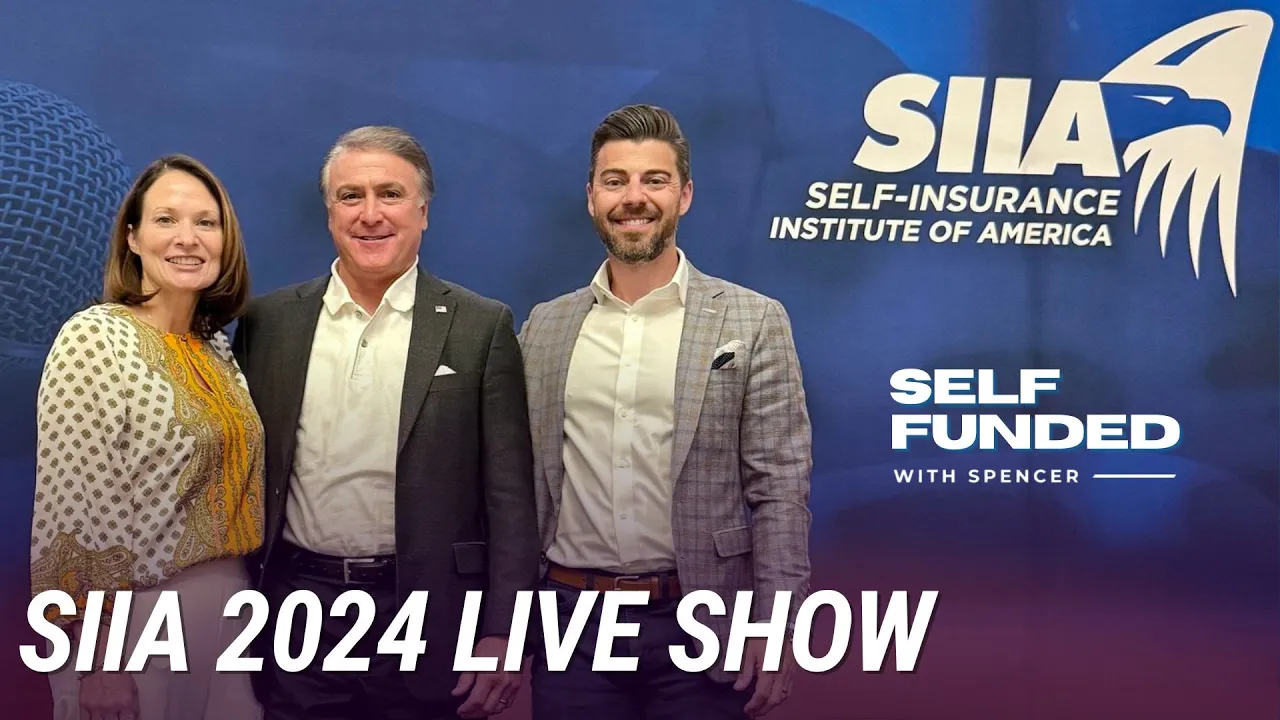
SIIA 2024 Live Show: Legislative Efforts, SIIA ROI, Networking, And Q&A
Self-Funded
@SelfFunded
Jan 28, 2025
This video provides an in-depth exploration of the Self-Insurance Institute of America (SIIA), detailing its core mission, legislative advocacy, educational initiatives, and the critical role it plays in networking and business development within the self-insurance and alternative risk markets. Recorded live at the SIIA National Conference, the discussion features SIIA board members Amy Gasbarro (President of ELMC RX Solutions) and John Capasso (CEO of Captive Planning Associates), alongside host Spencer Smith. The conversation establishes SIIA as the national organization representing the interests of the self-insured marketplace, focusing on how regulatory and legislative impacts connect directly to medical benefit services provided to employer groups across the U.S. The speakers structure the value of SIIA around four core pillars: Advocacy, Networking, Thought Leadership (Education), and Continuity. Advocacy is highlighted as the organization's primary driver, involving active lobbying on Capitol Hill and monitoring state-level legislation to protect self-insured plans, citing historical battles dating back to the enactment of ERISA in 1974. Current advocacy efforts focus on mental health parity and combating state attempts to micromanage or outlaw self-insurance practices, particularly concerning medical stop-loss. A specific example of successful advocacy was detailed: SIIA’s efforts in 2015 to save micro-captive legislation from elimination by educating high-powered Senators and eventually gaining the ability to write proposed legislative changes. Thought Leadership is presented as a crucial component, ensuring the industry remains current on complex and evolving topics. The discussion explicitly mentions specialized educational forums dedicated to Healthcare Transparency, Specialty Pharmacy, Cell and Gene Therapy, and, notably, Artificial Intelligence (AI). The AI forum, held recently, focused on the impact and applicability of AI in the self-insurance field, indicating the industry's proactive approach to emerging technology. The speakers emphasize that the educational content is dynamic, driven by feedback from stakeholders on pressing issues like rising specialty pharmacy costs and the need for better cyber security preparedness. Finally, the networking pillar is described as the "Super Bowl of Self-Insurance," where competitors become friendly collaborators, facilitating business deals and providing invaluable mentorship opportunities through programs like SIIA Future Leaders. Key Takeaways: * **AI is a recognized and growing focus area in self-insurance:** SIIA has hosted dedicated forums and established task forces on Artificial Intelligence (AI), recognizing its profound impact on the self-insurance field, including applications in predictive risk and underwriting (as mentioned in cocktail conversations). * **Specialty Pharmacy and Cell/Gene Therapy are top-tier educational priorities:** Due to escalating costs and complexity, SIIA is dedicating significant thought leadership and educational events to these areas, including a planned Specialty Pharmacy educational event in 2025, directly relevant to pharmaceutical cost management. * **Advocacy is critical for regulatory stability:** SIIA is the only organization with boots-on-the-ground lobbyists dedicated to the self-insurance market, actively fighting legislative threats at both the federal (e.g., mental health parity) and state levels (e.g., stop-loss regulations). * **The industry needs better data transparency solutions:** A session highlighted the maddening difficulty in accessing, parsing, and trusting hospital price transparency data, underscoring a massive need for data engineering and business intelligence solutions to make this information actionable. * **Continuity relies on active mentorship and energy:** The organization actively seeks to groom the next generation of leaders through the Future Leaders program and mentorship connections, prioritizing individuals who demonstrate high energy, inquisitiveness, and a passion for the self-insurance mission. * **Business is driven by collaborative networking:** The conference environment fosters collaboration even among competitors, allowing CEOs and decision-makers to share perspectives on challenges (like managing healthcare costs) and form partnerships to deliver better solutions. * **Employers must adopt a long-term, data-driven view:** A major impediment to improving population health is the short-term, 12-month myopic view of costs. Employers need to be encouraged to think on a 3-5 year horizon to realize the ROI of wellness and cost-management initiatives. * **Sponsorship provides direct ROI through exposure and thought leadership:** Sponsors gain brand awareness, access to key decision-makers, and the opportunity to participate in panels, positioning themselves as experts and generating new business leads. * **New attendees should prioritize education outside their expertise:** To maximize value, attendees new to the conference are advised to attend sessions outside their immediate field to gain a well-rounded understanding of the entire self-insurance ecosystem before focusing solely on networking. * **The self-insurance market is complex but influential:** Despite impacting over 100 million Americans, there is a general lack of understanding of how the self-insurance model works, making the educational efforts directed at lawmakers and employers increasingly vital. Key Concepts: * **SIIA (Self-Insurance Institute of America):** The national organization representing the interests of the self-insured marketplace and alternative risk markets. * **ERISA (Employee Retirement Income Security Act of 1974):** Federal law that provided the impetus for the growth and protection of self-insured plans. * **Micro-Captives:** Small captive insurance companies, the legislative protection of which was a major success story for SIIA advocacy. * **Thought Leadership:** The educational pillar of SIIA, focusing on specialized, current, and emerging topics like AI, Specialty Pharmacy, and Cell/Gene Therapy. Examples/Case Studies: * **Micro-Captive Legislation (2015):** SIIA successfully fought proposed legislation that would have eliminated micro-captives by engaging in extensive lobbying and education, ultimately gaining the ability to draft proposed changes to save the structure. * **Specialty Pharmacy Cost Management:** The high cost of specialty drugs is driving the creation of dedicated educational forums and is a primary concern for members, leading to the development of new content tracks. * **AI Forum:** SIIA recently held its first dedicated AI forum, bringing together industry leaders to discuss the application and impact of artificial intelligence within the self-insurance sector.

Why Is Selling in Healthcare So Hard??
AHealthcareZ - Healthcare Finance Explained
@ahealthcarez
Jan 26, 2025
This video provides an in-depth exploration of the inherent difficulties in selling within the healthcare sector, particularly for digital health and healthcare services companies targeting employers for their health plans. Dr. Eric Bricker, the speaker, frames the challenge as a complex business-to-business (B2B) sale, necessitating an understanding of two key sales frameworks. He begins by introducing the concept from "Hope is Not a Strategy," which posits that the importance of "Fit," "Risk," and "Price" varies significantly throughout the sales cycle. Initially, "Fit" is paramount, transitioning to "Risk" in the middle, and finally to "Price" at the close of the deal. Building on this, Bricker integrates the Miller Heiman sales approach, which emphasizes that complex B2B sales involve a multi-stakeholder buying committee rather than a single individual. This committee typically comprises "Technical," "Outcome," and "Financial" buyers, each with distinct priorities and concerns. The core of the video lies in the intersection of these two frameworks, creating a 3x3 matrix where each of the nine boxes represents a unique combination of buyer type and sales cycle stage (Fit, Risk, Price). The speaker highlights the "hard part": in a single sales meeting, multiple buyer types will simultaneously be at different stages of their "Fit, Risk, Price" mentality, requiring the salesperson to identify and address all these unique combinations at once. Dr. Bricker then systematically dissects each of these nine combinations, detailing the specific concerns and motivations of each buyer type at different points in the sales cycle. For instance, a Technical Buyer (e.g., benefits manager) is concerned with vendor competence (Fit), cooperation from carriers (Risk), and their own time/bandwidth (Price). An Outcome Buyer (e.g., VP of HR) focuses on improving employee health/satisfaction (Fit), avoiding low utilization or complaints (Risk), and their team's bandwidth or budget justification (Price). Finally, the Financial Buyer (CFO) assesses if health spend decrease is meaningful (Fit), if the solution will have a positive ROI (Risk), and if there's budget room (Price). The video underscores that effective selling requires a deep understanding of these underlying mental processes to navigate the complex, multi-faceted sales environment in healthcare. Key Takeaways: * **Healthcare Sales are Complex B2B:** Selling in healthcare is inherently difficult due to its nature as a complex business-to-business transaction, often involving multiple stakeholders and varying priorities. * **"Hope is Not a Strategy" Framework:** The importance of "Fit," "Risk," and "Price" shifts throughout the sales cycle. Initially, "Fit" (solution relevance) is key, then "Risk" (potential downsides, implementation challenges), and finally "Price" (cost-effectiveness, budget alignment). * **Miller Heiman Multi-Stakeholder Buying Team:** Complex B2B sales involve a buying committee, not a single decision-maker. This committee typically consists of Technical Buyers, Outcome Buyers, and Financial Buyers. * **The 3x3 Sales Matrix:** The intersection of "Fit, Risk, Price" with "Technical, Outcome, Financial Buyers" creates nine distinct areas of concern that a salesperson must address. * **Simultaneous & Varied Buyer Concerns:** The most challenging aspect is that different buyer types will be at varying stages of their "Fit, Risk, Price" mentality *simultaneously* within the same sales meeting, demanding a dynamic and adaptive sales approach. * **Technical Buyer Priorities:** These buyers (e.g., benefits managers, brokers) prioritize vendor competence in implementation (Fit), cooperation from existing systems/partners (Risk), and their own time/bandwidth for managing the solution (Price). * **Outcome Buyer Priorities:** These buyers (e.g., HR VPs, Directors of Benefits) focus on improving employee health and satisfaction (Fit), avoiding low utilization or service complaints (Risk), and ensuring their team has the capacity and budget justification for the solution (Price). * **Financial Buyer Priorities:** CFOs and other financial stakeholders are concerned with whether a decrease in health spend is meaningful to the organization (Fit), if the solution will yield a positive Return on Investment (Risk), and if there is available budget for the solution (Price). * **Organizational Context for Financial Buyers:** A solution's "Fit" for a CFO depends on the company's growth and margin profile; fast-growing, high-margin businesses may not prioritize health spend reduction as much as slower-growing or lower-margin ones. * **Risk of Negative ROI:** For financial buyers, a primary risk is spending more on a solution than it saves, meaning the solution must demonstrably achieve its promised cost controls. * **Solutions Exist for Each Box:** While the video does not detail them, the speaker assures that specific strategies and solutions exist to address each of the nine unique combinations within the sales matrix. Key Concepts: * **Fit, Risk, Price:** A framework from "Hope is Not a Strategy" describing the evolving priorities during a complex B2B sales cycle. * **Technical Buyer:** A stakeholder primarily concerned with the practical implementation, functionality, and operational aspects of a solution. * **Outcome Buyer:** A stakeholder focused on the benefits and results for the end-users or the organization's strategic goals, such as employee satisfaction or health improvement. * **Financial Buyer:** A stakeholder whose main concern is the monetary impact, ROI, budget implications, and overall cost-effectiveness of a solution. * **Complex B2B Sale:** A sales process involving multiple decision-makers, a lengthy sales cycle, and significant investment, often requiring tailored solutions.

Shopify, Veeva, & Uber: Top Growth Stocks to Buy and Hold for 2025 and Beyond
TheFinanceSavvy
/@thefinancesavvy
Jan 26, 2025
This video presents an analysis of high-potential growth stocks, focusing on companies positioned to capitalize on major transformative trends in e-commerce, cloud computing, and artificial intelligence (AI) over the next decade. The primary goal is to identify "powerhouses" like Shopify, Uber, and Veeva Systems that are suitable for long-term investment, specifically targeting 2025 and beyond. The analysis is framed within the context of macro-economic shifts, emphasizing the ongoing digital transformation across various industries. The presentation establishes a framework for evaluating these stocks based on their market dominance and potential for expansion within their respective sectors. Although the initial segment of the transcript focuses heavily on Shopify and the vast untapped potential of e-commerce (noting that e-commerce currently constitutes only 16.2% of total US retail), the core value proposition for IntuitionLabs.ai lies in the anticipated discussion of Veeva Systems. Veeva is implicitly positioned as the dominant cloud computing and AI platform within the highly regulated life sciences sector, mirroring Shopify's dominance in e-commerce. The speaker’s approach is to connect these companies to fundamental, irreversible technological shifts, suggesting their growth is secular rather than cyclical. For a company like IntuitionLabs.ai, which specializes in Veeva CRM consulting and AI integration within the life sciences, the video’s intent to analyze Veeva is highly significant. The discussion is expected to cover Veeva’s strategic market position—its "cloud computing" dominance in pharma—and its efforts to integrate AI capabilities, particularly through its Veeva Commercial Cloud and Clinical Cloud offerings. This financial perspective provides crucial insight into market confidence, investment drivers, and the perceived long-term stability of the core platform upon which IntuitionLabs.ai builds its custom solutions. Understanding the financial drivers behind Veeva’s growth (e.g., subscription revenue, expansion into new modules, regulatory compliance requirements) is essential for strategic planning and sales targeting within the life sciences consulting space. Key Takeaways: * **Veeva's Strategic Market Position:** The video positions Veeva Systems as a critical growth stock, suggesting its dominance in providing cloud computing solutions tailored specifically for the pharmaceutical and life sciences industries is a key driver of long-term value. This reaffirms Veeva's status as the indispensable enterprise platform for IntuitionLabs.ai's target market. * **Leveraging Transformative Trends:** The analysis highlights that successful long-term growth stocks, including Veeva, are those riding "transformative trends" such as cloud computing and AI adoption. This validates IntuitionLabs.ai's focus on integrating AI and LLM solutions directly into the Veeva ecosystem. * **Cloud Computing as a Growth Engine:** For the life sciences sector, Veeva’s cloud infrastructure (Commercial Cloud, Clinical Cloud) represents the necessary foundation for digital transformation, regulatory compliance, and data management, securing its recurring revenue model and justifying its high valuation. * **AI Integration as Future Value:** The anticipated discussion on Veeva’s growth trajectory likely emphasizes its ongoing investment in AI and data analytics tools, which are crucial for enhancing commercial operations and clinical trials—precisely the areas where IntuitionLabs.ai offers specialized AI agent solutions. * **Long-Term Investment Thesis:** The video promotes a "buy and hold for the next decade" strategy, suggesting sustained, predictable growth for Veeva. This stability is beneficial for IntuitionLabs.ai, as it ensures the primary platform they consult on will remain the industry standard for the foreseeable future. * **Market Confidence in Regulated Software:** High market confidence in Veeva reflects the difficulty and necessity of building compliant, industry-specific software. This reinforces IntuitionLabs.ai's value proposition of combining deep industry knowledge with technical expertise to navigate regulatory challenges (FDA, GxP). * **E-commerce and Digital Parallels:** While focusing on Shopify initially, the underlying theme of digital penetration (e-commerce only at 16.2%) suggests that the digital transformation in life sciences, particularly in areas like remote engagement and clinical trials, still has significant room for growth, benefiting Veeva and its ecosystem partners. * **Competitive Landscape Insight:** Analyzing Veeva as a top growth stock provides insight into its competitive moat, which is built on regulatory adherence and deep industry specialization, making it difficult for general-purpose tech companies to displace. Key Concepts: * **Growth Stocks:** Companies expected to grow sales and earnings at a faster rate than the overall market, often reinvesting profits back into expansion. * **Transformative Trends:** Large-scale, irreversible technological or societal shifts (e.g., cloud computing, AI, digital transformation) that drive long-term economic change. * **Cloud Computing in Life Sciences:** Refers specifically to Veeva Systems, which provides industry-specific, validated, and compliant cloud software solutions for commercial, medical, and R&D functions in pharma/biotech.

🔥 Veeva RIM Review: A Comprehensive Regulatory Information Management System for Life Sciences
Finn Brooks
/@FinnBrooks-u2s
Jan 25, 2025
This analysis provides an in-depth review of Veeva Regulatory Information Management (RIM), positioning it as a specialized, cloud-based platform essential for streamlining regulatory processes and ensuring global compliance within the life sciences industry. The core value proposition of Veeva RIM, as detailed in the review, is its ability to centralize all regulatory information—including submissions, documents, and correspondence—into a "single source of truth." This centralization is crucial for pharmaceutical, biotech, and medical device companies managing complex regulatory submissions across diverse health authorities and international standards, leading to improved transparency and significant error reduction. The review highlights several key advantages of the system, focusing heavily on operational efficiency and cross-functional collaboration. Veeva RIM’s seamless integration with other Veeva solutions, such as Veeva Vault and Veeva Quality, is emphasized as a major strength. This integration allows regulatory teams to work effectively with departments like quality assurance and clinical operations, fostering better decision-making across the product lifecycle. Furthermore, the platform incorporates robust automation capabilities designed to handle routine administrative tasks, such as tracking submission deadlines, managing document version control, and automating compliance workflows. By offloading these repetitive tasks, Veeva RIM allows regulatory teams to redirect their focus toward higher-value strategic activities, ultimately contributing to improved efficiency and accelerated time to market. However, the analysis also provides a balanced perspective by detailing significant challenges associated with adopting Veeva RIM. The primary drawback is the platform's inherent complexity and deep functionality, which presents a steep learning curve, particularly for smaller organizations or those new to advanced regulatory technology. Implementation and customization are described as time-consuming processes that require dedicated resources and specialized expertise to configure the system to specific business needs. This complexity can extend timelines and necessitates substantial investment in training for successful adoption. A secondary, but critical, challenge is the cost. Positioned as an enterprise-grade, premium solution, Veeva RIM’s pricing structure may act as a barrier to entry for smaller life sciences companies with limited budgets, even if they only require a fraction of the system’s extensive capabilities. The review concludes that while Veeva RIM offers unparalleled value for large, global organizations with complex regulatory requirements, smaller entities may find more suitable and cost-effective alternatives. Key Takeaways: • **Centralized Regulatory Hub:** Veeva RIM functions as a single source of truth for all regulatory submissions, documents, and correspondence, which is vital for pharmaceutical and biotech companies operating in multiple global markets and dealing with varying health authority requirements. • **Enhanced Compliance and Error Reduction:** The centralization and robust Version Control capabilities significantly improve transparency and reduce the risk of human error associated with managing complex regulatory submissions across different regions. • **Cross-Functional Integration:** The platform’s seamless integration with other Veeva products (Veeva Vault, Veeva Quality) facilitates collaboration between regulatory teams and other critical departments like Quality Assurance and Clinical Operations, enabling holistic product lifecycle management. • **Automation for Strategic Focus:** Veeva RIM’s automation features handle routine regulatory tasks—such as deadline tracking and workflow management—allowing specialized regulatory teams to shift their focus from administrative duties to higher-value strategic activities, accelerating time to market. • **High Barrier to Entry for SMBs:** The platform is positioned as an enterprise solution with a corresponding premium cost, making it less accessible and potentially excessive for smaller life sciences companies or those with simpler, non-global regulatory footprints. • **Steep Implementation and Learning Curve:** Due to its deep functionality and complexity, the implementation and customization of Veeva RIM are resource-intensive, requiring specialized expertise and dedicated planning to ensure successful configuration and adoption. • **Need for Specialized Consulting:** The complexity and implementation challenges highlighted in the review underscore the necessity of specialized consulting and expertise to configure the system correctly and train regulatory teams effectively, minimizing extended timelines. • **Integration Requirements for Advanced Capabilities:** Although Veeva RIM excels in regulatory management, some organizations may still need to integrate it with external systems for advanced analytics or specialized document management, adding layers of complexity and cost to the overall IT architecture. • **Value Proposition is Scale-Dependent:** The significant value delivered by Veeva RIM is maximized for large, global life sciences organizations with extensive and intricate regulatory requirements, whereas smaller entities may find the investment disproportionate to their needs. Tools/Resources Mentioned: * Veeva RIM (Regulatory Information Management) * Veeva Vault * Veeva Quality Key Concepts: * **Regulatory Information Management (RIM):** A system or process used by life sciences companies to manage, track, and submit all regulatory data, documents, and correspondence required by global health authorities throughout the product lifecycle. * **Single Source of Truth:** A concept referring to a centralized data management system that ensures every user accesses the same, consistent, and accurate data set, eliminating discrepancies and improving data integrity for regulatory submissions. * **Compliance Workflows:** Automated sequences of tasks and approvals within the Veeva RIM system designed to ensure that regulatory processes adhere strictly to local and international standards and requirements. * **Enterprise-Grade Solution:** A software system designed for large organizations, characterized by high scalability, robust security, extensive features, and typically a high cost structure.

Veeva & Zifo’s Game-Changing Partnership to Revolutionize Biopharma Quality Control 💥
Pharma Now Daily News
/@pharmanow_daily
Jan 24, 2025
This video explores a significant strategic partnership between Veeva Systems and Zifo Technology, focusing on the modernization and transformation of quality control (QC) within the biopharmaceutical industry. The collaboration is positioned as a crucial response to the demands of today's fast-paced biopharma landscape, where enhancing operational efficiency and streamlining complex processes are paramount. By combining Veeva’s leading cloud-based technology platform, particularly its Veeva Vault Quality Suite, with Zifo’s deep domain expertise in life sciences data and technology integration, the partnership aims to dismantle traditional silos and manual bottlenecks inherent in legacy Quality Management Systems (QMS). The overarching goal is to enable biopharma companies to achieve higher levels of GxP compliance, accelerate product release cycles, and ensure data integrity across the entire manufacturing and quality lifecycle. The core theme of this partnership revolves around leveraging integrated technology to address the critical need for modernized quality operations. Traditional biopharma QC often relies on disparate systems, paper-based records, and manual review processes, which introduce significant risk of error and slow down time-to-market. The Veeva-Zifo alliance is designed to provide a unified, end-to-end solution that integrates quality processes—such as document control, training management, deviation handling, and change control—directly into a compliant cloud environment. This modernization effort is essential for companies navigating increasingly stringent global regulatory requirements (FDA, EMA) and seeking to scale their manufacturing operations efficiently, moving quality from a reactive function to a proactive, data-driven operational pillar. For biopharma organizations, the implications of this collaboration are substantial, particularly regarding compliance and operational scalability. The partnership facilitates the seamless adoption and optimization of advanced quality management tools, ensuring that quality data is standardized, traceable, and readily available for audits and business intelligence. By focusing on streamlining operations, the collaboration helps reduce the administrative burden associated with quality assurance, allowing quality professionals to concentrate on high-value tasks. This strategic alignment between a major software provider (Veeva) and a specialized implementation and consulting firm (Zifo) sets a new industry standard for how technology is deployed to manage GxP requirements, ultimately accelerating innovation and ensuring product quality from the lab bench to the patient. Key Takeaways: • **Strategic Importance of Veeva in Quality:** The partnership underscores Veeva’s expanding role beyond commercial operations (CRM) into critical GxP areas like Quality Control, reinforcing the need for specialized consulting firms to handle complex Vault Quality implementations and integrations. • **Modernizing GxP Compliance:** The collaboration directly targets the modernization of Quality Management Systems (QMS), signaling an industry shift away from fragmented, on-premise solutions toward integrated, cloud-based platforms that enhance data integrity and audit readiness. • **Addressing Operational Inefficiency:** The primary driver for this alliance is tackling the inefficiency and risk associated with manual and siloed QC processes, emphasizing the need for automated workflows in document control, training, and deviation management within biopharma. • **Value of Domain Expertise:** Zifo’s involvement highlights the necessity of combining powerful technology (Veeva Vault) with deep life sciences domain knowledge and data engineering expertise to successfully implement and customize complex quality solutions that meet specific regulatory needs. • **Focus on Data Integrity and Traceability:** A modernized QC system, facilitated by this partnership, ensures that all quality data—from raw material testing to final product release—is traceable, secure, and compliant with 21 CFR Part 11 requirements, which is crucial for regulatory submissions. • **Accelerated Time-to-Market:** Streamlining QC processes directly impacts the speed of product release. By reducing review cycles and automating documentation, biopharma companies can accelerate the delivery of therapies while maintaining rigorous quality standards. • **Integration of Quality and Manufacturing:** Successful implementation of these modern QC systems requires tight integration with manufacturing execution systems (MES) and enterprise resource planning (ERP), demanding robust data engineering pipelines to connect these disparate enterprise systems. • **Implications for AI/Automation:** The push for modernized, data-rich quality platforms creates a fertile ground for future AI and LLM applications, such as predictive quality analytics, automated audit trail generation, and intelligent document classification, which are key service offerings for specialized AI firms. • **Need for Specialized Consulting:** As Veeva Vault Quality becomes the industry standard, there is a growing demand for consulting firms that possess dual expertise in Veeva technology and regulatory compliance to ensure successful adoption and maximization of the platform's investment. • **Proactive Quality Management:** The partnership promotes a shift toward proactive quality management, where real-time data monitoring and predictive insights replace reactive measures, minimizing costly deviations and ensuring continuous compliance. Tools/Resources Mentioned (Inferred): * **Veeva Systems:** The core technology provider, specifically referencing the Veeva Vault platform, likely the **Veeva Vault Quality Suite** (including QualityDocs, QMS, Training, etc.). * **Zifo Technology:** The specialized implementation and consulting partner providing domain expertise and integration services. Key Concepts: * **Quality Control (QC):** The operational procedures and activities required to ensure that products meet quality standards; a critical component of GxP. * **Biopharma Landscaping:** The complex, highly regulated environment of pharmaceutical and biotechnology companies, characterized by rapid innovation and stringent compliance demands. * **GxP (Good Practices):** A set of quality guidelines and regulations governing the manufacture and testing of pharmaceutical products (e.g., GMP - Good Manufacturing Practice). * **Streamlining Operations:** The process of optimizing workflows and eliminating bottlenecks, particularly through automation and system integration, to enhance efficiency and reduce costs in quality processes.

Veeva & Zifo: Transforming Biopharma Quality Control with Innovation
Pharma Now Daily News
/@pharmanow_daily
Jan 24, 2025
This video explores an exciting strategic partnership between Veeva Systems and Zifo Technology designed to fundamentally transform quality control (QC) operations within the biopharmaceutical industry. The collaboration addresses the critical industry need for modernization and efficiency, particularly in managing complex data flows associated with quality assurance. The core technological solution involves integrating Veeva’s specialized, cloud-based Laboratory Information Management System (LIMS) with Zifo's innovative qcKen platform, creating a unified system that streamlines data transfer, accelerates system deployment, and enhances overall operational efficiency and regulatory adherence. The primary significance of this integrated solution is its ability to simplify data transfer, which has traditionally been a cumbersome and productivity-inhibiting aspect of quality control. By leveraging the combined strengths of Veeva and Zifo, biopharma companies can seamlessly transfer data from various disparate sources directly into Veeva LIMS. This integration is crucial for eliminating reliance on outdated, legacy QC systems that often slow down operations. Furthermore, the partnership accelerates the setup and deployment phase of LIMS, allowing organizations to realize the benefits of the new system much faster than traditional implementation cycles. In terms of operational benefits, the collaboration directly targets the rigorous demands of quality assurance and control within the life sciences sector. Veeva LIMS is specifically engineered to help organizations adhere to Good Manufacturing Practices (GMP) with heightened accuracy and reliability, a non-negotiable requirement for regulatory compliance. Zifo’s qcKen platform complements this by rapidly accelerating the creation of necessary test and specification data, which is essential for system implementation and validation. This synergy not only enhances the daily efficiency of QC labs but also promises quicker returns on investment (ROI) for companies adopting Veeva LIMS, as noted by executives from both companies who highlighted the partnership’s role in facilitating rapid adoption and value realization. Ultimately, this alliance between a leading enterprise software provider and a specialized technology partner sets a new benchmark for quality control modernization efforts across the biopharma sector. By applying cutting-edge technology to streamline essential processes, Veeva and Zifo are poised to drive significant improvements in both operational efficiency and product quality, signaling a pivotal moment for innovation in the regulated life sciences landscape. Key Takeaways: • **Addressing QC Data Complexity:** The partnership directly tackles the challenge of cumbersome data management practices prevalent in traditional biopharma quality control, which often inhibit productivity and rely on outdated systems. • **Seamless System Integration:** The core value proposition is the integration of Veeva LIMS with Zifo’s qcKen platform, enabling seamless data transfer from various sources into the LIMS environment, thereby modernizing the data pipeline. • **Accelerated Deployment and ROI:** The integrated solution is designed to accelerate the setup and deployment of Veeva LIMS, allowing biopharma companies to implement advanced QC systems with greater ease and realize quicker returns on their technology investment. • **Enhanced GMP Compliance:** Veeva LIMS is purpose-built for the life sciences industry, ensuring that organizations can adhere to Good Manufacturing Practices (GMP) with enhanced accuracy and reliability, a critical factor for regulatory success. • **Zifo’s Role in Data Acceleration:** Zifo’s qcKen platform specifically contributes by accelerating the creation of crucial test and specification data, which is necessary for the rapid configuration and validation of the LIMS environment. • **Strategic Value for Modernization:** This collaboration establishes a new industry benchmark for quality control modernization, demonstrating how targeted partnerships can leverage specialized technology to drive significant operational improvements across the biopharma sector. • **Elimination of Legacy System Dependence:** The streamlined data transfer capabilities help companies eliminate their dependence on older, inefficient quality control systems that typically slow down overall operations and complicate audit trails. • **Executive Endorsement of Rapid Adoption:** Leadership from both Veeva and Zifo emphasized that the partnership empowers customers to adopt advanced technologies rapidly and realize the full value of their investments much faster than traditional, siloed implementation approaches. • **Focus on Operational Efficiency and Product Quality:** The ultimate goal of the integration is to make significant improvements in two critical areas: enhancing daily operational efficiency within QC labs and improving the overall quality assurance of biopharma products. • **Implication for Life Sciences Technology Strategy:** The success of this integration underscores the growing importance of specialized, cloud-based LIMS solutions in managing regulated laboratory data, moving away from generic enterprise solutions toward industry-specific platforms. Tools/Resources Mentioned: * Veeva LIMS (Laboratory Information Management System) * Zifo qcKen Platform Key Concepts: * **LIMS (Laboratory Information Management System):** A software-based system designed to manage laboratory data, samples, results, and instruments, critical for regulated environments like biopharma QC. * **GMP (Good Manufacturing Practices):** A system of regulations ensuring that products are consistently produced and controlled according to quality standards, a core requirement addressed by Veeva LIMS. * **Quality Control Modernization:** The process of updating and streamlining laboratory and manufacturing quality assurance processes using advanced technologies like cloud platforms and specialized integration tools to improve speed, accuracy, and compliance.

Lyriko Assistant (Pre-Interaction Solution)
Hyntelo
/@hyntelo
Jan 24, 2025
This video provides a demonstration of Lyriko Assistant, an AI-powered pre-interaction solution developed by Hyntelo, aimed at maximizing the effectiveness of pharmaceutical sales representatives (Pharma Reps) in their engagements with Healthcare Professionals (HCPs). The core challenge addressed is the information overload and organizational difficulty faced by reps, such as the newly appointed Sam, who must manage numerous details from past meetings, master new marketing materials, and ensure key messages are delivered accurately before each interaction. The solution positions itself as a tool for streamlining preparation, thereby driving business success for life science companies. Lyriko Assistant is designed for seamless integration directly within the Veeva Vault CRM environment, serving as the central hub for the sales representative's pre-call preparation. The demonstration illustrates a workflow where Sam accesses an immediate, comprehensive overview of the HCP he is scheduled to meet. This overview synthesizes critical information, including key topics suggested for discussion, the proposed Next Best Content (NBC) to share, and detailed notes from the previous interaction. This centralized, AI-curated data eliminates the need for the rep to manually sift through disparate records, significantly reducing preparation time. A key feature highlighted is the interactive chat function, which allows the sales rep to ask specific, context-aware questions about the HCP or the provided marketing materials. This instant knowledge retrieval capability ensures the rep is fully informed and confident before the meeting. Furthermore, the solution offers an AI-powered audio recap, providing a concise, audible summary of the key points and meeting details, allowing the rep to absorb crucial information quickly, even while on the move. This holistic approach ensures that the rep, exemplified by Sam, enters the interaction fully prepared, leading to a successful and productive engagement. The ultimate value proposition of Lyriko Assistant lies in its ability to enhance the quality and efficiency of commercial operations. By significantly reducing the time spent on preparation, the solution allows reps to focus more on strategic engagement. Crucially, the system improves adherence to marketing key messages, ensuring regulatory and brand consistency across all HCP interactions. This combination of efficiency, enhanced message delivery, and deeper relationship building positions the AI assistant as a vital tool for modern pharmaceutical commercial teams. Key Takeaways: • **AI-Powered Pre-Interaction Optimization:** The primary function of Lyriko Assistant is to automate and optimize the pre-call preparation phase for pharmaceutical sales representatives, transforming a time-consuming manual process into an efficient, AI-driven workflow. • **Deep Veeva CRM Integration:** The solution operates directly within Veeva Vault CRM, leveraging the existing enterprise platform as the point of access and data source, which is essential for rapid adoption and seamless workflow integration within regulated environments. • **Consolidated HCP Insight:** The system provides sales reps with a single-screen overview summarizing the most relevant information about the target HCP, including past interaction details, suggested discussion topics, and prioritized content recommendations. • **Next Best Content (NBC) Delivery:** Lyriko Assistant actively suggests the Next Best Content, aligning marketing strategy with specific HCP needs and interaction history, thereby improving the relevance and impact of the sales message. • **Interactive Knowledge Retrieval:** The built-in chat feature allows reps to query the system with specific questions about the HCP or supporting materials, providing instant, context-specific answers and acting as an on-demand knowledge assistant. • **Efficiency Gains in Commercial Operations:** The solution is explicitly stated to significantly reduce preparation time for sales reps, allowing them to allocate more time to high-value activities like direct engagement and relationship building. • **Enhanced Message Adherence:** By curating and prioritizing key marketing messages and content, the AI assistant helps improve the sales rep's adherence to approved marketing materials, which is critical for regulatory compliance and brand consistency. • **AI-Powered Audio Summaries:** The availability of an AI-generated audio recap of key meeting points provides a convenient, hands-free method for reps to quickly review essential information, catering to mobile workflows. • **Focus on Relationship Quality:** The improved preparation and targeted messaging facilitated by the assistant lead to higher quality interactions, ultimately enhancing the professional relationship between the sales rep and the HCP. • **Strategic Application of LLMs:** The solution demonstrates a practical application of Large Language Models (LLMs) or similar AI agents to synthesize complex commercial data into actionable, user-friendly insights for frontline personnel. Tools/Resources Mentioned: * Lyriko Assistant (AI-powered pre-interaction solution) * Veeva Vault CRM (Enterprise Customer Relationship Management platform) Key Concepts: * **Pre-Interaction Solution:** A software tool designed specifically to assist sales representatives in preparing for meetings with clients or customers (in this context, HCPs), focusing on data synthesis and content recommendation prior to the engagement. * **Next Best Content (NBC):** A marketing and sales strategy where AI or algorithms analyze customer data and interaction history to recommend the most appropriate piece of content or action for the sales rep to use next, maximizing the chance of a positive outcome. * **HCP Engagement:** The process by which pharmaceutical representatives interact with healthcare professionals to share product information, clinical data, and key marketing messages.
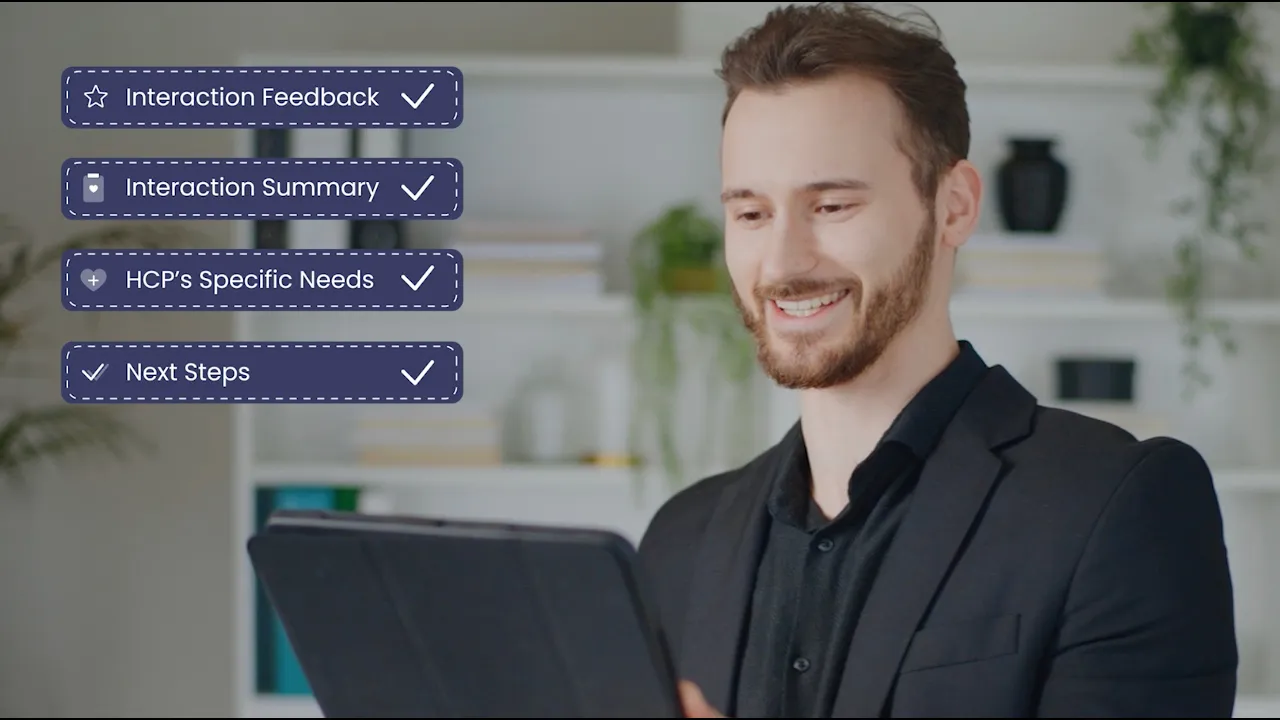
Lyriko Smart Notes (Post-Interaction Solution)
Hyntelo
/@hyntelo
Jan 24, 2025
This video provides a detailed demonstration of Lyriko Smart Notes, an AI-powered post-interaction solution developed by Hyntelo, designed specifically to assist pharmaceutical sales representatives in efficiently capturing and organizing insights from interactions with Healthcare Professionals (HCPs). The primary purpose of the solution is to streamline the data collection process post-meeting, thereby enhancing the quality and completeness of information flowing into the core Customer Relationship Management (CRM) system, specifically Veeva Vault CRM. The presentation highlights how this tool addresses the common industry challenge of sales reps struggling to accurately and fully document meeting outcomes immediately following an interaction, leading to incomplete or delayed CRM entries. The core functionality of Lyriko Smart Notes centers on seamless integration and intelligent guidance. The process begins immediately after a productive meeting when the sales rep, Sam, opens the application directly within Veeva Vault CRM. This integration allows the system to automatically pre-fill certain interaction details, minimizing manual entry. The solution then employs a guided questioning approach, prompting the rep to record relevant information by answering a series of targeted questions. This structured input mechanism ensures that all critical data points—which might otherwise be forgotten or omitted—are captured. The system accepts input either through writing or speaking, offering flexibility to the user. A key feature demonstrated is the automatic generation of a recap sheet. As the sales rep provides responses to the guided questions, the recap sheet is filled out in real-time. This automated documentation process serves two critical functions: it ensures that no important detail is missed, and it significantly reduces the administrative burden and time commitment typically associated with post-interaction data entry. By capturing these rich insights and integrating them seamlessly into the CRM, Lyriko Smart Notes aims to enrich the overall quality of commercial data, providing better intelligence for subsequent interactions and broader business analysis. The underlying methodology emphasizes efficiency, data quality, and maximizing the time sales reps spend on high-value activities rather than administrative tasks. The solution positions itself as a critical component in optimizing pharmaceutical commercial operations. By improving the speed and accuracy of data capture, it directly contributes to more informed sales strategies, better targeting, and enhanced compliance tracking related to HCP interactions. The emphasis on saving time while simultaneously elevating the quality of post-interaction insights underscores a significant trend in the life sciences sector: leveraging generative AI and intelligent automation to transform field force effectiveness and data governance within regulated platforms like Veeva. Key Takeaways: • **AI-Driven Data Capture for Commercial Operations:** The video showcases a practical application of AI in the pharmaceutical commercial space, specifically using intelligent automation to transform the historically tedious process of post-interaction data entry for sales representatives. • **Veeva CRM Integration is Essential:** The solution's value proposition is heavily reliant on its seamless integration with Veeva Vault CRM, confirming that deep platform integration is a non-negotiable requirement for successful AI tools targeting the life sciences field force. • **Enhancing Data Quality and Completeness:** Lyriko Smart Notes addresses the industry pain point of poor CRM data quality by using guided questions and automated documentation, ensuring that critical insights from HCP interactions are captured immediately and accurately. • **Reducing Administrative Burden:** The tool significantly saves time for sales reps by pre-filling interaction details and automatically generating a recap sheet, allowing the field force to focus more on selling and less on administrative tasks. • **Guided Input Mechanism:** The use of guided questions (answered via writing or speaking) is a crucial design choice, replacing unstructured note-taking with a structured, standardized data collection method that ensures consistency across the sales team. • **Market Trend: Post-Interaction Solutions:** The existence and focus of this product highlight a growing market demand for specialized AI solutions that optimize the "last mile" of the sales cycle—the documentation phase—which is vital for regulatory compliance and business intelligence. • **Focus on Life Science Specificity:** The solution is tailored for the unique requirements of the Life Sciences industry, dealing with HCP interactions and the need for rigorous, auditable documentation within a regulated environment. • **Generative AI for CRM Enrichment:** The underlying technology likely leverages Generative AI/LLMs to process unstructured input (written or spoken notes) and structure it into actionable, CRM-ready fields, aligning with the trend of using LLMs for sales operations assistance. • **Competitive Insight:** This solution from Hyntelo serves as a direct competitive benchmark for firms specializing in AI solutions for Veeva CRM, demonstrating the current state-of-the-art in automated sales documentation. Tools/Resources Mentioned: * Lyriko Smart Notes (AI-powered post-interaction solution) * Veeva Vault CRM (Core system integration platform) Key Concepts: * **Post-Interaction Solution:** A software application designed to facilitate the immediate and efficient documentation of outcomes, feedback, and insights following a customer or professional interaction, specifically targeting sales reps. * **CRM Enrichment:** The process of adding high-quality, detailed, and structured data to the Customer Relationship Management system, making the data more valuable for analysis, targeting, and strategic decision-making. * **HCP Interaction Insights:** Specific, relevant information gathered during meetings with Healthcare Professionals, which is crucial for tailoring future sales efforts, medical affairs strategies, and understanding market dynamics.
Unlocking the Power of Automation with Spotline V-Assure
Spotline
/@Spotlineinc
Jan 23, 2025
This video introduces V-Assure by Spotline, a Veeva-certified automated testing solution specifically engineered for Veeva Vault within the life sciences industry. It addresses a critical pain point for Veeva Vault owners: the challenge of managing frequent Veeva releases (typically three per year) alongside their own custom business enhancements. In this rapidly evolving and highly regulated landscape, ensuring flawless implementation, maintaining stringent regulatory compliance, and optimizing operational efficiency without compromising either, is paramount. The video highlights the inherent complexity and time-consuming nature of traditional manual testing and validation processes as a significant hurdle to innovation and agility. V-Assure is presented as a pioneering solution designed to navigate these unique demands. A core feature is its intuitive user interface, which simplifies otherwise complex testing procedures, making them straightforward and accessible. The solution boasts compatibility with multi-Vault environments, ensuring comprehensive, end-to-end platform coverage across diverse and intricate Veeva ecosystems. Furthermore, V-Assure offers customized reporting capabilities meticulously aligned with the specific compliance and integration requirements that are non-negotiable within the pharmaceutical and life sciences sectors. The video emphasizes several key operational and strategic benefits. V-Assure facilitates seamless integrations with essential enterprise business tools such as SAP and Workday, promoting a cohesive and interconnected operational framework. A significant advantage is its perfect synchronization with every Veeva release, enabling companies to proactively manage updates and maintain continuous operational readiness, thereby staying ahead of the curve. Crucially, the solution promises a dramatic reduction in testing times, by up to 80%, which translates into substantial operational overhead reduction and frees up valuable team resources to focus on strategic initiatives and innovation rather than repetitive testing. This efficiency gain is intrinsically linked to a robust focus on regulatory adherence, as V-Assure seamlessly integrates with GxP compliance processes, ensuring organizations remain "inspection ready" at all times. Beyond efficiency and compliance, V-Assure offers strategic flexibility, working across various cloud environments where data resides, and delivers significant cost savings by optimizing IT budgets. The solution is custom-tailored to fit the unique and often complex Veeva ecosystems of individual companies, demonstrating its adaptability. The video positions V-Assure as a vital bridge between the relentless demands of frequent release cycles and the critical necessity of risk-based testing. It is championed by Fortune 500 leaders and innovators in life sciences, underscoring its proven value and impact, with the ultimate goal of transforming the Veeva experience and establishing new industry benchmarks for automated testing. Key Takeaways: * **Addresses Core Life Sciences Challenge:** The video identifies the major challenge for Veeva Vault owners in life sciences: managing three annual Veeva releases plus internal enhancements, which demands flawless implementation, continuous compliance, and operational efficiency. V-Assure directly tackles the complexity and time-consuming nature of testing and validation in this dynamic, regulated environment. * **First Veeva-Certified Automation:** V-Assure is highlighted as the first Veeva-certified automated testing solution specifically for Veeva Vault. This certification provides a critical layer of trust and assurance regarding its compatibility, reliability, and adherence to Veeva's platform standards, which is highly valued in regulated industries. * **Dramatic Efficiency Gains:** The solution promises a significant reduction in testing times, up to 80%. This directly translates into substantial operational overhead reduction, allowing organizations to reallocate valuable human resources from tedious manual testing to more strategic and innovative initiatives. * **Enhanced Regulatory Compliance:** A central benefit is the seamless integration with GxP compliance processes, ensuring that organizations are consistently "inspection ready." The customized reporting capabilities are specifically designed to align with stringent compliance and integration requirements, which is crucial for maintaining regulatory adherence in life sciences. * **Comprehensive Multi-Vault Coverage:** V-Assure offers compatibility with multi-Vault environments, providing comprehensive, end-to-end platform coverage. This is essential for complex life sciences organizations that often utilize various interconnected Veeva modules and need a unified testing approach. * **Seamless Enterprise System Integration:** The solution integrates with essential business tools such as SAP and Workday, facilitating a more holistic and streamlined approach to enterprise operations and data management across the organization. * **Proactive Release Cycle Management:** V-Assure ensures perfect synchronization with every Veeva release, enabling companies to proactively manage updates, mitigate risks, and maintain system stability and functionality without disruptive downtime or compliance gaps. * **User-Friendly Interface:** The intuitive UI is designed to make complex testing processes easy and straightforward, significantly reducing the learning curve for testing teams and improving overall user adoption and efficiency. * **Significant Cost Optimization:** By automating testing and dramatically increasing efficiency, V-Assure contributes to substantial cost savings by optimizing IT budgets and reducing the need for extensive manual testing resources and associated labor costs. * **Customization and Cloud Flexibility:** The solution is custom-tailored to fit unique Veeva ecosystems, regardless of their complexity, and offers flexibility to work across various cloud environments where data resides, demonstrating its adaptability to diverse client infrastructures and needs. * **Industry Endorsement and Credibility:** V-Assure is championed by Fortune 500 leaders and innovators in life sciences, lending significant credibility and indicating its proven value and effectiveness within the target market. * **Strategic Value for Innovation:** The solution strategically bridges the gap between the demands of relentless release cycles and the necessity of risk-based testing, offering a competitive advantage for companies aiming to accelerate innovation while rigorously maintaining compliance and quality standards. Tools/Resources Mentioned: * V-Assure by Spotline (automated testing solution) * Veeva Vault (platform) * SAP (enterprise resource planning software) * Workday (human capital management and financial management software) Key Concepts: * **Veeva-Certified Automated Testing:** A testing solution specifically validated and approved by Veeva for its platforms, ensuring compatibility and adherence to best practices. * **GxP Compliance:** A set of good practice guidelines and regulations governing the manufacturing, testing, and distribution of pharmaceutical products, ensuring quality and safety. * **Multi-Vault Environments:** Refers to organizations utilizing multiple instances or configurations of Veeva Vault, often for different departments or regions. * **Risk-Based Testing:** A testing approach that prioritizes testing efforts based on the potential risks associated with different parts of a system or application. * **Operational Overhead Reduction:** The process of minimizing the indirect costs and efforts associated with running a business, such as manual testing. * **Release Cycle Management:** The process of planning, executing, and controlling the deployment of new software versions or updates.
🌻 Veeva RIM Review | Comprehensive Regulatory Information Management with Some Challenges
Finn Brooks
/@FinnBrooks-u2s
Jan 22, 2025
This video provides an in-depth review of Veeva Regulatory Information Management (RIM), a cloud-based platform specifically engineered for the life sciences sector to streamline regulatory processes and ensure compliance across global markets. The analysis begins by establishing the platform's core value proposition: the ability to centralize all regulatory information—including submissions, documents, and correspondence—into a "single source of truth." This centralization is highlighted as crucial for improving transparency, minimizing errors, and enabling pharmaceutical, biotech, and medical device companies to effectively manage complex submissions and track progress across diverse international regions. The speaker emphasizes that Veeva RIM is particularly valuable for organizations navigating the requirements of multiple health authorities. A significant strength detailed in the review is Veeva RIM's seamless integration capabilities. The platform connects effortlessly with other Veeva solutions, such as Veeva Vault and Veeva Quality, which ensures regulatory teams can collaborate effectively with adjacent departments like quality assurance and clinical operations. This cross-functional collaboration is presented as a key driver for better decision-making within the organization. Furthermore, the platform's automation capabilities are a major selling point, as they handle routine regulatory tasks—such as tracking submission deadlines, maintaining document version control, and managing compliance workflows—freeing up regulatory teams to focus on higher-value strategic activities, ultimately leading to improved efficiency and faster time to market. However, the analysis pivots to address several significant challenges associated with Veeva RIM. The primary drawback cited is the platform's complexity, which poses a barrier, especially for smaller organizations or those new to advanced regulatory information management systems. The deep functionality necessitates a substantial investment in dedicated resources and expertise for implementation and customization, often resulting in a steep learning curve for end-users and extended setup timelines. The second major challenge is cost; as an enterprise-grade solution, Veeva RIM is priced accordingly, making it less accessible to smaller Life Sciences companies with limited budgets. The speaker notes that these smaller entities may struggle to justify the investment if they only utilize a fraction of the system's comprehensive capabilities. Finally, while the platform excels in regulatory management, organizations often need to integrate it with external systems for advanced analytics or specialized document management, which further compounds the complexity and overall cost of ownership. In conclusion, the video positions Veeva RIM as a powerful, industry-specific tool that delivers significant value through centralization, automation, and integration. It is deemed an excellent choice for large, global organizations with complex and demanding regulatory requirements. Conversely, the high cost, inherent complexity, and steep learning curve suggest that smaller businesses or those with simpler needs may find more suitable, lower-cost regulatory management alternatives. Key Takeaways: * Veeva RIM’s core strength is establishing a "single source of truth" for regulatory data, centralizing submissions, documents, and correspondence to enhance transparency and reduce errors in complex global markets. * The platform is essential for pharmaceutical, biotech, and medical device companies managing interactions with multiple health authorities and adhering to diverse local and international regulatory standards. * Seamless integration with other Veeva products (Veeva Vault, Veeva Quality) facilitates crucial cross-functional collaboration between regulatory teams and departments like quality assurance and clinical operations, supporting better decision-making. * Automation features are critical for efficiency, handling routine regulatory tasks such as tracking submission deadlines, ensuring document Version Control, and managing compliance workflows, which accelerates time-to-market. * A significant barrier to adoption is the platform's inherent complexity; implementation and customization require substantial time, dedicated resources, and specialized expertise to configure the deep functionality correctly. * The high cost positions Veeva RIM primarily as an enterprise-grade solution, making it less accessible to smaller Life Sciences organizations with limited budgets who may struggle to justify the investment for partial usage. * The implementation process can extend timelines, necessitating careful planning and significant investment in comprehensive training to overcome the steep learning curve and ensure successful system adoption. * While the platform is robust, organizations may still need to integrate Veeva RIM with external systems for advanced analytics or specialized document management, which adds layers of technical complexity and increases the total cost of ownership (TCO). * The centralization of regulatory information is explicitly stated to improve transparency and reduce errors, which are critical components of maintaining GxP and other regulatory compliance standards. * The video implicitly advises that smaller companies should explore alternative regulatory management tools that offer a more suitable feature set and lower cost structure compared to the comprehensive, but expensive, Veeva solution. Tools/Resources Mentioned: * Veeva RIM (Regulatory Information Management) * Veeva Vault * Veeva Quality Key Concepts: * **Regulatory Information Management (RIM):** A system designed to manage the data, documents, and processes related to regulatory submissions, approvals, and compliance throughout a product's lifecycle in the life sciences industry. * **Single Source of Truth:** A concept ensuring that all data is stored in one central location, providing consistent, accurate, and reliable information across the entire organization. * **Cross-Functional Collaboration:** The ability for teams across different departments (e.g., Regulatory, QA, Clinical) to work together effectively, enabled by integrated systems like Veeva Vault. * **Document Version Control:** Automated management of document iterations to ensure that only the correct, approved version is used for submissions and compliance activities.

What is the Veeva Vault?
Howdy
/@howdy
Jan 21, 2025
This video provides a foundational overview of Veeva Vault, positioning it as a critical content management system (CMS) specifically designed for the highly regulated life sciences and pharmaceutical industries. The presentation establishes the context by noting the sensitive nature of medical information, justifying the need for a secure "vault" for storage. Historically, content management systems in this sector were fragmented, often separating data handling from documentation management. Veeva Systems, founded in 2007 as a cloud computing Software-as-a-Service (SaaS) company focused exclusively on life sciences, developed Vault in 2011 to address this fragmentation. Veeva Vault's core value proposition is the unification of document management capabilities, project workflows, and information security into a single, cohesive platform. This integration provides users with real-time visibility across various operational functions. The platform was engineered to overcome the challenges inherent in managing complex, highly regulated content, ensuring that pharmaceutical and biotech companies can maintain operational efficiency while strictly adhering to compliance mandates. By combining traditionally separate functions, Vault streamlines processes that are vital for drug development and commercialization. The video highlights several specific applications of the Vault platform that are essential for the life sciences ecosystem. Notably, Vault incorporates a Clinical Trial Management System (CTMS) and an Electronic Trial Master File (eTMF) system. These components are crucial for companies engaged in clinical research, allowing them to effectively manage ongoing clinical trials, track documentation, and ensure that all activities and records are current and compliant with governmental and regulatory agency requirements. This focus on clinical and regulatory functions underscores Vault's role not just as a storage solution, but as an operational backbone for compliance-driven activities. The video concludes by noting Veeva Systems' significant market presence, citing its headquarters in Pleasanton, California, and its substantial financial performance, having achieved over $2.3 billion USD in revenue in 2024. Key Takeaways: • **Veeva Vault as a Unified CMS:** Vault was developed to solve the historical problem of fragmented content management in life sciences, unifying data management, documentation, and process workflows into a single, cloud-based platform. • **Regulatory Compliance Focus:** The system is inherently designed to support regulatory compliance, ensuring that sensitive medical information and operational documentation meet the stringent requirements of government agencies overseeing clinical research and pharmaceutical operations. • **Real-Time Visibility:** By integrating workflows and documentation, Vault provides companies with real-time visibility into critical processes, which is essential for timely decision-making and rapid response during audits or clinical trial adjustments. • **Core Clinical Functionality:** Vault is not limited to general document storage; it includes specialized modules like the Clinical Trial Management System (CTMS) and the Electronic Trial Master File (eTMF), making it indispensable for managing the complex documentation required for clinical trials. • **Industry Specialization:** Veeva Systems’ exclusive focus on the life sciences and pharmaceutical sectors ensures that Vault’s features and architecture are tailored precisely to the unique needs, security requirements, and regulatory burdens of this industry. • **Cloud-Native SaaS Model:** Founded in 2007, Veeva operates as a Software-as-a-Service (SaaS) company utilizing cloud computing, which provides scalability, accessibility, and continuous updates necessary for modern, global pharmaceutical operations. • **Information Security Priority:** Given the sensitive nature of medical and clinical data, the platform integrates robust information security measures directly into its architecture, treating data storage as a secure "vault." • **Market Dominance and Scale:** Veeva Systems is a major player in the enterprise software space for life sciences, demonstrated by its 2024 revenue exceeding $2.3 billion USD, signifying its deep integration into the industry's operational infrastructure. Key Concepts: * **Veeva Vault:** A cloud-based content management system (CMS) developed by Veeva Systems specifically for the life sciences industry, designed to unify document management, data, and workflows while ensuring regulatory compliance. * **SaaS (Software-as-a-Service):** A software distribution model where a third-party provider hosts applications and makes them available to customers over the internet, utilized by Veeva Systems for Vault. * **Clinical Trial Management System (CTMS):** A component within Vault used to manage and track the planning, execution, and reporting of clinical trials. * **Electronic Trial Master File (eTMF):** A system for managing the essential documents and records that individually and collectively permit the evaluation of the conduct of a clinical trial and the quality of the data produced, ensuring regulatory readiness. Tools/Resources Mentioned: * Veeva Vault * Clinical Trial Management System (CTMS) * Electronic Trial Master File (eTMF)
The Primary Care Crisis: How We're Failing Patients | with David Kinzler
Self-Funded
@SelfFunded
Jan 21, 2025
This video provides an in-depth exploration of the crisis in U.S. primary care and presents a solution centered on relationship-based, accessible healthcare, featuring David Kinzler, CEO of One-to-One Health. The core thesis is that the current fee-for-service model creates perverse incentives, high costs, and significant barriers (financial and time-based) that deter patients from accessing necessary primary care, leading to worse outcomes and higher catastrophic costs down the line. Kinzler advocates for a return to the "Marcus Welby" model of primary care, where the physician is the trusted, accessible quarterback of a patient's health journey. One-to-One Health addresses this crisis through two main avenues: physical on-site or near-site clinics, and TextCare, a scalable virtual primary care product. The TextCare model is highlighted as a revolutionary approach that leverages simple text messaging to connect patients with a dedicated care team, promising a human response time under five minutes (with an average of 1.9 minutes). This accessibility is crucial, as Kinzler argues that if they are not accessible, they cannot help. The service is designed to remove all friction points—no co-pays, no deductibles for primary care—positioning primary care as essential maintenance (like an oil change) that should not be covered by catastrophic insurance. The discussion details the operational challenges and successes of scaling TextCare. By allowing patients to text about anything (from pink eye to benefits navigation), the service builds trust and ensures high utilization. A key operational insight is the importance of routing: while the front end is always a human, sophisticated routing ensures that primary care providers focus on high-value medical tasks, while navigators handle administrative or benefits questions. Kinzler shares a powerful case study involving his own son's appendicitis scare, demonstrating how immediate, coordinated access to a trusted physician prevented an unnecessary and expensive ER visit, instead guiding the patient through timely, cost-effective outpatient surgery and imaging. Kinzler emphasizes that the direct-to-employer model is the most effective route for scaling this solution, as employers ultimately hold the keys to healthcare spending and are demanding better value. The company has proven that this model works, citing high retention rates among employer clients and strong utilization data. The future vision is for this model—where primary care is free, accessible, and relationship-based—to become the de facto standard for healthcare access in America, replacing the current "Google-ER path" that patients often take when faced with uncertainty or illness. ### Detailed Key Takeaways * **The Death of Transactional Primary Care:** The market is seeing a decline in transactional, one-off primary care visits (like those offered by some virtual or retail clinics). Patients ultimately desire a recurring, relationship-based connection with a primary care doctor who knows and cares about them, which is essential for managing chronic conditions and changing behavior. * **Primary Care as Essential Maintenance:** Healthcare consumers should separate health insurance (for catastrophic risk) from healthcare delivery (for routine, preventative care). Primary care should be free at the point of service, similar to how car insurance is not used for an oil change. * **Correlation between Supply and Value:** Primary Care is unique in the healthcare system because an increase in its supply is directly correlated with improved patient outcomes and lower overall costs, unlike building more hospitals or specialty clinics. * **Texting as the Optimal Medium:** Text messaging provides the necessary accessibility and personalization for modern primary care. TextCare maintains a strict service level agreement (SLA) of under five minutes for a human response, with an average of 1.9 minutes, ensuring immediate support when patients need it most (e.g., late at night or on weekends). * **Building Trust Through Accessibility:** By allowing patients to text about "anything and everything," including non-medical issues like benefits navigation (e.g., "How do I use my Orange Theory benefit?"), the service builds trust. This ensures that when a serious medical issue arises, the patient’s first contact is the dedicated care team, not Google or the ER. * **The Power of Coordinated Care:** The TextCare model acts as the true quarterback, intentionally coordinating every step of a patient's journey. The example of the appendicitis scare showed the provider guiding the family away from an expensive ER trip to a physical exam, followed by a referral to an independent, lower-cost imaging center, and finally, an independent pediatric surgeon for outpatient surgery. * **Operationalizing High Utilization:** The company uses granular utilization data (e.g., 10-15 patient messages per minute) to accurately forecast staffing needs, noting specific spikes (e.g., 9-10 AM due to follow-up messages, and the day after major holidays like Christmas). They staff 24/7, with a ratio of 1.1 after-hours providers for every daytime panel owner. * **Challenges in Direct-to-Consumer (D2C):** While D2C marketing for symptom-based care (like UTIs) is cheap and effective, it faces two major challenges: D2C users often lack insurance (creating awkward spots when in-person care is needed) and they tend to "sign up, pay, cancel" after one visit, making member management difficult. * **Focus on Employer-Driven Change:** The most viable path to scaling this model is through the B2B direct-to-employer channel. Employers are the ultimate payers and are increasingly demanding innovative solutions to curb rising costs, making them the most effective change agents in the current system. * **Seamless Integration with Existing Benefits:** The solution must integrate seamlessly with an employer's existing benefits stack (e.g., MSK solutions like Hinge Health or Sword Health, or navigation platforms like Garner). One-to-One Health aims to be the front door to health, navigating patients to the employer's existing best-in-class vendors rather than trying to replace every specialty service. * **Mental Health Delivery Complexity:** While mental health integration (talk therapy, medication management) is valuable, it is significantly more expensive to deliver in a virtual, unlimited model due to the required time commitment (45-60 minutes per session) and extremely high utilization rates, often making employers hesitant to fully fund it. ### Key Concepts * **TextCare:** A virtual primary care product developed by One-to-One Health that provides text messaging access to a dedicated care team with a guaranteed human response time under five minutes. It serves as a scalable version of concierge medicine. * **Relationship-Based Primary Care:** A model focused on establishing continuity and trust between the patient and the provider, contrasting sharply with transactional, one-off visits. This relationship is critical for long-term health management and behavior change. * **Fee-for-Service (FFS) Perverse Incentives:** The traditional healthcare payment model where providers are paid for the volume of services rendered, which often acts as a deterrent for patients (due to cost/time barriers) and incentivizes unnecessary procedures or tests. * **Panel-Based Function:** The operational strategy used to staff providers, where a few thousand employees are assigned to a specific provider and their supporting team, ensuring continuity of care and manageable workload. ### Examples/Case Studies * **The Appendicitis Scare:** Kinzler’s son experienced right lower quadrant pain on a Sunday. Instead of rushing to the ER (the "Google-ER path"), Kinzler texted his primary care doctor (Keith), who advised against an immediate ER visit, coordinated a physical exam the next morning, directed them to a lower-cost independent imaging center, and connected them directly with an independent pediatric surgeon for outpatient surgery. This demonstrated superior patient experience and significant cost savings compared to a hospital admission. * **School System Engagement:** One-to-One Health tested TextCare on a school system client (6,000 employees) with low clinic utilization. By sending personalized text messages to unengaged employees offering a "no cost physical," they achieved a 33% physical visit rate, proving the power of communicating through a convenient medium. * **Benefits Navigation:** The care team received a text asking, "How do I use my Orange Theory benefit?" Although non-medical, the message was routed to a navigator who provided the answer. This demonstrates the strategy of being helpful on all fronts to ensure the patient returns for critical medical needs.

Sporify and Veeva Webinar: Getting Ready for IDMP: The Importance of Reference Data Management
SPORIFY
/@sporify8099
Jan 21, 2025
This webinar, co-hosted by Sporify and Veeva, provides an in-depth exploration of the challenges and solutions associated with preparing for the Identification of Medicinal Products (IDMP) mandate, focusing specifically on the critical role of reference data management (RDM) and data governance. The discussion establishes that the industry is moving toward a structured data agenda driven by health authorities (HAs) like the EMA and FDA, necessitating a shift from disparate, document-oriented systems to unified, data-centric platforms built on strong governance principles. The core of the presentation centers on the need for a robust Regulatory Information Management (RIM) data foundation, which must be built upon consistent, high-quality referential data. This data includes controlled vocabularies and standards (e.g., EMA's SPOR databases: Substances, Products, Organizations, and Referentials—SMS, PMS, OMS, RMS) that ensure submissions are accurate and compliant. Paul Attridge from Veeva emphasized that poor data quality at the outset leads to downstream failures, similar to historical "failure to file" issues with content submissions. Sporify, introduced by co-founder Gary Worsley, positions itself as a data broker sitting between internal systems (like Veeva Vault RIM) and health authority databases. Sporify synchronizes HA data, compares it against internal records, and facilitates a centralized governance workflow, offering initial mapping efficiency gains of up to 80% by filtering data relevant only to the organization's product portfolio. The webinar includes detailed case studies from Bristol Myers Squibb (BMS) and GSK, illustrating their respective IDMP and RDM journeys. BMS detailed a two-year process for establishing data governance, which involved clearly defining four distinct roles: Data Owner, Data Steward, IDMP Data Steward, and System Data Steward. Their strategy focused on harmonizing internal controlled vocabularies to accommodate regional differences while ensuring seamless mapping to required SPOR terms using the Sporify-Veeva integration. GSK shared their phased implementation approach, starting with Organization (OMS) and Referential (RMS) data, followed by Substance (SMS) data. GSK highlighted the business impact, noting that RDM implementation significantly improved data quality, particularly for organizational addresses, and created a new awareness among users regarding the importance of data alignment across documents and submissions. Both companies stressed the importance of intentional and sustainable data governance structures, ongoing training, and clear change management to maintain momentum and compliance long-term. A key technical and procedural insight shared by both pharmaceutical companies is that Sporify acts as a complement to their RIM system (Veeva Vault). Internal controlled vocabularies are maintained in Veeva, synchronized to Sporify for mapping and governance by IDMP Data Stewards, and then the approved SPOR data flows back into Veeva. This centralized approach ensures a single source of truth for reference data across the enterprise, enhancing interoperability and reliability for use in RIM, safety, and MDM systems. The speakers also addressed the complexities of managing data changes outside internal control, such as updates to SPOR terms, which require dedicated governance workflows to review, approve, and synchronize before the data is used downstream in production systems. ### Detailed Key Takeaways * **IDMP Requires a Data Foundation:** Successful IDMP compliance hinges on building a robust regulatory data foundation (RIM data foundation) that moves organizations away from fractured, document-oriented systems toward unified, structured data management. * **Data Governance is Foundational:** Establishing strong data governance principles and processes is critical for improving data quality from day one, which allows downstream QC processes to become more risk-oriented and prevents submission failures. * **Defined Governance Roles are Essential:** BMS implemented four distinct data governance roles: Data Owner (accountable for access and conformance), Data Steward (responsible for standards and quality), IDMP Data Steward (handles mapping internal terms to SPOR terms), and System Data Steward (evaluates system enhancements). * **Centralized RDM for Harmonization:** Centralizing the management of reference data (e.g., using Sporify) ensures data is harmonized across multiple enterprise systems (RIM, Safety, MDM), preventing version discrepancies and improving accessibility and reliability. * **Phased Implementation Strategy:** GSK adopted a phased approach for RDM implementation, starting with OMS (Organization) and RMS (Referential) data, followed by SMS (Substance) data, allowing them to manage complexity and focus resources sequentially. * **Managing External Change Control:** Organizations must adapt their change control practices to manage data that changes outside their control (e.g., SPOR updates). Sporify acts as a broker to alert organizations only to changes relevant to their product portfolio, enabling focused governance review. * **Mapping Efficiency Gains:** Using specialized tools like Sporify can provide initial mapping efficiency gains of up to 80% by automating the comparison between internal data and health authority data and filtering out irrelevant noise. * **The 4i Principle for Mapping:** BMS utilizes the "4i principle" (implying a rigorous review process) to ensure correct and appropriate mapping of internal terms to SPOR terms before the governed data is published back to the RIM system. * **Sustainability Requires Ongoing Effort:** Data governance implementation is not a one-time project; it requires approximately two years to establish fully (as per BMS) and demands ongoing training, refresher courses, and clear communication to maintain momentum and onboard new team members due to turnover. * **Controlled Vocabulary Management:** Organizations must develop harmonized internal controlled vocabulary lists that incorporate existing terms and new values, while also establishing processes for users to request new terms internally and recommend new terms to the EMA. * **Manual vs. Automatic Updates:** GSK decided against automatic updates from Sporify to Veeva for OMS data, opting for manual review and potentially creating a new organization record in Vault if an address change occurs, to prevent disruption to registered details and regulatory submissions. * **Global Governance Expansion:** The data governance structure should be built with the intention of expanding to other regions (e.g., Swissmedic, FDA SPL) as those requirements mature, necessitating training and preparation for regional data stewards. * **Data Enrichment and Cleansing Necessity:** Moving from disparate systems to a unified platform requires lengthy processes of data enrichment and cleansing, especially where historical systems did not enforce mandatory data fields. ### Tools/Resources Mentioned * **Veeva Vault RIM (Regulatory Vault):** The primary internal system used by GSK and BMS for managing regulatory information and content. * **Sporify:** A data broker platform that integrates with Veeva Vault RIM to synchronize, compare, govern, and manage health authority reference data (SPOR, GSRS). * **EMA SPOR Databases:** Substance Management Service (SMS), Organization Management Service (OMS), Referential Management Service (RMS), and Product Management Service (PMS). * **FDA GSRS:** Global Substance Registration System (used for substance data). ### Key Concepts * **IDMP (Identification of Medicinal Products):** The ISO standard requirements mandated by the EMA and other HAs for the unique identification and structured data submission of medicinal products. * **Referential Data Management (RDM):** The processes and systems used to manage controlled vocabularies and standardized data elements (like dose forms, units of measure, routes of administration) required for regulatory submissions. * **Regulatory Data Foundation:** A unified, centralized framework within an organization built on high-quality, governed data that serves as the single source of truth for all regulatory processes and submissions. * **Structured Data:** The shift from submitting regulatory information primarily as unstructured text documents to submitting machine-readable, standardized data elements. * **Data Steward:** A defined role responsible for authoring and maintaining data standards, ensuring data quality, and managing the mapping and governance of controlled vocabularies.

Know about Vault CRM - A discussion with @anirban
Learn more about Veeva
/@amirthadeepann9598
Jan 20, 2025
This video provides a comprehensive discussion on the ongoing migration from Veeva CRM (Salesforce-based) to the new Vault CRM, detailing the reasons behind this strategic shift by Veeva Systems, its phased implementation from 2025 to 2030, and the implications for pharmaceutical commercial operations. The speakers highlight the differences between the two platforms, emphasizing that Vault CRM leverages the native Veeva Vault architecture, which simplifies integration with other Vault applications like PromoMats and MedComms. A significant portion of the discussion is dedicated to the transformative AI use cases within the Veeva ecosystem, covering content automation, medical inquiry handling, and sales force effectiveness. The conversation also touches on the current adoption rates among pharma companies and the critical need for professionals to acquire Vault platform expertise. Key Takeaways: * **Strategic Platform Shift:** Veeva Systems is migrating its CRM offering from a Salesforce-dependent platform to a native Vault CRM by 2030, driven by a strategic decision to break ties with Salesforce, impacting all commercial operations in pharma. * **Enhanced Integration & Efficiency:** Vault CRM offers simplified, native integration with other Veeva Vault applications (e.g., PromoMats, MedComms), streamlining workflows for promotional material creation, distribution, and medical inquiry management, leading to improved operational efficiency and cost savings. * **AI-Driven Commercial & Medical Operations:** AI and LLM solutions are being actively integrated into the Veeva ecosystem to automate content tagging and compliance checks in PromoMats, power chatbots for faster medical inquiry responses in MedComms, and provide AI-generated "next best action" suggestions for sales reps in Vault CRM. * **Upskilling Imperative for Professionals:** The migration necessitates that professionals with Veeva CRM experience, particularly those involved in CLM and approved email templates, must acquire deep knowledge of the Veeva Vault platform to remain effective and capitalize on new opportunities. * **Early Adoption by Pharma:** Over 10 major pharmaceutical companies have already initiated the migration to Vault CRM, indicating a significant industry trend and a growing demand for Vault-specific expertise in consulting and development.

Healthcare Tax ID Numbers - Scam or Fair?
AHealthcareZ - Healthcare Finance Explained
@ahealthcarez
Jan 20, 2025
This video provides an in-depth exploration of healthcare Tax ID Numbers (TINs) and their strategic, often controversial, use by physician practices and private equity firms to influence reimbursement rates. Dr. Eric Bricker, the presenter, begins by establishing the fundamental role of TINs as unique identifiers for healthcare providers on claims submitted to insurance companies. He explains that these nine-digit numbers act as a "license plate" for individual physician practices, group practices, or hospital systems, enabling insurance companies to link claims to specific contracts and, consequently, determine the reimbursement amount. The discussion progresses to highlight how reimbursement rates can vary significantly between different TINs, even for the same service. This differential is particularly pronounced in commercial insurance and Medicare Advantage plans, where specific contracts dictate payment rates, unlike traditional Medicare or Medicaid where rates are government-set. Bricker then introduces the "rollup strategy," a tactic employed by private equity firms that acquire multiple physician practices. Under this strategy, all acquired practices begin billing under the TIN of the practice that historically secured the highest reimbursement rates from insurers. This effectively elevates the payment for services across all rolled-up entities, regardless of their original, lower contracted rates. The video illustrates this strategy with prominent real-world examples, detailing lawsuits filed by major insurers. Aetna sued Radiology Partners in Florida, alleging that the firm billed all services through the TIN of a high-paying practice called mbb, even when services were rendered by other, lower-paying acquired practices. Similarly, UnitedHealthcare took legal action against Radiology Partners in Texas for allegedly using the TIN of a Houston-based practice, Singleton, to maximize reimbursement. Bricker emphasizes that while these cases are ongoing and legally complex, the core outcome of such strategies is an increase in healthcare costs for patients and employers, with no inherent incentive for private equity or providers to reduce costs. He concludes by arguing that the debate over "fair" or "unfair" reimbursement is subjective and unproductive, advocating instead for radical price transparency and market-driven negotiations to determine healthcare costs. Key Takeaways: * **Tax ID Numbers (TINs) are Central to Reimbursement:** TINs serve as the primary identifier for healthcare providers on claims, directly linking services to specific insurance contracts and dictating the reimbursement amount. Understanding this mechanism is fundamental to healthcare finance. * **Reimbursement Rates Vary Significantly by Provider:** Different physician practices or groups, identified by unique TINs, can have vastly different contracted reimbursement rates with the same insurance company for identical services. This disparity creates opportunities for strategic billing. * **Private Equity's "Rollup Strategy":** Private equity firms acquire multiple physician practices and consolidate their billing under a single TIN belonging to the practice with the highest reimbursement rate. This strategy aims to maximize revenue across the consolidated entity. * **Increased Healthcare Costs:** The "rollup strategy" inherently leads to higher healthcare costs for employer-sponsored insurance and Medicare Advantage plans, as services that would have been reimbursed at lower rates are now billed at the highest available rate. * **Legal Challenges and Allegations of Fraud:** Insurance companies like Aetna and UnitedHealthcare have sued large physician groups (e.g., Radiology Partners) for allegedly using the rollup strategy, claiming it constitutes fraud by billing for services not performed at the location or under the contract associated with the high-paying TIN. * **Focus on Commercial and Medicare Advantage:** The strategic use of TINs for differential reimbursement primarily applies to commercial insurance and Medicare Advantage plans, where rates are negotiated. It does not significantly impact traditional Medicare or Medicaid, where rates are government-set. * **Lack of Incentive for Cost Reduction:** Neither private equity firms nor the physician practices involved in these rollup strategies have an inherent interest in decreasing healthcare costs; their primary objective is to maximize revenue and profitability. * **Subjectivity of "Fairness":** The speaker argues that the concept of a "fair" reimbursement rate is subjective and manipulative in negotiations. Instead, he advocates for a market-based approach where prices are determined by agreement between parties or by walking away from a deal. * **Crucial Need for Price Transparency:** The fundamental problem highlighted is the lack of price transparency for the ultimate payers—patients and employers. Making prices transparent would allow the market to function more effectively and enable informed decision-making. * **Market-Driven Pricing as the Solution:** The video advocates for allowing the market, through transparent negotiation between providers and insurers, to determine prices, rather than relying on an elusive concept of "fairness." Key Concepts: * **Tax ID Number (TIN):** A nine-digit number used by the IRS to identify businesses and individuals for tax purposes, also used in healthcare to identify providers on claims and link to specific insurance contracts for reimbursement. * **Rollup Strategy:** A business strategy, particularly in private equity, where multiple smaller companies (e.g., physician practices) are acquired and consolidated into a larger entity to achieve economies of scale, market dominance, or, as discussed, leverage higher reimbursement rates. * **Price Transparency:** The practice of making the costs of healthcare services readily available and understandable to patients and other payers before services are rendered, enabling informed choices and fostering market competition. Examples/Case Studies: * **Radiology Partners:** A large radiology practice cited as a "poster child" for the rollup strategy. * **Aetna vs. Radiology Partners (Florida):** A lawsuit alleging that Radiology Partners billed all services through the high-reimbursement TIN of a Florida practice called mbb, regardless of where the services were actually performed. * **UnitedHealthcare vs. Radiology Partners (Texas):** A similar situation where UnitedHealthcare sued Radiology Partners for allegedly using the high-reimbursement TIN of a Houston-based practice called Singleton to bill for services from other acquired practices.

Veeva CRM to Vault CRM || Uncover Some Incredible Insights Of Vault CRM
Anitech Talk
/@AnitechTalk
Jan 19, 2025
This video explores the significant strategic shift as Veeva CRM begins its migration to Vault CRM, breaking its long-standing tie-up with Salesforce by 2025-2030. The discussion highlights the technical differences between the Salesforce-based Veeva CRM and the native Veeva Vault-based CRM, emphasizing the advantages of a unified Vault ecosystem for pharmaceutical commercial operations. It delves into the impact on various commercial applications like PromoMats and MedComs, the simplification of integrations, and the current adoption rates among pharma companies. A key segment also focuses on the burgeoning role of AI within Veeva applications, showcasing specific use cases that enhance efficiency, compliance, and customer engagement in the life sciences industry. Key Takeaways: * **Strategic Platform Migration:** Veeva is undertaking a major architectural shift by migrating Veeva CRM from a Salesforce-dependent platform to its native Vault CRM, with a complete transition targeted by 2030. This move aims to consolidate Veeva's offerings within a unified Vault ecosystem. * **Enhanced Integration & Cost Efficiency:** The migration to Vault CRM simplifies integrations, particularly for other commercial Vault applications like PromoMats and MedComs, by enabling "Vault-to-Vault" connections. This unification can lead to significant cost savings through cross-training and optimized resource utilization. * **Impact on Commercial Operations & Skill Development:** The shift directly affects commercial applications, requiring professionals working with tools like Closed Loop Marketing (CLM) and Approved Emails to acquire new Vault knowledge. This creates a substantial opportunity for Veeva CRM resources to upskill in Vault applications. * **Accelerated Market Adoption:** Over 10 major pharmaceutical companies have already initiated their migration to Vault CRM, indicating a growing industry trend and a clear demand for expertise in the new platform. * **AI Integration for Life Sciences:** The video highlights concrete AI use cases within Veeva's ecosystem * **MedComs:** AI-powered chatbots to handle routine medical inquiries from Healthcare Professionals (HCPs), drafting responses and reducing turnaround times. * **Vault CRM:** AI-generated "next best action" suggestions for sales representatives, optimizing engagement with high-priority doctors. * **Unified User Experience:** Vault CRM will feature a consistent "Vault view," providing a familiar user interface for those already accustomed to other Veeva Vault applications, potentially improving user adoption and reducing training overhead.
Saving A Client Millions on Pharmacy Spend
Self-Funded
@SelfFunded
Jan 16, 2025
This video presents a compelling real-world case study demonstrating how an employer significantly reduced pharmacy spend by transitioning from a fully-insured model to a self-funded approach. The core narrative revolves around an employer with approximately 300 enrolled employees facing a daunting 35% renewal increase, primarily driven by the high cost of a single employee's medication, Hemlibra, for hemophilia. Initially reported at $1.15 million, the cost was projected to double to $2.3 million annually due to an increased dosage, making this individual account for nearly 50% of the plan's total spend. The speakers, Spencer Smith and Kristen Rivers of Paro Health, highlight the critical issues inherent in fully-insured plans, particularly the lack of transparency and data access, which prevents employers from understanding and managing their pharmacy costs effectively. They explain that such a high-cost, ongoing claimant would lead to a "stair stepper effect" of continuous, steep renewal increases for the employer. The video underscores that despite paying pooling charges in a fully-insured setting, employers often remain unprotected from the full financial impact of large claims. The solution presented involved the employer moving to a self-funded model and joining a captive, which provided the necessary transparency and control. Through a partnership with SmithRx, the exact same Hemlibra drug was sourced for a substantially lower price of $850,000, immediately yielding $1.45 million in annual savings. Furthermore, the strategy incorporated a "contingent laser" on the stop-loss policy, anticipating the potential for patient assistance programs. If the member qualified for these programs, the cost to both the plan and the member could drop to zero, transforming a $2.3 million annual expense into a non-cost item. This case study powerfully illustrates the financial benefits of proactive pharmacy benefit management and the strategic use of data. Key Takeaways: * **Significant Impact of Specialty Drugs:** High-cost specialty medications, such as Hemlibra for hemophilia, can disproportionately drive up employer health plan costs, potentially accounting for a substantial portion of total plan spend. * **Exponential Cost Increases:** Dosage adjustments for ongoing chronic conditions can lead to dramatic, multi-million dollar increases in annual drug spend, creating unsustainable financial burdens for employers. * **Limitations of Fully-Insured Plans:** Fully-insured models often lack the transparency and data access necessary for employers to effectively understand, manage, and mitigate high pharmacy costs, leading to reactive and steep renewal increases. * **The "Stair Stepper Effect":** Employers with large, ongoing claimants in fully-insured plans are susceptible to continuous, significant year-over-year premium increases, far exceeding typical trend rates. * **Benefits of Self-Funding and Captives:** Transitioning to a self-funded model, especially within a captive arrangement, empowers employers with greater control, transparency, and the ability to implement cost-saving strategies for pharmacy benefits. * **Strategic Drug Sourcing:** Partnering with specialized pharmacy benefit managers (PBMs) or sourcing partners (like SmithRx) can lead to massive cost reductions for high-cost drugs, even for the exact same medication. * **Leveraging Patient Assistance Programs (PAPs):** PAPs are a critical tool for reducing or eliminating out-of-pocket costs for members and claims costs for the plan, potentially turning multi-million dollar expenses into zero-cost items. * **The "Contingent Laser" Strategy:** A contingent laser on stop-loss insurance allows self-funded plans to manage the initial liability of a high-cost claimant while actively pursuing patient assistance program qualification, setting the plan up for potential future cost elimination. * **Data and Transparency are Paramount:** The principle "you can't manage what you can't measure" is central; access to detailed pharmacy spend data is essential for identifying cost drivers and implementing effective management strategies. * **Proactive Management Yields Millions in Savings:** Strategic shifts in plan design and pharmacy benefit management can result in immediate and ongoing savings of millions of dollars annually, significantly impacting an employer's bottom line. * **Overcoming Perceived Risk:** Even in scenarios with significant ongoing high-cost risk, moving to a self-funded model with strategic partners and data-driven insights can be a winning strategy, contrary to conventional wisdom. * **Long-term Financial Impact:** Proactive management of pharmacy spend not only yields immediate savings but also stabilizes future renewal increases, moving from potential 35-80% increases to more manageable 1-2% trends. **Tools/Resources Mentioned:** * **SmithRx:** A pharmacy benefit manager (PBM) or sourcing partner capable of sourcing drugs at significantly lower costs. * **Patient Assistance Programs (PAPs):** Programs offered by pharmaceutical manufacturers or non-profits that help patients afford their medications, potentially reducing costs to zero for eligible individuals and their health plans. * **Self-funded / Captive Models:** Alternative health plan funding mechanisms that provide employers with greater control, transparency, and the ability to manage their own healthcare costs, including pharmacy spend. **Key Concepts:** * **Fully-Insured:** A health plan funding model where an employer pays a fixed premium to an insurance carrier, and the carrier assumes the financial risk for claims. * **Self-Funded:** A health plan funding model where an employer directly pays for employee healthcare claims, often utilizing a third-party administrator (TPA) for claims processing and purchasing stop-loss insurance to protect against catastrophic claims. * **Captive:** A type of self-funded arrangement where multiple employers pool their resources to share risk, often providing more control and potential savings than traditional self-funding. * **Hemlibra:** A specific high-cost drug mentioned, used for treating hemophilia. * **Contingent Laser:** A specific provision in a stop-loss insurance policy that covers a high-cost claimant but is contingent upon the employer actively pursuing other cost-mitigation strategies, such as patient assistance programs. * **Transparency and Data:** The ability to access and analyze detailed information about healthcare and pharmacy spend, crucial for informed decision-making and cost management. **Examples/Case Studies:** * The video details a specific case study of an employer with nearly 300 enrolled employees. This employer was facing a 35% renewal increase due to one employee's Hemlibra cost, which was projected to be $2.3 million annually. By switching to a self-funded model and partnering with SmithRx, the cost for Hemlibra was reduced to $850,000, resulting in an immediate annual savings of $1.45 million. Further potential savings to zero were identified through patient assistance programs.

Producing A Healthcare Documentary | with Chelsea & Donovan Ryckis
Self-Funded
@SelfFunded
Jan 14, 2025
This video provides an in-depth exploration of the crisis in U.S. employer-sponsored healthcare, focusing on the critical role of fiduciary responsibility, transparency, and aligned incentives in benefits consulting. Featuring Chelsea and Donovan Ryckis of Ethos Benefits, the discussion covers their journey from traditional financial services and personal healthcare trauma to founding a benefits agency based on the principle of acting as a fiduciary. The conversation highlights the systemic failures that lead to massive cost inflation for employers and employees, arguing that the industry's traditional compensation structure—where brokers are rewarded for premium growth and plan retention—is fundamentally misaligned with client interests. The Ryckises detail how they leverage data and transparency to achieve dramatic cost savings, citing a case where they mitigated a 40% renewal increase for an employer by moving them to a self-funded plan, resulting in hundreds of thousands of dollars in savings and better benefits for employees. This success underscores the massive waste prevalent in the fully insured model, often summarized on a single page with no claims data or justification. Their approach emphasizes the necessity of unbundling services, utilizing data to identify cost drivers (like high-cost specialty drugs such as Spinraza), and proactively managing high-utilizer claims, rather than simply passing costs to the entire employee population. A significant portion of the discussion is dedicated to the documentary they helped produce, "It’s Not Personal, It’s Just Healthcare," which aims to educate decision-makers on the industry's misalignments. The film serves as a powerful call to action, leveraging the anger and curiosity of viewers—including HR professionals, CFOs, and clinicians—to inspire change. The speakers stress that the complexity of healthcare is often intentionally exaggerated by incumbents to discourage employers from seeking alternatives. They advocate for employers to ask simple, persistent questions ("Why is it that way?") to uncover hidden costs and conflicts of interest. The conversation concludes by emphasizing the imminent impact of the Consolidated Appropriations Act (CAA) of 2021, particularly the compensation disclosure requirements. This legislation is viewed as a watershed moment that will expose conflicts of interest and fuel an escalation of employer lawsuits over healthcare plan mismanagement. The Ryckises predict a flood of litigation, arguing that the public availability of Form 5500 data and compensation disclosures will enable law firms to easily identify and target companies with egregious premium growth and misaligned broker relationships. They also touch on the challenge of the proliferation of point solutions, advocating for employers to focus on clear Key Performance Indicators (KPIs) like pharmacy spend, rather than getting overwhelmed by the noise of hundreds of digital health vendors. ### Detailed Key Takeaways * **Fiduciary Responsibility is the New Standard:** The benefits consulting industry is rapidly moving toward a fiduciary standard, similar to financial advising. Consultants must legally and ethically act in the client's best interest, disclose all compensation, and avoid conflicts of interest. Failure to adopt this standard exposes employers to significant legal liability. * **The CAA 2021 is a Watershed Moment:** The compensation disclosure requirements under the CAA, mandating service providers making over $1,000 to disclose all direct and indirect compensation, will be the biggest driver of change since the ACA. This transparency will expose misaligned incentives, particularly bonuses tied to plan retention and premium growth. * **Employer Lawsuits Will Escalate:** The combination of regulatory transparency (CAA) and public data access (Form 5500) will lead to a "flood" of employer lawsuits regarding healthcare plan mismanagement. Companies failing to act as prudent fiduciaries will be held accountable, making this a critical risk management issue for executives and HR leaders. * **Self-Funding Unlocks Massive Savings:** Moving from a fully insured model to a self-funded, unbundled approach—even for mid-sized groups—can yield immediate and substantial savings (e.g., mitigating a 40% increase). This requires deep data analysis, aggressive sourcing of services (like PBMs), and proactive claim management. * **Broker Compensation Must Be Aligned:** Traditional commission models incentivize brokers to retain expensive plans and grow premiums. Agencies must shift to a fee-based model where compensation is structured around performance and value delivered (e.g., flat PMPM fee), making it easier to justify compensation increases after demonstrating significant savings. * **Data is the Key to Cost Control:** The lack of claims data provided in traditional renewal summaries is a major problem. Employers must demand and utilize claims data to set clear KPIs (e.g., lowering pharmacy spend) and evaluate vendors, rather than accepting generalized renewal increases. * **The Problem of Point Solution Overload:** The healthcare system is plagued by "thousands of point solution vendors," creating confusion and complexity for end-users and employers. Strategy should focus on core cost drivers (like pharmacy and medical claims) and simplifying the benefit experience, rather than adding more fragmented solutions. * **Culture and Talent Retention are Linked to Values:** Agencies committed to fiduciary principles experience high client and employee retention. Hiring based on shared values (like transparency and a desire to fix the system) leads to a highly capable and loyal team, reducing the significant cost of turnover. * **Start with Simple Questions:** For employers overwhelmed by complexity, the first step is to simply ask better questions of current providers, such as "Why is it that way?" or "Why are we being recommended this strategy?" This opens the door to understanding underlying incentives and exploring alternatives. * **The Parallel System Must Be Simple:** For alternative, unbundled healthcare models to succeed, they must be as simple and consumable for the end-user (employee) as the system they are replacing, despite the underlying complexity of managing multiple vendors. ### Key Concepts * **Fiduciary Approach:** A legal and ethical standard requiring a consultant to act solely in the client's best interest, disclosing all compensation and conflicts of interest. * **Consolidated Appropriations Act (CAA) of 2021:** Federal legislation mandating increased transparency in healthcare, most notably requiring service providers to disclose all direct and indirect compensation to the plan sponsor. * **Self-Funding/Unbundling:** Moving away from a fully insured model to where the employer assumes risk and contracts separately with a Third-Party Administrator (TPA), Pharmacy Benefit Manager (PBM), and other cost containment solutions. * **Performance-Based Compensation:** Structuring consultant fees based on delivering measurable value (e.g., flat PMPM fee or percentage of savings achieved) rather than a commission tied to premium volume. ### Examples/Case Studies * **The Cobra High-Utilizer:** An employer saved over a quarter million dollars in premiums by intervening with a Cobra member over 65, moving him to Medicare and his disabled dependent to an ACA plan. This individual was costing the plan three times the average claim cost. * **High-Cost Specialty Drug:** A discussion of a single individual accounting for 60% of a plan's spend due to a $600,000 annual injection (Spinraza). This illustrates how one high-cost claim can disproportionately affect all employees and the need for effective medication sourcing and patient assistance programs (PAPs). * **40% Renewal Mitigation:** A client facing a 40% health insurance increase was moved to a self-funded plan, mitigating the entire increase, improving benefits (HMO to PPO), and saving the employer hundreds of thousands of dollars, demonstrating vast overpayment in the previous fully insured arrangement.