Videos
Browse videos by topic
All Videos
Showing 241-264 of 1435 videos

Veeva CRM Review - What to Know Before You Commit
HelperDog
/@helperdog_yt
Mar 23, 2025
This video provides an in-depth review of Veeva CRM, a cloud-based customer relationship management platform explicitly designed for the unique needs of the life sciences industry, including pharmaceutical, biotech, and medical device companies. Built upon the Salesforce platform, the system offers a highly tailored solution focused on enabling sales, marketing, and medical teams (specifically Medical Science Liaisons, or MSLs) to efficiently manage engagement with Healthcare Professionals (HCPs) while strictly adhering to complex industry regulations. The core value proposition of Veeva CRM centers on combining robust customer relationship management functionality with an unwavering focus on compliance and data-driven commercial effectiveness. The platform distinguishes itself through several key technological features aimed at optimizing field force performance. These include sophisticated multichannel engagement tools, AI-driven insights for interaction optimization, and advanced territory management capabilities. A central component is Closed Loop Marketing (CLM), which empowers sales representatives to deliver targeted, data-driven presentations and capture feedback directly, thereby closing the marketing loop. Furthermore, the system leverages AI-powered suggestions to help reps optimize their customer interactions in real-time. For content security and regulatory adherence, Veeva CRM is designed to integrate seamlessly with Veeva Vault, ensuring secure content management and streamlined compliance processes. A significant emphasis is placed on the platform’s compliance-focused design, which is crucial for reducing regulatory risk within the life sciences sector. The system supports various compliant communication methods, such as Veeva CRM Approved Email, which utilizes pre-approved templates to ensure all electronic communications meet legal standards. For remote interactions, Veeva CRM Engage Meeting facilitates secure video conferencing between field teams and HCPs. Additionally, the Events Management module provides comprehensive tools for planning and tracking complex commercial activities like conferences, speaker programs, and webinars, ensuring all logistics and compliance requirements are met. The platform’s mobile-friendly interface and offline access capabilities are essential for supporting field teams, allowing for real-time data updates once connectivity is restored. While positioned as a powerful tool for organizations seeking to enhance sales effectiveness and maintain compliance, the review concludes with critical considerations regarding adoption. The complexity of Veeva CRM necessitates a significant learning curve for users, and successful implementation requires substantial investment and extensive customization to align the platform with specific organizational business needs. Consequently, the platform is best suited for mid-to-large life sciences enterprises that require a specialized, scalable, compliant, and data-driven CRM solution with deep industry integration, rather than smaller operations. Key Takeaways: • Veeva CRM is a highly specialized, cloud-based CRM built on Salesforce, exclusively targeting the life sciences ecosystem, including pharmaceutical, biotech, and medical device manufacturers. • The platform is designed to support a diverse set of commercial and medical roles, specifically sales representatives, Medical Science Liaisons (MSLs), and marketing teams, focusing on personalized and compliant HCP engagement. • Regulatory compliance is a foundational design principle, ensuring that all customer interactions adhere to stringent industry and legal standards, thereby actively reducing organizational risk. • Key technological features include AI-driven insights and Closed Loop Marketing (CLM), which enable field teams to deliver highly targeted, data-driven presentations and receive AI-powered suggestions for optimizing customer interactions. • Seamless integration with Veeva Vault is critical for secure content management, ensuring that all materials used by the field force meet regulatory standards and compliance requirements. • The platform includes specialized modules for compliant communication, such as Veeva CRM Approved Email, which provides pre-approved templates for compliant email communications, and Veeva CRM Engage Meeting for secure remote video conferencing with HCPs. • The Events Management module streamlines the complex planning and tracking of commercial activities, including conferences, speaker programs, and webinars, ensuring adherence to compliance protocols throughout the process. • Mobile functionality is robust, providing field teams with essential offline access capabilities, allowing them to capture data in real-time and synchronize updates immediately upon re-establishing connectivity. • A significant barrier to adoption is the platform's inherent complexity, which translates into a steep learning curve that organizations must account for when planning training and change management. • Successful deployment requires substantial financial investment and extensive customization efforts to accurately tailor the platform's capabilities to specific business processes and workflows within the enterprise. • Veeva CRM is strategically positioned for mid-to-large enterprises within the life sciences sector that demand a scalable, deeply integrated, and compliant CRM solution, rather than smaller organizations that might find the investment prohibitive. • Organizations must be prepared to commit to comprehensive team training and necessary customization to fully maximize the potential and return on investment of the Veeva CRM platform. Tools/Resources Mentioned: * Veeva CRM (Cloud-based Customer Relationship Management Platform) * Salesforce (Underlying platform architecture) * Veeva Vault (Integrated content management and regulatory compliance system) * Veeva CRM Approved Email (Module for compliant email communications) * Veeva CRM Engage Meeting (Module for secure remote HCP video conferencing) Key Concepts: * **Life Sciences Industry:** The specific target market, encompassing Pharmaceuticals, biotech, and medical device companies. * **HCPs (Healthcare Professionals):** The primary target audience for engagement by sales and medical teams. * **MSLs (Medical Science Liaisons):** Medical affairs professionals who utilize the CRM for non-promotional, scientific engagement. * **CLM (Closed Loop Marketing):** A process where sales reps deliver targeted, data-driven content and capture feedback, allowing marketing to measure effectiveness and refine future materials. * **Compliance-Focused Design:** The foundational principle ensuring all platform features and interactions adhere to strict industry and legal standards, mitigating regulatory risk.
Access to Healthcare Simplified | with Ryan Coplon
Self-Funded
@SelfFunded
Mar 18, 2025
This video provides an in-depth exploration of simplifying access to healthcare and optimizing employer-sponsored health plans, featuring Ryan Coplon, co-founder of HealthWallet. The discussion begins by establishing HealthWallet as a "member experience as a service" company, functioning as a benefits aggregation and engagement platform. Its core purpose is to consolidate disparate healthcare services and use this centralized "chassis" to communicate and engage effectively with members, thereby reducing fragmentation in the healthcare experience for employees. The conversation highlights the critical need to improve member engagement to reduce health plan expenses, ensure employees understand their healthcare options, and ultimately design more effective health plans. Coplon details his journey from a benefits broker to a technology founder, identifying a significant market problem: while employers were increasingly unbundling self-funded plans and adding innovative point solutions, employees often failed to utilize them due to confusion, lack of awareness, and poor accessibility. This underutilization not only negated the intended benefits but also contributed to unnecessary plan expenses. HealthWallet was initially developed to address this within Coplon's own brokerage programs, demonstrating the power of solving a personal problem that resonated with a broader market need. The platform's success led to its external market launch, driven by demand from TPA partners who recognized its value in their own client portfolios. A key aspect of HealthWallet's approach is its flexibility and vendor-agnostic "platform as a service" model. Instead of curating a fixed suite of vendors, HealthWallet integrates third-party point solutions (e.g., virtual care, pharmacy benefits, EAP) at the request of its partners, perpetuating the "strategist's strategy." This modularity allows for highly customized member experiences, where two HealthWallet implementations might be functionally unrecognizable from each other. The platform aims to simplify complex health plans by providing a consistent "front door" for members, regardless of the underlying carriers or point solutions. It also significantly reduces the burden of high-volume, low-complexity service requests (like "where's my ID card?") from member-facing service units, allowing them to focus on higher-complexity care navigation. The discussion culminates in a theoretical exercise of designing a "perfect" self-funded plan, emphasizing reference-based pricing, value-based primary care, robust care coordination, and strategic bill review to achieve optimal outcomes and cost efficiency. Key Takeaways: * **Fragmentation is a Major Problem:** The unbundling of self-funded health plans, while offering potential cost savings and specialized solutions, often leads to a fragmented member experience, causing confusion and underutilization of valuable benefits. * **Engagement Drives Utilization and Savings:** Effective communication and easy accessibility are paramount to ensuring members understand and use their health plan benefits. Improved engagement directly correlates with better health outcomes and reduced overall health plan expenses. * **Benefits Aggregation Platforms are Essential:** Solutions like HealthWallet centralize disparate healthcare services and information (accumulators, plan designs, virtual care, PBMs) into a single, user-friendly platform, simplifying the member journey. * **Vendor Agnosticism Enhances Scalability:** A platform-as-a-service model that integrates third-party solutions by request allows for greater flexibility and scalability, enabling partners (TPAs, brokers, payers) to maintain their preferred vendor ecosystems while still providing a unified member experience. * **Relieve Service Burden with Self-Service:** Mobile platforms can automate responses to high-volume, low-complexity member inquiries (e.g., ID cards, deductibles), freeing up care navigation teams to focus on complex, high-value cases. * **Timely, Actionable Communication is Key:** Leveraging automation logic for instance-based engagements (e.g., push notifications for pre-op/pre-cert, allergy season reminders) ensures members receive relevant information at critical moments, driving behavior change. * **Incentivize Member Behavior:** Plan designs should be structured to financially incentivize members to choose optimal care paths (e.g., free care at direct contract facilities, waived deductibles for centers of excellence), making the beneficial choice the obvious and easiest one. * **Digital Fulfillment Reduces Costs:** Transitioning from physical to digital ID cards and EOBs can lead to significant cost savings for TPAs and health plans, with some clients seeing over 90% reduction in print and mail expenses. * **The "Perfect" Plan Foundation:** An ideal self-funded plan often includes a reference-based pricing chassis for catch-all, a blend of direct primary care and value-based provider arrangements, and a mandatory pre-op/pre-cert process managed by a dedicated care coordination unit. * **Strategic Care Navigation:** The care navigation unit should act as the "brain trust" of the plan, executing on the plan-level strategy, guiding members through the healthcare journey, and alleviating the "onus of consumerism" from the individual. * **Long-Term Strategy Over 12-Month Cycles:** Employers should shift their mental paradigm from a 12-month insurance purchase to a long-term healthcare purchasing strategy, recognizing that sustainable cost reduction and quality improvement require a multi-year horizon. * **Market Shift to Self-Funding:** The benefits of self-funding are increasingly accessible to smaller employers, leading to a flattening of growth in the fully-insured market and a potential "adverse selection" scenario where fully-insured pools retain higher-risk populations. * **Regulatory Scrutiny on PBMs and Vertical Integration:** There's growing attention on the lack of transparency and potential conflicts of interest in the PBM sector and the vertical integration of insurers owning providers, suggesting potential future regulatory changes. **Key Concepts:** * **Member Experience as a Service (MXaaS):** A business model focused on providing platforms and services to enhance how members interact with and utilize their health benefits. * **Benefits Aggregation and Engagement Platform:** A centralized digital tool that consolidates information about various health benefits and point solutions, making them easily accessible and promoting member interaction. * **Self-Funded Plan:** An employer-sponsored health plan where the employer directly assumes the financial risk for providing healthcare benefits to its employees, rather than paying a fixed premium to an insurance carrier. * **Captive:** A type of self-funded arrangement where multiple employers pool their risks together, often gaining more control and potential savings than traditional self-funding. * **Reference-Based Pricing (RBP):** A payment methodology where healthcare providers are reimbursed based on a reference price (e.g., a percentage above Medicare rates) rather than negotiated rates with traditional networks. * **Value-Based Care:** A healthcare delivery model where providers are paid based on patient health outcomes rather than the volume of services provided, incentivizing quality and efficiency. * **Care Coordination/Navigation:** Services that help guide members through the complex healthcare system, assisting with appointments, referrals, understanding benefits, and finding high-quality, cost-effective care. * **Digital Fulfillment:** The electronic delivery of documents and services (e.g., ID cards, Explanation of Benefits) that traditionally would have been physical, reducing print and mail costs. **Examples/Case Studies:** * **Aha Moment for HealthWallet:** The realization at a group captive member meeting that cool, shiny point solutions were underutilized due to ineffective communication and lack of accessibility, leading to "egg on the face" of consultants and increased expense ratios. * **Micro Member Experience for Optimal Care Paths:** A TPA client with a reference-based chassis and direct contracts offers totally free care at specific facilities. HealthWallet created a micro-experience with "free healthcare" messaging, prompting members to choose this option or watch an explainer video if unsure, thereby steering them to optimal, cost-free care. * **Digital ID Card Savings:** A 300,000-life Mech plan client saved 90% on print and mail costs by offering digital ID cards and EOBs as the default, with less than 10% opting for physical copies. * **Personal Experience with Emergency Care:** Ryan Coplon, despite being a benefits navigation expert, defaulted to an expensive, private equity-owned urgent care for a motorcycle injury, highlighting that consumerism often fails in emergent situations.

Transforming Pharma Sales with a 360° Customer View 📊#crm #veeva #veevacrm #crmsolutions #pharma
C&F
/@candfsa
Mar 17, 2025
This video provides an in-depth exploration of how a global pharmaceutical organization successfully transformed its sales operations by implementing a comprehensive 360-degree customer view directly within its existing Customer Relationship Management (CRM) system. The core purpose of the initiative was to eliminate operational friction and boost sales representative efficiency by consolidating disparate customer data into a single, actionable interface. The speaker details a specific use case where their team delivered both the foundational data architecture and the front-end visualization—a "one-pager" view—that served as the single source of truth for customer insights. This approach directly addressed the common industry challenge of sales reps wasting valuable time navigating multiple applications to gather necessary pre-call information. The key methodology centered on achieving seamless integration and contextual relevance. By deeply embedding the Customer 360 view into the client's Veeva CRM environment, the solution ensured that representatives did not have to leave their primary workflow tool. This integration was critical not just for convenience, but for ensuring data integrity and timely access. The data model was specifically constructed to serve up the most pertinent information contextually, meaning the system provided "the right message" at the right time. This level of curated insight delivery minimized cognitive load and ensured that the information presented was exactly what the rep needed for effective customer engagement, eliminating ambiguity or the need for interpretation. The tangible outcome of this implementation was a significant increase in preparation efficiency, quantified as saving "tons of time" for the field force. By providing a single, consolidated view of all key customer insights—including engagement history, prescribing patterns, medical inquiries, and other relevant data points—the solution allowed reps to shift their focus from data aggregation to strategic customer interaction. This shift is paramount in the regulated pharmaceutical environment, where every interaction must be precise and compliant. The design philosophy emphasized simplicity and directness, ensuring the rep was "just being given the information you were expected to be given," thereby streamlining the sales cycle and enhancing the quality of customer interactions. Ultimately, this case study underscores the critical role of data engineering and front-end design in maximizing the return on investment in enterprise software like Veeva CRM. It demonstrates that true optimization in pharma commercial operations comes not just from having data, but from structuring that data into an intelligent, embedded workflow that drives specific, compliant actions. The success hinged on recognizing that the data model must directly support the front-line user experience, turning complex data pipelines into simple, actionable insights for the sales team. Key Takeaways: • **The Imperative of Customer 360 Integration:** A comprehensive Customer 360 view is essential for modern pharmaceutical sales, but its value is maximized only when it is seamlessly embedded directly within the primary CRM platform (Veeva). • **Efficiency Gains Through Consolidation:** The primary benefit of the single-page 360 view is the elimination of "swivel-chair integration," saving sales representatives significant time previously spent searching for information across disparate applications. • **Dual Focus on Data Model and Front-End:** Successful implementation requires expertise in both robust data engineering (creating the underlying data model) and user-centric front-end design (the "one-pager" view) to ensure data is both accurate and easily consumable. • **Contextual Insight Delivery:** The data architecture must be designed to deliver contextually relevant information, ensuring the rep receives "the right message" tailored to the specific customer and stage of the sales cycle. • **Veeva CRM as the Hub:** Leveraging Veeva CRM as the central hub for the 360 view ensures that the solution aligns with existing commercial workflows and regulatory compliance standards inherent to the platform. • **Focus Shift from Preparation to Strategy:** By automating and simplifying the data gathering phase, the solution allows sales representatives to dedicate more time to strategic preparation and high-value customer engagement, rather than administrative tasks. • **Minimizing Interpretation Risk:** The system was designed to present information clearly and directly, minimizing the "room for implementation" or misinterpretation by the field force, which is crucial for maintaining compliant messaging. • **The Value of Bespoke Solutions:** While standard CRM features exist, achieving optimal efficiency often requires custom software development to build the specific data models and visualization layers necessary for a truly seamless, integrated experience. • **Strategic Investment in Commercial Operations:** This use case highlights that targeted investments in data integration and workflow optimization within commercial operations yield measurable returns in sales productivity and effectiveness. Tools/Resources Mentioned: * **Veeva CRM:** The primary Customer Relationship Management platform used by the client, serving as the embedding environment for the 360-degree view. Key Concepts: * **Customer 360 View:** A consolidated, holistic view of all interactions, data points, and relevant insights pertaining to a specific customer (e.g., Healthcare Professional or organization), designed to provide a complete picture for the sales representative. * **Seamless Embedding:** Integrating a custom solution so deeply into an existing enterprise platform (like Veeva) that it functions as a native feature, eliminating the need for users to switch applications or interfaces. * **Underlying Data Model:** The structured architecture and schema used to organize, integrate, and store disparate customer data sources, which forms the foundation for the front-end visualization.

How Do Actuaries Model Healthcare Costs?
AHealthcareZ - Healthcare Finance Explained
@ahealthcarez
Mar 16, 2025
This video provides an in-depth exploration of how actuaries model healthcare costs, specifically focusing on projecting an employer-sponsored health plan's spend. Dr. Eric Bricker, the speaker, demystifies the actuarial process, which often appears opaque to non-actuaries, by breaking it down into eight distinct steps. His approach is to explain the underlying logic and data requirements, emphasizing the importance of historical data analysis and forward-looking adjustments to arrive at a projected Per Member Per Month (PMPM) cost. The video aims to educate a broad audience, including HR, CFOs, and professionals in the pharma and med device sectors, on the intricate methodology behind these critical financial projections. The process begins with the foundational step of gathering comprehensive historical data, typically 24 to 36 months of both paid and pending claims, alongside detailed monthly plan member enrollment data. This granular data is crucial for accurately calculating the historical PMPM, which involves dividing total claims expense by total member months, accounting for members joining or leaving the plan throughout the year. Dr. Bricker highlights the breakdown of claims into categories like inpatient, outpatient, physician, and prescriptions, as these categories are subject to different medical cost trends. He then explains how to apply these trends, which incorporate factors such as medical inflation (e.g., 5-6% for inpatient/outpatient/physician, 7.5-8% for RX), changes in utilization (like those seen during COVID-19), the impact of new treatments and drugs (specifically mentioning GLP-1s), and regulatory changes (such as those introduced by the Affordable Care Act). Further adjustments are made for plan design changes, where actuaries use proprietary tables and historical data to quantify the impact of increased deductibles, higher cost-sharing, narrow networks, or benefit enhancements like IVF coverage. A critical step involves excluding high-cost claimants who are non-recurring, such as those who have passed away, left the plan, or undergone successful, non-chronic treatments. Demographic changes within the covered population, such as an influx of younger or older employees due to early retirement programs or high turnover, also necessitate adjustments to the risk profile. Finally, a risk margin (typically 2-5%) is added to account for projection uncertainties, and the projected PMPM is benchmarked against similar groups to provide a range of estimates: high, mid, and low. Dr. Bricker underscores that the value of actuaries often lies in their access to extensive proprietary historical data and actuarial tables, which allow them to quantify these complex adjustments. Key Takeaways: * **Foundational Data Requirements:** Accurate healthcare cost modeling begins with 24-36 months of historical claims data (both paid and pending) and detailed monthly member enrollment data to understand plan utilization and membership fluctuations. * **Per Member Per Month (PMPM) Calculation:** The core metric for comparison and projection is the PMPM, calculated by dividing total claims expense by total member months, which normalizes costs across varying group sizes and enrollment periods. * **Categorization of Claims:** Breaking down claims into categories like inpatient, outpatient, physician, and prescriptions is essential because each category can have different medical cost inflation rates and utilization patterns. * **Applying Medical Cost Trend:** Projections must incorporate medical inflation (e.g., 5-6% for most services, 7.5-8% for RX), changes in utilization (e.g., post-COVID rebound), the introduction of new treatments/drugs (e.g., GLP-1s), and regulatory mandates (e.g., ACA benefit changes). * **Impact of New Treatments and Drugs:** Pharmaceutical companies and medical device manufacturers should note that new drugs like GLP-1s are explicitly factored into actuarial trend calculations, influencing overall healthcare spend projections. * **Adjusting for Plan Design Changes:** Changes in plan design, such as increasing deductibles or co-insurance, implementing narrow networks, or adding new benefits (e.g., IVF), have quantifiable impacts on claims costs, which actuaries model using historical data and proprietary tables. * **Excluding Non-Recurring High-Cost Claimants:** It is crucial to identify and exclude high-cost claimants who are unlikely to recur (e.g., deceased members, those who left the plan, or those with successful, one-time treatments) to avoid overstating future costs. * **Demographic Adjustments:** Significant demographic shifts within an employer's population (e.g., early retirement programs leading to an older workforce or high turnover resulting in a younger workforce) necessitate adjustments to the overall risk profile and projected costs. * **Risk Margin for Uncertainty:** Actuarial projections are educated guesses, requiring the addition of a 2-5% risk margin to account for potential errors or unforeseen circumstances, providing a buffer in the final cost estimate. * **Benchmarking for Validation:** Final PMPM estimates are benchmarked against similar historical groups to validate the projections and typically presented as a range (high, mid, low) to reflect inherent uncertainties. * **Value of Actuarial Tables and Data:** A significant value proposition of actuaries lies in their access to extensive proprietary historical data sets and actuarial tables, which enable them to quantify complex adjustments that would otherwise be impossible for individual employers. Key Concepts: * **Per Member Per Month (PMPM):** A standardized metric used in healthcare finance to express the average cost of healthcare services for each plan member per month, allowing for comparison across different groups and time periods. * **Medical Cost Trend:** The projected rate of increase in healthcare costs over time, incorporating factors like inflation, changes in utilization, new technologies, and regulatory impacts. * **Actuarial Tables:** Proprietary databases and models developed by actuaries that contain historical data and statistical relationships used to quantify the financial impact of various factors, such as plan design changes or demographic shifts. * **Specific Stop-Loss Level:** A threshold (e.g., $100,000 per claimant per year) above which an employer's self-funded health plan is reimbursed by a stop-loss insurance carrier, protecting against catastrophic claims. Examples/Case Studies: * **COVID-19 Impact on Utilization:** The pandemic dramatically reduced healthcare utilization initially, followed by an increase in subsequent years as deferred care was sought, illustrating how utilization changes significantly affect cost trends. * **GLP-1 Medications:** Mentioned as a specific example of new drugs that actuaries must factor into RX spend trends due to their significant cost and growing adoption. * **Affordable Care Act (ACA):** Cited as an example of regulatory changes that mandated coverage for certain services, thereby increasing healthcare costs for plans that previously did not cover them. * **Deductible Increase Example:** An increase in deductible from $500 to $1,000 is used to illustrate how actuaries can quantify a 4% decrease in employer claims costs based on their proprietary tables. * **Benefit Enhancement (IVF):** Offering invitro fertilization coverage is given as an example of a benefit enhancement that would increase healthcare costs, with actuaries able to project the specific financial impact. * **Non-Recurring Claimants:** Examples include a deceased plan member, a dialysis patient who left the plan (saving $60k-$120k annually), or a successful cardiac surgery patient (e.g., stent or CABG) who may incur few subsequent costs. * **Demographic Shift (Early Retirement):** An employer offering early retirement could see a shift in their workforce's age profile, impacting the overall risk and cost of the health plan.

MAHA, Steak 'n Shake, and AI Prescriptions | Last Month In Healthcare
Self-Funded
@SelfFunded
Mar 13, 2025
This video provides an in-depth exploration of key healthcare news and trends from February 2025, as discussed in the "Last Month In Healthcare" podcast. The hosts, Nathaniel Smith and Spencer Smith, delve into a range of topics, starting with new administrative policies and progressing through market dynamics, pharmaceutical trends, and the rapidly evolving role of artificial intelligence in the healthcare sector. The discussion highlights the interconnectedness of public health initiatives, economic pressures, and technological advancements shaping the industry. The discussion begins with an analysis of the "Make America Healthy Again" (MAHA) commission's broad mandate, which extends beyond traditional medical interventions to encompass the entire food system, environmental factors, and lifestyle choices as contributing causes to chronic disease. This sets a tone for a holistic view of health. Following this, the hosts examine executive orders aimed at healthcare price transparency, noting the challenges in implementing and enforcing such policies due to the complexity of machine-readable data and the influence of lobbying efforts. The conversation then shifts to market-specific trends, including the growing influence of telehealth companies in direct-to-consumer drug advertising, particularly for GLP-1 medications, and the significant increase in employer-sponsored coverage for these drugs, reflecting a massive shift in consumer demand and benefit design. A substantial portion of the video is dedicated to the impact of artificial intelligence on healthcare. The hosts explore the dichotomy between the high hopes doctors place on AI to alleviate burnout (e.g., for note-taking, EMR management, symptom checking) and the widespread public distrust stemming from concerns over AI's role in claims denials, algorithmic biases, and broader societal fears. The most forward-looking discussion centers on a proposed bill to classify AI as a licensed practitioner, enabling it to prescribe drugs, potentially leveraging "digital twin" technology for personalized simulations. This segment underscores the regulatory and ethical complexities inherent in integrating advanced AI into clinical decision-making and patient care. Key Takeaways: * **AI as a Solution for Physician Burnout:** A significant majority of doctors (93%) experience burnout, with 80% believing AI can alleviate stress by automating tedious tasks like note-taking, transcribing, and managing electronic medical records, allowing them to focus more on patient care. * **Public Distrust of AI in Healthcare:** Despite potential benefits, 65% of American adults distrust AI in healthcare, fueled by concerns over its application in automated claims denials, perceived algorithmic biases, and a general fear of AI's increasing autonomy, potentially influenced by "predictive programming" in media. * **The Future of AI in Prescribing Drugs:** A proposed bill aims to classify AI as a licensed practitioner, enabling it to prescribe medications. The concept involves AI ingesting vast amounts of patient data to create a "digital twin" for simulated drug testing, raising significant questions about regulatory oversight, liability, and the human element in care. * **Surging Demand for GLP-1 Medications:** One-third of Americans would consider switching jobs for GLP-1 access, and employer-sponsored coverage for these drugs jumped from 30% to 63% in one year, indicating a massive market shift and potential for these drugs to become a leading expenditure category. * **Telehealth's Role in Drug Accessibility:** Telehealth companies like Hims & Hers and Ro are significantly boosting ad spending, making drugs more accessible by reducing friction in obtaining prescriptions for conditions ranging from ED to weight loss, and offering a private, direct-to-consumer model. * **Challenges in Healthcare Price Transparency:** While executive orders aim to increase price transparency, the current system often involves hospitals providing complex, machine-readable-only files, making effective enforcement and consumer access difficult. True transparency requires robust data processing and clear, actionable information. * **Scrutiny of PBM Practices:** The FTC's lawsuit against major PBMs (CVS, Express Scripts, Optum RX) for alleged price fixing through discounts highlights ongoing concerns about drug pricing models, rebates, and the lack of transparency in the pharmaceutical supply chain. A "Cost Plus" model is suggested as a more transparent alternative. * **Holistic Approach to Public Health:** The "Make America Healthy Again" commission's mission to fight chronic disease adopts a broad scope, considering factors like diet, toxic material absorption, environmental influences, and corporate practices, signaling a comprehensive view of public health determinants. * **Data Engineering for Healthcare Insights:** The discussion on price transparency underscores the critical need for sophisticated software and data engineering capabilities to process, clean, and make actionable the vast amounts of healthcare data, transforming raw information into usable insights for competition and cost reduction. * **Regulatory Compliance in AI Development:** The potential for AI to prescribe drugs and its role in claims denials emphasizes the paramount importance of regulatory compliance (e.g., FDA, 21 CFR Part 11) for any AI solution deployed in the healthcare sector, ensuring safety, efficacy, and ethical use. **Key Concepts:** * **Digital Twin:** A virtual replica of a physical entity (in this case, a patient) that can be used for simulations and testing, particularly for personalized drug prescriptions. * **GLP-1s (Glucagon-Like Peptide-1s):** A class of medications primarily used for treating type 2 diabetes and obesity, experiencing massive growth in demand and market impact. * **PBMs (Pharmacy Benefit Managers):** Third-party administrators of prescription drug programs for commercial health plans, self-insured employer plans, Medicare Part D plans, and other government programs. * **Cost Plus Model:** A drug pricing model where the cost of the drug is determined by its acquisition cost plus a small, transparent margin, often bypassing traditional insurance and rebate systems. * **Price Transparency:** The practice of making healthcare service and drug prices openly available to consumers, intended to foster competition and reduce costs. * **Telehealth:** The use of electronic information and telecommunications technologies to support long-distance clinical healthcare, patient and professional health-related education, public health, and health administration. **Examples/Case Studies:** * **FTC Lawsuit against PBMs:** The Federal Trade Commission is suing major PBMs (CVS's Caremark, Cigna's Express Scripts, and UnitedHealth Group's Optum RX) over alleged price-fixing and anti-competitive practices related to drug discounts and rebates. * **Luigi Manon Case:** Referenced as an example of AI's application in automated claims denials by insurance companies, contributing to public distrust in healthcare AI. * **Steak 'n Shake Beef Tallow Fries:** An example of a food industry company adopting a healthier cooking oil (beef tallow instead of vegetable oil) in response to broader public health discussions, aligning with the "Make America Healthy Again" initiative's focus on food systems.

Veeva Vault: Revolutionizing Life Sciences
Echo-Mind
/@EchoMind18
Mar 11, 2025
This video provides an in-depth exploration of Veeva Vault's transformative impact on the life sciences industry. The speaker begins by introducing Veeva Vault as a cloud-based content management system specifically engineered for life sciences companies, establishing its critical importance in an industry where precision and compliance are paramount. The core message is that Veeva Vault centralizes all essential documents, data, and processes, ranging from clinical trials to regulatory submissions, thereby acting as a game-changer for operational efficiency. The presentation then delves into the key features that underpin Veeva Vault's value proposition. First, it highlights enhanced collaboration, enabling geographically dispersed teams—including researchers, regulatory affairs, and quality control personnel—to work seamlessly and stay synchronized. Second, the video emphasizes Veeva Vault's robust compliance capabilities, which include automatic change tracking, maintenance of comprehensive audit trails, and assurance that data consistently meets stringent industry regulations. Furthermore, the speaker points out Veeva Vault's strong integration capabilities, allowing it to connect effortlessly with existing systems to further streamline workflows, and its real-time reporting functionality, which provides rapid insights for data-driven decision-making. In essence, the video positions Veeva Vault as the foundational "backbone" for digital transformation within the life sciences sector. It underscores how the platform significantly enhances productivity, ensures unwavering compliance with regulatory standards, and actively fosters innovation. The speaker concludes by advocating for Veeva Vault as an indispensable tool for any life sciences professional or organization aiming to maintain a competitive edge and stay ahead in a rapidly evolving industry, ultimately contributing to better patient outcomes through improved operational excellence and data integrity. Key Takeaways: * **Veeva Vault's Core Function:** Veeva Vault is a specialized cloud-based content management system designed exclusively for the unique needs of life sciences companies, addressing their specific requirements for data handling and operational workflows. * **Centralization for Precision and Compliance:** The platform centralizes all critical documents, data, and processes, from clinical trial documentation to regulatory submissions, which is crucial for an industry where precision and strict compliance are non-negotiable. * **Enhanced Team Collaboration:** Veeva Vault facilitates seamless collaboration among diverse teams, such as researchers, regulatory affairs specialists, and quality control personnel, ensuring everyone operates from the same, most current information, regardless of their location. * **Automated Regulatory Adherence:** A key feature is its ability to automatically track changes, maintain detailed audit trails, and ensure that all data and processes meet rigorous industry regulations, thereby simplifying and strengthening compliance efforts. * **Streamlined Workflows Through Integration:** The system boasts strong integration capabilities, allowing it to connect easily with other existing enterprise systems, which helps to further streamline operational workflows and reduce manual data transfer or reconciliation. * **Data-Driven Decision Making:** Real-time reporting functionality provides immediate insights into operations and data, empowering organizations to make prompt, informed, and data-driven decisions that can accelerate product development and improve outcomes. * **Digital Transformation Enabler:** Veeva Vault is presented as a fundamental component of digital transformation strategies within life sciences, offering the infrastructure needed to modernize operations and leverage technology effectively. * **Benefits of Productivity and Innovation:** By enhancing productivity and ensuring compliance, the platform frees up resources and fosters an environment conducive to innovation, allowing companies to focus more on research and development. * **Strategic Tool for Industry Leadership:** For life sciences organizations looking to maintain a competitive advantage and lead in their field, Veeva Vault is highlighted as an essential tool for optimizing operations and ensuring regulatory integrity. * **Addressing Industry-Specific Challenges:** The platform directly addresses the inherent complexities of the life sciences industry, particularly the need for meticulous document control, stringent data integrity, and unwavering adherence to regulatory frameworks like those from the FDA and EMA. Tools/Resources Mentioned: * Veeva Vault Key Concepts: * **Cloud-based Content Management System:** A digital system for managing and storing content (documents, data) that is hosted on the internet rather than on local servers, offering accessibility and scalability. * **Regulatory Compliance:** Adherence to laws, regulations, guidelines, and specifications relevant to the life sciences industry, such as those from the FDA and EMA. * **Audit Trails:** A chronological record of system activities, including who accessed what data, when, and what changes were made, essential for regulatory compliance and data integrity. * **Digital Transformation:** The strategic adoption of digital technology to improve an organization's processes, culture, and customer experiences to meet changing business and market requirements. * **Data-Driven Decisions:** Business decisions that are made based on actual data rather than intuition or observation, often facilitated by analytics and reporting tools.

Veeva QualityOne About Us Video
Veeva QualityOne
/@veevaqualityone
Mar 11, 2025
This video serves as an introductory overview of the value proposition offered by Veeva QualityOne, positioning the platform as a catalyst for innovation and operational excellence within regulated industries. The core message emphasizes that breakthroughs stem from creativity and the drive to innovate, a spark that Veeva aims to harness by transforming visionary ideas into tangible reality. While the brief transcript specifically references guiding "consumer product companies," the underlying themes of modernizing quality, speed, and compliance are directly applicable to the pharmaceutical and life sciences sectors that rely heavily on the Veeva ecosystem for GxP and regulatory adherence. The presentation outlines a commitment to supporting companies across the entire product lifecycle, "from concept to consumer," ensuring that products not only lead the market in innovation and value but also maintain stringent quality standards. This holistic approach highlights the necessity of managing quality not as a siloed function but as an integrated process spanning R&D, manufacturing, and commercialization. The video stresses the role of technology in achieving these goals, specifically mentioning "seamlessly integrated digital solutions" designed to make the journey smoother, faster, and more efficient. Veeva's commitment is defined by excellence, empowering customers to transcend traditional limitations and push boundaries in highly regulated environments. The ultimate goal is framed around consumer delight, but within the context of life sciences, this translates to patient safety and efficacy, achieved through rigorous quality and compliance management. By setting new standards of excellence, Veeva QualityOne positions itself as the necessary digital infrastructure for turning complex challenges—such as managing global supply chains, audit trails, and document control—into opportunities for streamlined, compliant operations. The message concludes by reinforcing the platform's role in realizing visionary ideas through enhanced quality and compliance frameworks. Key Takeaways: • **Integrated Digital Quality Management is Paramount:** The video stresses the necessity of "seamlessly integrated digital solutions" to manage quality, speed, and compliance simultaneously, moving away from fragmented legacy systems that hinder efficiency and increase regulatory risk in pharmaceutical operations. • **Compliance as an Accelerator, Not a Bottleneck:** Veeva frames compliance modernization as a driver of speed and efficiency, suggesting that robust, integrated systems (like QualityOne) allow companies to accelerate product delivery while maintaining strict adherence to standards like GxP and 21 CFR Part 11. • **Focus on End-to-End Product Journey:** The platform aims to support the entire lifecycle "from concept to consumer," emphasizing that quality management must be continuous and connected across all stages, including R&D, clinical trials, manufacturing, and post-market surveillance. • **Leveraging the Veeva Ecosystem:** For IntuitionLabs' clients, the use of QualityOne implies deeper integration with other Veeva products (like Veeva Vault and Veeva CRM), necessitating specialized consulting expertise to ensure data pipelines and operational workflows are unified across commercial and quality functions. • **The Importance of Modernizing Quality Infrastructure:** The core value proposition is modernization; companies must adopt advanced digital tools to handle the complexity of modern product development and global regulatory landscapes, a critical area where AI-powered compliance tracking can add significant value. • **Excellence Through Boundary Pushing:** The messaging encourages customers to "push boundaries," suggesting that the platform provides the necessary regulatory safety net to pursue innovation aggressively without compromising required quality standards. • **Operational Efficiency Through Automation:** The promise of making processes "smoother, faster, and more efficient" points directly to the need for automation in quality processes, such as document control, training management, and deviation handling, which are prime targets for LLM and AI agent solutions. • **Strategic Opportunity in Quality Data:** The emphasis on integrated solutions highlights the opportunity for robust data engineering and business intelligence services to extract actionable insights from quality data, enabling predictive compliance and proactive risk management. Tools/Resources Mentioned: * Veeva QualityOne (A platform for quality management and compliance within the broader Veeva Vault suite). Key Concepts: * **Integrated Digital Solutions:** Refers to unified software platforms that connect disparate business functions (e.g., quality, regulatory, commercial) to ensure data consistency and streamlined workflows, crucial for maintaining GxP compliance across the enterprise. * **Compliance Modernization:** The strategic effort to update quality management systems using advanced technology to improve efficiency, reduce manual errors, and ensure audit readiness in accordance with regulatory bodies like the FDA and EMA. * **Product Quality, Speed, and Compliance:** The three core, non-negotiable outcomes that modern regulated enterprises must achieve simultaneously, facilitated by unified digital infrastructure.
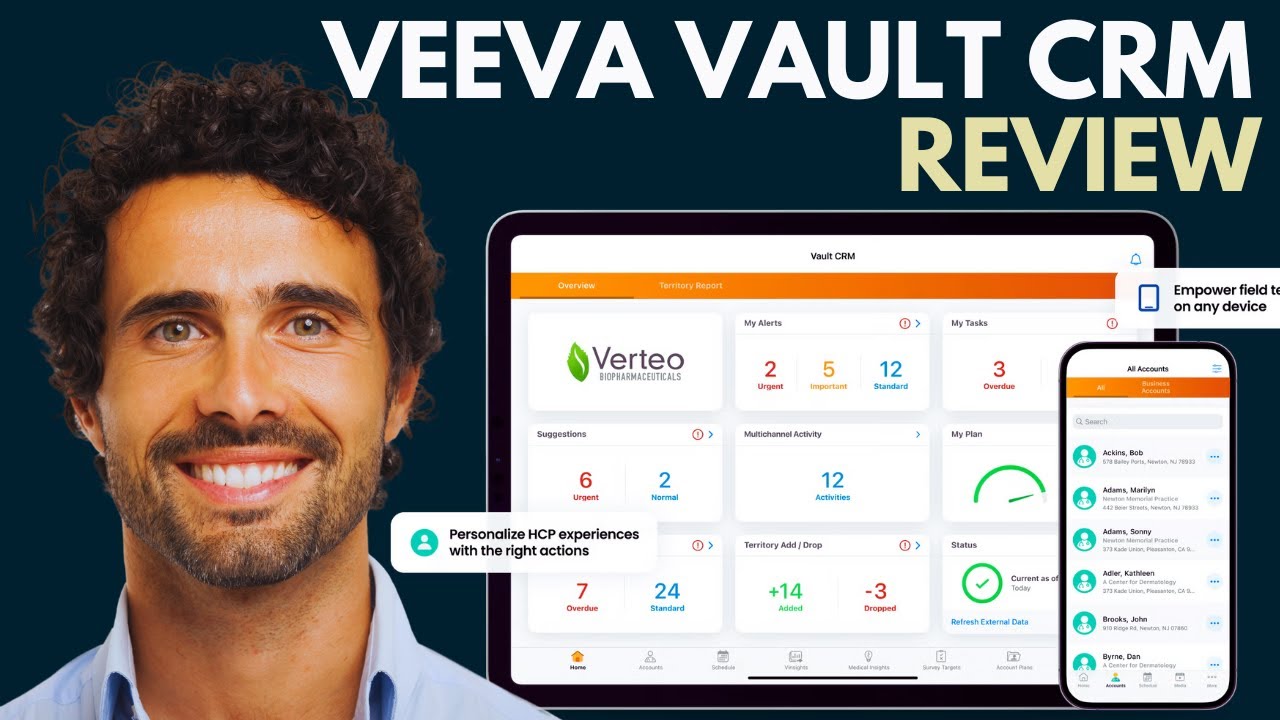
Veeva Vault CRM Review (2025) : Worth It Or Overhyped ?
How To Tech
/@howtotechruet
Mar 10, 2025
This video provides an in-depth review of Veeva Vault CRM, presenting a comprehensive analysis of its strengths, weaknesses, and suitability for various organizations within the life sciences sector. The presenter outlines Veeva Vault CRM as a cloud-based platform specifically engineered for pharmaceutical and life sciences companies, offering a unified system for managing regulated content, customer interactions, and compliance workflows. The core purpose of the platform is to streamline documentation, track approvals, maintain audit trails, and facilitate real-time collaboration, all while adhering to stringent industry-specific requirements. The review meticulously details the key features of Veeva Vault CRM, starting with its robust document management capabilities, which include a centralized repository for regulatory documents, marketing materials, and Standard Operating Procedures (SOPs), complete with version control and audit trails. It highlights workflow automation through customizable approval processes and task assignments, crucial for compliance-heavy operations. Collaboration tools like real-time editing and integrated messaging are also emphasized. A significant focus is placed on its built-in regulatory compliance features, designed to meet global requirements from bodies like the FDA and EMA, alongside multi-channel engagement tracking and strong data security measures. The video then transitions into a balanced discussion of the platform's advantages and disadvantages. Pros include its unparalleled industry-specific focus, seamless integration with other Veeva products and third-party tools (like Salesforce and Microsoft Office), scalability for both small and enterprise-level organizations, a user-friendly interface, and robust audit and compliance features. Conversely, the cons highlight the high cost of licensing, a steep learning curve requiring significant training, reported limitations in search functionality, and rigid permission settings that can restrict collaborative flexibility. The review concludes by identifying ideal users, such as pharmaceutical companies, Clinical Research Organizations (CROs), medical device manufacturers, and biotech firms, ultimately deeming Veeva Vault CRM a powerful tool for highly regulated industries where compliance and document management are paramount, despite its cost and complexity. Key Takeaways: * **Industry-Specific Design:** Veeva Vault CRM is purpose-built for the life sciences and pharmaceutical industries, offering specialized functionalities that cater directly to regulated content management, customer interactions, and compliance workflows, ensuring a high degree of usability and adherence to industry standards. * **Comprehensive Document Management:** The platform provides a centralized, robust repository for all types of regulatory and operational documents, including marketing materials and SOPs, featuring essential version control and automated audit trails to maintain data integrity and historical records. * **Streamlined Compliance and Workflow Automation:** It offers customizable approval processes, automated notifications, and task assignments, which are critical for streamlining complex, compliance-heavy tasks and ensuring that regulatory requirements from bodies like the FDA and EMA are met efficiently. * **Enhanced Collaboration:** Veeva Vault CRM integrates real-time editing, commenting, and messaging tools, fostering improved team communication and collaboration on documents and projects, which is vital in fast-paced research and development environments. * **Seamless Integration Capabilities:** The platform boasts seamless integration with other Veeva products and popular third-party tools such as Salesforce and Microsoft Office, allowing for a unified ecosystem and minimizing data silos across an organization's tech stack. * **Scalability for Diverse Organizations:** Its cloud-based infrastructure ensures that Veeva Vault CRM can effectively support a wide range of organizations, from small teams to large enterprise-level corporations, adapting to varying operational scales and needs. * **Robust Audit and Data Security:** Automatic tracking of document changes and approvals ensures organizations are always audit-ready, while robust encryption and role-based access controls safeguard sensitive information, addressing critical data security and privacy concerns. * **Significant Investment Required:** A major drawback is the high licensing cost, which can make the platform less accessible for startups or smaller organizations. This necessitates a substantial budget allocation beyond just the initial purchase. * **Steep Learning Curve:** Users, particularly those who are non-technical or new to the platform, should anticipate a steep learning curve. Adequate investment in training is crucial to maximize the utilization of its advanced features and ensure user proficiency. * **Potential Usability Challenges:** Some users have reported inefficiencies in the search functionality for locating specific documents or content, and rigid permission settings can limit flexibility in collaborative workflows, potentially hindering efficiency in certain scenarios. * **Ideal User Profiles:** Veeva Vault CRM is particularly well-suited for pharmaceutical companies requiring stringent document control, Clinical Research Organizations (CROs) for managing trial master files, medical device manufacturers for quality documentation, and biotech firms navigating evolving regulatory landscapes. * **Value Proposition for Regulated Industries:** The platform's robust feature set, strong compliance support, and collaboration tools position it as a top-tier choice for organizations operating in highly regulated environments where adherence to standards and efficient document management are primary concerns. Tools/Resources Mentioned: * Veeva Vault CRM * Salesforce * Microsoft Office Key Concepts: * **Cloud-based Platform:** A software platform hosted on the internet, accessible via web browsers, eliminating the need for on-premise infrastructure. * **Regulated Content:** Any document, data, or information that is subject to specific industry regulations and compliance standards (e.g., FDA, EMA). * **Compliance Workflows:** Automated processes designed to ensure that tasks and approvals adhere to specific regulatory requirements and internal policies. * **Version Control:** A system that tracks changes to documents over time, allowing users to retrieve previous versions and manage concurrent edits. * **Audit Trails:** A chronological record of all activities and changes made within a system, essential for demonstrating compliance and accountability. * **Multi-channel Engagement:** The ability to track and manage customer interactions across various communication channels, such as email, phone, and in-person meetings. * **Role-based Access Control (RBAC):** A security mechanism that restricts system access to authorized users based on their role within the organization.

Top 6 Communication Tactics in Healthcare
AHealthcareZ - Healthcare Finance Explained
@ahealthcarez
Mar 9, 2025
This video provides an in-depth exploration of six key communication tactics specifically tailored for the healthcare industry. Dr. Eric Bricker, the presenter, begins by establishing the fundamental premise that successful interactions, whether for improving patient care or transforming healthcare, hinge on people's propensity to do business with those they like and trust. He introduces a framework from communication expert Dr. John Lund, which posits that recipients of communication are primarily concerned with three things: the potential for pain, the duration of the interaction, and the communicator's underlying objective. The presentation systematically categorizes communication into two main forms—speaking/listening (in-person, video, phone) and writing/reading (email, text)—and then combines these forms with Dr. Lund's three recipient concerns to create a matrix of six actionable tactics. For verbal communication, the video emphasizes the importance of one-on-one interactions for relationship building, the strategic use of enthusiasm, and the critical skill of active listening to make conversations less "painful." For written communication, particularly emails, tactics include optimizing send times and ensuring readability through larger font sizes, acknowledging the prevalence of mobile email consumption. The discussion then shifts to addressing the "how long" concern, advocating for concise conversations (10-15 minutes) and short meetings (under 30 minutes) to respect attention spans. Similarly, emails are advised to be brief, resembling text messages with approximately two sentences and 30 words, given the average 9-second read time. Finally, to clarify "what do you want," the video recommends setting clear expectations in conversations regarding tasks, responsibilities, and deadlines, ideally allowing the other person to set their own timeline. For emails, a clear, questioned call to action, highlighted for visibility, is presented as essential. Dr. Bricker concludes by stressing the importance of managing expectations for others' communication quality, acknowledging that healthcare organizations often struggle with miscommunication, and encouraging individuals to focus on controlling their own communication effectiveness. Key Takeaways: * **Build Liking and Trust for Success:** The foundation of effective communication in healthcare is building like and trust, which is crucial for improving patient care, fostering collaboration, and driving positive change within the industry. * **Address Core Recipient Concerns:** When communicating, always consider the other person's three primary, often subconscious, questions: "Is this going to be painful?", "How long is this going to take?", and "What do you want from me?". Tailor your approach to proactively alleviate these concerns. * **Prioritize One-on-One Interactions for Relationships:** For verbal communication, one-on-one conversations are paramount for forming genuine relationships, which Stephen Covey refers to as "production capability," essential for sustained and effective future communication. * **Cultivate Enthusiasm in Conversations:** Injecting enthusiasm into your verbal interactions, even when not naturally inclined, can make the conversation less painful for the recipient and can also be personally refreshing, contributing to a more positive exchange. * **Practice Active Listening:** To minimize the "pain" of a conversation for the other person, allow them to do the majority of the talking. Seek first to understand their perspective before attempting to convey your own. * **Optimize Email Timing and Readability:** Send emails earlier in the day and earlier in the week to maximize engagement before recipients experience email fatigue. Crucially, use a 14-16 point font (14pt is a recommended compromise) as 50-60% of work emails are read on mobile devices, and larger fonts improve readability, especially for those with vision challenges. * **Keep Conversations and Meetings Concise:** Respect attention spans by limiting conversations to 10-15 minutes and meetings to 30 minutes or less. This approach minimizes the perceived "pain" of long interactions and increases productivity. * **Draft Emails as Concise Text Messages:** Given that the average person spends only 9 seconds reading an email (approximately 25-30 words), structure your emails to be around two sentences and 30 words long, much like a text message, to ensure key information is absorbed. * **Clearly Define Expectations in Verbal Communication:** To address the "what do you want" concern, explicitly state who is responsible for what, what specific tasks need to be done, and by when. Whenever possible, allow the other person to set the deadline, as this fosters greater commitment and accountability. * **Implement a Clear Email Call to Action:** For written communication, place a clear call to action, phrased as a direct question (e.g., "Could you do this?"), within the second or third sentence of your email. Bold or underline this question to ensure it stands out and explicitly communicates your request. * **Manage Expectations for Others' Communication:** Recognize that a significant portion of the workforce (up to two-thirds, according to a Gallup poll) is disengaged, which often translates to poor communication. Maintain low expectations for others' communication quality but hold yourself to high standards, as you can only control your own actions. * **Acknowledge Widespread Miscommunication in Healthcare:** The video highlights that "all Healthcare organizations are essentially cesspools of miscommunication," underscoring the critical need for individuals to master these tactics to navigate and improve communication within this complex sector. Tools/Resources Mentioned: * **Daniel Kahneman's "Thinking Fast and Slow":** A book by the Nobel laureate in economics, referenced for insights into human decision-making and the importance of trust in business interactions. * **Dr. John Lund:** A communication expert whose framework on the three primary concerns of communication recipients (pain, time, want) forms a central pillar of the video's tactics. * **Stephen Covey's PPC Balance:** A concept (Production vs. Production Capability) used to illustrate the dual importance of achieving immediate tasks and building strong relationships in communication. * **Gallup Poll:** Referenced for statistics on employee engagement, indicating that a large percentage of employees are not engaged at work, which can impact communication effectiveness. Key Concepts: * **Recipient-Centric Communication:** An approach to communication that prioritizes understanding and addressing the needs and concerns of the person receiving the message. * **PPC Balance (Production vs. Production Capability):** A framework emphasizing that effective interactions not only achieve immediate goals (production) but also nurture the underlying relationships (production capability) that enable future collaboration. * **Introvert/Extrovert Communication Preferences:** The understanding that individuals' personality types can influence their preferred communication channels, with introverts often favoring written communication and extroverts preferring verbal. * **Low Expectations for Happiness:** A pragmatic philosophy suggesting that by setting realistic, often low, expectations for external factors (like others' communication quality), one can better manage personal satisfaction and focus on controllable actions.

$VEEV Veeva Q4 2025 Earnings Conference Call
EARNMOAR
/@EarnMoar
Mar 9, 2025
This video presents the Veeva Systems fiscal 2025 fourth quarter and full year earnings conference call, featuring CEO Peter Gastner, EVP Strategy Paul Shawa, and CFO Brian Man Wagner. The call begins with an overview of Veeva's strong financial performance, exceeding guidance with total revenue of $721 million in Q4 and $2.75 billion for the full year. A significant announcement is Veeva's ambitious 2030 revenue goal of $6 billion, signaling confidence in future growth and planned expansion into new markets. The primary focus of the call, following prepared remarks, is a Q&A session where executives delve into product innovation, market strategy, and the impact of industry trends. Key themes explored include the remarkable momentum in Veeva's Clinical Cloud, with specific examples like a top 20 pharmaceutical customer going "all in" with Veeva's clinical platform, driven by a desire for speed and efficiency. The discussion highlights the industry trend of large Pharma standardizing on Veeva's eTMF and CTMS, with 17 out of the top 20 now using CTMS and 9 out of 20 adopting EDC. Peter Gastner emphasizes the unique value proposition of Veeva Vault's integrated platform, which seamlessly combines document and transactional systems, a concept initially met with skepticism but now widely adopted. The call also addresses the resilience of the life sciences industry to broader economic and regulatory changes, noting that while projects might be delayed, core system subscriptions provide predictable revenue. A significant portion of the discussion is dedicated to Veeva's evolving AI strategy. Peter Gastner articulates a pragmatic approach, moving beyond general AI hype to focus on stable, platform-level large language models and specific, workflow-integrated AI solutions. Examples include a TMF bot for document classification, CRM voice control, a CRM bot, and an MLR (Medical Legal Regulatory) bot. The company is increasing investment in AI solutions, centralizing efforts to build core competency. Furthermore, the Data Cloud is gaining traction, with new products like Veeva Pulse being introduced to provide privacy-safe industry activity data for segmentation and targeting, and the Direct Data API being made free to customers to accelerate data leverage for AI and data science initiatives. The impending migration to Vault CRM is also a critical topic, with most top 20 Pharma decisions anticipated by the end of 2026, as customers recognize a "red zone" for timely transition. Key Takeaways: * **Strong Financial Performance and Ambitious Growth Targets:** Veeva concluded fiscal 2025 with robust revenue and operating income, setting an aggressive 2030 revenue goal of $6 billion, indicating significant market opportunity and confidence in its strategic direction. * **Clinical Cloud Dominance and Integration:** Veeva is seeing strong adoption in its Clinical Cloud, with 17 of the top 20 pharma companies using CTMS and 9 using EDC. The integrated Vault platform, combining eTMF and CTMS, is a key differentiator, offering speed and efficiency for clinical operations. * **Strategic Customer Consolidation:** Large pharmaceutical companies are increasingly consolidating their technology stack around strategic vendors like Veeva, driven by a desire for faster value realization, streamlined operations, and reduced procurement risk. * **Pragmatic AI Strategy:** Veeva's approach to AI is focused on delivering specific, workflow-integrated solutions such as TMF bots, CRM voice control, CRM bots, and MLR bots. This strategy leverages stable LLM platforms to add value directly within existing pharmaceutical workflows, rather than chasing broad, unproven applications. * **Urgency for Vault CRM Migration:** Veeva anticipates the "vast majority" of top 20 pharma companies will make their Vault CRM migration decisions by the end of 2026, with early 2027 being a "red zone" for starting such complex transitions. This highlights a critical window for customers to adopt the new platform. * **Expanding Data Cloud Capabilities:** Veeva is enhancing its Data Cloud with products like Compass Patient and Prescriber, OpenData, Link, and the newly announced Pulse, which offers privacy-safe industry activity data for segmentation and targeting. The Direct Data API, now free, significantly improves data accessibility for customers. * **Targeting Smaller Biotechs with Data Solutions:** Veeva aims to bring the value of its Data Cloud, particularly integrated patient and prescriber data, to smaller companies (under 50 employees) who critically need data for clinical trial decisions and patient pathway analysis. * **Resilience of Life Sciences Market:** The life sciences industry demonstrates resilience to economic cycles and policy changes, with core system subscriptions providing predictable revenue streams for Veeva, even if project timelines are occasionally impacted. * **Focus on Product Excellence and Efficiency:** Veeva prioritizes investment in product R&D (spending twice as much on product as on sales and marketing) and internal efficiency, believing lean teams are more agile and that economies of scale from the Vault platform drive better execution and innovation. * **"Version Two" Cloud Platform Vision:** Peter Gastner hints at the potential for a "version two" of cloud application platforms, designed from the ground up with AI integration in mind, which could fundamentally change user interfaces and how AI dips into multiple applications to add value. * **New CRM Customer Acquisition:** Veeva reported 20 new Vault CRM customers in the quarter, primarily small-to-mid-size companies in the US and Europe adopting their first CRM system, indicating strong market penetration in emerging commercial operations. * **Impact on Clinical Outsourcing Models:** The efficiency and integrated tech stack offered by Veeva Development Cloud are playing a small part in large pharma companies moving towards more functional outsourcing models rather than full-service CRO relationships, allowing them greater control and standardization. Tools/Resources Mentioned: * **Veeva Commercial Cloud:** Veeva CRM, Veeva Vault PromoMats, Veeva Vault Medical, Veeva Crossix, Veeva OpenData, Veeva Link, Veeva Compass (Patient & Prescriber), Veeva Pulse. * **Veeva Development Cloud:** Veeva Vault Clinical (eTMF, CTMS, EDC, Study Training, Site Connect, Payments, Clinical Data Management, RTSM, ECOA), Veeva Vault RIM, Veeva Vault Safety, Veeva Vault Quality, Veeva QualityOne, Veeva RegulatoryOne, Veeva Claims. * **AI Solutions:** TMF bot, CRM voice control, CRM bot, MLR bot. * **Data Access:** Direct Data API. Key Concepts: * **Integrated Clinical Platform:** Veeva's strategy of combining various clinical operations and data management systems (e.g., eTMF and CTMS) on a single platform (Veeva Vault) to create seamless workflows and improve efficiency. * **Data Cloud:** Veeva's suite of data products (Compass, OpenData, Link, Pulse) designed to provide actionable insights for life sciences companies, from patient and prescriber data to industry activity intelligence. * **Vault CRM:** Veeva's next-generation CRM platform for the life sciences, replacing its previous CRM built on Salesforce, offering deeper integration with other Vault applications and new functionalities like Service Center, Campaign Manager, and Patient CRM. * **AI Solutions in Workflow:** Veeva's approach to AI, focusing on embedding AI capabilities directly into specific operational workflows (e.g., document classification in TMF, pre-call planning in CRM) to deliver tangible value and compliance. * **Red Zone for CRM Migration:** A critical timeframe (post-2026, early 2027) for pharmaceutical companies to initiate their migration to Vault CRM, beyond which the complexity and timeline for transition become significantly challenging. * **Compensation Grade Data:** High-quality, validated data used for calculating incentive compensation for sales representatives, a key aspiration for Veeva's Compass Prescriber data. * **Functional Outsourcing:** A model in clinical development where pharmaceutical companies outsource specific functions (e.g., data management, monitoring) to CROs, rather than outsourcing entire clinical trials, often enabled by integrated technology stacks. Examples/Case Studies: * **Top 20 Pharma "All In" with Veeva Clinical:** A major pharmaceutical customer committed to Veeva's entire clinical platform, driven by the desire for speed and efficiency in consolidating their tech stack. * **Widespread CTMS and EDC Adoption:** 17 out of the top 20 pharmaceutical companies are now using Veeva's CTMS, and 9 out of 20 are using Veeva's EDC, demonstrating significant market penetration and standardization. * **First 7-Figure Deal for Veeva Pulse:** A top 20 pharma company in the US signed the first deal for Veeva Pulse, a new data product designed to provide privacy-safe industry activity data for segmentation and targeting, highlighting the immediate value proposition of this offering.

Veeva (VEEV|$35.5B) - 2025 Q4 & Full Year Earnings Analysis
SmartStockWatch
/@SmartStockWatch
Mar 5, 2025
This video provides an in-depth analysis of Veeva's fourth quarter and full fiscal year 2025 earnings report, presented by Smart Stockwatch. The primary purpose is to dissect Veeva's financial performance, operational efficiencies, and future outlook, positioning Veeva as a leading provider of cloud solutions within the life sciences industry. The analysis features insights from a senior analyst, John, who interprets the reported figures and leadership statements to offer a comprehensive view of the company's health and trajectory. The report begins by detailing Veeva's impressive financial results, highlighting a total revenue of $720.2 million for Q4 2025, marking a 16% increase year-over-year. For the full fiscal year 2025, Veeva achieved a total revenue of $2.746 billion, also up 16% from the previous year. A significant point of discussion is the strong performance of Veeva's subscription services, which saw a 17% increase in Q4. Furthermore, the adjusted Earnings Per Share (EPS) of $1.74 significantly surpassed the market forecast of $1.02, based on a survey of ten analysts, underscoring robust operational execution and effective cost management. The analysis further delves into Veeva's operational efficiencies and future growth prospects. The company reported a Q4 operating income of $188 million, a substantial 39% increase year-over-year. For the full year, non-GAAP operating income rose by 37% to $1.152 billion. These figures are attributed to Veeva's ability to scale efficiently, driven by a focus on innovation and strategic partnerships, which have contributed to expanding profit margins. Looking ahead, Veeva's revenue guidance for fiscal year 2026 is projected between $3.044 billion and $3.055 billion, signaling continued confidence in its growth trajectory. The video concludes by incorporating insights from CEO Peter Gassner, who emphasized significant opportunities, and CFO Brian Van Wagener, who noted that the company closed the year ahead of guidance, reinforcing a robust outlook for Veeva across its product areas. Key Takeaways: * **Strong Financial Performance:** Veeva reported a total revenue of $720.2 million for Q4 2025 and $2.746 billion for the full fiscal year 2025, both representing a 16% year-over-year increase. This consistent growth underscores Veeva's strong market position and execution within the life sciences sector. * **Subscription Services as a Growth Driver:** A significant portion of Veeva's revenue growth is attributed to its subscription services, which experienced a 17% increase in Q4. This highlights the stability and recurring nature of Veeva's business model, which is crucial for long-term sustainability. * **Exceptional EPS Beat:** Veeva's adjusted EPS of $1.74 dramatically exceeded the analyst forecast of $1.02. This substantial beat indicates superior operational execution, effective cost management, and potentially stronger-than-anticipated demand for its solutions. * **Enhanced Operational Efficiencies:** The company demonstrated significant improvements in operational efficiency, with Q4 operating income rising 39% year-over-year to $188 million and full-year non-GAAP operating income increasing 37% to $1.152 billion. These figures suggest effective scaling and margin expansion. * **Confidence in Future Growth:** Veeva's revenue guidance for fiscal year 2026, projected between $3.044 billion and $3.055 billion, reflects strong confidence from leadership in the company's continued growth trajectory and market opportunities. * **Leadership Optimism and Strategic Focus:** CEO Peter Gassner's mention of "significant opportunities ahead" and CFO Brian Van Wagener's note of closing the year "ahead of guidance" underscore a positive outlook backed by strategic positioning, innovation, and efficient execution across product areas. * **Veeva's Dominance in Life Sciences Cloud Solutions:** The video reiterates Veeva's status as a "leader in Cloud solutions for the life sciences industry." This leadership position is critical for companies like IntuitionLabs.ai that specialize in Veeva CRM consulting, as it ensures a stable and evolving platform for their clients. * **Implications for Veeva CRM Consulting:** The strong performance and positive outlook for Veeva suggest continued investment and innovation in their platform, including the Vault CRM Suite. This provides a robust foundation for IntuitionLabs.ai's Veeva CRM consulting services, ensuring that clients are investing in a growing and stable ecosystem. * **Importance of Innovation and Strategic Partnerships:** The analysis attributes Veeva's success to its focus on innovation and strategic partnerships. For firms operating in the life sciences tech space, this highlights the necessity of continuous product development and collaborative efforts to maintain market leadership. * **Market Validation of Life Sciences Technology Investment:** Veeva's strong earnings report serves as a positive indicator for the broader life sciences technology market. It validates the ongoing need and investment in specialized cloud solutions, data management, and CRM platforms within the pharmaceutical and biotech sectors. Key Concepts: * **Cloud Solutions for Life Sciences:** Refers to software and services delivered over the internet, specifically tailored to meet the unique needs and regulatory requirements of pharmaceutical, biotech, and medical device companies. * **Subscription Services:** A business model where customers pay a recurring fee to access a product or service, providing predictable revenue streams for companies like Veeva. * **Adjusted EPS (Earnings Per Share):** A non-GAAP measure that adjusts reported EPS to exclude certain non-recurring or non-cash items, providing a clearer view of a company's core operational profitability. * **Non-GAAP Operating Income:** Operating income adjusted to exclude certain items (e.g., stock-based compensation, amortization of acquired intangibles) that are not considered part of normal business operations, offering a different perspective on operational efficiency. * **Revenue Guidance:** A company's forecast of its expected revenue for a future period, providing insights into management's confidence and strategic expectations.

Webinar: The Journey Towards Predictive FSQA Management
Agroknow
/@AgroKnow
Mar 4, 2025
This webinar, titled "The Journey Towards Predictive FSQA Management," delves into how AI and digital technologies are revolutionizing food safety and quality assurance (FSQA). Featuring industry experts Geert Van Kempen from Veeva and Giannis Stoitsis from Agroknow, the session, facilitated by Nikos Manouselis, explores the acceleration of AI deployments in food risk prevention since 2021. The discussion highlights the transformative impact of AI, not just in modeling and technological enablement, but also in data aggregation, combination, and the development of user-friendly front-end applications like chatbots. The speakers emphasize that while AI is rapidly changing industries, the core challenge in FSQA is to demonstrate its practical value to an audience primarily focused on preventing food safety incidents, rather than technology for its own sake. The conversation progresses by addressing common questions from the food industry, such as what peers are doing with AI, practical applications, and the challenges and pitfalls of adoption. Geert Van Kempen shares insights from Veeva's Product Summits, revealing that a "predictive state" in food safety is a high priority for industry leaders like Nestle, Mars, and Pepsi. These companies view it as a critical journey that cannot be undertaken alone, fostering collaboration within the non-compete space of food safety. Giannis Stoitsis corroborates this, stressing the need for robust data and software infrastructure to enable risk prevention, acknowledging the complexity while also pointing to valuable basic steps that can be taken. A significant point of agreement is that while the will to adopt predictive FSQA is strong, the practical implementation faces substantial hurdles, particularly around data integration and standardization. The webinar then dissects three practical use cases for AI in FSQA: mitigating external risks, monitoring internal production facilities, and managing supplier-related risks. For external risks, AI helps identify unexpected new threats from global supply chains by processing public data like recalls, border rejections, and inspection results to provide actionable alerts and forecast incident trends. Internally, AI aids in developing methodologies to assess factory-specific risks by integrating diverse data points—from audit findings and non-conformances to environmental monitoring and even non-classical quality data like absenteeism and training records—to generate leading indicators. Finally, for supplier risk management, AI combines external risk intelligence with internal data (audit performance, lab results) to create dynamic risk profiles, forecast potential hazards, and prioritize preventive measures, thereby shifting from reactive to proactive supplier management. The discussion concludes by reflecting on the broader adoption curve of AI, the level of trust required for automated decision-making (e.g., automatically delisting a supplier), and the call for pragmatism in starting the AI journey, focusing on quick returns while building foundational capabilities. Key Takeaways: * **Accelerated AI Adoption:** AI and predictive analytics have seen significant acceleration in food risk prevention since 2021, with applications like chatbots transforming how industries interact with vast amounts of knowledge. * **Three Pillars of Transformation:** AI's impact spans three core areas: advanced modeling, aggregation and utilization of diverse data, and innovative front-end applications that facilitate human interaction with these technologies. * **Industry Prioritization:** A "predictive state" in food safety is a top priority for leading food manufacturers, who see it as a significant enabler for improving food safety management from a reactive to a proactive stance. * **Collaboration is Key:** Food safety is widely recognized as a non-compete area, fostering collaboration among companies to share data and insights, as no single entity can tackle the problem alone. * **Data Infrastructure Challenges:** A major hurdle is the collection, integration, and harmonization of data, both external (public sector information from diverse sources, formats, languages) and internal (disparate LIMS, ERPs, quality systems). Data silos and lack of standardization (e.g., for food, hazard, or region classification) hinder effective analytics. * **Focus on Leading Indicators:** While traditional quality data provides lagging indicators, the true value of predictive FSQA lies in identifying leading indicators. This requires integrating non-classical data points like absenteeism, changeovers, and training records to anticipate risks. * **Practical Use Case - External Risk Mitigation:** AI can provide actionable alerts and forecast incident trends by analyzing global public data (recalls, border rejections, inspections), helping food safety teams design risk-based testing programs and share knowledge across large organizations. * **Practical Use Case - Internal Facility Monitoring:** AI helps assess risks within manufacturing environments by combining audit findings, non-conformances, analytical results, and environmental monitoring data to identify potential issues before they escalate. * **Practical Use Case - Supplier Risk Management:** AI combines external risk intelligence (forecasted hazards, non-compliances) with internal supplier performance data (audits, lab results) to create dynamic risk profiles, enabling proactive communication and targeted preventive measures. * **Digital Pipeline for Agility:** The industry aims to create a "digital pipeline" where risk information flows seamlessly from external intelligence platforms into internal quality management systems, enabling agile responses to emerging hazards and informing updates to HACCP plans. * **Trust in Automation:** A critical open question is the extent to which organizations will trust AI algorithms to make fully automated decisions with significant economic and public health impacts, such as automatically delisting a supplier. * **Start Pragmatically:** Companies are advised to start their AI journey with pragmatic initiatives that yield a quick return on investment, focusing on learning and building capabilities over time, as the benefits are significant and not adopting will lead to falling behind. * **Integrate Solutions, Not Just Data:** Beyond integrating data, there's a growing realization that integrating software solutions themselves is crucial to effectively support food safety and quality assurance experts, moving beyond "software silos." * **Preventable Crises:** Examples like lead contamination in cinnamon or allergen contamination in spices highlight how predictive technologies, by identifying increasing incident frequencies or known hazards, could have enabled proactive measures and prevented costly recalls. Tools/Resources Mentioned: * **Veeva Systems:** Described as a provider of cloud-based Quality Systems, specifically for the food and beverage industry in this context. * **Agroknow:** The channel host and a company specializing in AI and digital technologies for food safety and quality assurance. * **Predict System (USFDA):** A pilot program by the USFDA (started 2019) using data and machine learning algorithms to highlight risky seafood imports, now heavily deployed in US importing ports. * **Data Lake:** Mentioned as an infrastructure investment for consolidating data, but highlighted as insufficient without data standardization. Key Concepts: * **Predictive FSQA Management:** Shifting from reactive food safety and quality assurance (based on past incidents) to a proactive approach that anticipates future risks using data and AI. * **Leading vs. Lagging Indicators:** Leading indicators predict future events (e.g., absenteeism as a sign of stress leading to mistakes), while lagging indicators describe past events (e.g., audit findings, non-conformances). Predictive FSQA aims to leverage more leading indicators. * **Non-Compete Space:** The concept that certain areas, like food safety, are universally beneficial and should encourage collaboration among competitors rather than competition. * **Data Silos:** Disconnected data storage and management systems within an organization, hindering comprehensive analysis and integration. * **Data Harmonization/Standardization:** The process of making data from different sources consistent and compatible, crucial for effective AI and analytics.
Reversing Diabetes Instead Of Managing Symptoms | with Steve Hastings
Self-Funded
@SelfFunded
Mar 4, 2025
This video provides an in-depth exploration of reversing type 2 diabetes and obesity through nutrition-based interventions, featuring Steve Hastings, Leader of Health Plans at Virta Health. The discussion challenges the conventional approach of merely managing chronic conditions, advocating for a paradigm shift towards achieving sustained reversal. Hastings emphasizes the profound impact of food as medicine and details Virta Health's comprehensive strategy, which combines individualized nutrition protocols with a continuous virtual care model to empower patients and drive significant health outcomes. The core of Virta Health's methodology revolves around personalized nutrition, moving away from generic dietary advice. The program focuses on reducing processed foods, excess carbohydrates, and sugars, while integrating healthy fats, which can clinically be described as a well-formulated ketogenic diet, though the term "keto" is deliberately avoided due to its commercialized stigma. This protocol is meticulously tailored to each member, considering their medical history, allergies, intolerances, cultural preferences, food environment, budget, and social determinants. This highly individualized approach, coupled with daily virtual interactions with a dedicated care team (health coach and provider), allows for real-time adjustments based on objective biomarker readings and subjective data points like hunger, cravings, and depressive symptoms. A significant portion of the conversation addresses the role of GLP-1 medications in weight loss and diabetes management. While acknowledging their effectiveness for some, Hastings cautions against viewing GLP-1s as a standalone "magic pill," emphasizing that they are prescribed as an adjunct to diet and exercise. Virta's program demonstrates comparable weight loss outcomes (13% average) without GLP-1s, and critically, provides a strategy for sustained weight loss (85% success rate) for patients who deprescribe GLP-1s. The company's success is backed by peer-reviewed published papers, showing 60% diabetes reversal (A1C below 6.5% and off all diabetes-specific medications) within the first year, with sustained results over two, three-and-a-half, and five years. This evidence-based approach highlights the potential for true behavior change and long-term metabolic health improvement. The video also delves into the broader implications of diabetes and obesity, noting that three-quarters of the US population is overweight or obese, with type 2 diabetes costing approximately $16,000 per patient annually. Beyond physical health, the program has shown improvements in mental health, specifically depressive symptoms, and creates a "halo effect" where family members also adopt healthier eating habits and experience positive health changes. Hastings discusses the scalability of Virta's "provider and vendor" model, which partners with health plans, PBMs, and employers to deliver this reversal benefit, often fully covered for members. He anticipates the GLP-1 "crisis" will continue to dominate healthcare discussions but expresses hope that "food as medicine" will gain greater recognition and be valued as a primary tool for optimizing health outcomes, challenging the skepticism that patients "won't do this." Key Takeaways: * **Diabetes and Obesity Reversal is a Proven Reality:** Virta Health has clinically demonstrated that type 2 diabetes can be reversed, defined as achieving sub-diabetic A1C levels (below 6.5%) while eliminating the need for diabetes-specific medications. Their trials show a 60% reversal rate in the first year, with sustained outcomes over five years. * **"Food as Medicine" is a Powerful, Quantifiable Tool:** The concept of food as medicine is not just a buzzword but a practical tool that impacts biochemistry. By reducing processed foods, excess carbohydrates, and sugars, and introducing healthy fats, individuals can achieve significant metabolic health improvements. * **Individualized Nutrition is Essential for Success:** A one-size-fits-all approach to diet is ineffective. Virta tailors nutrition protocols based on a patient's medical history, allergies, intolerances, cultural preferences, food environment, budget, and social determinants, ensuring adherence and efficacy. * **Virtual Care Models Drive Continuous Support and Behavior Change:** Virta's continuous remote care platform facilitates daily interaction with a dedicated care team (health coach and provider), allowing for real-time monitoring of biomarkers and subjective data, crucial for sustained behavior modification. * **Deprescription of Medications is a Key Outcome:** A primary goal of the program is to safely deprescribe diabetes-specific medications as patients' blood sugar normalizes, reducing reliance on drugs and associated costs. * **GLP-1s are Adjuncts, Not Sole Solutions:** While GLP-1 drugs are effective for weight loss, they are most impactful when combined with diet and exercise. Virta's program offers a non-drug alternative with comparable weight loss (13%) and provides critical support for sustaining weight loss after GLP-1 deprescription (85% success rate). * **The GLP-1 Cost Crisis Demands Comprehensive Solutions:** The rising cost and utilization of GLP-1s pose a significant financial challenge for employers and health plans. Solutions that focus on root cause reversal and sustained behavior change are necessary to manage this trend. * **Broad Health Improvements Extend Beyond Weight and A1C:** Patients experience a range of benefits, including improved sleep, reduced cardiovascular risk factors, and significant improvements in depressive symptoms, highlighting the holistic impact of metabolic health. * **"Halo Effect" Promotes Family-Wide Health:** Individual health improvements often lead to positive changes within the family unit, as spouses and children adopt healthier eating and activity patterns, amplifying the program's impact. * **Scalability Through a Provider-Vendor Model:** Virta's dual role as a clinical provider and a vendor (managing communications, enrollment, and reporting) enables the delivery of reversal benefits at scale across diverse populations and demographics (commercial, Medicare, Medicaid, veterans). * **Challenging the "Patients Won't Do This" Mindset:** Virta's Health Equity Report demonstrates successful A1C reduction across all socioeconomic cohorts, proving that even the most disadvantaged patients can achieve diabetes reversal, refuting the common physician skepticism about patient adherence. * **Satiety is a Critical Mechanism for Adherence:** The nutrition protocol focuses on making patients feel full and satiated, which naturally reduces cravings and supports long-term adherence, mirroring a key mechanism of GLP-1 drugs. * **Employer and Health Plan Engagement is Crucial:** Employers and carriers play a vital role in promoting health by offering solutions that go beyond traditional drug management, empowering members with options for chronic disease reversal. **Key Concepts:** * **Diabetes Reversal:** Achieving sub-diabetic A1C levels (below 6.5%) while simultaneously eliminating the need for diabetes-specific medications. * **Food as Medicine:** The concept that dietary choices have a direct and profound impact on an individual's biochemistry and overall health, serving as a primary tool for disease prevention and reversal. * **Deprescription:** The process of safely reducing or discontinuing medications, particularly when a patient's underlying condition has improved through lifestyle interventions. * **Virtual Care Model:** A healthcare delivery system that utilizes remote technologies (e.g., apps, video calls, remote monitoring) to provide continuous patient support, coaching, and clinical oversight. * **Halo Effect:** The positive ripple effect of an individual's health improvements on their immediate family members, who often adopt similar healthy behaviors. * **Area Deprivation Index (ADI):** A measure of socioeconomic disadvantage used to assess health equity and the impact of interventions across different demographic groups. **Examples/Case Studies:** * **Virta Health's Clinical Trials:** The video frequently references Virta's peer-reviewed published clinical trials, which demonstrate 60% diabetes reversal in the first year and sustained results over five years. * **GLP-1 Deprescription Data:** Virta has published data showing that 85% of patients who deprescribe GLP-1s are able to sustain their weight loss through the Virta protocol. * **Health Equity Report:** Virta's report using the Area Deprivation Index illustrates that A1C reduction is achievable across all socioeconomic cohorts, including the most disadvantaged populations.

Veeva Systems Review: Honest User Experience & Features Breakdown
How Review
/@howt2reviews
Mar 3, 2025
This video offers an in-depth user review and feature breakdown of Veeva Systems, positioning it as a critical cloud-based software suite tailored specifically for the global life sciences industry, including pharmaceutical companies. The reviewer focuses on how Veeva addresses the unique operational and regulatory challenges faced by organizations in this sector, examining its core functionalities, interface design, and overall value proposition. The analysis progresses from general usability to specific module performance (CRM and Clinical Trial Management) before concluding with a discussion of cost and target market suitability. The platform is described as having a clean, user-friendly interface designed specifically for life sciences professionals. While the navigation is generally straightforward, the reviewer notes that the inherent complexity of a comprehensive enterprise solution like Veeva, with its multitude of modules, results in a steep initial learning curve for new users. This balance between usability and deep functionality is a central theme, suggesting that while the tool is powerful, successful adoption requires significant training and integration support. A major focus of the review is the Veeva CRM module, which is highlighted for its specialization in the pharmaceutical industry. The CRM enables organizations to effectively manage relationships with Health Care Professionals (HCPs), meticulously track communications, and ensure adherence to stringent regulatory standards. It is particularly effective for managing medical representatives and handling sensitive data, offering powerful integration capabilities between sales and marketing efforts to yield actionable insights into customer interactions. Furthermore, the video explores the Clinical Trial Management (CTM) module, noting its critical role in drug development. The CTM functionality helps streamline the administrative burden of trials, automating tasks, and ensuring that trial data is accurately recorded and easily accessible—a significant time and resource saver. However, the reviewer points out a key limitation: some users find the CTM feature lacks sufficient customization options to accommodate highly unique or specialized trial protocols. The review concludes by classifying Veeva as a premium solution, emphasizing that its high cost and comprehensive nature make it best suited for larger organizations in the healthcare space, potentially limiting its accessibility for smaller businesses or startups. Key Takeaways: • **Veeva’s Specialized CRM Focus:** The platform’s core strength lies in its design for the pharmaceutical industry, specifically enabling the management of HCP relationships, communication tracking, and regulatory compliance—critical areas for AI-powered sales operations and compliance automation. • **Opportunity in Mitigating Learning Curve:** The acknowledged "steep initial learning curve" for new users presents a direct consulting opportunity for specialized firms to offer targeted training, implementation, and customization services to accelerate user adoption and maximize ROI. • **Clinical Trial Customization Gap:** The reported lack of customization within the Clinical Trial Management module is a significant pain point that can be addressed through custom software development or advanced data engineering to tailor data capture and reporting to unique clinical protocols. • **Integration of Commercial Operations:** Veeva CRM is praised for its ability to integrate sales and marketing efforts, offering valuable insights; this reinforces the need for robust data engineering and business intelligence services to extract and visualize these integrated commercial insights effectively. • **Regulatory Compliance as a Core Feature:** The video confirms that Veeva’s architecture inherently supports regulatory compliance standards, validating the need for consulting services that specialize in maintaining FDA/GxP adherence during system customization and data migration. • **Validation of Target Market:** The high price point and comprehensive feature set confirm that Veeva is primarily tailored for large pharmaceutical and life sciences enterprises, aligning with the target market of firms providing premium, specialized consulting services. • **Data Management Efficiency:** The CTM module’s ability to automate administrative tasks and ensure accurate, accessible trial data underscores the necessity of robust data pipelines and data quality assurance, which are essential components of data engineering services. • **Addressing Complexity with Expertise:** The platform's complexity, despite its usability, necessitates expert guidance for implementation and integration, particularly when connecting Veeva data with external AI models or proprietary business intelligence dashboards. Tools/Resources Mentioned: * Veeva Systems (Cloud-based applications) * Veeva CRM * Veeva Clinical Trial Management module Key Concepts: * **Customer Relationship Management (CRM):** A system for managing a company's interactions with current and potential customers, specifically tailored by Veeva for Health Care Professionals (HCPs) in a regulated environment. * **Regulatory Compliance:** Adherence to the laws, regulations, guidelines, and specifications relevant to the life sciences industry (e.g., FDA, GxP), which Veeva systems are designed to facilitate and track. * **Clinical Trial Management (CTM):** The process of planning, executing, and monitoring clinical trials, which Veeva streamlines by automating administrative tasks and ensuring data accuracy. * **Life Sciences Industry:** The sector encompassing pharmaceuticals, biotechnology, medical devices, and related organizations that Veeva Systems specifically serves.

Hospital Budgeting - Where the Real Power Is
AHealthcareZ - Healthcare Finance Explained
@ahealthcarez
Mar 2, 2025
This video provides an in-depth exploration of hospital and healthcare organization budgeting, framing it as the ultimate locus of power and the essential prerequisite for any organizational transformation. Dr. Eric Bricker, the speaker, begins by acknowledging the seemingly mundane nature of budgeting but quickly establishes its critical importance, emphasizing that understanding and influencing the budget is synonymous with shaping the organization's future and priorities. The presentation covers the fundamental components of a budget, including income and expenses, and delves into the practicalities of forecasting versus actuals, highlighting the inherent uncertainty and "educated guessing" involved in financial projections. The discussion progresses by dissecting the income side of hospital budgeting into two broad categories: operating revenue and non-operating revenue. Operating revenue primarily consists of net patient revenue, which is the payment received from insurance companies and government programs for patient services. Other significant operating income sources include grants (e.g., federal grants during COVID) and ancillary sales like cafeteria food or parking fees. Non-operating revenue, often derived from retained earnings of non-profit hospitals, encompasses investment returns (e.g., stock market), real estate income (sales or rentals), and endowment revenue, particularly for institutions affiliated with universities. Following the income analysis, Dr. Bricker meticulously breaks down the expense categories that hospitals face. These include labor costs (salaries and benefits, noting that benefits can add 15-30% to salary and healthcare for hospital employees is paradoxically expensive), supplies (minor equipment, bed linens, scalpels, and critically, often highly inflated medication costs), capital expenditures (construction, renovation, and major equipment purchases like a gamma knife), technology (electronic health record systems and other software, which are "hugely expensive"), and professional fees (consultants, attorneys, and accountants). The video then identifies the key personnel responsible for budgeting, primarily rolling up under the Chief Financial Officer (CFO), including the VP or Director of Patient Financial Services, internal accountants, and the Controller (often the head accountant). The core message culminates in the powerful assertion that true organizational transformation necessitates budget transformation, and that clinicians, who are patient-facing and advocate for patients, have historically been "on the menu" rather than "at the table" in budgeting decisions, a dynamic that must change for healthcare to improve. Key Takeaways: * **Budgeting as the Locus of Power:** The video strongly asserts that budgeting is where all power within healthcare organizations resides, making it the fundamental driver of priorities and strategic direction. Any aspiration for organizational transformation must begin with a transformation of the budget itself. * **Forecasting is Educated Guesswork:** Budgeting involves forward projections of income and expenses, which are inherently "educated guesses" or "modeling and forecasting." Actual outcomes frequently diverge from these projections, underscoring the dynamic and uncertain nature of financial planning. * **Annual vs. Rolling Budgets:** Hospitals typically employ either an annual budgeting process, which can quickly become outdated due to its lengthy creation time (e.g., 6 months), or a more adaptive rolling budgeting process, where projections are continuously updated and extended monthly based on actual performance. * **Operating Income Sources:** The primary operating income for hospitals is "net patient revenue" from services provided to patients, paid by insurance companies and government programs. Other sources include grants (e.g., federal funding during crises like COVID) and sales from ancillary services like cafeterias or parking. * **Non-Operating Income Sources:** Hospitals, especially non-profits, generate non-operating revenue from investments (e.g., stock market returns on retained earnings), real estate (selling or renting properties), and endowments, particularly for academic medical centers. * **Significant Labor Expenses:** Labor costs, encompassing salaries and benefits, constitute a major expense. Benefits alone can add 15-30% to salary costs, and ironically, health insurance for hospital employees is often very expensive due to high utilization rates among healthcare professionals. * **High Supply and Medication Costs:** Supplies include minor equipment and medications. The cost of medications, especially specialty or infusion drugs, can be subject to significant inflation, heavily impacting the supply budget. * **Substantial Capital and Technology Investments:** Capital expenses cover construction, renovation, and major equipment purchases (e.g., a gamma knife). Technology, particularly Electronic Health Record (EHR) systems and other software packages, represents another "hugely expensive" investment area for healthcare organizations. * **Professional Fees as a Key Expense:** Hospitals incur significant professional fees for external consultants (e.g., revenue cycle consultants), attorneys, and accountants for audits and other specialized services. * **Key Budgeting Roles:** Budgeting responsibilities primarily fall under the Chief Financial Officer (CFO). Other critical roles include the VP or Director of Patient Financial Services (responsible for net patient revenue), internal accountants, and the Controller, who typically serves as the head accountant overseeing a team of financial professionals. * **The "At the Table or On the Menu" Imperative:** A central message is that if individuals or departments are not involved in the budgeting process ("at the table"), they risk being marginalized or cut ("on the menu"). This highlights the critical need for patient-facing clinicians (physicians, nurses) to be included in budgeting decisions to truly improve healthcare. Key Concepts: * **Budget:** A document used to track and project an organization's income and expenses, serving as a financial roadmap and a tool for resource allocation. * **Operating Revenue:** Income generated from the primary activities of the hospital, such as patient care services, grants, and ancillary sales. * **Non-Operating Revenue:** Income derived from secondary activities or investments, such as stock market returns, real estate income, and endowments. * **Net Patient Revenue:** The revenue a hospital receives from patient services after accounting for contractual adjustments with insurers and government payers. * **Capital Expenses:** Large, long-term investments in physical assets like buildings, renovations, and major medical equipment. * **Rolling Budgeting:** A continuous budgeting process where a new budget period is added as the current one expires, allowing for more frequent updates and adaptability compared to annual budgets. * **Controller:** The chief accounting officer of an organization, responsible for managing financial reporting, accounting operations, and ensuring compliance with financial regulations. Examples/Case Studies: * **COVID Grants:** Mentioned as an example of significant government grants contributing to hospital operating income. * **Stock Market Returns:** Cited as a source of non-operating revenue for hospitals investing their retained earnings. * **Real Estate Rental Income:** Hospitals owning buildings and renting them out to practices (e.g., physical therapy) as a source of non-operating revenue. * **Gamma Knife:** Used as an example of a major equipment purchase falling under capital expenses. * **Electronic Health Record (EHR) Systems:** Highlighted as a "hugely expensive" technology investment for healthcare organizations.

Veeva Vault QMS Business Automation Tool Review - Usage Experience
Ron Tester
/@rontesterreviews
Feb 28, 2025
This video provides a detailed review of Veeva Vault QMS (Quality Management System), positioning it as an essential business automation tool specifically tailored for organizations within the highly regulated life sciences sector, including pharmaceuticals, biotechnology, and medical devices. The primary purpose of the system, as described by the reviewer, is to help companies streamline complex quality processes, ensure rigorous compliance with industry standards, and significantly improve overall operational efficiency. The core value proposition of Veeva Vault QMS stems from its modern, cloud-based architecture. This structure is critical for enhancing collaboration and decision-making, as it allows geographically dispersed teams to access vital quality data instantly from any location or device. A key functional area discussed is the platform's intuitive document management system. This feature simplifies the storage, management, and tracking of all quality-related documentation, such as Standard Operating Procedures (SOPs), Corrective and Preventive Actions (CAPAs), and change controls, which are foundational elements of GxP compliance. A major focus of the review is the platform's automated workflow capabilities. These workflows are designed to standardize processes and drastically reduce reliance on manual tasks. The system automatically triggers critical actions based on predefined parameters—for instance, initiating document approvals, assigning training modules, or launching non-conformance investigations. This automation is presented as a crucial mechanism for minimizing human error and ensuring consistent adherence to stringent regulatory requirements. Furthermore, the video emphasizes the system’s robust integration capabilities, noting its seamless connection with other Veeva products as well as essential third-party enterprise systems like ERP (Enterprise Resource Planning) and CRM (Customer Relationship Management) platforms, making it a comprehensive solution for centralized operations. Finally, the review underscores the importance of the system's compliance and analytical features. Veeva Vault QMS includes robust audit trail capabilities, which are indispensable for maintaining regulatory adherence and providing full traceability of every action performed within the system—a critical requirement for GxP and 21 CFR Part 11 environments. The reporting and analytics features deliver real-time insights into quality metrics, enabling organizations to identify performance trends, track key indicators, and implement data-driven decisions necessary for continuous quality improvement in the quality management system. ### Key Takeaways: * **Life Sciences Specialization:** Veeva Vault QMS is explicitly designed for the highly regulated life sciences sector (Pharmaceuticals, Biotech, Medical Devices), focusing on automating and centralizing quality management to ensure compliance and boost operational efficiency. * **Cloud-Based Collaboration:** The system's cloud-based architecture is a critical feature, enabling teams to access vital quality data anytime, anywhere, and from any device, which facilitates better collaboration and more efficient, decentralized decision-making. * **Automated Workflow Compliance:** Automated workflows are a core highlight, standardizing quality processes and minimizing human error by automatically triggering critical tasks such as document approvals, training assignments, and non-conformance investigations based on defined parameters. * **Comprehensive Document Management:** The platform offers an intuitive system for managing all quality-related documents, including essential GxP documentation like SOPs, CAPAs, and change controls, ensuring easy tracking and regulatory readiness. * **Regulatory Traceability (Audit Trails):** Robust audit trail capabilities are essential for maintaining strict regulatory compliance (e.g., 21 CFR Part 11), ensuring complete traceability and accountability for every action performed within the quality management system. * **Centralized Operations via Integration:** Veeva Vault QMS integrates seamlessly with other Veeva products and crucial third-party enterprise systems, such as ERP and CRM platforms, allowing organizations to centralize their operations and create a unified data ecosystem. * **Data-Driven Quality Improvement:** The reporting and analytics features provide real-time insights into quality metrics, enabling businesses to identify performance trends, track key indicators, and make data-driven decisions crucial for continuous quality improvement (CI). * **Error Reduction:** By transitioning manual quality processes to standardized, automated workflows, the system helps life sciences companies significantly reduce human error, which is vital for maintaining product quality and avoiding regulatory penalties. * **Targeted Use Cases:** Specific processes that benefit from the automation include managing non-conformance investigations, streamlining document approval cycles, and ensuring timely training assignments based on role or document updates. ### Tools/Resources Mentioned: * **Veeva Vault QMS:** The primary Quality Management System reviewed. * **Veeva Products:** Mentioned as systems that seamlessly integrate with QMS. * **ERP Platforms:** Mentioned as third-party systems that integrate with Veeva Vault QMS. * **CRM Platforms:** Mentioned as third-party systems (like Veeva CRM) that integrate with Veeva Vault QMS. ### Key Concepts: * **Quality Management System (QMS):** A formalized system that documents processes, procedures, and responsibilities for achieving quality policies and objectives, essential for regulatory compliance in life sciences. * **GxP (Good Practices):** A general term for quality guidelines and regulations (e.g., GMP, GCP, GLP) that ensure products are consistently produced and controlled according to quality standards appropriate to their intended use. * **CAPA (Corrective and Preventive Actions):** A system within QMS that addresses and resolves identified non-conformances or quality issues to prevent recurrence. * **21 CFR Part 11:** FDA regulations governing electronic records and electronic signatures, requiring systems like Veeva Vault QMS to maintain robust audit trails and ensure data integrity. * **SOPs (Standard Operating Procedures):** Detailed, written instructions to achieve uniformity of the performance of a specific function.

Leading An All-Female Insurance Agency | with Maggi Quinn
Self-Funded
@SelfFunded
Feb 25, 2025
This video features an in-depth conversation with Maggi Quinn, SVP of Consulting at Intrepid Benefits, exploring her journey into the health insurance industry, the unique operational model of her all-female agency, and innovative strategies in employer-sponsored healthcare. Hosted by Spencer of the "Self-Funded" podcast, the discussion centers on how Intrepid Benefits provides fiduciary services to employer-sponsored plans, emphasizing a shift from fully-insured to self-funded arrangements to achieve greater impact and cost savings for employers and better care for employees. Maggi shares personal anecdotes about her career progression, the challenges and rewards of consulting, and the importance of building strong, trusting relationships with clients. A significant portion of the discussion highlights Intrepid's distinctive approach to talent acquisition and development. The agency intentionally hires individuals without prior industry experience, preferring a "clean slate" to train them in their specific methodologies and culture, rather than "unwinding" pre-existing industry knowledge. They utilize tools like the Culture Index to screen for personality traits, avoiding profiles that are "slower to think, slower to act, and not proactive." This rigorous focus on culture fit and a structured immersion training process allows them to quickly bring new hires up to speed in the complex world of benefits, fostering a team that is deeply connected and passionate about their work. The conversation further delves into the strategic advantages of self-funded healthcare, particularly for small to mid-market employers (50-500 lives), and the role of benefits captives like Paro Health. Maggi expresses her passion for moving employers into these alternative funding arrangements, where consultants can truly make a strategic impact beyond simply shopping for rates. The most exciting and innovative areas for Intrepid currently revolve around pharmacy spend, including a cutting-edge DNA sequencing strategy for personalized medication management (pharmacogenetics/genomics) and the carving out of specialty pharmacy benefits. These approaches aim to provide significant cost savings for employers while delivering invaluable, life-changing benefits to employees, such as access to expensive medications at no out-of-pocket cost. Key Takeaways: * **Strategic Shift to Self-Funding:** Employers are increasingly being priced out of fully-insured markets, making a move to self-funded or captive arrangements not just an option, but a necessity for sustainable healthcare benefits. This shift empowers consultants to deliver tangible value and strategic impact. * **"Clean Slate" Hiring & Culture Focus:** Intrepid Benefits successfully hires and trains individuals without prior industry experience, believing it's easier to teach complex benefit concepts from scratch than to retrain those with ingrained industry perspectives. Culture fit, screened partly through tools like the Culture Index, is paramount. * **Operational Efficiency Through Specialization:** Intrepid maintains a "well-oiled machine" by staying in its lane (benefits, not payroll or HR), segmenting its client base (e.g., core group, mid-market, self-funded), and developing specialized teams. This allows for repeatable processes and scalable growth with complex solutions. * **Relationship-Driven Sales Philosophy:** The agency prioritizes building deep, trusting, and long-lasting client relationships, often embracing a "slow sale" approach. They are willing to turn away business if there isn't a mutual cultural fit, believing that engaged clients who appreciate the relationship yield better long-term outcomes. * **Pharmacy as a Pivotal Cost-Saving Area:** Pharmacy spend is identified as the most exciting and impactful area for innovation in employer-sponsored healthcare. Significant savings can be achieved by unbundling and carving out pharmacy benefits, especially specialty medications. * **Personalized Medication Management via DNA Sequencing (Pharmacogenetics):** Intrepid is implementing a DNA sequencing strategy that provides employees with personalized information on how their DNA interacts with various medications. This precision medicine approach can optimize drug efficacy, minimize side effects, and eliminate trial-and-error prescribing, offering an invaluable, lifelong gift to employees. * **Specialty Pharmacy Carve-Outs and Patient Assistance:** Partnering with specialized firms (like Smith) for specialty pharmacy carve-outs can lead to dramatic cost reductions for high-cost drugs, often leveraging patient assistance programs to bring employee and employer costs down to zero for multi-million dollar annual medications. * **Employers as a Lever for Health Improvement:** Employers represent the most significant opportunity to facilitate access to better healthcare and improve the health outcomes of individuals. By offering innovative benefits, they can empower employees to make informed health decisions. * **Simplifying Healthcare Communication:** The industry needs to do a better job of simplifying complex healthcare jargon and concepts. Consultants should use analogies and terms that everyone understands to foster better engagement and comprehension among employers and employees. * **Value of Advisor Networks:** Being part of networks like "True" provides invaluable access to training, knowledge, and expertise from peers across the industry, fostering a collaborative environment and enhancing the capabilities of individual agencies. * **Optimistic Outlook for Healthcare Reform:** Despite current challenges, there is growing optimism for a "course correction" in the U.S. healthcare system, with a strong belief that innovative models and solutions will continue to emerge and gain traction in the coming years. **Tools/Resources Mentioned:** * **Culture Index:** A behavioral assessment tool used for screening job candidates to ensure cultural fit and identify desired personality traits. * **Spring Buck:** A tool mentioned for generating annual reports and focusing on key areas of pharmacy spend and stop-loss breaches. * **Paro Health:** Described as the largest benefits captive in the United States, used by Intrepid Benefits to help employers transition to self-funded models. * **Smith:** A partner specializing in specialty pharmacy solutions and patient assistance programs. * **True (Network of Advisors):** A network of advisors, led by Scott Smith, that provides training, knowledge sharing, and cultural alignment for independent agencies. **Key Concepts:** * **Self-Funded Healthcare:** An arrangement where an employer directly pays for employees' healthcare costs rather than paying premiums to an insurance carrier. This allows for greater control over plan design and potential cost savings. * **Fully-Insured Healthcare:** The traditional model where an employer pays a fixed premium to an insurance carrier, which then covers employees' healthcare costs. * **Level-Funded Healthcare:** A hybrid model that combines elements of self-funding and fully-insured plans, often used by smaller employers to gain some of the advantages of self-funding with more predictable monthly costs. * **Benefits Captive:** A group of employers that pool their resources to self-insure their health benefits, sharing risk and gaining greater control over costs and plan design. * **Pharmacogenetics/Genomics:** The study of how an individual's genetic makeup affects their response to drugs, used to personalize medication management and optimize treatment. * **Specialty Pharmacy Carve-Out:** Separating the management and purchasing of high-cost specialty medications from the main pharmacy benefit manager (PBM) to achieve better pricing and utilization controls. * **Stop-Loss Insurance:** Insurance purchased by self-funded employers to protect against catastrophic claims that exceed a certain threshold. * **Fiduciary Services:** Services provided by a third party (like Intrepid Benefits) that act in the best interest of the employer and employee benefit plan, ensuring fair and reasonable charges. **Examples/Case Studies:** * **Hemophilic Drug Cost Reduction:** A specific example was shared where a hemophilic drug's annual cost was projected to increase from $1.8 million to $2.4 million. Through intervention with a specialty pharmacy partner, the cost was reduced to $850,000, and further patient assistance brought the employee and employer cost down to zero. * **"Selling Beer at a Falcons Game" Analogy:** Clayton (from Paro) challenged Maggi, stating she "couldn't sell beer at a Falcons game" if she struggled to sell the captive, motivating her to successfully close her first Paro case after two to three years. * **All-Female Agency Dynamic:** Intrepid Benefits, an all-female agency, has both won and lost business due to its dynamic, including a school that declined to work with them because they felt male employees wouldn't be comfortable calling an all-female agency.

The Jackson Hole Group... Secret Healthcare Conspiracy??
AHealthcareZ - Healthcare Finance Explained
@ahealthcarez
Feb 23, 2025
This video provides an in-depth exploration of the Jackson Hole Group, a highly influential, albeit largely secretive, healthcare policy think tank that convened from 1992 to 2002. Dr. Eric Bricker, the speaker, delves into the group's origins, key attendees, aspirations, and ultimately, its profound impact on the structure and policies of the American healthcare system. He frames the discussion around the question of whether the group constituted a "secret healthcare conspiracy," using its activities to highlight a broader critique of centralized power in healthcare. The video details how the Jackson Hole Group was founded by Dr. Paul Ellwood, whom Bricker identifies as the "father of the HMO" in America and a mentor to the founders of two of the largest health insurance companies: Richard T. Burke (United Health Group) and Leonard Schaeffer (WellPoint, which merged into Anthem). The group comprised approximately 30 influential individuals, including prominent economists, hospital system CEOs, medical device executives, and former government administrators. Notably, attendees included Dr. Allen Enthoven, the Stanford economist credited with developing the concept of "managed competition" that served as the framework for the Affordable Care Act's insurance exchanges, and Dr. Glenn Nelson, who transitioned from a major hospital system CEO to Vice Chairman of Medtronic, the largest medical device company in America. Also present was Dr. Bill Roper, who held significant roles in government (running Medicare/Medicaid and the CDC) before moving into senior positions at health insurance companies and major health systems. The Jackson Hole Group's stated aspiration was to measure health outcomes, publicly report them, and tie federal government payments to these outcomes. While acknowledging this goal as potentially positive, Dr. Bricker argues that the very nature of a centralized policy think tank, bringing together a relatively small number of powerful individuals from both government and business, inherently leads to a concentration of power. He contends that this centralization is problematic, contributing to the systemic issues in healthcare today, because "concentration of power corrupts, and it corrupts absolutely." He links the group's influence and the relationships fostered within it to the development of major healthcare programs and corporations, including Medicare Advantage, Medicare Part D, the Affordable Care Act, United Health Care, Anthem, Medtronic, CVS, and Express Scripts, all of which represent significant centralizations of power. His ultimate perspective is that decentralization, rather than reliance on a centralized group of "smart people," is the more viable solution for improving healthcare. Key Takeaways: * The Jackson Hole Group, active from 1992 to 2002, was a highly influential, largely secretive think tank that played a significant role in shaping the modern American healthcare system. It brought together influential figures from government, business, and academia. * Dr. Paul Ellwood, founder of the group, is identified as the "father of the HMO" and mentored the founders of major health insurance giants, including United Health Group and WellPoint/Anthem, highlighting the deep connections between the group and the commercial healthcare sector. * The concept of "managed competition," which formed the intellectual framework for the Affordable Care Act (ACA) insurance exchanges, originated with Dr. Allen Enthoven, a Stanford economist and Jackson Hole Group attendee, underscoring the group's direct impact on major health policy. * The group's attendees included top executives from the medical device industry (e.g., Vice Chairman of Medtronic), major hospital systems (e.g., CEO of Park Nicollet), and pharmacy benefit managers (PBMs) and pharmacies (e.g., senior advisor to CVS, board member of Express Scripts), demonstrating its broad reach across the healthcare ecosystem. * Key government figures, such as former administrators of Medicare/Medicaid (HCFA) and the CDC, were also part of the group, illustrating the close interplay between policy-making and commercial interests. * The Jackson Hole Group's aspiration to measure health outcomes, publicly report them, and tie government payments to these outcomes, while seemingly benign, is presented as an example of a centralized approach to healthcare reform. * The speaker critically argues that the centralization and concentration of power, inherent in such policy think tanks and manifested in large government programs (Medicare Advantage, Medicare Part D, ACA) and corporations (United Health, Anthem, Medtronic, CVS, Express Scripts), are fundamental causes of current healthcare problems. * The video implicitly suggests that understanding the historical forces and influential figures behind the current healthcare landscape is crucial for any entity operating within the life sciences and pharmaceutical industries, as these historical decisions continue to shape market dynamics, regulatory environments, and commercial operations. * For companies like IntuitionLabs.ai, which develop AI solutions for pharmaceutical commercial operations and regulatory compliance, recognizing the centralized nature of healthcare policy and market power is vital for strategizing and developing effective, compliant solutions. * The speaker advocates for a decentralized approach to healthcare solutions, contrasting it with the centralized policy-making exemplified by the Jackson Hole Group, suggesting that distributed innovation and decision-making might offer better outcomes. * The discussion highlights the "human element" in policy-making, positing that even well-intentioned "smart people" are susceptible to the corrupting influence of concentrated power, leading to unintended consequences for the broader healthcare system. Key Concepts: * **Jackson Hole Group:** An influential, secretive healthcare policy think tank that met from 1992-2002, comprising leaders from government, business, and academia. * **Managed Competition:** An economic theory applied to healthcare, advocating for competition among health plans on a marketplace, which was a foundational concept for the Affordable Care Act's insurance exchanges. * **Centralization vs. Decentralization:** A core theme of the video, contrasting the concentration of power and decision-making in a few entities (centralization) with a more distributed approach (decentralization) as a potential solution for healthcare challenges. * **Policy Think Tank:** A group of experts who conduct research and advocate on particular issues, often influencing public policy. Examples/Case Studies: * **United Health Group:** Founded by Richard T. Burke, mentored by Dr. Paul Ellwood. * **WellPoint/Anthem:** Founded by Leonard Schaeffer, mentored by Dr. Paul Ellwood. * **Medtronic:** Largest medical device company in America, where Dr. Glenn Nelson served as Vice Chairman. * **CVS and Express Scripts:** Major players in pharmacy and PBMs, with key Jackson Hole Group attendees serving as advisors or board members. * **Affordable Care Act (ACA) Exchanges:** Framework based on Dr. Allen Enthoven's concept of managed competition. * **Medicare Advantage and Medicare Part D:** Government programs cited as examples of centralized policy and influence.

Lyriko MLR Pre-Check
Hyntelo
/@hyntelo
Feb 20, 2025
The video presents an in-depth demonstration of Lyriko MLR Pre-Check, an AI-powered solution developed by Hyntelo, designed to optimize and accelerate the Medical, Legal, and Regulatory (MLR) review process within the life sciences sector. The core objective of the tool is to drastically reduce the time and effort spent on content revisions, which the presentation notes typically takes an average of 20 days due to frequent errors and inaccuracies in initial submissions. The solution targets brand managers and content owners who are responsible for ensuring compliance before content is released. The central value proposition of Lyriko MLR Pre-Check is its seamless integration with Veeva Vault PromoMats, a widely used content management platform in the pharmaceutical industry. The workflow begins with the user, exemplified by the persona "Brenda the brand manager," selecting a finalized document directly within Veeva Vault PromoMats to initiate the AI pre-check. The user is then guided to a control panel where they can customize the analysis by selecting from six distinct categories: Spelling and grammar, Claims, Medical, Legal, Regulatory, and Tone of Voice. This customization extends to setting the severity level for the analysis and assigning specific reviewers to oversee the findings for each category, allowing for targeted internal quality assurance. Once the pre-check is launched, the system generates a comprehensive analysis summary accessible to both the content owner and the assigned reviewers. This summary is highly actionable, featuring highlighted text that requires attention, color-coded comment call-outs corresponding to the specific pre-check categories, and clear, actionable insights for addressing identified issues. By implementing this pre-submission quality gate, the solution aims to significantly increase the quality of the content before it enters the formal MLR workflow. The video claims that using Lyriko MLR Pre-Check results in a "significantly higher chance of first-round approval," citing a specific metric of up to a 7% increase in first-time validation success. Ultimately, the tool is positioned as a strategic asset for streamlining regulatory adherence, enhancing the quality of promotional content, and accelerating the overall time-to-market for pharmaceutical materials. Key Takeaways: • **Addressing MLR Bottlenecks:** The solution directly tackles the inefficiency of traditional MLR processes, which are cited as taking an average of 20 days to complete due to numerous revisions and inaccuracies in initial content submissions. • **Veeva Ecosystem Integration:** Lyriko MLR Pre-Check is designed for seamless operation within the Veeva Vault PromoMats environment, ensuring that the pre-check process is initiated directly where content resides, minimizing workflow disruption. • **Quantifiable ROI on Validation Success:** The tool promises a tangible improvement in content quality, claiming an increase of up to 7% in the rate of first-time validation success for submitted materials. • **Customizable AI Analysis Categories:** Users can tailor the pre-check to their specific needs by selecting from six detailed analysis categories: Spelling and grammar, Claims, Medical, Legal, Regulatory, and Tone of Voice. • **Granular Control and Reviewer Assignment:** The system allows brand managers to set the severity level for the AI analysis and assign one or more specific internal reviewers to manage the feedback generated for each distinct category. • **Actionable Feedback Mechanism:** The output is not merely a list of errors; it provides a summary that includes color-coded comment call-outs, highlighted text indicating issues, and clear, actionable insights designed to guide content owners in making necessary corrections swiftly. • **Strategic Pre-Submission Quality Gate:** By performing a rigorous AI-powered analysis before formal submission, the tool functions as a critical quality gate, ensuring content is optimized for compliance and accuracy, thereby reducing friction with regulatory teams. • **Acceleration of Time to Market:** The primary business benefit derived from increased first-round approval rates is the acceleration of the regulatory process, enabling life science companies to bring compliant content to market faster. Tools/Resources Mentioned: * Lyriko MLR Pre-Check (Hyntelo’s AI-powered solution) * Veeva Vault PromoMats (Content management platform) Key Concepts: * **MLR (Medical, Legal, and Regulatory) Review:** The mandatory internal review process in the life sciences industry that ensures all promotional and medical content is accurate, substantiated, and compliant with relevant regulations (e.g., FDA, EMA). * **First-Round Approval Rate:** A key performance indicator (KPI) measuring the percentage of content submissions that are approved by the MLR team without requiring any revisions or resubmissions. * **Tone of Voice Analysis:** An AI capability included in the pre-check to ensure content adheres to established brand guidelines and professional standards, particularly crucial for medical and regulatory communications.

Selling In A Collaborative Environment | with Sean Wood
Self-Funded
@SelfFunded
Feb 18, 2025
This video provides an in-depth exploration of collaborative B2B sales strategy, channel partnership management, and the evolving role of the consultant in the complex U.S. healthcare market. Featuring Sean Wood, SVP of National Partnerships at ParetoHealth, the discussion frames sales success not as an individual achievement but as a collaborative effort rooted in trust, stewardship, and mutual goals. Wood draws parallels between his experience as a professional basketball point guard—whose role is to facilitate the entire offense—and the modern sales leader who must elevate and coordinate their team and external partners. The conversation emphasizes that in today's noisy, skeptical market, sellers must transition from being product pushers to being educators and strategic partners. A central theme is the "Buyer's Dilemma," which describes the information overload and resulting skepticism faced by decision-makers in the B2B space, particularly mid-market employers. This dilemma is exacerbated by the digital age and the proliferation of new vendors post-2007. To cut through this noise, Wood introduces the **SCDC framework** (Specific, Customized, Defendable, Complimentary) as a methodology for crafting differentiated and effective messaging. The discussion highlights that effective collaboration requires co-authored goals and a shared vision, moving beyond asynchronous partnerships where one party is simply trying to extract a sale. Honesty ("shooting straight") is presented as the foundation for developing the long-term trust necessary for successful channel sales. The speakers trace the evolution of the healthcare market, noting how major regulatory shifts like the Affordable Care Act (ACA) and the Consolidated Appropriations Act (CAA) have fundamentally changed the dynamics of benefits purchasing. The ACA, specifically the employer mandate, forced the "trifecta" (payroll, HR, and benefits) to collaborate, creating a demand for integrated technology and expertise. This regulatory complexity has accelerated, making the role of the modern Employee Benefits (EB) consultant increasingly challenging. Consultants must now act as "conductors" of a complex team, leveraging a grab bag of solutions and external subject matter experts (SMEs) to address the rapidly evolving needs of their clients, rather than attempting to be the sole expert on all matters. Ultimately, the conversation pivots to defining success in this environment. For Wood, success is tied to a moral obligation to educate partners and employers about better solutions (like captives for cost control), which in turn reduces the financial strain on employees and families. The goal is to reach a "Tipping Point" where superior solutions become the obvious, normalized choice in the market segment. This requires sales leaders and consultants to be perpetual students of the game, maintaining relevance by continuously learning and adapting to market and regulatory changes, and focusing on delivering ethical, long-term value. ### Detailed Key Takeaways * **The Buyer's Dilemma Requires Differentiation:** Modern B2B buyers are highly skeptical due to an overabundance of information and sellers (noise). To pierce this noise, sales professionals must slow down, conduct research, and deliver a highly differentiated message that is specific, customized, defendable, and complimentary (SCDC framework). * **SCDC Framework for Messaging:** Effective sales messaging must be: 1) **Specific** to the recipient's role (e.g., CFO vs. HR), 2) **Customized** to their organizational context, 3) **Defendable** with proven results and case studies (avoiding making the buyer a "guinea pig"), and 4) **Complimentary** to the client's existing business ecosystem. * **Collaborative Selling is Essential for Complex Sales:** In complex B2B environments, decisions are made in clusters. Team selling leverages existing trust relationships to cut through skepticism, earning the right to teach and guide the buyer. This is crucial for selling high-value, specialized services like custom AI solutions. * **Co-Author Goals for True Partnership:** Collaboration must be based on mutually agreed-upon, co-authored goals and calls to action, not just running individual sales quotas side-by-side. If the partnership feels asynchronous or self-serving, trust will dissolve quickly. * **Honesty Builds Long-Term Trust:** The foundational rule of partnership is to "shoot straight." This means being honest even when an opportunity is not a good fit, proactively advising the partner or buyer to walk away if the terms are unreasonable or the solution is inappropriate. * **Regulatory Shifts Drive Commercial Strategy:** Major legislation (like the ACA and CAA) creates seismic shifts in the market, forcing employers and consultants to seek new solutions. Sales leaders must study these regulations (e.g., the ACA employer mandate) to anticipate market needs and position their partners as differentiated experts. * **Mentorship and Coaching are Critical for Skill Gaps:** Sales leaders should seek out mentors within their operational ecosystem who have a vested interest in their success. When coaching partners, anxiety often signals a skills gap; addressing this gap through training and clearly defined processes reduces frustration and improves execution. * **The Modern Consultant is a Conductor:** The role of the EB consultant has evolved from a generalist to a quarterback or conductor. They must manage a wide array of specialized solutions and external partners, introducing the right SME at the right time based on the unique needs of the buyer, rather than trying to be the expert in all areas. * **Longevity Requires Relevance:** Leaders must stay connected to the field and maintain a "real-time connection" to the challenges partners and buyers face. This continuous learning ensures that the guidance and coaching provided remain relevant amidst rapid technological and social change. * **Focus on Purpose Over Title:** Success is often achieved by focusing on one's "why"—helping, inspiring, and coaching others—rather than solely chasing corporate titles or climbing the ladder. This purpose-driven approach creates longevity, relevancy, and profound personal satisfaction. ### Key Concepts * **Buyer's Dilemma:** The state of information overload and excessive vendor noise in the B2B market, leading decision-makers to become skeptical and shut down, making it difficult for even valuable solutions to gain attention. * **SCDC Framework (Specific, Customized, Defendable, Complimentary):** A four-part methodology for crafting sales messaging designed to cut through market noise and skepticism. * **Lipid Noster Model (Complex Change Management):** A framework used to identify missing elements necessary for successful organizational or partnership change. Missing elements lead to specific negative outcomes: * Lack of Vision -> Confusion * Lack of Skills -> Anxiety * Lack of Incentive -> Slow Action * Lack of Resources/Tools -> Frustration * Lack of Consensus -> Resistance * Lack of Action Plan -> False Starts ### Examples/Case Studies * **ACA Employer Mandate:** The Affordable Care Act forced employers to integrate payroll, HR technology, and benefits, creating a "trifecta" of collaboration. This regulatory pressure created a massive opportunity for vendors (like ADP at the time) who could provide expertise and technology to manage compliance. * **Point Guard Analogy:** Sean Wood uses his experience as a point guard in basketball to illustrate collaborative leadership. A point guard's value is not solely in scoring but in facilitating the entire offense, elevating teammates, and understanding the game—a transferable skill set for leading channel partnerships. * **CAA (Consolidated Appropriations Act):** Referenced as the next major regulatory catalyst following the ACA. The CAA is raising the general level of awareness regarding gross inefficiencies in healthcare (e.g., PBM rebates, lack of fiduciary responsibility), compelling employers to demand innovative solutions and driving a seismic shift in how health plans are purchased.

Do Medical Schools Want Value-Based Care?? The 'Dean's Tax' May Prohibit.
AHealthcareZ - Healthcare Finance Explained
@ahealthcarez
Feb 16, 2025
This video provides an in-depth exploration of the intricate financial structures within America's academic medical centers (AMCs) and medical schools, specifically analyzing how these established revenue flows create significant resistance to the adoption of Value-Based Care (VBC). Dr. Eric Bricker, the speaker, meticulously breaks down the diverse funding sources for medical schools, including endowments, grants, university contributions, government funding, student tuition, and crucially, revenue from their affiliated academic health systems and faculty physician groups. He highlights that the latter two are most profoundly impacted by a shift to VBC, setting the stage for understanding the financial disincentives at play. The core of the video's argument revolves around the "Dean's Tax," a controversial practice where faculty physician groups pay a portion of their clinical revenue (typically around 10% from Medicare, Medicaid, and commercial insurance billing) directly to the medical school dean. This tax, coupled with declining physician reimbursement rates (especially from Medicare and commercial payers tied to Medicare), creates a financial squeeze on physician groups. Simultaneously, academic health systems have historically been able to negotiate higher facility fees from commercial insurers, making them a more financially stable contributor to the medical school. Dr. Bricker explains that under the current fee-for-service model, medical schools rely heavily on this "Dean's Tax" and hospital system contributions, often even subsidizing faculty physicians who don't generate enough billing revenue to cover their costs. The progression of ideas then shifts to how Value-Based Care fundamentally disrupts this financial equilibrium. VBC, by definition, aims to reduce costly hospitalizations and incentivize outpatient, home health, and preventive care. This means less revenue for hospitals from facility fees and significantly less billing for specialists within physician groups (e.g., fewer surgeries, less orthopedic or cardiac care). Consequently, the "Dean's Tax" revenue stream for medical schools would diminish, creating a strong financial disincentive for medical schools and their faculty to embrace VBC. Dr. Bricker emphasizes that for VBC to succeed in an academic setting, a radical restructuring of financial relationships is necessary, including increased subsidies from the health system to both the medical school and the physician group, and a shift away from fee-for-service physician compensation models. He cites the American Association of Medical Colleges (AAMC) white paper and the successful example of Ashner Medical Center in New Orleans, which transitioned specialists to salaries and increased subsidies, demonstrating that such changes are feasible but require significant "political will." Key Takeaways: * **Complex Financial Web of AMCs:** Medical schools derive revenue from a multitude of sources including endowments, grants, university funds, government, tuition, and critically, their affiliated academic health systems and faculty physician groups. Understanding these interconnected flows is essential to grasping their operational challenges. * **The "Dean's Tax" as a Disincentive:** Faculty physician groups pay a "tax" (typically 10%) from their clinical billing revenue to the medical school. This revenue stream is a significant component of medical school funding, and its potential reduction under VBC creates a strong financial barrier to adoption. * **Divergent Revenue Trends:** While academic health systems have historically secured increasing facility fee reimbursements from commercial insurers, physician professional fee reimbursement (especially from Medicare and related commercial plans) has been declining, creating a financial strain on physician groups. * **VBC Disrupts Traditional Revenue:** Value-Based Care models inherently aim to reduce high-cost inpatient care, leading to decreased hospital facility fees and lower specialist billing (e.g., fewer surgeries, procedures). This directly impacts the revenue streams that currently support medical schools and physician groups. * **Financial Squeeze on Physicians:** Many academic physicians do not generate enough billing revenue to cover their costs, requiring subsidies from the hospital system. A shift to VBC would further reduce their fee-for-service revenue, exacerbating this financial challenge. * **Necessity for Compensation Model Reform:** For VBC to be adopted, medical schools and academic health systems must fundamentally change physician compensation models, moving away from the "RVU treadmill" (relative value unit-based billing) towards salaried models or other risk-based arrangements. * **Increased Subsidies from Health Systems:** To compensate for lost "Dean's Tax" revenue and decreased physician billing under VBC, the academic health system (especially if it includes a successful health plan) must increase financial subsidies to both the medical school and the physician groups. * **AAMC's Call for Change:** The American Association of Medical Colleges (AAMC) recognizes these financial challenges and has published white papers advocating for new "next-generation funds flow models" to facilitate VBC adoption in academic settings. * **Ashner Medical Center as a Model:** Ashner Medical Center in New Orleans successfully transitioned its specialists to salaries, increased subsidies from the health system, and even paid physicians more for doing less fee-for-service work, demonstrating a viable path for VBC implementation in AMCs. * **Political Will is Paramount:** The ultimate determinant of VBC adoption in medical schools is not just financial logic but the "political will" within these complex institutions to restructure long-standing financial relationships and overcome internal resistance. * **Shift in Care Settings:** VBC incentivizes a shift towards more outpatient care, ambulatory surgery centers (ASCs), and home health services, moving care delivery away from traditional inpatient hospital settings. * **Health Plan Profitability under VBC:** Academic health systems that operate their own health plans can become more profitable under successful VBC models, as they retain the difference between capitated payments and reduced care costs, providing a potential source for increased subsidies. **Tools/Resources Mentioned:** * **AAMC White Paper:** The American Association of Medical Colleges (AAMC) has published a "fantastic white paper" on "next-generation funds flow models" for academic medical centers. * **ECGMC.com Blog:** A blog post titled "Is it time to abolish the Dean's Tax?" from ecgmc.com/insights/blog/1896/is-it-time-to-abolish-the-deans-tax. * **Denver Post Article:** A 2006 article from the Denver Post titled "Med school in fiscal pinch" (denverpost.com/2006/06/24/med-school-in-fiscal-pinch/). **Key Concepts:** * **Value-Based Care (VBC):** A healthcare delivery model where providers are paid based on patient health outcomes, rather than the volume of services provided (fee-for-service). It often involves taking on financial risk for patient populations. * **Dean's Tax:** A portion of the clinical revenue generated by faculty physician groups that is paid directly to the medical school dean, typically around 10% of their billing. * **Capitation:** A payment arrangement for healthcare service providers where a fixed payment is made per patient over a set period, regardless of how many services the patient uses. This is a core mechanism of VBC. * **Academic Health System:** A complex organizational structure typically comprising a medical school, one or more teaching hospitals, and associated clinics and research facilities. * **Faculty Physician Group:** The collective body of physicians who are faculty members of a medical school and provide clinical services, generating professional fee revenue. * **RVU Treadmill:** A colloquial term referring to the pressure on physicians to increase the volume of services (measured in Relative Value Units) to maintain or increase their income under fee-for-service compensation models. **Examples/Case Studies:** * **University of Pittsburgh Medical Center (UPMC):** Mentioned as an example of an academic health system that operates a large health plan, offering Medicare Advantage and employer-sponsored health insurance. This highlights the potential for AMCs to integrate health plans into their VBC strategy. * **Ashner Medical Center (New Orleans):** Presented as a successful case study where an academic medical center implemented VBC by shifting specialists to salaried compensation, increasing subsidies from the hospital system, and even paying physicians more for delivering less fee-for-service care, leveraging savings from reduced hospitalizations.

All about DAC - Access Restrictions #ecm #startup #interviewqa #veeva #education #veevavault
Learn more about Veeva
/@amirthadeepann9598
Feb 15, 2025
This video provides a detailed comparison between two methods for managing document access restrictions within a regulated content management system, specifically focusing on the capabilities of Group access versus Dynamic Access Control (DAC) within the Veeva Vault platform. The core objective is to explain how DAC offers a superior, automated solution for assigning user roles and ensuring compliance with granular access requirements, such as restricting content based on geography. The discussion begins by outlining the traditional approach, which relies on Group access. Under this method, if a user required a specific role, such as an approver for a document, an administrator first had to grant them access to the relevant approval group. Even after this initial step, the document owner was then manually required to add the user to the document’s specific sharing settings. This conventional, manual, two-step process is prone to administrative delays and inconsistencies, particularly in large pharmaceutical organizations managing vast libraries of regulated content. Dynamic Access Control (DAC) was introduced as a solution to automate this process. Using DAC, if a user is configured with the appropriate "user role setup" (e.g., an approver role), they are automatically added to the sharing settings of all eligible documents. The speaker emphasizes a crucial application of DAC: managing country-specific access restrictions, a common requirement in global life sciences companies dealing with localized regulatory and commercial materials. While Group access can technically restrict users to US or UK specific documents using override rules, the document owner still has to perform the final manual addition to the sharing settings. DAC streamlines this geographical restriction significantly. By enabling the "country specific checkbox" under the sharing rule setup and configuring the user role setup accordingly, the system automatically manages the user’s inclusion as an approver for all documents matching that country criteria (e.g., all US-specific documents). This automated management removes the control from the document owner, ensuring consistency and adherence to predefined access policies. The speaker concludes that DAC is the preferred, forward-looking method because it is substantially easier for end-users and administrators, eliminating the need for manual intervention in sharing settings. Furthermore, to remove a user governed by DAC, the administrator must inactivate the user role setup, centralizing control and auditability. Key Takeaways: • **DAC Automates Role Assignment:** Dynamic Access Control eliminates the manual step where the document owner must add a user to the document’s sharing settings after the user has been granted group access, significantly reducing administrative overhead. • **Two-Step Group Access:** The legacy Group access method requires two distinct actions: an administrator grants the user access to the appropriate approval group, and then the document owner manually adds the user to the specific document’s sharing settings. • **Granular Restriction Use Case:** DAC is particularly valuable for implementing complex access restrictions, such as ensuring users only access documents relevant to their specific country or region (e.g., US-specific documents vs. UK-specific documents). • **Country-Specific Checkbox:** DAC facilitates geographical restriction by enabling a "country specific checkbox" within the sharing rule setup, linking the user’s role directly to the document’s geographical metadata. • **Centralized Control and Consistency:** When DAC is utilized, the document owner loses the ability to manually add or remove users from the sharing settings. This centralization ensures that access is governed strictly by the pre-configured user role setup, enhancing regulatory consistency. • **Inactivation for Removal:** To revoke a user’s access that is managed by DAC, the corresponding "user role setup" must be explicitly inactivated by an administrator, providing a clear audit trail for access changes. • **Efficiency for High-Volume Content:** DAC is superior to Group access in environments with high volumes of regulated content because it automatically manages user additions across all eligible documents, making it highly scalable for commercial and regulatory operations. • **Industry Adoption Trend:** The speaker notes a clear trend toward utilizing DAC over traditional Group access due to its ease of implementation and maintenance, making it a critical skill set for Veeva consultants. Key Concepts: * **Dynamic Access Control (DAC):** An automated mechanism within Veeva Vault that assigns user roles and permissions to documents based on predefined criteria (user role setup and sharing rules), bypassing the need for manual intervention by the document owner. * **User Role Setup:** The configuration defining a user's specific function (e.g., approver, reviewer) and the criteria (e.g., country) under which DAC applies that role to documents. * **Sharing Settings:** The configuration on a specific document that dictates which users or groups have access and what roles they hold (e.g., view, edit, approve). * **Group Access:** The traditional method of granting access where users are added to predefined groups, which then must be manually linked to document sharing settings by the document owner.

Veeva CRM Introduction Benefits and Features of VEEVA CRM
WebDevelopment Tutorials
/@WebDevelopmentTutorials
Feb 14, 2025
This video provides an introductory overview of Veeva CRM, a specialized Customer Relationship Management software specifically designed for the life sciences and pharmaceutical industries. The speaker details its core functionalities, benefits, and key features, emphasizing its critical role in managing sales, marketing, and regulatory compliance within this highly regulated sector. The presentation highlights how Veeva CRM goes beyond generic CRM solutions by offering tailored tools to address the unique challenges and requirements of pharmaceutical companies, particularly concerning interactions with healthcare professionals (HCPs). The video explains that Veeva CRM serves as a comprehensive platform for pharmaceutical companies to track and manage all sales and marketing activities. It enables sales representatives to efficiently manage their interactions with HCPs, including scheduling meetings, tracking sales activities, and presenting personalized content. A significant focus is placed on the system's robust tracking and reporting capabilities, which allow for detailed recording of every interaction, presentation slide shown, and feedback received. This granular data is crucial for creating personalized call records and refining future engagements, ensuring that messaging is tailored to individual HCPs. Furthermore, the discussion delves into the key benefits of adopting Veeva CRM. These include enhanced customer engagement through a holistic view of customers, enabling personalized and targeted interactions. It significantly boosts sales force effectiveness by providing sales representatives with the necessary tools to plan and execute their activities more efficiently, manage territories, and provide feedback to marketing teams for continuous message optimization. Crucially, the video underscores Veeva CRM's inherent design to meet the stringent regulatory requirements of the pharmaceutical industry, such as ensuring compliance for all documentation and messages. It also features multi-channel consent management, preventing non-compliant communication with HCPs who have opted out of specific channels, thereby mitigating regulatory risks. The system's foundation on Salesforce CRM is also noted, providing a robust and familiar underlying architecture. Key Takeaways: * **Specialized CRM for Life Sciences:** Veeva CRM is uniquely designed for the life sciences and pharmaceutical industries, distinguishing it from generic CRM solutions by incorporating industry-specific workflows and compliance features. * **Comprehensive Sales & Marketing Management:** The platform provides essential tools for pharmaceutical companies to effectively track and manage all sales and marketing activities, from initial contact to follow-up. * **Optimized Healthcare Professional (HCP) Interactions:** Sales representatives can manage and schedule interactions with HCPs, track their activities, and ensure that engagements are structured and recorded for future reference. * **Personalized Customer Engagement:** Veeva CRM enables a holistic view of customers, allowing for the delivery of personalized and targeted interactions, presentations, and messaging based on past engagements and feedback. * **Robust Tracking and Reporting:** The system offers extensive tracking and reporting capabilities, recording details of every interaction, including specific slides presented and feedback received, which is vital for continuous improvement and personalization. * **Enhanced Sales Force Effectiveness:** Sales representatives benefit from tools that facilitate efficient planning and execution of sales activities, territory management, and a feedback loop to marketing teams for refining messaging strategies. * **Critical Regulatory Compliance:** A core strength of Veeva CRM is its design to meet the strict regulatory requirements of the pharmaceutical industry, ensuring that all documents and communications are compliant and auditable. * **Multi-Channel Consent Management:** The platform includes sophisticated features for managing multi-channel consent, preventing non-compliant communication with HCPs who have opted out of specific contact methods (e.g., phone, email, SMS). This helps avoid regulatory pitfalls. * **Seamless Conversion and Follow-up:** By leveraging detailed interaction data, reporting, and personalized content sequencing, Veeva CRM facilitates more straightforward and seamless conversions and follow-up meetings with HCPs. * **Foundation on Salesforce CRM:** Veeva CRM is built on the Salesforce CRM platform, providing a reliable and scalable foundation with familiar architecture for users. Tools/Resources Mentioned: * **Veeva CRM:** The primary subject of the video, a specialized CRM for the life sciences and pharmaceutical industries. * **Salesforce CRM:** Mentioned as the underlying platform upon which Veeva CRM is built. Key Concepts: * **Customer Relationship Management (CRM):** Software designed to manage and analyze customer interactions and data throughout the customer lifecycle, with the goal of improving business relationships with customers, assisting in customer retention, and driving sales growth. * **Healthcare Professionals (HCPs):** The primary target audience for pharmaceutical sales and marketing efforts, whose interactions are meticulously managed within Veeva CRM. * **Regulatory Compliance:** Adherence to laws, regulations, guidelines, and specifications relevant to the pharmaceutical industry (e.g., FDA, EMA, GxP, 21 CFR Part 11), which Veeva CRM is specifically designed to support. * **Multi-channel Consent:** The process of obtaining and managing permission from individuals (HCPs) regarding how and through which channels they wish to receive communications, crucial for regulatory adherence. * **Sales Force Effectiveness:** The ability of a sales team to achieve its sales goals and objectives efficiently and effectively, supported by tools within Veeva CRM for planning, execution, and feedback. Examples/Case Studies: The video provides functional examples of how Veeva CRM is utilized: * **Sales Representative Activities:** Sales reps use Veeva CRM to schedule meetings, track sales activities, manage territories, and record interactions with HCPs. * **Personalized Presentations:** The system enables reps to present tailored slides and messages to HCPs, with feedback on each slide being recorded to refine future content. * **Compliance Automation:** Veeva CRM automatically manages multi-channel consent, preventing emails or calls from being sent to HCPs who have opted out of specific communication channels, thereby ensuring regulatory compliance.

Learn about Veeva Vault Integration
Learn more about Veeva
/@amirthadeepann9598
Feb 11, 2025
This video provides a detailed technical explanation of how to establish continuous document integration from Veeva Vault to external downstream applications. The speaker differentiates this process from a one-time bulk document migration, emphasizing that continuous integration is necessary when documents must be automatically transferred upon reaching a specific, critical milestone, such as the "Approved State" within their life cycle. This mechanism ensures that external systems, which might include other Veeva applications or entirely separate enterprise systems, always receive the latest, finalized versions of regulated content and associated metadata as soon as they are officially approved within Vault. The core of the continuous integration strategy relies on developing custom code and configuring specific actions within Veeva Vault’s document life cycle management. The process begins with developing custom code designed solely to push the internal document ID (Document ID) to a designated external endpoint. This code must then be packaged as a Veeva Package (VPK) and imported into the Vault environment, where it is deployed as a "Web Action." Once the Web Action is deployed, it is configured within the document life cycle settings. Specifically, under the entry actions for the "Approved State" (or any designated steady state), the Web Action is triggered, ensuring that the document ID is automatically transmitted the moment the document achieves final approval. The integration flow continues externally via dedicated integration tools, such as Mulesoft or SnapLogic. The external endpoint, which receives the document ID, is configured within Veeva Vault’s Admin Connections section. These integration tools are constantly monitoring the configured endpoint. Upon receiving a document ID, the integration tool uses the internal ID to connect back to Veeva Vault via its backend REST API services. The speaker notes that this connection establishes a session ID, which remains active for 30 minutes, allowing the integration tool to securely extract all necessary details, including the document’s full content and its associated metadata. Once extracted, the integration tool then handles the final step of pushing the complete document package to the designated downstream application, completing the continuous data synchronization loop. Key Takeaways: • **Distinction Between Migration and Integration:** One-time bulk migration is suitable for initial data transfers, but continuous integration is required for ongoing synchronization, triggered by specific events like a document reaching a steady, approved state within its life cycle. • **Trigger Mechanism via Life Cycle:** The integration process is initiated by configuring a Web Action within the entry actions of the target document life cycle state (e.g., "Approved State"), ensuring automated transfer immediately upon status change. • **Web Action Development:** Custom code must be developed and packaged as a VPK (Veeva Package) to be imported and deployed as a Web Action within Veeva Vault; this code’s sole function is to push the document’s internal ID to a configured external endpoint. • **Endpoint Configuration:** The external endpoint, which serves as the receiving mechanism for the document ID, must be configured under the Admin Connections section in Veeva Vault, linking the internal action to the external integration tool. • **Integration Tool Dependence:** External integration tools like Mulesoft or SnapLogic are essential for monitoring the endpoint, receiving the document ID, and executing the subsequent data extraction and transfer steps. • **Leveraging REST API Services:** Once the document ID is received, the integration tool must connect back to Veeva Vault using the REST API services to authenticate and establish a session ID (active for 30 minutes) necessary for data extraction. • **Data Extraction Scope:** The integration tool extracts both the document’s content (the file itself) and all associated metadata, ensuring the downstream application receives a complete and contextually rich data package. • **Continuous Pull Strategy:** The external integration tool operates on a continuous verification loop, constantly checking the configured endpoint for new document IDs, thereby maintaining real-time data flow between Veeva Vault and the downstream system. • **Supported Integration Tools:** Veeva systems officially supports robust integration tools such as Mulesoft, which are well-suited for handling the complex API interactions and data transformation required for reliable document transfer. Tools/Resources Mentioned: * **Veeva Vault:** The source system for regulated document content. * **Mulesoft:** A specific integration tool recommended and supported for connecting to Veeva Vault. * **SnapLogic:** Another example of an integration tool capable of providing the necessary endpoint and handling the data flow. * **REST API Services:** The standard backend mechanism used by integration tools to connect to Veeva Vault, authenticate, and extract content and metadata. Key Concepts: * **Web Action:** A custom piece of code deployed within Veeva Vault that can be triggered by life cycle events to execute specific tasks, in this case, pushing a document ID to an external system. * **VPK (Veeva Package):** The standardized format used to package and import custom code and configurations into Veeva Vault. * **Endpoint:** A specific URL or network address configured to receive data (the document ID) from the Veeva Vault Web Action, acting as the bridge to the external integration tool. * **Steady State (Approved State):** A defined status within the document life cycle that signifies finality and readiness for external distribution or use, triggering the integration event. * **Session ID:** A temporary authentication token generated when an external system connects to Veeva Vault via the REST API, granting access to extract data for a limited time (30 minutes).