Videos
Browse videos by topic
All Videos
Showing 673-696 of 1435 videos

Making Sense of the PBM World with Brian Shonat of Goodroot
Self-Funded
@SelfFunded
Dec 20, 2022
This video provides an in-depth exploration of the complex Pharmacy Benefit Manager (PBM) landscape, focusing on strategies for self-funded employers to manage escalating pharmacy costs, particularly for high-cost specialty medications. The conversation features Brian Shonat of Goodroot, who details the firm’s two main solutions: AlignRx, the agnostic pharmacy consulting arm for deep, individualized expertise, and CoeoRx, a fluid coalition offering pre-negotiated PBM contracts to provide small and mid-market employers with choice, leverage, and savings. Shonat’s perspective is uniquely informed by his personal experience living with hemophilia, a condition requiring expensive specialty medication, which underscores the dichotomy between the human need for effective treatment and the financial pressures placed on health plans. The discussion highlights the inherent confusion and lack of true transparency in the PBM world. Shonat argues that "transparency" is often an overused buzzword, as PBMs may only pass on 100% of *agreed-upon* rebates, while contract terms and conditions are far more critical than headline discounts (like AWP percentages or rebate guarantees). Key areas of hidden profit for PBMs include spread pricing, the exclusion of multi-source or single-source generic drugs from generic pools to maintain higher margins, and the imposition of penalties or reduced rebate guarantees when employers attempt to carve out specialty pharmacy services. The video stresses that pharmacy spend, once 5-10% of total plan costs, now often approaches 50%, making PBM contract optimization a necessity rather than an option. Goodroot’s approach, facilitated by the AlignRx team, emphasizes agnostic consulting to navigate these complexities. They utilize a proprietary repricing tool called "Neuro" to take a client’s actual utilization data and reprice it across various PBM contracts, providing an accurate, apples-to-apples comparison of true financial impact. The CoeoRx coalition, which includes nine different PBM partners, is designed to offer a full spectrum of solutions, recognizing that a one-size-fits-all approach fails to address diverse population needs (e.g., a young population versus one requiring robust specialty care). The ultimate goal is to move beyond the status quo of accepting single-digit renewals and achieve substantial cost reductions, often in the range of 20% to 30% decreases, by identifying and mitigating hidden fees and optimizing contract language. A significant portion of the conversation is dedicated to specialty medications, which are the primary driver of cost trend. Strategies discussed include optimizing the site of care for medical injectables (J-codes) by moving infusions from high-cost hospital settings to lower-cost clinics or home delivery. Furthermore, they emphasize leveraging Patient Assistance Programs (PAPs) or Manufacturer Assistance Programs (MAPs), which can cover 100% of the drug cost for qualifying members, potentially saving hundreds of thousands of dollars per patient annually. The conversation also touches on alternative sourcing (International Filling) and the emerging field of pharmacogenomics—genetic testing to predict a drug’s efficacy and a patient's reaction, allowing for more informed and personalized prescribing decisions, thereby reducing costly trial-and-error treatment paths. ### Detailed Key Takeaways * **Pharmacy Spend is a Critical Focus Area:** Pharmacy costs have dramatically increased, often accounting for nearly 50% of an employer's total health plan spend, making PBM contract evaluation a non-negotiable component of self-funded plan management. * **Contract Terms Outweigh Discount Percentages:** Brokers and employers should prioritize detailed contract language over headline figures like AWP discounts or rebate guarantees. Key areas to scrutinize include termination clauses (e.g., 180-day notice requirements, evergreen clauses), definitions of rebatable drugs, and how multi-source and single-source generics are categorized. * **Beware of "Transparency" Buzzwords:** True transparency requires understanding what the PBM is transparent *about*. Many PBMs claim to pass on 100% of rebates but may limit the definition of a rebatable drug or generate profit through undisclosed administrative fees and spread pricing. * **The Coalition Model Provides Leverage:** Solutions like CoeoRx aggregate lives across multiple employers, granting small and mid-market groups access to PBM pricing and contract terms typically reserved for massive organizations. This is a highly efficient way to achieve scaled savings. * **Agnostic Consulting is Essential for Complex Cases:** Consulting arms like AlignRx offer the ability to negotiate with *any* PBM, including those bundled with major carriers (Bucas). This allows groups to improve their existing PBM contract without incurring penalties for carving out or leaving the carrier's bundled solution. * **Data-Driven Repricing is the Gold Standard:** Utilizing tools like Neuro to reprice a client’s actual historical utilization data against potential PBM contracts provides an accurate, apples-to-apples projection of future savings, moving beyond broad demographic assumptions. * **Specialty Drug Management Requires Multi-Pronged Strategy:** High-cost specialty drugs must be managed through several tactics: optimizing the site of care (J-codes) to move infusions out of high-cost hospital settings, and rigorously pursuing Manufacturer Assistance Programs (MAPs) for eligible members. * **PBMs May Penalize Specialty Carve-Outs:** Many PBMs discourage specialty carve-outs by imposing fees or drastically reducing specialty rebate guarantees (e.g., from 100% down to 60%), making it crucial to evaluate the net financial impact of carving out. * **Single-Source Generics are a Hidden Profit Center:** PBMs often exclude single-source generics (the first generic alternative after a patent expires) from their standard generic pool because these drugs initially have significantly lower AWP discounts. This practice allows PBMs to maintain higher generic spread margins. * **Pharmacogenomics is the Future of Drug Efficacy:** Genetic testing (pharmacogenomics) can predict how a patient’s biology will react to a specific drug, potentially eliminating costly trial-and-error prescribing and ensuring patients receive the most effective medication upfront. ### Key Concepts * **Spread Pricing:** The difference between what a PBM charges the health plan for a drug and what the PBM reimburses the pharmacy for that drug. This is a major source of hidden PBM profit in traditional contracts. * **J-Codes (Medical Injectables):** Billing codes used for drugs administered by a medical professional (e.g., infusions). Optimizing the site of care for J-code drugs (moving from hospital to home or clinic) is a critical cost-containment strategy. * **Manufacturer Assistance Programs (MAPs) / Patient Assistance Programs (PAPs):** Programs offered by drug manufacturers to provide high-cost specialty medications at little or no cost to qualifying patients, typically based on household income thresholds. * **Single-Source Generic:** The first generic version of a drug to enter the market after the brand patent expires. PBMs often treat these differently than multi-source generics due to initial pricing structures. * **Pharmacogenomics:** The study of how an individual's genetic makeup affects their response to drugs. This testing aims to personalize medicine by predicting drug efficacy and adverse reactions. ### Tools/Resources Mentioned * **Neuro:** A proprietary repricing tool developed by Goodroot/AlignRx used to analyze a client’s utilization data and compare the financial outcomes across various PBM contracts on an apples-to-apples basis. * **CoeoRx:** Goodroot’s fluid coalition model that provides pre-negotiated PBM contracts to small and mid-market employers, offering choice, leverage, and savings. * **AlignRx:** Goodroot’s agnostic consulting arm specializing in deep-dive PBM contract analysis, RFP management, and negotiation with bundled PBM solutions.

Documents - Uploading a New Version of an Existing Document to Veeva
Envu's Guide Through Veeva Vault
/@envusguidethroughveevavaul5558
Dec 15, 2022
This video provides an in-depth exploration of how to upload a new version of an existing document within Veeva, a critical process for maintaining accurate and compliant documentation, particularly in regulated industries. The guide focuses on the specific steps required to update a document while ensuring the previous version is correctly made obsolete, a common necessity when corrections or updates are made to official records such as regulatory submissions, manufacturing methods, or product labels. The presenter walks through the user interface, highlighting common pitfalls and the correct operational path to achieve proper document versioning. The core of the process revolves around using the "Create Draft" function, which, despite potentially counter-intuitive naming compared to an "Upload New Version" option, is the correct method for generating a new iteration of an existing document. This action ensures that the document retains its original identifier (document number) while incrementing its version number. The guide demonstrates two primary ways to create a new draft: either by uploading an entirely new file to replace the existing content or by directly editing the current document within the system. The former is suitable for complete content overhauls, while the latter is ideal for minor corrections or updates. Following the creation of a draft, the video emphasizes the importance of reviewing and updating associated metadata, such as regulatory actions or effective dates, which may change with the new document version. Once the content and metadata are finalized, the document is transitioned from "Draft" status to "Release." This "Release" action is crucial as it automatically makes the previous major version of the document obsolete and updates the current document to a new major version number (e.g., from 7.2 to 8). The system then meticulously tracks this version history, providing a clear audit trail of all superseded documents. The presenter further illustrates the direct editing method, showcasing how users can check out a document, make changes using integrated tools like Microsoft Office, and then check it back in, which automatically creates a new minor version (e.g., 8.1) before it can be released as a new major version. This tutorial distinctly differentiates the versioning process from simply "making a copy" of a document. Creating a copy in Veeva results in an entirely new document number and resets the versioning to zero, which is inappropriate for updating an existing record. The detailed walkthrough provides practical guidance for users to navigate Veeva's document management functionalities effectively, ensuring data integrity and compliance with internal and external regulatory requirements by maintaining accurate and traceable document versions. Key Takeaways: • **Correct Versioning Method:** To upload a new version of an existing document in Veeva, users must select the "Create Draft" option, not "Upload New Version," as the latter may not function as intended for this specific process. This is a critical user interface distinction to ensure proper document management. • **Preservation of Document Identity:** Utilizing the "Create Draft" feature ensures that the document retains its original document number, which is essential for maintaining continuity and traceability within the system. • **Version Number Progression:** Creating a draft and subsequently releasing it will change the document's version number. A draft typically creates a minor version (e.g., 7.2), and releasing it promotes it to a new major version (e.g., 8), making the previous major version obsolete. • **Obsolescence of Previous Versions:** Releasing a new version of a document automatically supersedes the prior version, effectively marking it as obsolete in the system's history. This is vital for regulatory compliance and ensuring only the current, approved version is in use. • **Mandatory Metadata Review:** After uploading new content or making edits, it is crucial to double-check and update the document's metadata, such as regulatory actions or text dates, to reflect any changes associated with the new version. • **Two Paths for Draft Creation:** Users have the flexibility to either upload an entirely new document file to replace the existing content or to directly edit the document within the system (e.g., using integrated Microsoft Office tools). • **Direct Editing Workflow:** For direct edits, the process involves checking out the document, making necessary changes in the integrated application, and then checking it back in. Checking in creates a new minor version (e.g., 8.1) before it can be released as a major version. • **Importance of Version History:** Veeva maintains a comprehensive version history, allowing users to track all previous iterations of a document, which is critical for audit trails and regulatory compliance. • **Distinction from "Make a Copy":** It is crucial to understand that "Make a Copy" creates an entirely new document with a new document number and resets the versioning to zero, which is different from updating an existing document's version. • **Regulatory Compliance Implications:** Accurate document version control is paramount in regulated industries like pharmaceuticals, ensuring that only approved and current documents are used for submissions, operations, and audits, aligning with standards like GxP and 21 CFR Part 11. Tools/Resources Mentioned: * **Veeva:** The primary document management platform discussed. * **Microsoft Office:** Mentioned as an integrated tool for direct document editing within Veeva. Key Concepts: * **Document Versioning:** The process of creating and managing multiple iterations of a document, tracking changes over time. * **Draft:** A preliminary or unreleased version of a document that is undergoing edits or review. * **Release:** The action of publishing a finalized draft, making it the current official version and superseding previous versions. * **Obsolete:** The status given to previous versions of a document once a newer version has been released, indicating they are no longer current or valid. * **Metadata:** Data that provides information about other data, such as regulatory action, text date, and document type, which needs to be updated with new document versions. * **Document Number:** A unique identifier for a document that remains constant across its versions. * **Version Number:** A numerical indicator that changes with each new iteration of a document (e.g., 7.2, 8, 9). * **Check-out/Check-in:** A process in document management systems where a user temporarily locks a document for editing (check-out) and then saves their changes back to the system (check-in), often creating a new version. Examples/Case Studies: * **Cover letter submitted to an agency:** Used as a practical example where a mistake might necessitate re-uploading a corrected version, making the original obsolete. * **Various methods, labels, and other document types:** General categories of documents in regulated environments that frequently require version updates.

A Quick Overview Of Some Study Startup Regulatory At The CRC Academy Using Veeva eReg!
Dan Sfera
/@dansfera
Dec 10, 2022
This video provides a practical overview of study startup regulatory processes, specifically focusing on the use of Veeva eReg (electronic regulatory) through Veeva Site Vault within the context of a Clinical Research Coordinator (CRC) Academy internship. The main purpose is to familiarize aspiring clinical research professionals with the essential regulatory documents and the technological tools used to manage them in real-world clinical trials. The presenters, Dan Sfera and Monica, emphasize the importance of hands-on experience with industry-standard platforms to prepare students for their careers. The presentation delves into the structure and content of an electronic Investigator Site File (e-binder) within Veeva Site Vault. It highlights how sites can customize their e-binder sections to match their specific study needs, mirroring traditional paper ISFs. A significant portion of the video is dedicated to explaining various critical regulatory documents required during study startup. This includes detailing who is responsible for signing or providing each document and its significance from a regulatory perspective, particularly concerning FDA requirements. The speakers use the CRC Academy's mock study to demonstrate the practical application of these concepts, allowing interns to gain direct exposure to the platform and the documents. Throughout the discussion, the video underscores the increasing role of technology in streamlining clinical trial operations. Veeva Site Vault is presented as a free and accessible tool for clinical sites to manage their regulatory documents electronically, offering features like electronic delegation of authorities logs and integration with sponsor systems via Veeva Study Connect. The presenters also explain the pedagogical approach of the academy, where CRC interns manage these documents and CRA (Clinical Research Associate) interns monitor them, providing a comprehensive learning experience that simulates the collaborative environment of clinical research. The overall message is that understanding both the regulatory requirements and the technological solutions for managing them is crucial for success in the clinical research field. Key Takeaways: * **Veeva Site Vault as a Free eReg Solution:** Veeva Site Vault is highlighted as a readily available, free electronic regulatory platform that any clinical site can use to manage their e-rec documents, offering a significant advantage for smaller sites or those transitioning to digital systems. * **Customizable e-Binder Structure:** The platform allows for flexible customization of the e-binder (Investigator Site File) to match a site's specific study binder structure, ensuring adaptability to different study requirements and internal organizational preferences. * **Essential Study Startup Regulatory Documents:** The video provides a detailed walkthrough of critical documents, including the Financial Disclosure Form, Investigator Brochure (IB), Study Protocol, Protocol Signature Page, FDA Form 1572, Curriculum Vitae (CV), Good Clinical Practice (GCP) training records, medical licenses, and the Delegation of Authorities (DOA) Log. * **Significance of FDA Form 1572:** The 1572 is emphasized as one of the most important regulatory documents from the FDA's perspective, representing the Principal Investigator's (PI) promise and responsibility for the conduct of the study at their site. * **Distinction Between PI and Staff Documents:** The presentation clarifies which documents require the PI's signature (e.g., IB acknowledgment, protocol signature page, 1572, amendments) versus those required for all study staff or sub-investigators (e.g., Financial Disclosure Form, CV, medical licenses, training evidence). * **Electronic Delegation of Authorities Log:** Veeva Site Vault offers an electronic DOA log, which automates and streamlines the process of tracking staff roles and responsibilities, a key component for regulatory compliance and audit readiness. * **Hands-on Experience with Industry Tools:** The CRC Academy's approach of providing interns with direct access and experience using Veeva Site Vault for a mock study is crucial for preparing them for real-world scenarios and enhancing their marketability. * **Technology's Transformative Role in Clinical Research:** The video consistently reinforces how technology, specifically platforms like Veeva Site Vault, is increasingly integral to study startup, site management, and overall regulatory compliance, making processes more efficient and transparent. * **Veeva Study Connect for Sponsor Oversight:** Although not used in the academy's mock study, Veeva Study Connect is mentioned as a feature that allows sponsors to directly access and monitor site documents within the e-reg system, facilitating seamless communication and oversight without manual document transfers. * **Timing of Protocol Training:** It's noted that while other regulatory documents are part of study startup, formal protocol training logs are typically completed during the Site Initiation Visit (SIV), not prior to it, which is an important practical detail for new CRCs. Tools/Resources Mentioned: * **Veeva Site Vault:** An electronic regulatory platform for managing clinical trial documents, offered free to clinical sites. * **Veeva Study Connect:** A feature that allows sponsors to access site documents directly within Veeva's e-reg ecosystem. Key Concepts: * **eReg (Electronic Regulatory):** The digital management of regulatory documents for clinical trials, replacing traditional paper-based systems. * **Investigator Site File (ISF) / e-binder:** A collection of essential documents maintained at the investigational site, demonstrating the conduct of a clinical trial in accordance with regulatory requirements and GCP. An e-binder is the electronic version of this file. * **Study Startup Regulatory:** The initial phase of a clinical trial involving the collection, review, and approval of all necessary regulatory documents before patient enrollment can begin. * **Principal Investigator (PI):** The qualified physician or other health care professional responsible for the conduct of the clinical trial at a site. * **FDA Form 1572 (Statement of Investigator):** A form signed by the PI to provide the FDA with information about the investigator, sub-investigators, facilities, IRB, and other details relevant to the clinical trial, serving as a commitment to comply with FDA regulations. * **Investigator Brochure (IB):** A compilation of the clinical and nonclinical data on the investigational product(s) that is relevant to the study of the product(s) in human subjects. * **Delegation of Authorities (DOA) Log:** A document that formally assigns specific tasks and responsibilities related to the clinical trial to qualified study staff members, ensuring accountability and compliance. * **Site Initiation Visit (SIV):** A visit conducted by the sponsor or CRO to the investigational site to ensure that all necessary preparations are complete and that the site staff are fully trained and ready to begin the study.

Sr. Clinical Research Associate Gets Candid On Clinical Research Career and Avoiding Traps
Dan Sfera
/@dansfera
Dec 9, 2022
This video provides an in-depth exploration of career development within clinical research, featuring a candid discussion between host Dan Sfera and guest Jasmyn Adams, a Senior Oncology Clinical Research Associate (CRA) and career coach. The conversation delves into Jasmyn's personal journey, highlighting the unconventional paths available in the industry, the importance of practical experience over excessive academic credentials, and the strategic necessity of personal branding and career management. A significant portion of the discussion also touches upon the operational realities of clinical trial sites and Contract Research Organizations (CROs), including the role of technology like Veeva Site Vault. The discussion begins with a notable shout-out to Veeva for sponsoring the podcast, specifically highlighting Veeva Site Vault's free offering for clinical sites to manage e-regulatory documents. This segues into Jasmyn's career trajectory, starting from her decision to leave a PhD program with a Master's degree to pursue clinical research, driven by a desire for a more direct impact on science, medicine, and patients. She recounts her early experiences, including a brief but impactful stint at an SMO (Site Management Organization) that engaged in questionable, even fraudulent, data practices, which she quickly left due to ethical concerns. This experience underscores the critical importance of regulatory compliance and data integrity within the industry. The conversation further progresses to Jasmyn's extensive experience across various large CROs, where she advanced from CTA (Clinical Trial Assistant) to CRA and eventually to CTM (Clinical Trial Manager), though she expresses a preference for the CRA role due to its direct impact and higher earning potential at certain levels. A key theme that emerges is the concept of "job-hopping" as a legitimate career growth tool in an industry where internal promotions can be slow. Jasmyn emphasizes that individuals are responsible for their own career development, not their employers. This leads to a discussion on the "institutionalized education shock," where many aspiring professionals believe more degrees and certifications are the answer, often overlooking the value of hands-on experience and soft skills. Jasmyn's coaching philosophy, "Confessions of a CRA," focuses on shifting from a "job mindset" to a "career mindset," teaching clients how to create a "job attraction system" through robust personal branding, marketing, and effective negotiation. Key Takeaways: * **Veeva Site Vault as an Enabler:** Veeva Site Vault is offered free to clinical sites, enabling them to digitize e-regulatory documents and passively share them with CRAs and sponsors. This streamlines operations, reduces manual tasks like emailing documents, and enhances data accessibility for Trial Master Files (TMFs). * **Unconventional Career Paths in Clinical Research:** The industry lacks a single, clear-cut path like medicine or law. Success often comes from diverse experiences and strategic career moves, rather than solely academic progression. * **Prioritizing Experience Over Excessive Degrees:** Many professionals are "over-educated" with multiple degrees but lack practical experience. Gaining hands-on experience at a clinical site, even through volunteering, is often more beneficial for career advancement than pursuing additional academic qualifications. * **Ethical Compliance is Paramount:** Early career experiences can expose individuals to unethical practices, such as data fabrication at SMOs. It is crucial for professionals to recognize and disengage from such environments to protect their personal livelihood and the integrity of clinical research. * **Job-Hopping as a Strategic Career Tool:** In the absence of rapid internal promotions, strategically moving between companies can be an effective way to gain diverse experience, accelerate career growth, and increase earning potential. * **Personal Responsibility for Career Development:** Individuals must take ownership of their career growth, as companies often prioritize their own objectives (e.g., shareholder profits) over individual employee development. * **The Value of Personal Branding and Marketing:** Developing a strong personal brand, marketing skills, and the ability to "sell yourself" are critical for career attraction. This includes optimizing LinkedIn profiles, crafting effective resumes and cover letters, and networking. * **Challenges of Large CROs vs. Mid-sized Companies:** Large CROs can offer less personalized onboarding, a feeling of being "just a number," and a focus on company-centric compliance training. Mid-sized companies often provide a more supportive culture, better career development resources, and closer access to decision-makers. * **Importance of Soft Skills and Mindset:** Interview anxiety, limiting beliefs, and a lack of confidence are significant barriers to career success. Coaching on mindset, communication, and negotiation skills is essential for professionals. * **Negotiation Gaps, Especially for Women:** Many professionals, particularly women, fail to negotiate for what they want (salary, promotions, benefits). Developing negotiation skills and overcoming the fear of asking are crucial for maximizing career potential. * **CRA Metrics and Performance:** Key performance indicators for CRAs at CROs typically include report turnaround times (first draft within 5 business days, final within 10-15 business days) and timely completion of mandatory training (both study-specific and corporate compliance). * **Bringing Value as an Intern/Volunteer:** When seeking entry-level positions or internships, it's vital to demonstrate value by doing homework, understanding basics, and actively contributing to day-to-day operations rather than just expecting to "shadow." **Tools/Resources Mentioned:** * **Veeva Site Vault:** A platform for e-regulatory document management for clinical sites, offered free by Veeva. * **LinkedIn:** Emphasized as a crucial tool for personal branding, networking, and job attraction. * **The Clinical Trials Guru (Dan Sfera's platform):** Host's channel/podcast, offering content on clinical trials. * **Confessions of a CRA (Jasmyn Adams' podcast/coaching):** Jasmyn's platform for CRA career coaching and development. **Key Concepts:** * **Institutionalized Education Shock:** A term used to describe the phenomenon where individuals are so ingrained in the belief that more education (degrees, certifications) is always better, that they overlook practical experience and delay career progression. * **Job Attraction System:** A strategy for career development that focuses on personal branding, marketing, and networking to attract job opportunities rather than solely relying on traditional job applications. * **BMS (Branding, Marketing, Selling):** Jasmyn's acronym for the essential skills needed to advance one's career in the competitive clinical research landscape. * **Equity (in a capitalistic society):** Defined as ownership in a business or idea, contrasting with the common misconception of equity solely as fairness or equality in compensation. **Examples/Case Studies:** * **Fraudulent Data at an SMO:** Jasmyn recounted an early experience at an SMO where data was fabricated (e.g., non-existent patients, tweaked lab values) to meet enrollment criteria and secure budget payments, leading her to resign due to ethical concerns. * **Onboarding at Large vs. Mid-sized CROs:** Jasmyn contrasted the impersonal, self-directed onboarding process at large CROs (receiving equipment with minimal guidance) with the more supportive, structured, and personalized onboarding at mid-sized companies, which included daily check-ins and comprehensive development resources. * **Employer Conflict over Personal Branding:** Jasmyn shared an experience where a previous employer gave her an ultimatum to shut down her coaching business and podcast or resign, highlighting the potential conflict between corporate interests and individual branding, and reinforcing the need for personal career autonomy.
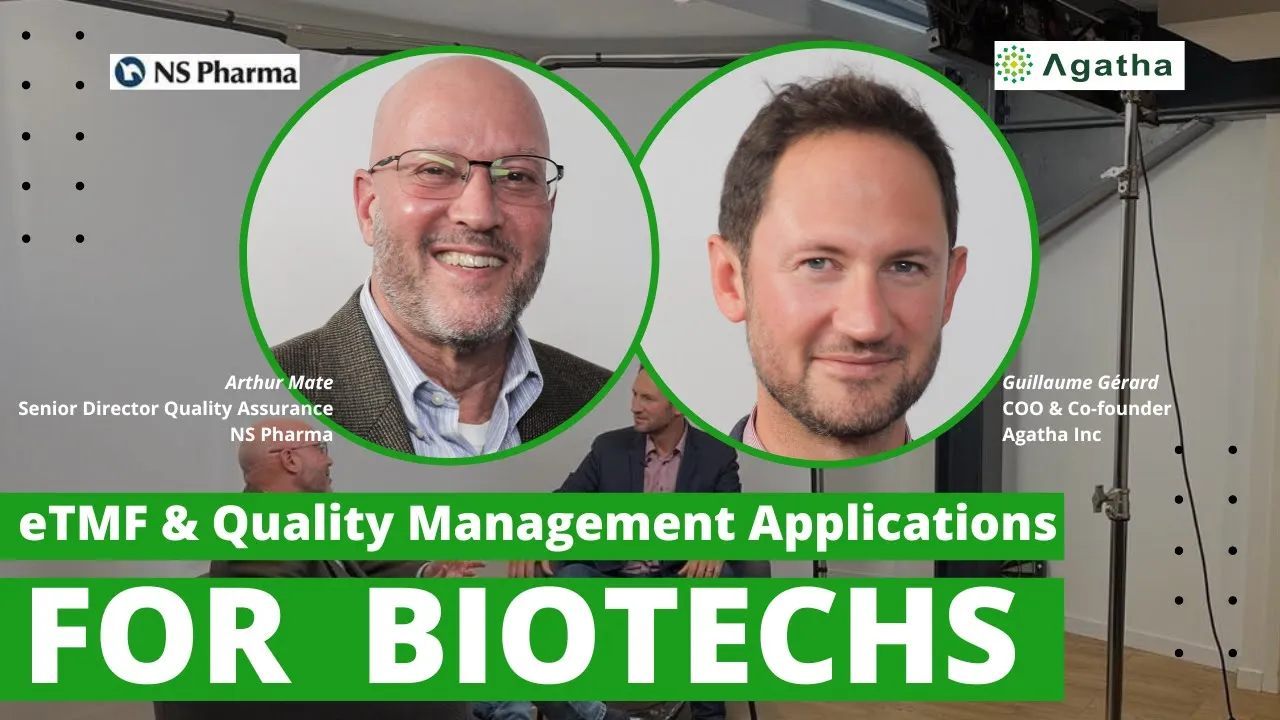
eTMF software and quality management software for biotechs ( Life sciences ) - Case study NS Pharma
Agathalife EN
/@Agathalife_EN
Dec 8, 2022
This video features an interview with Arthur Mate, Senior Quality Director at NS Pharma, Inc., a small pharmaceutical company specializing in rare diseases. Mate discusses his extensive background in the pharmaceutical industry, covering toxicology, clinical monitoring, quality assurance, electronic document management systems, computer system validation, audits, and inspections. The primary focus of the discussion revolves around NS Pharma's use of Agatha, an eTMF and quality management software, to manage their documentation, quality processes, and regulatory compliance, particularly in the context of FDA inspections. Mate explains that NS Pharma adopted Agatha approximately three years prior to his arrival, initially using it as a basic document repository for Standard Operating Procedures (SOPs) and a single Trial Master File (TMF). As the company grew, expanding its studies and requiring more robust quality assurance, Agatha's role evolved. Mate, tasked with building NS Pharma's quality group, leveraged Agatha to ensure the approval of their lead study, Vilarson, and to manage an increasing number of clinical trials and associated TMFs. The platform became instrumental in streamlining their quality processes, from SOP development and approval within Agatha to linking these procedures to employee training matrices, which is crucial for maintaining compliance and preparing for inspections. A significant portion of the interview highlights Agatha's utility during FDA inspections. Mate details how the system serves as the central repository for all SOPs, which are the first documents inspectors request to understand a company's business processes. The ability to manage SOP approvals and link them to training records within Agatha simplifies compliance tracking. Furthermore, the eTMF functionality allows NS Pharma to securely store and retrieve all source documentation for their studies, making it efficient to provide requested documents to health inspectors. Mate also touches upon the process of integrating eTMFs from Contract Research Organizations (CROs) into Agatha at the conclusion of a study, ensuring NS Pharma maintains control and security over critical clinical data. From a user perspective, Mate praises Agatha for its simplicity and ease of use, especially for a small company that prioritizes straightforward systems over complex ones. He notes its cloud-based nature, which simplifies validation requirements, often only necessitating performance testing. Mate recommends Agatha to other companies seeking a simple, cost-effective, and well-supported solution for quality and clinical document management, emphasizing its quick implementation and user-friendly interface. He underscores that Agatha's core strengths lie in its simplicity, reasonable cost, and the strong support provided by the Agatha team, all of which have contributed to NS Pharma's satisfaction with the platform. Key Takeaways: * **Centralized Document Management is Critical for Pharma:** NS Pharma utilizes Agatha as a central repository for SOPs and Trial Master Files (TMFs), demonstrating the necessity of a robust electronic document management system (EDMS) for managing critical pharmaceutical documentation. This ensures consistency, control, and accessibility of vital operational and clinical data. * **QMS and eTMF Support Regulatory Compliance:** The software plays a direct role in supporting FDA inspections by providing a structured system for storing, approving, and retrieving SOPs and clinical trial documentation. This highlights the importance of integrated QMS and eTMF solutions for meeting regulatory requirements. * **Streamlined SOP Management:** Agatha facilitates the entire lifecycle of SOPs, from development and internal approval to distribution and linking with employee training. This process is crucial for demonstrating adherence to established procedures during audits and inspections. * **Training Management Integration:** The ability to develop and manage training matrices within the QMS, linking them to specific employee roles and SOPs, is a key feature for ensuring personnel are adequately trained and compliant with their responsibilities, a common focus during regulatory reviews. * **Efficient Clinical Data Control:** NS Pharma uses Agatha to manage their eTMFs, including the secure transfer and control of documentation from CROs at the conclusion of studies. This ensures the integrity and security of clinical trial data post-study. * **Cloud-Based Solutions Simplify Validation:** The cloud-based nature of Agatha significantly reduces the validation burden for NS Pharma, often requiring only performance testing. This is a crucial consideration for biotech and pharma companies looking to adopt new software efficiently while maintaining compliance. * **Simplicity and Ease of Use are Valued:** For smaller pharmaceutical companies like NS Pharma, a simple, easy-to-use system is highly preferred over complex solutions. This minimizes training time, reduces user error, and ensures broader adoption across the organization. * **Cost-Effectiveness and Strong Support are Key Decision Factors:** Arthur Mate emphasizes that Agatha's reasonable cost and the excellent support from the vendor were significant factors in NS Pharma's satisfaction. These aspects are critical for resource-constrained smaller companies. * **Proactive Quality Group Development:** Mate's role in building a quality group and leveraging Agatha from an early stage underscores the importance of establishing robust quality infrastructure early in a biotech company's growth trajectory. * **Importance of Audit Trails and Approvals:** While not explicitly detailed, the mention of "getting approvals within Agatha" for SOPs and documentation implies the system provides an audit trail, which is fundamental for demonstrating compliance and accountability in regulated environments. * **Meeting Inspector Demands:** The video illustrates how a well-implemented eTMF/QMS system enables quick and accurate retrieval of requested documents during health inspections, directly addressing a critical pain point for pharmaceutical companies. Tools/Resources Mentioned: * **Agatha:** A software solution for eTMF and quality management. Key Concepts: * **eTMF (electronic Trial Master File):** A digital system for managing and storing essential clinical trial documents, ensuring regulatory compliance and data integrity. * **QMS (Quality Management System):** A formalized system that documents processes, procedures, and responsibilities for achieving quality policies and objectives, crucial for regulated industries like pharmaceuticals. * **SOPs (Standard Operating Procedures):** Detailed, written instructions to achieve uniformity of the performance of a specific function, critical for quality control and regulatory compliance. * **Computer System Validation:** The process of ensuring that a computer system does exactly what it is intended to do in a consistent and reproducible manner, especially important in regulated environments like pharmaceutical manufacturing and clinical trials. * **Training Matrix:** A tool used to identify the training requirements for different roles within an organization, ensuring employees have the necessary skills and knowledge to perform their duties compliantly. * **FDA Inspections:** Audits conducted by the U.S. Food and Drug Administration to ensure that pharmaceutical companies comply with regulations such as Good Manufacturing Practices (GMP), Good Clinical Practices (GCP), and Good Laboratory Practices (GLP). Examples/Case Studies: * **NS Pharma, Inc.:** A small pharmaceutical company based in New Jersey, focused on rare diseases, specifically Duchenne muscular dystrophy (DMD). They used Agatha to manage their TMF and quality processes, supporting the approval of their Vilarson study and subsequent growth in clinical trials. * **Vilarson:** The specific study mentioned by Arthur Mate that received approval, highlighting a tangible outcome of NS Pharma's quality and document management efforts with Agatha.

MLR in pharma: what does the future hold?
Anthill
/@helloanthill
Dec 7, 2022
This video provides an in-depth exploration of the future of Medical, Legal, and Regulatory (MLR) review processes in the pharmaceutical industry, emphasizing that true efficiency gains stem from fundamental operational restructuring centered around a "Content Creation Hub" and the adoption of modular content strategies. The speakers, drawing on experience from major pharmaceutical companies, stress that simply implementing new technology is insufficient; success requires standardizing processes and establishing centralized governance to manage the content supply chain effectively. The core challenge addressed is the difficulty of training hundreds of people on complex systems and ensuring consistency, which often leads to variations and poor quality inputs ("crap in, crap out"). A critical theme is the necessity of standardization and templates for modular content to function efficiently. Modular content requires a significantly different way of working and necessitates new organizational roles, such as "librarians," to manage and catalog content modules. Without standardization, the ability to plug modules into various downstream channels is severely hampered. The goal is to establish a baseline of consistent, high-quality content that allows regions and local affiliates to slowly build something more relevant and easily "pre-approved." This approach minimizes the need for full re-approval cycles and greatly assists in operationalizing the entire content supply chain. The experts advocate for an agile and adaptive approach, urging pharmaceutical companies not to "reinvent the wheel" but rather to look at existing industry solutions and best practices. A key structural recommendation is the establishment of a centralized "Content Factory" supported by dedicated content librarians. This centralized structure ensures consistency, facilitates easier tracing of content history, and allows MLR colleagues to focus their attention on high-risk or novel content, rather than redundant reviews. This operational shift is positioned as the solution to the widespread pain point of slow, inconsistent MLR processes. Ultimately, the discussion highlights that while MLR is often viewed as a necessary but tedious topic, optimizing it through modular content and a centralized Content Factory is essential for enabling rapid, compliant omnichannel engagement. The experts emphasize that flexibility is crucial, acknowledging that there is "no one-size-fits-all approach," but stressing that foundational elements like centralized governance and standardization are non-negotiable for achieving scalable operational efficiency and speeding up time-to-market for promotional and medical information materials. Key Takeaways: * **Operationalizing the Content Supply Chain:** Optimizing MLR requires viewing content creation as a supply chain, demanding a centralized "Content Creation Hub" to ensure consistency and manage the flow from creation to deployment. * **Standardization is Non-Negotiable:** Modular content cannot be truly efficient without rigorous standardization and the use of approved templates, which allows content modules to be consistently plugged into various downstream materials and channels. * **The "Crap In, Crap Out" Principle:** Variation in how 800+ people upload and work within content systems leads to inconsistent quality; centralizing training and standardizing input processes are essential to maintain high quality and compliance. * **New Roles Required:** The shift to modular content necessitates the creation of new roles, specifically "content librarians," who are responsible for managing, cataloging, and maintaining the library of approved content modules. * **Focus on Pre-Approval:** The strategic goal is to establish a baseline of content that is centrally "pre-approved," allowing local regions and affiliates to adapt and build upon it without triggering extensive, full MLR reviews for every minor variation. * **Agility in Decision Making:** Companies should be agile in adopting solutions and avoid the tendency to "reinvent the wheel," instead looking around the industry to see what proven solutions and processes others are successfully utilizing. * **Content Factory Model:** The recommended organizational structure is a centralized "Content Factory," which provides the necessary governance and infrastructure to support modular content and streamline the review process. * **MLR Focus Shift:** By implementing modular content and centralized governance, MLR teams can shift their focus from reviewing redundant or standardized content to concentrating their expertise on novel, high-risk, or complex materials, thereby removing unnecessary duplication of work. * **Support for Omnichannel Strategy:** Speeding up MLR and the content supply chain is crucial for supporting modern omnichannel engagement, enabling affiliates to respond faster and more relevantly to the needs of Healthcare Professionals (HCPs). * **Flexibility vs. Foundation:** While recognizing that "there is no one-size-fits-all approach" for every company, the foundational elements—centralized governance, standardization, and a Content Factory—are universal requirements for efficiency. Key Concepts: * **MLR (Medical, Legal, Regulatory Review):** The mandatory process in pharmaceutical and life sciences companies where all promotional and medical materials are reviewed and approved by medical, legal, and regulatory teams to ensure compliance. * **Modular Content:** An approach where content is broken down into small, reusable, approved blocks (modules) that can be assembled quickly into various communications (e.g., emails, presentations, websites) while maintaining compliance. * **Content Creation Hub / Content Factory:** A centralized organizational structure or platform responsible for the governance, creation, standardization, and management of all core content modules and templates. * **Content Supply Chain:** The end-to-end process flow of content, from initial creation and sourcing through MLR review, localization, distribution, and final delivery to the target audience. Tools/Resources Mentioned: * **Activator:** Mentioned in the description as a technology solution that enables content history tracing, makes approval status clearly visible, and helps streamline MLR reviews.

Financial Deception in Healthcare Highlights
AHealthcareZ - Healthcare Finance Explained
@ahealthcarez
Dec 4, 2022
This video provides an in-depth exploration of financial deception within the healthcare industry, arguing that such practices are not unique to healthcare but are common business strategies across all sectors. Dr. Eric Bricker, the speaker, begins by establishing this context, referencing an economist from the University of Chicago Business School, Albert Carr, who posited that executives are often compelled to practice some form of deception—through misstatements, concealment, or exaggeration—to gain a competitive advantage. Bricker applies this framework to healthcare, asserting that to think the business side of healthcare is immune to such tactics due to its life-and-death nature is naive. The presentation then systematically details over 30 examples of financial deception, categorized by different stakeholders within the healthcare ecosystem. The core of the video progresses through specific examples of deceptive practices across various healthcare entities. It starts with physicians, discussing the significant financial gifts from pharmaceutical and medical device companies, including food, stock options, and grants, and how these can potentially bias continuing medical education. Moving to hospitals, Bricker highlights the practice of "charge capture" and "upcoding," citing the dramatic 300% increase in sepsis coding after Medicare increased its Diagnosis-Related Group (DRG) reimbursement for the condition, implying a financial incentive rather than a true increase in incidence. The discussion then shifts to health insurance, unraveling the complexity and often misleading nature of deductibles, particularly the concept of multiple individual and family deductibles, both in-network and out-of-network, and the "embedded deductible" structure that makes it difficult for families to meet their stated family deductible. Further examples delve into the pharmaceutical industry's strategies to extend market exclusivity and delay generic competition. This includes the practice of filing multiple patents on a single medication, as seen with Humira, to prolong its patent life beyond the standard 17 years. Additionally, Bricker explains "pay-to-delay" schemes, where brand-name pharmaceutical companies financially compensate generic manufacturers to postpone the release of generic versions of drugs. The final category of deception focuses on private equity firms, illustrating how they circumvent "corporate practice of medicine" laws, which typically forbid corporations from owning physician practices, by establishing shell management companies. This allows private equity giants like KKR and Blackstone to acquire large physician groups, effectively employing tens of thousands of providers. The video concludes with a "buyer beware" message, urging individuals to be actively engaged and critically think about healthcare transactions, while acknowledging the inherent difficulty of this approach, especially for those who are ill or suffering. Key Takeaways: * **Deception as a Business Strategy:** The video posits that deception, including conscious misstatements, concealment of facts, or exaggeration (bluffing), is a common and often effective business strategy across all industries, including healthcare. Ignoring this reality can put an entity at a disadvantage. * **Financial Influence on Physicians:** Pharmaceutical and medical device companies provide substantial financial gifts to doctors, totaling $2.4 billion annually, with the majority being food. These gifts, along with stock options and grants, can potentially bias medical education and prescribing practices. * **Hospital Upcoding for Reimbursement:** Hospitals engage in "charge capture" practices that can lead to upcoding. A notable example is the 300% increase in sepsis coding after Medicare increased its DRG reimbursement for the condition, suggesting a financial incentive drove the diagnostic shift rather than a true epidemiological change. * **Complexity of Insurance Deductibles:** Health insurance deductibles are often deceptively complex. Families typically face four deductibles (individual in-network, individual out-of-network, family in-network, family out-of-network), and the "embedded deductible" structure means multiple family members must individually meet their deductibles before the family deductible is satisfied, leading to significant unexpected out-of-pocket costs. * **Pharmaceutical Patent Manipulation:** Pharmaceutical companies employ strategies to prolong drug patents beyond the standard 17 years, such as filing dozens of patents on a single medication. This extends market exclusivity, delaying generic competition and keeping drug prices high. * **"Pay-to-Delay" Generic Drug Schemes:** Brand-name pharmaceutical companies often pay generic drug manufacturers to delay the release of generic versions of medications. This anti-competitive practice prevents more affordable alternatives from entering the market, benefiting the brand-name company financially. * **Private Equity's Circumvention of Corporate Practice Laws:** Private equity firms bypass "corporate practice of medicine" laws, which prohibit corporations from owning physician practices, by creating shell management companies. These shell companies, nominally led by a physician, then acquire and manage large groups of providers, effectively allowing private equity to control healthcare delivery. * **Scale of Private Equity Acquisitions:** Major private equity firms like KKR and Blackstone have acquired massive physician groups, such as Envision (25,000 providers for $10 billion) and TeamHealth (20,000 providers for $6 billion), demonstrating the significant financial investment and control private equity exerts over healthcare providers. * **The "Buyer Beware" Imperative:** Given the prevalence of deception, individuals are urged to adopt a "Caveat Emptor" (buyer beware) mindset, actively engaging, verifying information, and thinking critically about healthcare services and costs. * **Challenges of Individual Vigilance:** The video acknowledges that relying solely on individual vigilance is an imperfect solution, as patients who are in pain, suffering, or emotionally distraught are often not in a position to think critically or advocate effectively for themselves. Key Concepts: * **Deception as a Business Strategy:** The idea that misrepresentation or concealment can be a deliberate and effective tactic in business negotiations and operations. * **Charge Capture:** The process in healthcare facilities of documenting and translating services rendered into billable codes for reimbursement. * **DRG (Diagnosis-Related Group) Reimbursement:** A system used by Medicare and other insurers to classify hospital cases into groups with similar resource consumption and then pay a fixed amount per case. * **Embedded Deductible:** A feature in family health insurance plans where individual family members must meet a certain portion of the deductible before the family deductible is met, even if the family's total out-of-pocket expenses exceed the family deductible amount. * **Patent Evergreening:** Strategies used by pharmaceutical companies to extend the patent life of their drugs beyond the initial term, often through minor modifications or additional patents. * **Pay-to-Delay (Reverse Payment Settlements):** Agreements where a brand-name drug manufacturer pays a generic drug manufacturer to delay bringing its generic product to market. * **Corporate Practice of Medicine Laws:** State laws that prohibit corporations from directly employing physicians or owning medical practices, intended to prevent non-medical entities from interfering with clinical judgment. Examples/Case Studies: * **Humira Patent Extension:** Cited as an example of a pharmaceutical company using multiple patents to extend a drug's market exclusivity well beyond the standard 17 years. * **Sepsis Coding Increase:** The 300% increase in sepsis coding after Medicare increased reimbursement for DRGs related to sepsis, illustrating how financial incentives can influence diagnostic coding. * **KKR and Envision:** KKR's acquisition of Envision, a group of 25,000 providers, for $10 billion, demonstrating private equity's large-scale ownership of physician practices. * **Blackstone and TeamHealth:** Blackstone's purchase of TeamHealth, comprising 20,000 providers, for $6 billion, further highlighting the trend of private equity investment in healthcare provider groups.

Episode 6: Data Managers: Driving the Future of Clinical Research
Veeva Systems Inc
/@VeevaSystems
Dec 2, 2022
This video directly addresses the evolving landscape of clinical data management within the pharmaceutical industry, the strategic importance of data, and the increasing role of advanced technologies like AI/ML. This video explores the transformative journey of clinical data management, highlighting its shift from a back-office function to a strategic imperative driving the future of clinical research. Richard Young and Mayank Anand discuss how data professionals' roles are evolving in an era of decentralized data, emphasizing the critical need for data to optimize trial protocols, operations, and patient access to treatments. The conversation delves into GSK's innovative approach to data strategy and management, which integrates various data functions and prioritizes an enterprise mindset, stakeholder collaboration, and patient-centricity. A key theme is the operationalization of AI/ML in clinical research, moving beyond buzzwords to real-world applications, while also considering ethical implications and the need for continuous professional evolution. Key Takeaways: * **Strategic Elevation of Data Management:** Clinical data management is no longer a secondary function but is now "front and center" in optimizing clinical trials, requiring professionals to drive the future of research rather than just support it. * **AI/ML as an Operational Reality:** AI and Machine Learning are no longer just buzzwords but are becoming integral to clinical data management, offering significant opportunities for efficiency and transformation, necessitating discussions around ethical AI and regulatory alignment. * **Integrated Data Strategy for End-to-End Oversight:** Leading pharmaceutical companies like GSK are adopting a holistic "Data Strategy and Management" approach, consolidating functions such as data acquisition, medical coding, core data management, centralized monitoring, and data analytics to ensure comprehensive and strategic data oversight. * **Enterprise Mindset and Collaborative Innovation:** Successful data transformation requires an "enterprise mindset" that considers all stakeholders (clinical operations, biostats, pharmacovigilance, etc.) and fosters collective ownership, utilizing agile methodologies to accelerate delivery and manage complex interdependencies. * **"Total Experience" for Adoption and Impact:** Designing new technologies and processes with "Total Experience" (TX) in mind—encompassing change management, communication, and the impact on all end-users, including patients and investigators—is crucial for successful adoption and achieving desired outcomes. * **Evolving Role of Data Professionals:** The traditional "data manager" role is transforming into future-oriented positions like "data scientist" or "data engineer," emphasizing continuous learning and adaptation to new technologies, rather than fearing job displacement by AI. * **Challenges in Infrastructure and Data Democratization:** Significant industry challenges persist in modernizing legacy infrastructure and achieving broader data democratization, highlighting areas for future innovation and collaborative efforts to unlock the full potential of clinical data.

Patient Advocacy with Graith Care - Priscilla Romans
Self-Funded
@SelfFunded
Nov 29, 2022
This video provides an in-depth exploration of patient advocacy through a conversation with Priscilla Romans, CEO and Founder of Graith Care. Romans discusses the origin story of her independent patient advocacy firm, detailing her personal and professional journey from a nursing background and entrepreneurial family to identifying critical gaps in the healthcare system. The core purpose of Graith Care is to empower patients by providing transparency, control, and comprehensive options for their healthcare decisions, ultimately aiming to improve outcomes, efficiency, and cost-effectiveness. The discussion highlights the systemic challenges within the current healthcare model, where patients often feel disempowered, uninformed, and constrained by institutional policies and financial incentives. Romans elaborates on the practical application of patient advocacy, explaining how Graith Care operates as an independent entity, free from hospital or insurance company affiliations, to solely serve the patient's best interest. She describes the process of clients engaging with Graith Care, from initial contact to being matched with one of their 20+ specialized advocates who possess diverse backgrounds in critical care, insurance, naturopathy, and therapy. A significant portion of the conversation focuses on real-world scenarios, including complex hospital cases where patients' primary ailments are overlooked due to COVID-19 protocols and incentives, and situations where patients seek alternative or complementary treatments not offered by their primary care providers. Graith Care acts as a "second set of eyes," helping families navigate medical decisions, plan discharges, and even facilitate critical patient transfers between facilities when standard care pathways are insufficient or undesired by the patient. The discussion also delves into the future of patient advocacy, emphasizing the growing need for a collaborative approach that integrates allopathic (conventional) medicine with alternative and holistic treatment options. Romans advocates for a shift in mindset within the healthcare industry, urging for greater recognition and coverage of complementary therapies, such as high-dose IV ascorbic acid for cancer patients, which are often dismissed despite being relatively inexpensive and potentially beneficial. She attributes the bias against such treatments to doctors' limited training in nutrition and holistic approaches, coupled with the systemic pressures of short patient visit times and productivity scores. Romans passionately argues for a return to patient-centered care, where informed consent and individual choice are paramount, and where collaboration between all healthcare stakeholders—from physicians to nurses and advocates—prioritizes the patient's well-being over institutional constraints. Key Takeaways: * **Empowering Patient Control and Transparency:** Graith Care's mission is to restore control and transparency to healthcare consumers, ensuring patients are fully informed of all options to make the best decisions for their unique situations. This counters the common feeling of disempowerment within the complex healthcare system. * **Independent Advocacy Model:** Graith Care operates independently of hospitals and insurance companies, allowing advocates to provide unbiased advice and recommendations. This independence removes the "blinders of policies and procedures" that often constrain institutional providers. * **Diverse Advocacy Services:** The firm offers over 40 types of advocacy services, ranging from navigating insurance claims and appeals to finding transplant advocates, exploring holistic alternatives, and managing pediatric to adult care needs. This breadth addresses the multifaceted challenges patients face. * **Addressing Systemic Gaps in Care:** The video highlights critical gaps, such as the neglect of primary medical issues due to hospital incentives for specific protocols (e.g., COVID-19), and the lack of comprehensive discharge planning, which contributes to high readmission rates. * **Facilitating Patient Transfers:** Graith Care assists patients in transferring to facilities that offer desired treatments or protocols not available at their current hospital. This often involves complex logistics, collaboration with physicians, and sometimes legal pressure to ensure patient choice is honored. * **Challenging the Allopathic-Only Mindset:** Romans advocates for integrating complementary and alternative treatment options alongside conventional medicine, citing examples like high-dose IV ascorbic acid for cancer patients. She emphasizes that these are not "fufu" but scientifically supported options that should be covered by insurance. * **Physician Constraints and Bias:** Doctors often lack comprehensive training in nutrition and holistic treatments, and are constrained by short appointment times (e.g., 15 minutes) and productivity metrics. This systemic pressure limits their ability to discuss broader treatment options or engage in deeper patient-physician relationships. * **Proactive vs. Reactive Healthcare:** Graith Care emphasizes proactive planning to prevent health crises, arguing that it is more cost-effective and leads to better outcomes than reacting to problems. This approach aims to keep individuals out of the "hands of crisis" where bad decisions are often made. * **Importance of a Collaborative Network:** The success of Graith Care relies on a strong network of diverse professionals, including nurses, insurance experts, naturopaths, physical therapists, and occupational therapists, who can collectively address the wide range of patient needs. * **Transparency in Pricing and Services:** Graith Care maintains transparent pricing and FAQs online, and commits to quick follow-up, especially for critical hospital cases, demonstrating a commitment to accessibility and responsiveness. * **The "Molly and Jim" Case Study:** This example illustrates the challenges of patient choice in a high-tier hospital where a doctor refused to consider alternative treatments or transfer, highlighting the need for external advocacy to ensure patient options are presented and pursued. * **Impact of Information Suppression:** The speaker's experience with a viral TikTok video promoting cash price negotiations being taken down suggests a broader issue of information suppression regarding patient empowerment and alternative healthcare options. Key Concepts: * **Patient Advocacy:** The act of supporting and representing patients to ensure their rights, wishes, and needs are met within the healthcare system, especially when they are unable to do so themselves. * **Informed Consent:** The ethical and legal requirement that patients understand the risks, benefits, and alternatives of a proposed medical procedure or treatment before agreeing to it. * **Independent Advocacy:** Advocacy services provided by an entity not affiliated with hospitals, insurance companies, or other healthcare providers, ensuring unbiased representation of the patient's interests. * **Allopathic Medicine:** The conventional Western medical system that treats diseases with drugs, surgery, or radiation. * **Complementary and Alternative Medicine (CAM):** A group of diverse medical and health care systems, practices, and products that are not generally considered part of conventional medicine. "Complementary" means used together with conventional medicine; "alternative" means used in place of conventional medicine. * **Cash Price Negotiations:** The practice of patients asking for and negotiating the direct cost of medical services or pharmaceuticals, often bypassing insurance, which can sometimes lead to lower prices. Examples/Case Studies: * **COVID-19 Hospital Protocols:** Patients admitted for primary issues (e.g., colitis) being diagnosed with COVID-19 via PCR tests, leading to neglect of their original ailment due to hospital incentives for COVID protocols. Graith Care helps families redirect focus to the primary issue and immune support. * **Patient Transfers for Alternative Treatments:** Cases where patients in critical care (e.g., with COVID-19) desire specific "Frontline doctors protocols" (e.g., IV ascorbic acid, Ivermectin) not offered by their hospital. Graith Care facilitates transfers to facilities willing to provide these options, involving complex logistics like air ambulances. * **"Molly and Jim" Story:** A patient in a high-tier South Dakota hospital whose doctor refused to offer or facilitate alternative treatments or a transfer. Graith Care intervened, navigating institutional resistance to successfully transfer the patient, emphasizing the patient's right to choose. * **Cancer Treatment Alternatives:** Discussion of cancer patients seeking to combine conventional treatments (chemo, radiation) with complementary options like high-dose IV ascorbic acid for immune support, highlighting the need for oncologists to be open to these alternatives.
Medicare Advantage Overpayments
AHealthcareZ - Healthcare Finance Explained
@ahealthcarez
Nov 27, 2022
This video provides an in-depth exploration of the systemic issue of government overpayments to Medicare Advantage (MA) plans, highlighting a significant financial and regulatory challenge within the U.S. healthcare system. Dr. Eric Bricker, the speaker, begins by detailing the Centers for Medicare & Medicaid Services (CMS) risk adjustment methodology, which dictates payments to private MA plans based on a beneficiary's health conditions. He illustrates how this system financially incentivizes MA plans to identify and potentially exaggerate the severity of chronic conditions, leading to increased payments from CMS. The video then progresses to discuss the legal and auditing failures surrounding these overpayments, culminating in a critical look at the political and financial forces that appear to perpetuate the problem. The core of the issue, as presented, lies in the financial incentives embedded within the risk adjustment model. MA plans receive a base rate per member, which is then adjusted upwards if the member has more chronic conditions, reflecting higher anticipated healthcare costs. Conversely, healthier individuals result in lower payments. This structure, while designed to account for varying healthcare needs, creates a strong incentive for plans to "game the system" by making beneficiaries appear sicker than they might be. The Department of Justice has taken action, suing major insurers like Cigna and Elevance (Anthem) for allegedly inflating Medicare payments through such exaggerations. However, Dr. Bricker points out a deeper, more troubling problem: CMS's own auditing process is severely lacking, with the most recent audits dating back a decade (2011-2013), identifying $650 million in overpayments that CMS has largely failed to act upon or even disclose. The lack of transparency and action by CMS is a central theme. The Kaiser Family Foundation (KFF) had to resort to a Freedom of Information Act (FOIA) request, and subsequently a three-year lawsuit, to compel CMS to release its own audit findings. This resistance from CMS suggests a reluctance to reveal or address the overpayment issue, which Dr. Bricker attributes to either incompetence or political pressure. He further introduces a controversial perspective by highlighting the significant financial ties between AARP and Medicare Advantage plans, particularly UnitedHealthcare. AARP receives substantial royalty payments from endorsing healthcare products, including MA plans, which far exceed its member dues. This financial incentive, Dr. Bricker speculates, could potentially influence AARP's stance on the quiet maintenance of the "Medicare Advantage gravy train," thereby contributing to the political inertia surrounding reform. Ultimately, the video concludes with a pessimistic outlook on immediate change. With Medicare Advantage enrollment rapidly growing and projected to surpass traditional Medicare, the overpayments—estimated at $7 billion more than traditional Medicare in 2019—are hastening the depletion of the Medicare Part A trust fund, which is projected to run out by 2028. Despite these alarming financial implications and evidence of systemic issues, Dr. Bricker argues that political will for reform is absent, largely due to high re-election rates for incumbents and a lack of public outcry. He suggests that meaningful change is unlikely until a full-blown crisis forces the issue, echoing the sentiment of "never let a crisis go to waste." Key Takeaways: * **Medicare Advantage Risk Adjustment Incentives:** CMS's payment model for Medicare Advantage plans, based on risk scores reflecting chronic conditions, creates a strong financial incentive for plans to maximize the reported sickness of their members to increase payments. * **Allegations of System Gaming:** The Department of Justice and the Office of Inspector General have sued major Medicare Advantage providers like Cigna and Anthem for allegedly exaggerating beneficiary health conditions to inflate payments from CMS. * **CMS Audit Deficiencies:** CMS's internal audits of Medicare Advantage plans are severely outdated, with the most recent data from 2011-2013. These audits identified $650 million in overpayments, but CMS has taken minimal action to recover these funds. * **Lack of Transparency from CMS:** CMS initially refused to release its own audit findings, requiring the Kaiser Family Foundation to file a Freedom of Information Act request and a subsequent three-year lawsuit to obtain the information. * **Potential Influence of AARP:** AARP receives substantial royalty payments (over $750 million annually in 2020) from endorsing healthcare products, including Medicare Advantage plans, particularly from UnitedHealthcare, raising questions about its potential influence on policy and the lack of reform. * **Financial Burden on Medicare:** Medicare Advantage plans are significantly more expensive for Medicare than traditional Medicare, with overpayments estimated at $7 billion more in 2019, contributing to the accelerated depletion of the Medicare Part A trust fund. * **Impending Trust Fund Depletion:** The Medicare Part A trust fund, which pays for hospital services, is projected to run out by 2028, a crisis that is being hastened by the overpayments to Medicare Advantage plans. * **Political Inertia:** Despite clear evidence of overpayments and financial strain, there is a perceived lack of political will to address the issue, partly due to high re-election rates for congressional representatives and a lack of public demand for change. * **Growth of Medicare Advantage:** Medicare Advantage enrollment has nearly doubled in less than a decade, now covering almost half of all Medicare beneficiaries, indicating its growing impact on the overall healthcare system. * **No Immediate Change Expected:** The speaker concludes that fundamental changes to the risk adjustment methodology or the auditing process are unlikely in the near future, suggesting that the "Medicare Advantage gravy train" will continue until a significant crisis forces action. Tools/Resources Mentioned: * NPR * Commonwealth Fund * Reuters * FierceHealthcare * OpenSecrets * Kaiser Family Foundation (KFF) * Freedom of Information Act (FOIA) Key Concepts: * **Medicare Advantage (MA):** Private health insurance plans that contract with Medicare to provide Part A and Part B benefits. * **Centers for Medicare & Medicaid Services (CMS):** The federal agency that administers Medicare, Medicaid, and the Children's Health Insurance Program. * **Risk Adjustment:** A methodology used by CMS to adjust payments to MA plans based on the health status and demographic characteristics of their enrollees, aiming to pay more for sicker patients and less for healthier ones. * **Department of Justice (DOJ):** The federal department responsible for enforcing the law, including prosecuting cases of fraud against government programs. * **Office of Inspector General (OIG):** An independent oversight body within the Department of Health and Human Services (HHS) that combats waste, fraud, and abuse in HHS programs. * **AARP:** A non-profit organization advocating for the rights and interests of older Americans, which also generates significant revenue through royalty payments from endorsing various products and services, including Medicare Advantage plans. * **Medicare Part A Trust Fund:** The federal fund that pays for hospital inpatient care, skilled nursing facility care, hospice care, and some home health care. Examples/Case Studies: * **DOJ Lawsuits:** The Department of Justice has sued Cigna and Elevance (Anthem) for allegedly inflating Medicare payments by exaggerating beneficiary sickness. * **Kaiser Family Foundation vs. CMS:** KFF had to sue CMS under the Freedom of Information Act to obtain CMS's own audit findings regarding Medicare Advantage overpayments, a legal battle that lasted three years. * **AARP and UnitedHealthcare:** AARP receives substantial royalty payments from UnitedHealthcare for endorsing its Medicare Advantage plans, which often carry the AARP brand name.
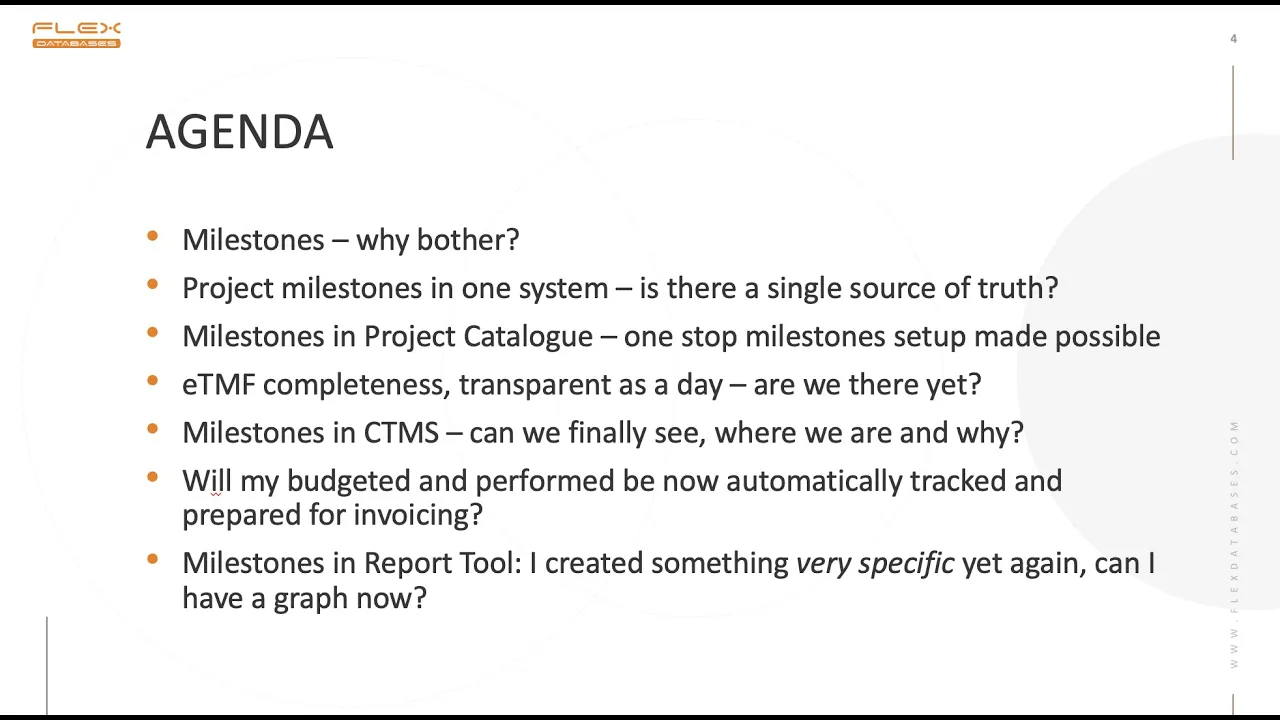
Webinar: Actionable milestones to connect and control project performance throughout CTMS & eTMF
Flex Databases
/@Flexdatabases
Nov 21, 2022
This webinar, presented by Flex Databases, provides an in-depth exploration of how "actionable milestones" can be effectively utilized within their integrated CTMS (Clinical Trial Management System) and eTMF (electronic Trial Master File) to connect and control project performance throughout clinical trials. The core purpose is to demonstrate how a synchronized milestone system can optimize project management, streamline document tracking, automate financial processes, and enhance reporting capabilities, ultimately leading to greater transparency and efficiency in clinical operations. The presenters, Montasser (Project Manager) and Kenya (from Flex Databases), highlight the system's ability to address common pain points such as miscommunication, delays in financial processes, and challenges in assessing project completeness. The session begins by establishing the fundamental need for milestones in project management, emphasizing their role in meeting deadlines, allocating resources, increasing study visibility, and demonstrating success for financial targets. A key theme is the concept of "rolling milestones" and "connected vessels," illustrating how milestones, once defined, automatically synchronize and travel across various modules of the Flex Databases system. This includes the Project Catalog (initial source), eTMF (for document completeness), CTMS (for site-level data), and Project Management & Budgeting (for financial tracking). The webinar progresses by detailing the implementation of milestones in each of these areas, providing specific examples and demonstrating the system's functionalities through brief video demos. Throughout the presentation, the speakers underscore the system's unique methodologies, such as the automatic "Roll-Ups" feature, where site-level milestone achievements (e.g., first patient in) automatically update country and global/study level milestones, taking the earliest date for the global achievement. This significantly reduces manual data entry and potential errors in multi-country studies. Furthermore, the integration of milestones with budgeting and invoicing rules allows for automated generation of invoices based on milestone completion, ensuring timely cash flow management. The final segment focuses on the comprehensive reporting tool, which leverages all interconnected milestone data to generate predefined and custom reports, charts, and graphs for assessing performance, identifying bottlenecks, and troubleshooting. This holistic approach aims to provide all stakeholders, from project managers to finance teams and sponsors, with real-time, actionable insights into trial progress and performance. Key Takeaways: * **Centralized Milestone Management:** Milestones are established at the project's inception within a "Project Catalog" and serve as the initial, single source of truth for project progress, supporting resource allocation and enhancing study visibility. * **Automated Milestone Synchronization:** Once defined, milestones automatically "travel" and synchronize across various modules of the Flex Databases system, including eTMF, CTMS, and Project Management & Budgeting, ensuring consistent data across all departments. * **eTMF Completeness by Milestone:** Milestones are integrated into the eTMF to automatically assess document completeness. The system indicates expected and missing documents for specific milestones, guiding teams on what needs to be uploaded or finalized to meet deadlines and ensure regulatory readiness. * **Dynamic CTMS Integration:** Site-level data entered into the CTMS (e.g., a PI indicating the first patient recruited, or a CRA uploading an SQV report) automatically updates the corresponding milestones across the entire system, eliminating miscommunication and manual tracking. * **Hierarchical Milestone Roll-Ups:** The system supports three levels of milestones: site, country, and global/study. Site-level milestone achievements automatically roll up to country and global levels, with the system identifying and applying the earliest date for the global achievement, which is crucial for international studies. * **Flexible Milestone Timelines:** Milestones can be defined with three key dates: "Planned Date" (initial target), "Forecast Date" (team's expectation), and "Actual Date" (when achieved), allowing for comprehensive tracking against original plans and current predictions. * **Automated Milestone-Based Invoicing:** The system enables the creation of invoicing rules tied to milestone achievements. When a milestone is reached, the finance team is immediately aware, and invoices can be automatically generated for sponsors, optimizing cash flow and reducing manual effort. * **Task Dependency Automation:** Project tasks can be linked to specific milestones. If a milestone's date changes (e.g., the planned date is adjusted), the dates of all connected tasks automatically update, maintaining the integrity and accuracy of the project plan. * **Comprehensive Reporting Capabilities:** All synchronized milestone data feeds into a powerful "Report Tool," allowing users to generate predefined reports (e.g., overdue, upcoming milestones) or create custom reports with charts and graphs to assess project performance, identify bottlenecks, and troubleshoot based on real data. * **Configurable Grace Periods for Documents:** For documents associated with eTMF milestones, the system allows for configurable grace periods (e.g., days for upload, days for review) in the system settings, providing flexibility while still tracking compliance. * **Support for Diverse Invoicing Milestones:** The system accommodates both project-driven and financially-driven milestones for invoicing, offering flexibility to align with various contractual payment terms beyond just project progress. * **Future Logic Checks for Milestones:** While not currently implemented, the idea of introducing logic checks (e.g., ensuring a patient is screened before being "in") for default milestones was acknowledged as a valuable future development, indicating a focus on data integrity. **Tools/Resources Mentioned:** * **Flex Databases:** The overarching platform providing the CTMS, eTMF, Project Catalog, Project Management & Budgeting, Report Tool, and Investigators and Site Management modules. * **DIA (Drug Information Association):** Mentioned as a source for recommended eTMF structures, which the Flex Databases system can accommodate. **Key Concepts:** * **Actionable Milestones:** Project measurements that, upon achievement, trigger specific actions, updates, or assessments within the system, driving project progress and automation. * **CTMS (Clinical Trial Management System):** A software system designed to manage and track various operational aspects of clinical trials, including site and patient data. * **eTMF (electronic Trial Master File):** A secure, electronic repository for all essential clinical trial documents, crucial for regulatory compliance and audit readiness. * **Roll-Ups:** A data aggregation feature where information from lower-level entities (e.g., site-specific milestone dates) automatically updates higher-level entities (country or global study milestones). * **Connected Vessels:** A metaphor used to describe the seamless, real-time data synchronization and flow between different modules of the Flex Databases system. * **Planned Date:** The initial target date for a milestone, often agreed upon during study planning or in contracts. * **Forecast Date:** The project team's current prediction for when a milestone will be achieved. * **Actual Date:** The definitive date on which a milestone was successfully completed. * **Lap:** The calculated difference in days between planned/forecast dates and the actual achievement date, used to measure performance against schedule. **Examples/Case Studies:** * **eTMF Document Management:** The "clinical infrastructure ready" milestone is used to demonstrate how the system tracks required documents (e.g., TMF plan, monitoring plan, quality plan, list of SOPs). It highlights how the system shows expected and missing documents, along with their deadlines, to ensure timely completion. * **Site-level Data to Global Milestone:** A scenario where a site in Germany recruits its first patient on November 2nd. This date, entered by the Principal Investigator (PI) in the "Investigators and Site Management" module of CTMS, automatically updates the "first subject in" milestone in the Project Catalog and other relevant system parts. * **Automated Invoice Generation:** An example of an invoicing rule tied to the "first site activated" milestone. Upon this milestone's achievement, the system automatically generates an invoice for the sponsor based on pre-defined budget assumptions and tasks. * **Performance Reporting:** Custom reports are shown comparing "site activation to first subject in" periods across different sites and countries, displaying planned vs. actual dates and the "lap" (time difference). Another report tracks "protocol finalized to first site initiated" at a global level, showing planned, forecast, and actual dates to assess overall study progress.

DVQT Walkthrough
Daelight Solutions
/@daelightsolutions2128
Nov 18, 2022
This video provides an in-depth walkthrough of the Daylight Vault Query Tool (DVQT), an interactive user interface designed to streamline the extraction and analysis of data from Veeva Vault instances. Presented by Mike Mulhearn, the solutions lead at Daylight and creator of DVQT, the tool was initially conceptualized to assist their migration and integration teams in better analyzing Veeva Vault environments, ultimately enhancing their ability to deliver high-quality client solutions. The demonstration highlights DVQT's efficiency, ease of use, and unique capabilities that extend beyond standard VQL (Vault Query Language) functionalities. The core of DVQT's value proposition lies in its ability to overcome common limitations encountered when working with Veeva Vault data. It comes pre-packaged with helpful sample queries and allows users to build and store their own. A standout feature is its capacity to automatically extract all attributes for a given object, a functionality not natively available with VQL alone, making comprehensive data retrieval significantly easier. Furthermore, DVQT is engineered to handle large queries with exceptional efficiency, capable of returning over one million results per minute on a typical laptop, addressing a major pain point often experienced with other tools like Postman due to API limitations. The demo systematically guides the viewer through the tool's interface and functionalities. After a straightforward login process that accommodates both single sign-on and password-based accounts, users are presented with a query window. Mulhearn demonstrates running a "documents query" using a `select *` command, showcasing how DVQT retrieves all attributes for an object and efficiently handles large result sets. The tool then allows for local transformation of the retrieved data using standard SQL commands, enabling further filtering, aggregation (e.g., counting documents per study), and advanced analysis such as duplicate document detection using MD5 checksums. Finally, the processed data can be easily exported into various formats, including Excel, CSV, JSON, and SQLite, facilitating integration with other systems or reporting tools. The video concludes by highlighting additional features like viewing all queryable objects, retrieving object metadata, and exporting pick list values, underscoring DVQT's comprehensive utility for anyone working extensively with Veeva Vault. Key Takeaways: * **Efficient Veeva Vault Data Extraction:** DVQT provides an interactive user interface for quickly extracting and analyzing data from Veeva Vault instances, addressing common challenges faced by migration, integration, and data analysis teams. * **Overcoming VQL Limitations:** The tool offers unique capabilities not available with VQL alone, such as the ability to automatically extract *all* attributes for a given object using a simple `select *` query, significantly simplifying comprehensive data retrieval. * **High Performance for Large Datasets:** DVQT is highly efficient in handling large queries, capable of returning over one million results per minute, which is a substantial improvement over other methods that may be constrained by API limitations (e.g., Postman). * **Local SQL Data Transformation:** Users can perform local data transformations and advanced analysis on retrieved Veeva Vault data using standard SQL commands, allowing for filtering, aggregation, and complex operations directly within the tool. * **Versatile Data Export Options:** Query results can be easily exported into multiple formats, including Excel, CSV, JSON, and SQLite, providing flexibility for further analysis, reporting, or integration with other business intelligence tools. * **Pre-packaged and Custom Query Management:** DVQT comes with pre-packaged sample queries for common use cases and allows users to store their own useful queries, accelerating workflow and promoting best practices. * **Advanced Data Analysis Features:** The demo specifically highlights functionalities like duplicate document detection using MD5 checksums and the ability to aggregate data (e.g., count documents per study), which are critical for data quality and operational insights. * **Comprehensive Veeva Vault Metadata Access:** The tool enables users to view all VQL queryable objects, retrieve detailed metadata for specific objects, and export all pick list values, providing a deeper understanding of the Veeva Vault data model. * **Regulatory Compliance Support:** The ability to view audit trails for documents directly within the tool is crucial for maintaining regulatory compliance and facilitating audit readiness, as it provides a clear record of changes and actions. * **Accessibility and Cost-Effectiveness:** DVQT is available globally and can be requested for free from the Daylight Solutions website, making it an accessible and cost-effective solution for organizations working with Veeva Vault. Tools/Resources Mentioned: * **DVQT (Daylight Vault Query Tool):** The primary tool demonstrated for Veeva Vault data extraction and analysis. * **Veeva Vault:** The enterprise content and data management platform from which DVQT extracts data. * **VQL (Vault Query Language):** Veeva's proprietary query language, enhanced by DVQT's features. * **SQL:** Used for local data transformation and analysis within DVQT. * **Postman:** Mentioned as a comparison point for its limitations in handling large Veeva API query results. * **Export Formats:** Excel, CSV, JSON, SQLite. Key Concepts: * **Veeva Vault:** A cloud-based content and data management platform widely used in the life sciences industry for managing documents, quality processes, clinical operations, and regulatory submissions. * **VQL (Vault Query Language):** A SQL-like language used to query data within Veeva Vault. * **MD5 Checksum:** A cryptographic hash function used to verify data integrity and identify duplicate files based on their content. * **Pick List Values:** Predefined, standardized lists of options for specific fields within Veeva Vault, ensuring data consistency. * **Audit Trail:** A chronological record of events, actions, and changes made within a system or to a document, essential for regulatory compliance and accountability. Examples/Case Studies: * **Documents Query:** Demonstrating how to retrieve all attributes for documents stored in Veeva Vault, including handling large result sets. * **Aggregating Documents per Study:** Using SQL to count the number of documents associated with each study, providing insights into clinical data management. * **Duplicate Document Detection:** Identifying duplicate documents within Veeva Vault by comparing their MD5 checksums, crucial for data quality and storage optimization.

A Fiduciary's Guide to Data Analytics with Agility Innovation Partners
Self-Funded
@SelfFunded
Nov 17, 2022
This video provides an in-depth exploration of how data analytics, particularly in the context of the Consolidated Appropriations Act (CAA), is transforming health plan management for employers and the role of benefits brokers. Brian Behnken, Chief Data and Analytics Officer, and Drew Calistead, Chief Strategy Officer for Agility Innovation Partners, discuss the evolution of healthcare data analysis, the challenges faced by brokers and employers, and the opportunities presented by new regulations and advanced data platforms. They emphasize that the CAA, which mandates transparency in healthcare pricing, has shifted the employer's responsibility from a passive payer to a proactive fiduciary, necessitating the use of sophisticated data tools. The discussion highlights the historical difficulties in accessing and utilizing healthcare claims data, from floppy disks in the 90s to today's complex digital landscape. Agility Innovation Partners addresses two primary challenges for brokers: the high cost of data analytics platforms and the difficulty in effectively using them without specialized staff. Their solution involves offering "at-scale pricing" for their chosen platform, Innovu, to small-to-mid-market brokers, coupled with a "data wingman" service – a dedicated data analyst who consults and assists brokers in maximizing their platform investment. This approach aims to democratize access to powerful analytics, enabling brokers to drive measurable changes to health plans and better serve their self-funded clients. A significant portion of the conversation focuses on the post-CAA landscape, where employers now have access to claims and pricing data, empowering them to benchmark costs and ensure compliance. Innovu's platform integrates a CAA fiduciary tool stack, allowing benchmarking against millions of lives for plan design, claims costs, and fixed costs. Crucially, it also incorporates hospital transparency data, which reveals contracted rates by procedure, hospital, and payer. This unprecedented access to pricing information allows employers to compare what they are paying through traditional networks versus cash prices or alternative arrangements like Reference-Based Pricing (RBP), uncovering substantial opportunities for cost reduction (estimated 20-30%). The speakers present a compelling case for brokers to embrace data as a competitive advantage, transforming their role from merely managing renewals to actively leading clients towards more affordable and transparent healthcare solutions. Key Takeaways: * **CAA's Transformative Impact:** The Consolidated Appropriations Act (CAA) has fundamentally changed healthcare transparency, moving employers from passive payers to proactive fiduciaries responsible for ensuring reasonable health plan costs and compliance. Fines for non-compliance can be substantial ($100/day per employee). * **Low Data Analytics Adoption:** Despite its importance, only about 10% of brokerage consulting firms are "all in" on data analytics platforms, indicating a significant market opportunity for those who embrace it. * **Common Broker Challenges:** Brokers typically face two main hurdles: the high cost of data analytics platforms and the lack of internal expertise or staff to effectively utilize them, often leading to underutilized "shelfware." * **Agility's Solution: At-Scale Pricing & Data Wingman:** Agility Innovation Partners addresses these challenges by offering Innovu, a data analytics platform, at "at-scale pricing" for mid-market brokers (5-15 self-funded cases), making it affordable. They also provide a dedicated data analyst ("wingman") to help brokers leverage the platform effectively, acting as an outsourced, part-time team member. * **Innovu's Fiduciary Tool Stack:** The Innovu platform includes a CAA fiduciary tool stack that enables benchmarking of claims costs, fixed costs, and plan design against a database of over 4 million lives, helping employers determine if they are paying reasonable costs. * **Hospital Transparency Data Integration:** Innovu integrates hospital transparency files, which detail contracted rates by procedure, hospital, and payer. This allows employers to compare what they are paying through their networks to what they "could have paid" under different arrangements (e.g., cash price), exposing significant cost discrepancies. * **Unlocking the "Black Box" of Healthcare:** The combination of CAA regulations and integrated hospital transparency data effectively "unlocks the black box" of healthcare pricing, providing unprecedented visibility into costs and enabling informed decision-making. * **Actionable Cost Reduction Strategies:** With data insights, employers can pivot from traditional networks to alternative arrangements like narrow networks, direct contracting, or Reference-Based Pricing (RBP) to reduce costs. RBP, for instance, is seen as a stepping stone, potentially 10-15% above cash/Medicare prices, but still significantly below traditional commercial rates. * **Significant Savings Potential:** The speakers suggest that leveraging these data insights could lead to 20-30% cost reductions in healthcare spend, a dramatic shift from the typical 5-10% adjustments seen with traditional population health initiatives. * **Proactive vs. Passive Purchasing:** Data empowers plan sponsors to transition from being "passive payers" to "proactive purchasers," making informed decisions about healthcare services based on transparent pricing and value. * **Competitive Advantage for Brokers:** Brokers who proactively embrace data analytics can transform their marketing strategy, win new business by demonstrating tangible value and savings opportunities, and significantly improve client retention. * **Long-Term Strategic Decision:** Investing in a data analytics platform is a long-term, lifestyle change for a firm, not a cyclical or reactionary measure. It requires a commitment to becoming a data-driven organization. * **Getting Started:** The process of onboarding data onto a platform typically takes about three months. Brokers are encouraged to start educating themselves and their clients on CAA and data now, even during Q4, to be ready for January 1. **Tools/Resources Mentioned:** * **Innovu:** The specific data analytics platform partnered with by Agility Innovation Partners. * **CAA Fiduciary Tool Stack:** A feature within Innovu for benchmarking and compliance. * **Hospital Transparency Data:** Publicly available files from hospitals, integrated into Innovu, detailing contracted rates. **Key Concepts:** * **Consolidated Appropriations Act (CAA):** Federal legislation establishing protections for consumers related to surprise billing and transparency in health care, imposing fiduciary responsibilities on employers. * **Fiduciary Responsibility:** The legal and ethical obligation of employers to act in the best financial interest of their health plan participants, now requiring due diligence on health plan costs and services. * **At-Scale Pricing:** Offering a premium service or platform at a reduced price point by leveraging collective buying power, making it accessible to smaller entities. * **Data Wingman:** A dedicated data analyst provided as a service to assist brokers in utilizing a data analytics platform, effectively acting as an expert consultant. * **Hospital Transparency Data:** Mandated public disclosure of contracted rates by procedure, hospital, and payer, providing unprecedented insight into healthcare pricing. * **Reference-Based Pricing (RBP):** A healthcare payment model where providers are paid a set amount based on a reference price (often Medicare rates plus a percentage), rather than negotiated rates with traditional networks.

Deviations in Pharmaceutical industry l Interview Questions
PharmGrow
/@PharmGrow
Nov 15, 2022
This video provides a comprehensive overview of deviations within the pharmaceutical industry, framed as a series of interview questions and answers. It covers the fundamental definition, classification, and regulatory importance of deviations, alongside detailed discussions on their investigation, impact assessment, and management within a Quality Management System (QMS). The speaker emphasizes the structured approach required for handling deviations, from initial identification and reporting to root cause analysis, corrective and preventive actions (CAPA), and closure, highlighting the critical role deviations play in ensuring product quality and regulatory compliance. Key Takeaways: * **Foundational Role in QMS & Compliance:** Deviations are defined as departures from established procedures and are a core component of pharmaceutical QMS, directly impacting regulatory compliance (e.g., ICH Q10, GxP). Proper handling is a regulatory expectation. * **Structured Investigation & Impact Assessment:** The process involves classifying deviations (minor, major, critical), forming cross-functional teams (CFTs) for investigation, utilizing various tools (e.g., 5 Why, Fishbone, FMEA), and performing comprehensive impact assessments on existing, previous, and future batches. * **Timeliness and Root Cause Focus:** Prompt reporting (within 24 hours) and adherence to defined closure timelines are crucial for effective deviation management. The primary goal is to identify the root cause (or most probable cause) to prevent recurrence, with human error being a frequently cited factor. * **QMS Software Integration:** The video explicitly mentions specialized software like TrackWise as commonly used for deviation handling, indicating the industry's reliance on dedicated systems for managing these critical processes. This highlights an opportunity for AI-powered enhancements or custom integrations. * **Procedural Rigor and Data Integrity:** The discussion underscores the need for clear procedures for various scenarios, such as distinguishing deviations from incidents, avoiding "planned deviations" in favor of change controls, and the importance of not covering multiple discrepancies in a single deviation. The deviation count serves as an indicator of the overall health and control of a facility's QMS.
Adult ADHD Impact on Health
AHealthcareZ - Healthcare Finance Explained
@ahealthcarez
Nov 13, 2022
This video, presented by Dr. Eric Bricker of AHealthcareZ, provides an in-depth analysis of adult Attention Deficit Hyperactivity Disorder (ADHD) and its profound, yet often hidden, impact on individual health and employee health plans. Dr. Bricker aims to shed light on ADHD as a significant public health issue, moving beyond the common misconception that it is solely a childhood condition. He emphasizes that ADHD is a genetic disorder characterized by decreased self-regulation, inattention, impulsivity, and low conscientiousness, which collectively lead to poor judgment and an inability to connect known consequences with behavioral change. The discussion highlights the stark reality that a large majority of children with ADHD continue to experience the condition into adulthood, with a two-to-one prevalence of men over women. A central theme of the presentation is the severe health consequences associated with untreated adult ADHD. Dr. Bricker cites compelling statistics, noting that adults with ADHD have a decreased life expectancy of 12.7 years—a reduction more than three times greater than that caused by smoking or alcohol abuse. He attributes this alarming figure to a cascade of unhealthy behaviors and increased risks: individuals with ADHD are two to three times more likely to be obese, face a three times higher risk of developing type 2 diabetes, and have a 30-40% increased risk of heart disease. These individuals often engage in poor dietary habits (high fat, sugar, carbohydrates), have a higher incidence of accidents (especially motor vehicle accidents), and exhibit greater rates of smoking and alcohol abuse. The speaker contrasts these behaviors with five identified healthy behaviors (not smoking, daily exercise, BMI < 25, no excess alcohol, healthy diet) that can increase life expectancy by 12-14 years, underscoring that people with ADHD tend to do the exact opposite. Despite the severe health implications, Dr. Bricker offers a critical solution: ADHD is highly diagnosable and treatable. Diagnosis typically occurs through a psychiatrist, psychologist, or primary care physician using criteria from the DSM-5 (Diagnostic and Statistical Manual of Mental Disorders, Fifth Edition). The primary and most effective treatment involves stimulant medications such as Ritalin and Dex-Amphetamine, often combined with cognitive behavioral therapy. However, a significant public health gap exists, as only 20% of adults with ADHD are diagnosed and treated, leaving four out of five individuals without necessary intervention. Dr. Bricker concludes by presenting a compelling opportunity for employee health plans: given that a small percentage of plan members drive a disproportionately large share of healthcare costs, it is highly probable that many high-cost claimants have undiagnosed and untreated ADHD. Identifying and treating these individuals through outpatient settings like on-site clinics, near-site clinics, or direct primary care represents a substantial, yet largely untapped, opportunity to improve population health and reduce overall healthcare expenditures. Key Takeaways: * **Prevalence and Persistence of Adult ADHD:** ADHD is not just a childhood disorder; 2-5% of adults are affected, and the majority of children with ADHD continue to experience symptoms into adulthood, with a 2:1 male-to-female ratio. * **Core Nature of ADHD:** It is a genetic condition primarily characterized by decreased self-regulation, impulsivity, inattention, and low conscientiousness, leading to an inability to connect known consequences with behavioral change. * **Profound Impact on Life Expectancy:** Adult ADHD significantly reduces life expectancy by 12.7 years, which is over three times the reduction caused by smoking or alcohol abuse, highlighting its severe public health burden. * **Increased Health Risks:** Individuals with ADHD face substantially higher risks for obesity (2-3x), type 2 diabetes (3x), heart disease (30-40% increase), motor vehicle accidents, and substance abuse (smoking, alcohol). * **Counter-Productive Behaviors:** The impulsivity and poor judgment associated with ADHD lead individuals to consistently engage in behaviors opposite to those proven to promote health and longevity, such as poor diet, lack of exercise, and substance abuse. * **Diagnosable and Treatable Condition:** ADHD can be effectively diagnosed using criteria from the DSM-5 by mental health professionals or primary care physicians. * **Effective Treatment Modalities:** The mainstay of treatment involves stimulant medications (e.g., Ritalin, Dex-Amphetamine), often complemented by cognitive behavioral therapy (CBT), which can significantly improve outcomes. * **Significant Treatment Gap:** A major challenge is that only 20% of adults with ADHD are diagnosed and treated, leaving 80% without intervention, perpetuating negative health outcomes. * **Opportunity for Employee Health Plans:** Undiagnosed and untreated ADHD likely contributes significantly to the high healthcare costs associated with the top 5% of claimants in employer-sponsored health plans. * **Strategic Intervention for Cost Reduction and Health Improvement:** Identifying and treating adult ADHD through outpatient settings like on-site clinics, near-site clinics, or direct primary care offers a substantial opportunity to improve the health of plan members and reduce overall healthcare expenditures. * **Focus on Outpatient Care:** Diagnosis and initiation of ADHD treatment are typically done in outpatient primary care or psychiatric settings, not during hospitalizations for acute conditions. Tools/Resources Mentioned: * **DSM-5 (Diagnostic and Statistical Manual of Mental Disorders, Fifth Edition):** The standard diagnostic tool used by mental health professionals and physicians to diagnose ADHD. * **Ritalin (Methylphenidate):** A common stimulant medication used to treat ADHD. * **Dex-Amphetamine (Dextroamphetamine):** Another common stimulant medication used in ADHD treatment. * **Cognitive Behavioral Therapy (CBT):** A therapeutic approach often used in conjunction with medication for ADHD treatment. Key Concepts: * **Self-Regulation:** The ability to manage one's thoughts, emotions, and behaviors, which is impaired in individuals with ADHD. * **Conscientiousness:** A personality trait characterized by being careful, diligent, and wishing to do one's work well; often low in individuals with ADHD, leading to a disregard for consequences. * **5/50 Rule in Employee Health Plans:** The observation that approximately 5% of an employee health plan's members account for 50% of the total healthcare costs, highlighting areas for targeted intervention.

Labeling - Creating a PRL/FPL
Envu's Guide Through Veeva Vault
/@envusguidethroughveevavaul5558
Nov 10, 2022
This video provides a detailed, step-by-step walkthrough of the pharmaceutical labeling process, specifically focusing on the creation and management of the Final Print Label (FPL) or Pre-Restricted Label (PRL) within a regulated document management system, strongly implied to be Veeva Vault. The main purpose is to guide users—likely regulatory affairs or labeling specialists—on transitioning an approved Master Label (ML) into the final document required by the supply chain for graphic creation and printing. The process emphasizes maintaining regulatory integrity by ensuring proper version control, document classification, and workflow management before the label is released for production. The workflow begins immediately after a regulatory action has been approved, resulting in an approved Master Label. The first critical step involves creating a complete copy of the approved ML. This is done to initiate a new versioning cycle, acknowledging that the PRL/FPL is a distinct document classification separate from the ML, even though it is derived from it. Following the copy creation, the document must be formally reclassified within the system as a Print Restricted Label (PRL) or Final Print Label (FPL). Once classified, the document is checked out for editing, where specific commercial or logistical modifications are made. These modifications typically include updating the alternate brand name, adjusting storage and disposal instructions, removing regulatory bracketed text, and adding specific use restrictions that apply to the final market product. A crucial regulatory and operational step involves linking the newly created PRL/FPL back to its originating Master Label. This relationship management ensures a clear audit trail and traceability between the final printed material and the centrally approved regulatory document. The video highlights the importance of documenting specific PRL/FPL instructions within the system, which serves as institutional knowledge for future labeling iterations. Once all edits are complete and the document is checked back in, the label is ready to enter the release workflow. Depending on internal procedures, the label can be sent directly to release or routed through an optional review cycle, potentially involving state registration managers. The final step involves initiating a system workflow to send the released label to the supply chain department, which triggers a notification and task creation for the supply chain manager to proceed with graphic label creation and subsequent state registration review. Key Takeaways: • **Mandatory Version Reset for FPL/PRL:** When transitioning from an approved Master Label (ML) to a Final Print Label (FPL) or Pre-Restricted Label (PRL), users must create a complete copy of the ML to initiate a new, independent versioning cycle. This separation is crucial because the FPL/PRL is considered a distinct document classification, even though its content is derived from the ML. • **Document Reclassification is Essential:** After copying the ML, the new document must be explicitly reclassified within the document management system (e.g., Veeva Vault) as a PRL or FPL. Proper classification ensures the document follows the correct lifecycle and regulatory workflow specific to print materials. • **Specific Editing Scope for Print Labels:** Edits made to the PRL/FPL are focused on commercial and logistical details necessary for printing, such as changing to the alternate brand name, updating storage and disposal information, and removing temporary regulatory bracketed text, while ensuring the core regulatory content remains compliant with the ML. • **Traceability via Document Relationships:** It is a best practice and regulatory requirement to formally link the new PRL/FPL back to its approved Master Label (ML) using the system’s document relationship features. This linkage provides an essential audit trail for regulatory compliance and efficient document retrieval. • **System-Driven Workflow Initiation:** The process culminates in initiating a workflow (e.g., "Send to Supply Chain"), which automatically generates a notification and a task for the designated recipient (the supply chain manager), ensuring accountability and process adherence. • **Importance of Documenting Instructions:** Users should utilize the dedicated section within the document management system to record specific instructions for the PRL/FPL. This documentation serves as a critical knowledge base for future label iterations, preventing the need to rely on external notes or tribal knowledge. • **Optional Review Cycle:** Before final release, the label can be routed through an optional review process, often involving stakeholders like the State Registration Manager, to ensure all regional or specific requirements are met prior to printing. • **Supply Chain Responsibility:** Once the PRL/FPL is released and sent to the supply chain, their task involves uploading the final state-registered graphic label back into the system and initiating a subsequent review cycle for the final registered material. Tools/Resources Mentioned: * **Veeva Vault (Implied):** The entire process, including document classification, versioning, check-in/check-out, relationships, and workflow management, is conducted within a regulated document management platform like Veeva Vault. * **Microsoft Word (or equivalent):** Used for checking out and editing the document content, with the ability to view markups via the system’s rendition settings. Key Concepts: * **Master Label (ML):** The primary, regulatory-approved document containing all necessary information for a product, serving as the source for all subsequent print labels. * **Final Print Label (FPL) / Pre-Restricted Label (PRL):** The version of the label derived from the ML that contains the specific commercial and logistical details required for printing and distribution. This is the document sent to the supply chain. * **Versioning Cycle:** The system used to track changes to a document. Creating a copy of the ML restarts this cycle for the FPL/PRL, ensuring independent tracking. * **Document Classification:** Assigning a specific type (e.g., ML, FPL, PRL) to a document within the system, which dictates its lifecycle, permissions, and workflow path. * **Document Relationships:** A feature within the document management system that formally links related documents (e.g., linking the FPL back to the ML) for traceability and audit purposes.

Labeling - Change Requesting a label
Envu's Guide Through Veeva Vault
/@envusguidethroughveevavaul5558
Nov 8, 2022
This video provides a practical, step-by-step guide on managing a label change request within Veeva Vault, specifically when a competent authority, such as the EPA, requests modifications to an already submitted label. The core purpose is to demonstrate the workflow for documenting, implementing, and resubmitting these changes while maintaining document integrity and an auditable trail within the Veeva system. The presenter walks through the entire process, from marking the original label as "change requested" to preparing the revised label for resubmission, emphasizing Veeva's functionalities for version control, document renditions, and attachment management. The demonstration begins with an existing label in a "submitted" state, which the EPA has now requested changes for. The initial step involves updating the status of the original label to "change requested" to accurately reflect its current standing. A critical part of the process is creating a draft of the original document, which ensures that the integrity of the previously submitted version is preserved while allowing for edits on a new, versioned copy (e.g., moving from version 1.0 to 1.1). The video then details the editing process, highlighting the importance of using "track changes" to clearly document all modifications made in response to the authority's request. Further into the guide, the presenter explains how to leverage Veeva's capabilities for document check-in/check-out, which, in a production environment, integrates seamlessly with Microsoft Word for direct editing. A key feature demonstrated is the "word rendition setting," which allows users to generate both "clean" (no markups) and "shaded" (with track changes visible) versions of the label – both essential for regulatory submissions. The video also covers the "direct release" option for the revised label, contrasting it with a more extensive review workflow. Finally, it illustrates how to attach the EPA's original change request PDF directly to the label within Veeva, linking the request to the specific label version for future reference and auditability, before preparing the final, revised label for resubmission. Key Takeaways: * **Accurate Status Tracking:** It is crucial to mark the original label as "change requested" within Veeva once a competent authority has requested modifications, ensuring the system accurately reflects the document's current regulatory status. * **Preserving Document Integrity with Drafts:** Always create a new draft of a submitted document (e.g., version 1.1 from 1.0) when changes are required. This preserves the integrity of the previously submitted version while allowing for documented edits on the new draft. * **Leveraging Veeva's Versioning:** Veeva automatically manages document versioning (e.g., 1.0 to 1.1), providing a clear audit trail and the ability to revert to previous steady states if needed. This system-level versioning can potentially reduce the reliance on manual date stamping within the document itself. * **Documenting Changes with Track Changes:** Utilize the "track changes" feature during the editing process to clearly highlight all modifications made to the label. This is vital for transparency and regulatory compliance, as authorities often require visibility into all changes. * **Seamless Editing in Production:** In a full production environment, Veeva integrates directly with Microsoft Word, allowing for in-system editing without the need to download and re-upload documents, streamlining the check-out/check-in process. * **Generating Clean and Shaded Renditions:** Veeva's "word rendition setting" is a powerful feature that allows users to generate both "clean" (final) and "shaded" (with track changes) versions of the label. Both renditions are typically required for submission back to regulatory authorities. * **Automating Rendition Uploads:** An upcoming enhancement will automatically upload both clean and shaded versions into the rendition section, further simplifying the preparation of submission packages. * **Workflow Flexibility:** Veeva offers workflow options such as "direct release" for immediate finalization or a more extensive "editing or review" process, depending on internal company policies and the nature of the changes. * **Attaching External Regulatory Correspondence:** It is a best practice to attach the competent authority's change request (e.g., EPA's PDF) directly to the corresponding label version within Veeva. This links the request to the specific document, providing context and an auditable record for future inquiries. * **Clear Naming Conventions for Submissions:** When preparing for resubmission, it is recommended to include the regulatory action in the document title (e.g., "r0102 - EPA Change Request") to easily identify and search for specific documents, especially when managing multiple versions. * **Tracking Document States:** Veeva clearly indicates the state of a document (e.g., Draft, Steady State, Submitted, Plan), providing a comprehensive overview of its lifecycle and readiness for various actions. * **Regulatory Compliance Focus:** The entire workflow demonstrated is designed to ensure that label changes are managed in a compliant manner, providing the necessary documentation and traceability required by regulatory bodies like the EPA. Tools/Resources Mentioned: * **Veeva Vault:** The primary platform used for managing the label change request process. * **Microsoft Word:** The document editor used for making changes to the label, with seamless integration in Veeva's production environment. Key Concepts: * **Change Request:** A formal request from a regulatory authority (e.g., EPA) to modify an already submitted document, such as a product label. * **Competent Authority:** The regulatory body responsible for overseeing and approving product labels and other submissions (e.g., EPA in the U.S.). * **Labeling:** The process and content of product labels, which are subject to strict regulatory guidelines in industries like pharmaceuticals and life sciences. * **Versioning:** The system of tracking and managing different iterations of a document, typically denoted by numbers (e.g., 1.0, 1.1, 2.0), ensuring a historical record of all changes. * **Draft State:** A document status indicating that it is under active revision and not yet finalized or in a "steady state." * **Steady State:** A document status indicating that it is a finalized, approved, and stable version, often representing a submitted or released document. * **Word Rendition Setting:** A Veeva feature that allows the generation of different visual representations of a Word document, specifically "clean" (final version without markups) and "shaded" (version with track changes visible). * **Direct Release:** A workflow option in Veeva that allows a document to be immediately finalized and released without requiring additional review steps. * **Regulatory Action:** The specific type of submission or interaction with a regulatory authority (e.g., initial submission, change request, amendment). Examples/Case Studies: * **Natalie's Wonder Product:** A fictional product used as an example for the label change process, including an alternate brand name "Natalie's Wonder Product 2.0." * **EPA (Environmental Protection Agency):** Cited as the "competent authority" requesting changes to the label, illustrating a real-world regulatory body interaction.

Important Elements From An Investigative Site File Regulatory Binder For A Clinical Research Monitor
Dan Sfera
/@dansfera
Nov 7, 2022
This video provides a detailed overview of the essential elements within an Investigator Site File (ISF), also known as a regulatory binder, from the perspective of a clinical research monitor. The speaker outlines critical documents and logs that monitors scrutinize during site visits to ensure regulatory compliance and proper study conduct within clinical trials. Key areas of focus include protocol adherence, staff training and delegation, informed consent management, investigational product (IP) accountability, protocol deviation tracking, and oversight by Institutional Review Boards (IRBs) and for Serious Adverse Events (SAEs). The discussion emphasizes the practical, pragmatic approach monitors take to ensure sites maintain comprehensive and up-to-date documentation, highlighting the continuous nature of compliance checks. Key Takeaways: * **Criticality of Investigator Site File (ISF) Management:** The ISF (regulatory binder) is central to clinical trial compliance, requiring meticulous management of documents such as protocols, delegation logs, staff training records, informed consents, and investigational product (IP) accountability logs. * **Monitor's Role in Ensuring Regulatory Adherence:** Clinical Research Monitors (CRAs) focus on verifying key elements like PI signatures on protocol amendments, current staff training and delegation, proper IP storage and dispensing (including temperature logs), and timely IRB continuing reviews to ensure ongoing compliance. * **Proactive and Continuous Monitoring:** The video emphasizes that critical aspects like IP accountability and informed consent amendments require continuous, proactive monitoring throughout the study lifecycle, rather than being deferred to closeout, to maintain data integrity and patient safety. * **Interconnectedness of Compliance Documentation:** Many regulatory documents are interdependent; for example, protocol deviations necessitate documented training, highlighting the complexity of maintaining a fully compliant and auditable ISF. * **Implications for AI and Data Solutions:** The detailed, log-intensive, and highly structured nature of ISF management and monitoring, as described, presents a clear opportunity for AI-powered solutions to enhance compliance tracking, automate audit trails, and streamline data integrity checks

Veeva Vault 22R2 Release Questions and Answers || Veeva 22R2 New Release Features || Veeva Vault Que
The Corporate Guys
/@TheCorporateGuys
Nov 5, 2022
This video provides an in-depth overview of the new features introduced in the Veeva Vault 22R2 release, primarily aimed at administrators and users preparing for the associated certification exam. The speaker, Vaibhav Agrawal, details three significant enhancements: improved configuration migration with "Outbound Package View and Add Dependencies," streamlined content discovery through "Add Documents to Expanded Search" (Search Collections), and advanced reporting capabilities by supporting "Document Roles as a Reporting Object." The discussion also covers the exam structure, passing criteria, and important considerations for each new feature. Key Takeaways: * **Enhanced Configuration Migration:** The "Outbound Package View and Add Dependencies" feature allows administrators to proactively identify and include missing dependent components (e.g., picklist values, document fields) when migrating configurations between Veeva Vault environments (e.g., sandbox to production). This significantly reduces deployment errors by ensuring all necessary components are moved together, with a maximum display of 2000 dependent components. * **Consolidated Content Search:** "Search Collections" enable users to group up to 15 objects and a single document type into a unified collection, facilitating a single-point search for related records and documents. This eliminates the need to navigate multiple tabs, improving efficiency in content discovery, provided the "Allow Expanded Search" option is enabled during collection creation. * **Advanced Document Role Reporting:** The introduction of "Document Role" and "Document with Document Role" as new report types empowers administrators to generate detailed reports on user roles and group assignments across documents. This allows for analysis of active/inactive users with specific document permissions (e.g., owners, reviewers), and when "Document" is the primary object, "Users and Groups" can also be selected as related reporting objects. * **Veeva 22R2 Exam Preparation:** The video outlines the critical aspects of the Veeva Vault 22R2 certification exam, including a deadline of December 16th, a passing score of 80% (8 out of 10 questions), and specific policies for retakes based on initial performance. * **Practical Implementation Details:** For each feature, the speaker provides practical details such as navigation paths (e.g., Admin > Settings > Search Collections), specific checkboxes to enable functionality, and limitations (e.g., only one document type per search collection, maximum three related objects for relationships).

Episode 5: How Will RTSM Impact Clinical Data?
Veeva Systems Inc
/@VeevaSystems
Nov 3, 2022
This video provides an in-depth exploration of the evolution and future impact of Randomization and Trial Supply Management (RTSM) on clinical data, featuring Natalie Townsend, VP, Strategy, Veeva RTSM, and Richard Young, VP, Strategy, Veeva Vault CDMS. The discussion traces the journey of digital clinical trials from their early, often cumbersome, phone-based and spreadsheet-centric beginnings to the sophisticated, cloud-based solutions prevalent today. A central theme is the critical interplay between RTSM and Electronic Data Capture (EDC) systems, examining how data management, site supplies, and randomization can harmoniously integrate to overcome long-standing challenges in clinical trial operations. The conversation highlights the persistent issues within the RTSM space, such as managing complexity and ensuring timely, accurate data flow, despite significant technological advancements. Townsend points out that many current processes are still influenced by past Corrective and Preventive Actions (CAPAs) from 10-15 years ago, even when modern tools could offer more efficient solutions. This leads to the concept of moving from "anxiety of change" to "confidence in success," urging the industry to re-evaluate legacy practices and embrace new technologies to anticipate future needs rather than being inhibited by past failures. The speakers emphasize the need for open architecture and intelligent, connected workflows that allow both RTSM and EDC systems to operate optimally without compromising each other's design requirements. Furthermore, the video delves into the strategic considerations for integrating these systems, advocating for a flexible approach rather than a mandated one-way data flow. It suggests that RTSM should ideally handle only the minimal data necessary for randomization and trial supply, keeping processes lean and efficient. The dialogue also touches upon the broader tension between scientific rigor and operational excellence in trial design, likening it to solving a complex Rubik's Cube. The ultimate goal is to bridge existing silos between data managers and supply managers, fostering a unified approach that ensures technology supports, rather than hinders, scientific advancement and operational agility, especially in the face of unforeseen circumstances like a pandemic. The discussion concludes with a vision for truly digital communication workflows, enhanced compliance reporting, and the elimination of outdated practices like paper CRFs and batch edit checks in favor of real-time, intelligent monitoring. Key Takeaways: * **Evolution of Clinical Data Management:** Clinical trials have progressed from rudimentary phone-based and spreadsheet systems to sophisticated web and cloud-based solutions, significantly improving data entry and management processes. * **Persistent Challenges in RTSM:** Despite technological advancements, the RTSM space still grapples with challenges related to handling complexity, ensuring data is in the right place at the right time, and seamless integration with other clinical systems. * **Re-evaluating Legacy Processes:** Many current operational practices are rooted in past CAPAs or decisions made years ago, which may no longer be optimal with modern toolsets. There's a critical need to revisit and modernize these processes. * **Embracing Change with Confidence:** The industry should shift from an "anxiety of change" mindset, which anticipates failure, to a "confidence in success" approach, leveraging new technologies to drive efficiency and innovation. * **Seamless RTSM-EDC Integration:** The goal is to achieve better connected workflows between RTSM and EDC systems, allowing each system to maintain its optimal design without being compromised by integration requirements, moving beyond simple data auto-population. * **Open Architecture for Flexibility:** Systems should be built with open architecture to support flexible, bidirectional data flow, acknowledging that the starting point for data integration (e.g., EDC to RTSM or vice versa) can vary based on protocol design. * **Minimalist RTSM Data Strategy:** RTSM systems should ideally focus on handling only the minimal data required for randomization and trial supply, ensuring lean processes and reducing complexity for data managers. * **Balancing Scientific and Operational Excellence:** Clinical trial design involves a delicate balance between scientific rigor and operational efficiency. Technology should enable both to move in lockstep, rather than creating tension or holding back scientific progress. * **Bridging Silos in Clinical Operations:** There is a need to unify the perspectives and solutions for data managers and supply managers to prevent fragmented approaches and ensure a holistic view of trial operations. * **Agile and Adaptable Technology:** To cope with rapidly changing scientific needs and unforeseen global events (e.g., pandemics), clinical trial applications must be agile and capable of quick adaptation, avoiding monolithic systems that are difficult to pivot. * **Standardization for Clarity:** Establishing RTSM standards, similar to CRF libraries in EDC, and aligning on terminology (e.g., "transaction dates" vs. "event dates") is crucial to prevent confusion, reconciliation issues, and improve overall data quality. * **Truly Digital Communication Workflows:** A future vision includes entirely digital and seamless communication workflows for resolving data changes, queries, and deviations, eliminating reliance on paper, emails, and manual interventions. * **Enhanced Compliance Reporting:** The industry should better utilize existing data from RTSM (drug accountability), EDC (visit dates), and ePRO/devices to generate more comprehensive and insightful compliance reports, moving beyond basic data cleaning. * **Elimination of Outdated Practices:** Practices like paper CRFs, scanning/signing paper forms, and batch edit checks should be relegated to the past. Modern systems should provide real-time alerting and intelligent monitoring of data discrepancies. Tools/Resources Mentioned: * Veeva RTSM (Randomization and Trial Supply Management) * Veeva EDC (Electronic Data Capture) * Veeva Vault CDMS (Clinical Data Management System) * ePRO (Electronic Patient Reported Outcomes) * IVR (Interactive Voice Response) Key Concepts: * **RTSM (Randomization and Trial Supply Management):** Technology used in clinical trials to manage patient randomization into study arms and the supply of investigational products. * **IRT (Interactive Response Technology):** An older, broader term encompassing IVR and IWR (Interactive Web Response), often used interchangeably with RTSM in the past. * **EDC (Electronic Data Capture):** Software used to collect clinical trial data from sites in an electronic format. * **ePRO (Electronic Patient Reported Outcomes):** Electronic systems for patients to directly report their health status and experiences. * **CAPA (Corrective and Preventive Action):** A system for identifying, documenting, and resolving non-conformances and preventing their recurrence, often impacting operational processes. * **CRF (Case Report Form):** A document, electronic or paper, designed to record all protocol-required information on each trial participant. * **Open Architecture:** System design that allows for easy integration and interoperability with other systems and platforms. Examples/Case Studies: * **Adaptive Trials:** Discussion of planned mid-study amendments for adaptive trials, including new cohorts, doses, and visit schedules, highlighting the need for flexible systems. * **Extensive Screening Processes:** An example where a very extensive screening process with numerous calculations and data points naturally sits better within the CRF before integrating with RTSM, illustrating the need for protocol-specific data flow decisions.

CaseStudy Veeva ThreatStack F5 Cloud Security Threat Detection
AIP F5 Brand
/@aipf5Brand
Nov 2, 2022
This video provides an in-depth exploration of how Veeva Systems, a leading software provider for the life sciences community, addresses its cloud security, visibility, and compliance requirements through the adoption of F5/Threat Stack solutions. Featuring Russell Shupert, Senior Director of Security Engineering at Veeva Systems, the discussion highlights the unique challenges of securing cloud environments, particularly for early adopters in highly regulated industries. The webinar serves as a practical case study, detailing Veeva's journey from confronting initial cloud security hurdles to implementing a sophisticated threat detection and compliance system that significantly enhances operational efficiency and incident response capabilities. The core of the discussion revolves around the evolution of cloud security and Veeva's strategic decision-making process. Shupert explains that early cloud adopters like Veeva struggled with adapting traditional data center security tools to a cloud-native landscape, necessitating either homegrown solutions or the careful evaluation of emerging cloud security vendors. A pivotal moment, influenced by global incidents like the SolarWinds hack, led Veeva to re-evaluate its trust in third-party security providers and prioritize tools that operate with a low-privileged access model. This critical requirement, combined with the need for actionable, high-fidelity data, ultimately guided their selection of Threat Stack. Shupert elaborates on the tangible benefits realized from the Threat Stack implementation, emphasizing its seamless integration with major cloud providers like Amazon CloudTrail and Azure. A key differentiator for Veeva was Threat Stack's ability to correlate vast amounts of data, drastically reducing false positives from over 90% to under 20%, thereby transforming their security operations. The system provides comprehensive, contextualized information for incident response, allowing Veeva to quickly understand the blast radius of a threat and its position within the MITRE kill chain. Looking ahead, Veeva's strategy includes minimizing the number of security vendors to reduce complexity and centralize information, a goal further supported by F5's acquisition of Threat Stack, which is seen as a natural fit for expanding cloud security offerings. Key Takeaways: * **Veeva Systems' Industry Focus:** Veeva Systems specializes in building software for the highly regulated life sciences community, including pharmaceutical, biotech, consumer health, and med tech sectors, underscoring the critical importance of robust security and compliance in their operations. * **Evolution of Cloud Security:** Early cloud adopters like Veeva faced significant challenges in securing their environments due to the lack of cloud-specific security tools, often relying on adapted traditional methods or developing in-house solutions. However, cloud security offerings have matured significantly, now providing capabilities comparable to traditional data center security. * **Observability as a Core Challenge:** Achieving comprehensive observability in complex cloud environments is a magnified challenge compared to traditional data centers, requiring specialized tools and strategies to gain visibility into distributed systems. * **Impact of Supply Chain Security Incidents:** Global events, such as the SolarWinds incident, prompted Veeva to critically re-evaluate its trust in third-party security vendors and prioritize solutions with stringent security models, particularly those operating with low-privileged access. * **Preference for Low-Privileged Security Tools:** A key selection criterion for Veeva was the requirement for security tools that do not operate with default privileged or administrative access, preferring elevation only when explicitly commanded. Threat Stack was unique in offering this capability at the time of Veeva's adoption. * **Actionable Intelligence Over Noise:** Veeva prioritized security solutions that deliver reliable, actionable data with a significantly low false positive rate. Threat Stack reduced their false positive rate from over 90% to under 20%, allowing security teams to focus on genuine threats rather than chasing irrelevant alerts. * **Comprehensive Incident Response Capabilities:** Threat Stack provides all necessary correlated data at the security engineer's fingertips, detailing both external and internal impacts of a threat. This enables rapid assessment of the blast radius and precise positioning within the MITRE kill chain, facilitating quicker and more effective incident mitigation. * **Quantifiable Operational Efficiency Gains:** By drastically reducing false positives, Veeva's security operations team reclaimed approximately 85% of their time previously spent on alert investigation. This freed up resources to focus on proactive security measures, tool maturation, and strategic tuning. * **Seamless Cloud Provider Integration:** Threat Stack offers native, seamless integration with major cloud providers such as Amazon (specifically CloudTrail) and Azure, ensuring immediate data flow and simplifying deployment across complex, multi-account cloud infrastructures. * **Scalability and Rapid Deployment:** Despite Veeva's highly complex cloud deployment model, encompassing hundreds of Amazon accounts and 31 core product teams, Threat Stack was implemented efficiently. Initial configuration took less than four hours, and full agent rollout across all environments (Dev, test, production, QA) was completed within months. * **Strategic Vendor Consolidation:** Veeva's long-term security objective includes minimizing the number of security vendors to reduce operational complexity, improve system integration, and centralize information for faster threat response. * **F5 Acquisition as a Strategic Enabler:** F5's acquisition of Threat Stack is viewed positively by Veeva, aligning with their vendor consolidation strategy and enhancing F5's overall cloud security offerings, allowing Veeva to potentially leverage a single, trusted vendor for a broader range of security needs. **Tools/Resources Mentioned:** * Threat Stack (now part of F5) * F5 * Amazon (AWS) * Amazon CloudTrail * Azure * SolarWinds (mentioned as a cautionary example of a third-party supply chain incident) **Key Concepts:** * **Observability:** The ability to understand the internal state of a system based on its external outputs. In cloud environments, this involves comprehensive monitoring of logs, metrics, and traces across distributed services to detect anomalies and threats. * **DevSecOps:** An approach that integrates security practices into every phase of the software development lifecycle, emphasizing automation, collaboration, and continuous security monitoring. * **Offensive Security:** Proactive security testing techniques, such as internal and external penetration testing and bug bounty programs, designed to identify vulnerabilities before malicious actors can exploit them. * **Low-Privileged Model:** A security principle where applications or processes operate with the minimum necessary permissions required to perform their functions, significantly reducing the potential impact of a security breach. * **False Positive Rate:** The proportion of security alerts that are incorrectly identified as threats. A high false positive rate leads to "alert fatigue" and wastes security team resources. * **Blast Radius:** The extent of potential damage or impact that a security incident could have on an organization's systems, data, or operations. * **MITRE ATT&CK Kill Chain:** A globally accessible knowledge base of adversary tactics and techniques based on real-world observations. It provides a framework for understanding the stages of an attack and developing defensive strategies. * **Vendor Consolidation:** A strategic initiative to reduce the number of technology vendors an organization uses, aiming to simplify management, improve integration, reduce costs, and streamline support. **Examples/Case Studies:** * **Veeva Systems' Cloud Security Journey:** The entire discussion serves as a case study of Veeva's transition to a cloud-first architecture, the inherent security challenges faced as an early adopter, and their methodical approach to evaluating and implementing a cloud-native security solution. * **SolarWinds Incident:** This real-world supply chain attack was cited as a significant catalyst that prompted Veeva to re-evaluate its trust models for third-party security tools and prioritize solutions with specific operational characteristics, such as low-privileged access. * **Threat Stack's Impact on Veeva's Security Operations Center (SOC):** A concrete example of success was the dramatic reduction in false positive rates from over 90% to under 20%, directly leading to an 85% time savings for Veeva's security operations team, allowing them to shift focus from reactive alert chasing to proactive security enhancements.

Hospital-Insurance Contracting Part 3: Carve-Outs Explained
AHealthcareZ - Healthcare Finance Explained
@ahealthcarez
Nov 2, 2022
This video provides an in-depth explanation of "carve-outs" within hospital and insurance carrier contracting, focusing on how these specific contract terms impact the reimbursement for high-cost medical devices and implants. The speaker, Dr. Eric Bricker, frames this discussion as the third part of a series detailing how hospital systems and insurance carriers negotiate pricing. The core concept of a carve-out is defined as a specific, separate line item for reimbursement within a patient's bill, typically applied to expensive, implantable items like artificial joints, spinal rods and screws, pacemakers, implantable cardiac defibrillators (ICDs), and cardiac stents. The presentation contrasts the carve-out methodology with the standard case rate reimbursement model. In a typical negotiation, the hospital receives a fixed "case rate" for the entire surgery (covering the operating room time, nurses, lights, etc.). When a carve-out is negotiated, the hospital receives the standard case rate *plus* an additional, separate payment specifically for the implant itself. The video uses a detailed financial example comparing Hospital A, which successfully negotiated a carve-out, and Hospital B, which did not. Hospital A had a lower case rate ($30,000) but received a $20,000 carve-out for the implant, totaling $50,000 in reimbursement. Hospital B had a higher case rate ($40,000) but zero carve-out, resulting in a total reimbursement of only $40,000. This comparison highlights how focusing solely on the case rate can lead payers (insurance carriers) to mistakenly believe they are achieving better savings at the facility with the lower case rate (Hospital B), when in fact the total cost is higher at the facility with the carve-out (Hospital A). From a commercial perspective, hospitals strongly favor carve-out clauses because they guarantee specific, often generous, reimbursement for expensive devices, whereas insurance carriers generally oppose them as they lead to higher total costs and reduced predictability. The speaker emphasizes that this negotiation dynamic is often the reason for massive price discrepancies seen between facilities for the exact same procedure, such as a total knee replacement costing $25,000 at one hospital and $75,000 at another. The most critical implication discussed is the potential for financial incentives created by carve-outs to influence clinical decision-making. The video shares an extreme, criminal example of a cardiologist who was imprisoned for placing unnecessary stents in patients' hearts because the hospital system received an additional carve-out payment (e.g., $1,000) for every stent implanted, demonstrating how these financial structures can potentially alter clinical judgment. Key Takeaways: * **Definition of Carve-Outs:** A carve-out is a specific, negotiated line item for reimbursement within a hospital bill, separate from the overall procedure cost, typically used to cover the cost of high-value implants and medical devices. * **Common Applications:** Carve-outs are most frequently applied to procedures involving expensive implants, such as total joint replacements (for the artificial joint itself), spine surgeries (for rods and screws), and cardiac procedures (for pacemakers, ICDs, and stents). * **Impact on Total Reimbursement:** Carve-outs significantly increase the total reimbursement paid to the hospital for a procedure. The total payment equals the negotiated case rate (for the surgery and facility costs) plus the negotiated carve-out amount (for the device). * **Negotiation Dynamics:** Hospitals aggressively seek carve-out clauses because they ensure higher revenue and better coverage for device costs. Insurance carriers generally dislike carve-outs because they increase overall healthcare expenditure and reduce the predictability of bundled payments. * **Hidden Costs in Contracting:** Payers who only focus on the negotiated case rate (e.g., $30,000 at Hospital A vs. $40,000 at Hospital B) can be misled into believing they are achieving savings, failing to account for the substantial additional cost imposed by a carve-out clause (e.g., $20,000 for the implant). * **Source of Price Variation:** The presence or absence of a carve-out, and the amount negotiated, is a primary driver behind the massive price disparities observed between different facilities for identical procedures (e.g., a total knee replacement varying from $25,000 to $75,000). * **Financial Incentive Risk:** Carve-outs create a direct financial incentive for hospitals and physicians to utilize more devices or implants, potentially leading to overutilization. The speaker cited a criminal case where a cardiologist was jailed for implanting clinically unwarranted stents due to the financial benefit derived from the carve-out for each stent. * **Strategic Importance for Med Device Firms:** For medical device manufacturers, understanding the prevalence and value of carve-outs in hospital-payer contracts is essential for commercial strategy, pricing, and market access, as it dictates how their products are financially covered and incentivized for use. Key Concepts: * **Carve-Out:** A contract term providing specific, separate reimbursement for a medical device or implant, distinct from the global case rate for the procedure. * **Case Rate:** A fixed, bundled payment negotiated between a hospital and an insurance carrier for a specific procedure, covering facility costs, staff time, and standard supplies. * **Implantable Cardiac Defibrillator (ICD):** A device similar to a pacemaker that monitors the heart and automatically delivers an electric shock to correct life-threatening arrhythmias. * **Stent:** A small tube inserted into a coronary artery to keep it open, often used after a heart attack or to treat significant blockages.

Sales Mastery - Part 3 - Ryan Miller - Sales Performance Coach
Self-Funded
@SelfFunded
Nov 1, 2022
This video provides an in-depth exploration of sales mastery, focusing heavily on the foundational role of personal authenticity, disciplined process, and relationship building in achieving long-term success. Host Spencer Smith and guest Ryan Miller, a sales performance coach, transition from a deep dive into Miller's personal journey—including overcoming significant life challenges and the impact of the 2017 Las Vegas mass shooting—to practical, actionable sales methodologies. The core thesis is that true sales success stems from self-awareness, integrity, and the willingness to be one's authentic self, which naturally attracts the right clients and creates a sustainable business model. Miller emphasizes that the greatest chance for success comes from leaning fully into one's unique strengths and personality, rather than attempting to replicate others. He recounts his early career, where he leveraged natural persuasion skills but lacked structure and mentorship, leading to a "cocky" attitude that limited his potential. The conversation highlights the "Hero's Journey" archetype in entrepreneurship, where a period of humbling failure (like Miller's financial struggles in 2012, starting his business with only $500) is necessary to forge a stronger, more purposeful professional identity. This personal foundation is presented as the essential prerequisite for effective sales execution. A significant portion of the discussion is dedicated to Miller's proprietary prospecting framework, the "21 Day Prospect Pursuit." This methodology involves seven to eight strategic outreach attempts over a condensed 21-day period, utilizing a mix of communication mediums: phone, email, social media, and even snail mail. The explicit goal of this high-intensity, multi-channel approach is to force a clear "Yes" (agreeing to a meeting) or "No" (disengagement), eliminating the ambiguity that plagues most sales pipelines. Miller stresses that this approach, while seemingly aggressive, is rarely perceived as "too much" by prospects if the content adds genuine value and focuses on relationship building rather than mere follow-up. Finally, the experts analyze the future of sales, particularly in the Employee Benefits (EB) space, but with implications for all B2B consulting and software sales. Miller argues that the pandemic exposed deficiencies in sales acumen and an over-reliance on technology, leading to a loss of essential human-to-human interaction skills. He predicts a pendulum swing back toward valuing in-person engagement, reading non-verbal cues, and deep relationship development. This shift necessitates that sales professionals admit their "chinks in the armor" exposed by the virtual environment and proactively seek coaching and mentorship to adapt and master the art of genuine, face-to-face consulting. ### Detailed Key Takeaways * **Authenticity is the Foundation of Sales:** Sales professionals must strive to be the same person both on and off-camera, eliminating the "vanilla version" often adopted in professional settings. This authentic presence attracts clients who genuinely resonate with the individual, leading to stronger, more productive relationships and reducing the mental effort required to maintain a facade. * **The "21 Day Prospect Pursuit" Framework:** This high-urgency prospecting methodology mandates 7 to 8 touchpoints across multiple channels (phone, email, social, physical mail) within a 21-day window. The explicit goal is rapid qualification: securing a meeting ("Yes") or receiving a definitive rejection ("No") to clear the pipeline of ambiguous leads. * **Avoid the Ambiguity Trap:** Most salespeople fail by leaving prospects in a state of ambiguity, fearing they will "bother" them. The 21-day pursuit combats this by creating a condensed timeline that forces a decision, ensuring time is not wasted on non-responsive leads who are unlikely to convert. * **The Long Game of Exponential Awareness:** Consistent content creation (podcasts, social media, thought leadership) acts as an exponential layer on top of traditional prospecting. It positions the salesperson's value system and expertise, leading to inbound inquiries where the answer is often already "Yes" by the time the prospect reaches out. * **Building a Referral "Spider Web":** Instead of asking clients for direct referrals to ideal clients (which creates pressure), ask centers of influence (carrier partners, other sales professionals, friends) for introductions to people *like them*. This lowers the barrier to entry and creates a broad network that eventually yields qualified prospects. * **The Necessity of Mentorship and Coaching:** Miller regrets his youthful arrogance in rejecting a mentor early in his career, recognizing that success can breed arrogance and limit potential. Successful professionals must consistently seek out coaches and mentors to address "chinks in the armor" and prevent stagnation, regardless of current performance. * **The Post-Pandemic Sales Pivot:** The future of sales will involve a strong return to in-person, human-to-human interaction. Salespeople must re-hone skills like reading non-verbal cues, engaging in deep relationship building, and managing the logistics of face-to-face meetings, which were often neglected during the period of virtual reliance. * **The Danger of Success-Induced Laziness:** The pandemic exposed that many professionals had become reliant on natural market growth (e.g., rising premiums) rather than disciplined sales effort. This created a sense of "laziness" that was punished when the market contracted, highlighting the need for continuous skill development. * **The Value of Condensed Timelines:** Setting highly condensed timelines (like the 21-day pursuit) creates an artificial sense of urgency that focuses effort and prevents tasks from expanding to fill a longer, less productive period, maximizing momentum and efficiency. * **Focus on Strengths, Not Just Weaknesses:** While addressing weaknesses is necessary, the greatest chance for success comes from focusing resources on making one's unique strengths as great as possible, differentiating the individual in the marketplace. ### Tools/Resources Mentioned * **Sandler Training:** Formal sales training methodology mentioned. * **Ziggler Training:** Formal sales training methodology mentioned. * **Carnegie Training:** Formal sales training methodology mentioned. ### Key Concepts * **21 Day Prospect Pursuit:** A proprietary, high-intensity sales process designed to rapidly qualify or disqualify prospects through seven to eight multi-channel touchpoints over three weeks. * **Exponential Awareness:** The strategy of using consistent public content (podcasts, social media) to position one's expertise and value system, leading to inbound leads who are already pre-qualified and receptive to the sales conversation. * **Spider Web Referral Strategy:** A low-pressure referral method where the salesperson asks centers of influence for introductions to people *like them* (peers, colleagues) rather than asking for specific, high-value client referrals. This builds a broad network that eventually yields qualified leads. ### Examples/Case Studies * **The CEO Mentor Rejection:** Miller recounts laughing in his CEO's face in his early 30s when offered a mentor, believing his high sales numbers negated the need for guidance. He now views this as one of his biggest regrets, illustrating how success can breed arrogance and limit potential. * **The 2012 Financial Crisis:** After being laid off, Miller started his own coaching business with only $500 to his name. This period of extreme financial humility and desperation forced him to fully commit to his entrepreneurial path, which he credits as the necessary crucible for his current success. * **Pandemic Revenue Loss:** Miller lost nearly $19,000 a month in consulting agreements in a single day in March 2020 due to California shutdowns. He recovered quickly by leveraging deep relationships with key centers of influence who immediately referred him new business, demonstrating the value of relationship capital during crises.

Hospital - Insurance Contracting Part 1: Case Rates and Per Diems Explained
AHealthcareZ - Healthcare Finance Explained
@ahealthcarez
Oct 29, 2022
This video provides an in-depth exploration of hospital-insurance contracting, specifically focusing on the methodologies of case rates and per diems. Dr. Eric Bricker, the presenter, begins by establishing the context of how hospital systems and health insurance carriers negotiate prices for various medical services. The presentation aims to demystify these contractual terms, which are fundamental to understanding healthcare finance and the true cost of medical care. The core of the discussion revolves around two primary contracting methodologies: case rates and per diems. Case rates are explained as fixed payments for specific services or procedures, often applied to outpatient imaging like MRIs, CT scans, or mammograms, and certain surgeries. Per diems, on the other hand, represent a fixed payment per day of hospitalization, typically used for inpatient medical stays such as pneumonia or acute renal failure. Dr. Bricker emphasizes that in both scenarios, the hospital's initial "bill charges" become largely irrelevant once a contract is in place; what truly matters is the "allowed amount" that has been negotiated. Through illustrative examples comparing two hypothetical hospitals with different bill charges and negotiated rates for an MRI, the video highlights a critical insight: the perceived "discount" from a hospital's bill charges is a misleading metric. Instead, the actual "allowed amount" is the true indicator of cost-effectiveness. The discussion then extends to the complex negotiation process itself, revealing that insurance carriers typically lead these negotiations, which can be an extensive 18-month process for contracts lasting three to five years. A significant point of contention and a major driver of healthcare cost inflation, according to Dr. Bricker, is the inclusion of "Evergreen inflators"—pre-agreed annual percentage increases (e.g., 6-8%) in reimbursement rates that hospitals secure, even when overall inflation is low. This mechanism, he argues, has historically caused healthcare cost inflation to outpace general inflation by two to three times. The video concludes by clarifying that these specific commercial contracting methods primarily apply to employer-sponsored plans and not to Medicare Advantage, where rates are more closely tied to Medicare. Key Takeaways: * **Case Rates Defined:** A case rate is a fixed, pre-negotiated payment for a specific medical service or procedure, regardless of the hospital's initial bill charges. This methodology is commonly applied to outpatient services like MRI scans, CT scans, mammograms, and certain surgical procedures. * **Per Diems Defined:** A per diem is a fixed, pre-negotiated payment for each day a patient is hospitalized, typically used for inpatient medical stays such as treatment for pneumonia or acute renal failure. Like case rates, it supersedes the hospital's daily bill charges. * **Irrelevance of Bill Charges:** The hospital's initial "bill charges" or list prices are largely irrelevant in the context of negotiated contracts between hospitals and insurance carriers. The actual amount paid is the "allowed amount," which is the negotiated case rate or per diem. * **Focus on Allowed Amount, Not Discount:** When evaluating the value of an insurance contract with a hospital system, the critical metric is the "allowed amount" (the actual payment), not the "discount" or "savings" relative to the hospital's inflated bill charges. A higher discount from a higher bill charge can still result in a higher allowed amount. * **Hospital Price Transparency:** Hospitals are legally mandated to post their prices, and these posted prices should ideally reflect the "allowed amounts" or negotiated rates, offering greater transparency to consumers and self-funded plans. * **Insurance Carriers Lead Negotiations:** The negotiation of these contracts is primarily led by health insurance carriers or insurance networks (e.g., United Healthcare's head of contracting) on behalf of employer-sponsored plans. * **Protracted Negotiation Process:** Hospital-insurance contracts are typically negotiated over a lengthy period, often taking around 18 months to finalize, and are designed to last for three to five years to avoid frequent renegotiations. * **Evergreen Inflators Drive Costs:** A significant factor contributing to healthcare cost inflation is the inclusion of "Evergreen inflators" in these long-term contracts. These are pre-agreed annual percentage increases (e.g., 6-8%) in reimbursement rates that hospitals secure, irrespective of broader economic inflation. * **Healthcare Inflation vs. General Inflation:** Due to these contractual inflators, healthcare cost inflation has historically been two to three times higher than overall general inflation, even during periods of low CPI. * **Commercial vs. Medicare Advantage Distinction:** The contracting methodologies discussed (case rates and per diems with significant inflators) primarily apply to employer-sponsored commercial health plans. Medicare Advantage plans typically have contracted rates that are much closer to, or a small percentage above or below, standard Medicare rates. * **Value for Self-Funded Employers:** Self-funded employer groups should actively analyze their claims data to understand the "allowed amounts" paid to different hospitals, as this data can inform strategies for directing employees to more cost-effective providers. Key Concepts: * **Case Rate:** A fixed payment for a specific medical service or procedure. * **Per Diem:** A fixed payment per day of hospitalization. * **Allowed Amount:** The negotiated rate that an insurance carrier will pay for a service, regardless of the hospital's initial bill charges. * **Bill Charges:** The initial, often inflated, price a hospital lists for a service before any insurance negotiations or discounts. * **Evergreen Inflators:** Pre-determined annual percentage increases built into long-term hospital-insurance contracts, leading to automatic increases in reimbursement rates. * **Self-Funded Plan:** An employer-sponsored health plan where the employer directly assumes the financial risk for providing healthcare benefits to its employees, rather than purchasing a fully insured plan from an insurance carrier. * **Medicare Advantage:** Private health insurance plans that contract with Medicare to provide Medicare benefits, often with different cost structures than traditional commercial plans.