

Drug Patent Expirations 2027-2030: Market Entry Calendar
A dated calendar of drug patent, exclusivity, and settlement-based market-entry events for 2027-2030, with a reproducible method and September 2026 sourcing.

IntuitionLabs is now a member of the Claude Partner Network – AI training and upskilling with Claude for pharma and biotech. Book a call.
A dated calendar of drug patent, exclusivity, and settlement-based market-entry events for 2027-2030, with a reproducible method and September 2026 sourcing.

How virtual and external control arms are built, validated, and regulated in 2026: FDA and EMA guidance, exchangeability, bias, sensitivity analysis, and documented case studies.
A 2026 analyst guide to FDA's 510(k), De Novo, and PMA pathways for AI-enabled medical devices, with a reproducible tabulation of FDA's own device list, PCCP adoption data, and peer-reviewed clinical evidence audits.
A 2026 evidence review of enterprise AI deployment failures and outcomes: MIT, RAND, S&P Global, and Gartner failure-rate studies, McKinsey, IBM, Deloitte, and BCG ROI benchmarks, and a transparent case-selection method.
2026 data report on life sciences industry employment trends and salary data, covering BLS occupational wages, regional pay premiums, seniority benchmarks, and 2024-2026 hiring and layoff dynamics.
A 2026 reference on MCP server permissions architecture: the OAuth 2.1 authorization layer, documented vulnerability classes like tool poisoning, and a least-privilege connector design method.
A 2026 data report classifying the specific AI skills, roles, and training pathways found in current pharma job postings, using BLS, O*NET, Lightcast, and a direct sample from six drugmakers' career sites.
A 2026 methodology guide to evaluating biology foundation models covering benchmark design, sequence-homology data leakage in genomic and protein datasets, and the progression from held-out tests to experimental validation.

A 2026 evidence review of AI radiology accuracy from prospective and randomized studies, covering FDA authorization counts, false positive rates, workflow efficiency, and patient outcomes.
A 2026 data-driven analysis of AI and entry-level hiring, covering the Stanford ADP payroll study, NACE, Indeed Hiring Lab, ILO and OECD statistics, exposure methodology, and competing causal explanations.

A 2026 guide to reading AI benchmark scores: detecting data contamination, evaluation harness and prompt-format effects, statistical significance, and leaderboard reliability, with a reproducible comparison checklist.

A 2026 data report on long-running AI agent reliability covering METR time-horizon benchmarks, failure recovery architectures, human intervention rates, and enterprise monitoring, with dated, sourced figures.
A 2026 analyst guide to regression testing AI model changes in validated workflows: version pinning, GxP change control, acceptance criteria, audit evidence, and rollback.

A 2026 reproducible protocol and evidence review for testing citation reliability in AI literature reviews: existence, bibliographic accuracy, claim support, and relevance, with measured error rates and tool comparisons.
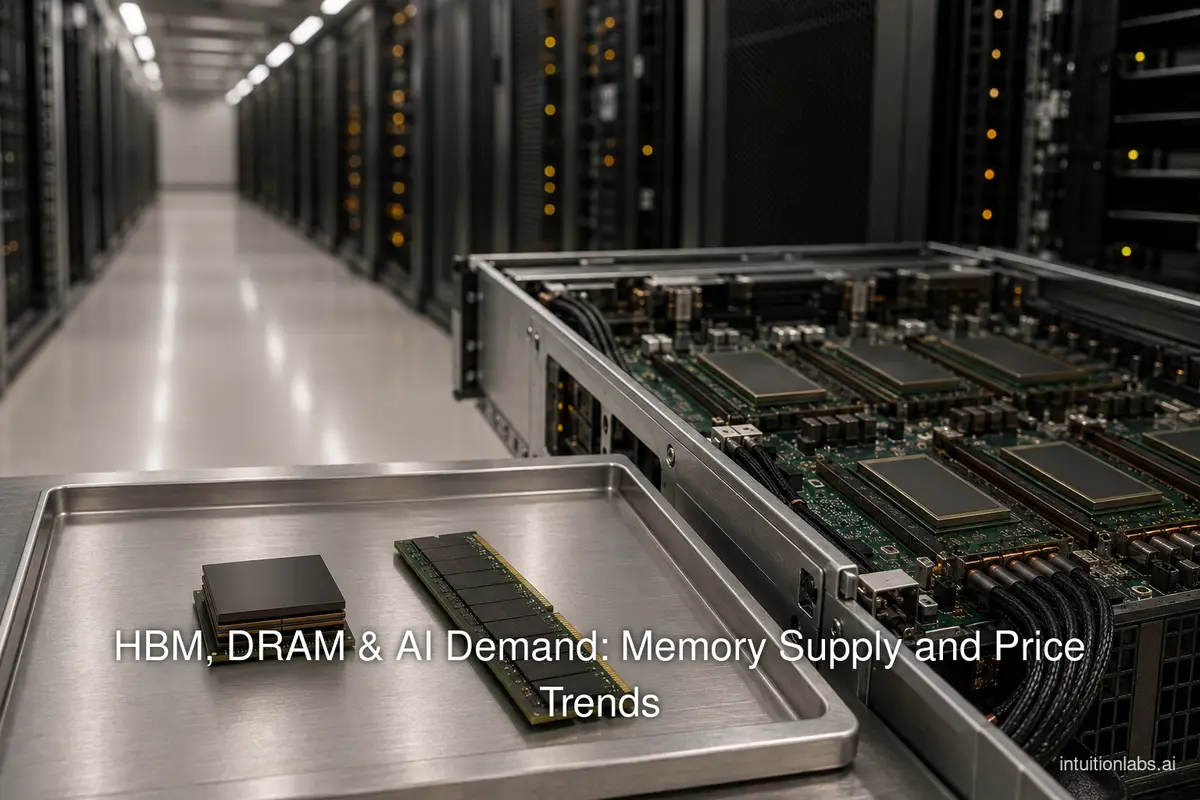
Data-driven 2026 analysis of the HBM and DRAM shortage: dated Samsung, SK hynix and Micron capacity disclosures, TrendForce contract and spot price data, and JEDEC HBM2-HBM4 specifications.
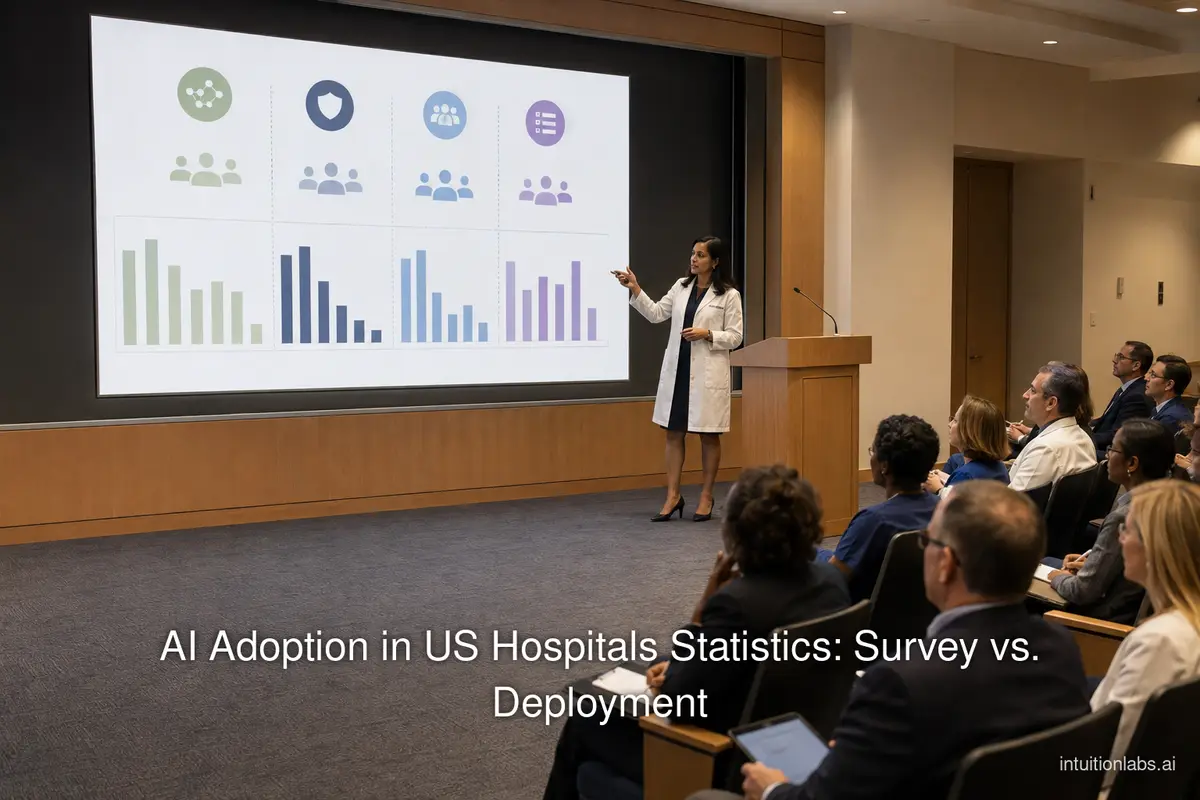
A 2026 source-by-source comparison of AMA, ONC/ASTP, AHA, JAMA Network Open, KLAS, Bain, and Deloitte hospital AI adoption data, separating pilots and purchased licenses from routine clinical use.
Compares 2026 cloud GPU rental prices across AWS, Google Cloud, Azure, Lambda, CoreWeave, RunPod, Vast.ai, Paperspace, and Crusoe, with dated H100 and A100 rates, egress and storage costs, and a reproducible effective-hourly-rate method.
A 2026 workload-based cost model comparing hosted AI API pricing (OpenAI, Anthropic, Google) to self-hosted GPU inference (CoreWeave, RunPod, Lambda), spanning $0.21 to $15.25 per million tokens by utilization.

A 2026 reference on LLM prompt caching cost savings, covering Anthropic, OpenAI, Google Gemini, AWS Bedrock, and DeepSeek pricing, cache invalidation triggers, and a reproducible break-even worksheet formula.
A September 2026 evidence review of pharma document extraction benchmarks: DocLayNet, PubTables-1M, and RD-TableBench scores, footnote and missing-value handling, and vendor pricing across Textract, Document AI, and Mistral OCR.
A 2026 analyst guide to NVIDIA Nemotron 3.5 Lightning for local AI agent inference: architecture, GPU and DGX Spark hardware requirements, vendor versus independent benchmark data, and cost comparisons against cloud LLM inference.

A dated, source-verified evaluation of Kimi K3 long context evaluation: architecture, AA-LCR and BrowseComp benchmark results, pricing, and 2026 frontier-model context window comparisons.
A dated, source-verified review of Gemini 3.8 Flash (released September 2, 2026) covering accuracy, latency, and per-token cost for research tasks, with a task-level benchmark method and vendor-versus-independent comparisons for 2026.
A dated, source-verified 2026 comparison of Claude Enterprise, ChatGPT Enterprise, Microsoft 365 Copilot, and Gemini Enterprise on data retention, encryption, compliance certifications, FedRAMP status, and connector ecosystems.
© 2026 IntuitionLabs. All rights reserved.